- Company Articles
- Products and Technology
- Procurement Guidelines
- How to select Flat Swivel Castor Wheels by Floor Type: Concrete, Tile, or Carpet

How to select Flat Swivel Castor Wheels by Floor Type: Concrete, Tile, or Carpet
Related Product
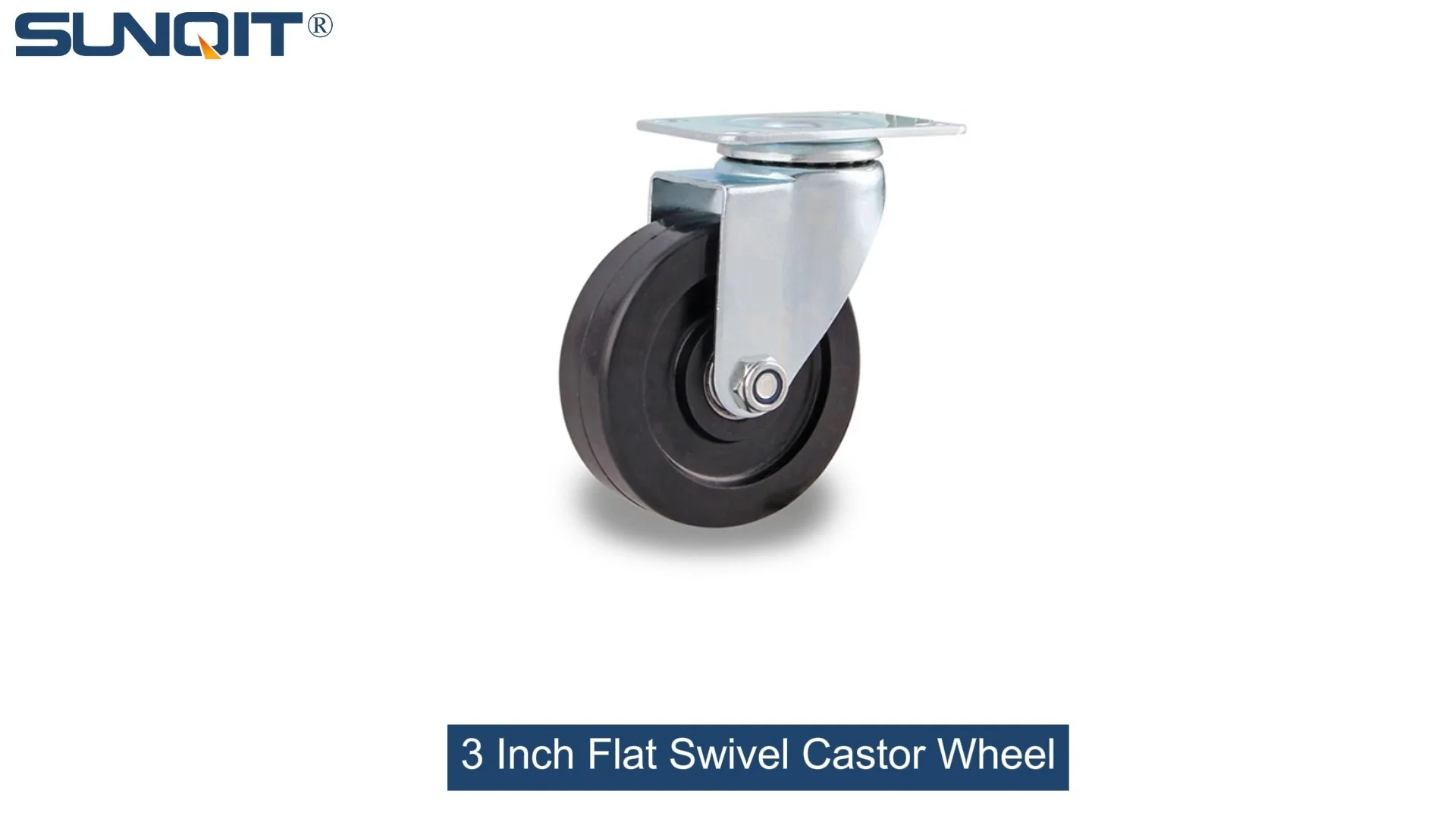
Flat Swivel Castor Wheel
Chair Casters Ball Bearing Wheels Rubber Base. Resistant to abrasion, impact and corrosion. Heavy payload can hold 70-90Kgs per pcs,which can make it works at a stable and smooth status.
Let's start with a scenario we've all encountered (or maybe even caused ourselves): You're pushing a heavy cart through the office, and suddenly, there's a loud screech as the wheels catch on the carpet. Or maybe you've noticed unsightly scratches on your brand-new kitchen tiles after moving a rolling island, or watched in frustration as a warehouse trolley with flimsy wheels struggles to glide across a concrete floor, slowing down your team's workflow. What's the common culprit here? More often than not, it's a mismatch between the castor wheels you're using and the type of floor they're rolling on.
Flat swivel castor wheels are the unsung heroes of mobility—they make everything from office chairs to industrial trolleys functional, allowing us to move heavy loads with minimal effort. But not all castor wheels are created equal, and choosing the right ones isn't just about picking something that "looks sturdy." It's about understanding how your floor type interacts with the wheel's material, design, and features. Whether you're outfitting a workshop with concrete floors, a retail space with glossy tiles, or a home office with plush carpet, the wrong wheels can lead to damaged floors, reduced efficiency, and even safety hazards. The right ones? They'll glide smoothly, protect your surfaces, and stand up to daily use without a hitch.
In this guide, we're diving deep into the world of flat swivel castor wheels, focusing on how to select the perfect pair for three common floor types: concrete, tile, and carpet. We'll break down the key factors that matter—from wheel material and hardness to tread design and load capacity—and even touch on why features like brakes and caster accessories can make all the difference. By the end, you'll be equipped to make a choice that saves you time, money, and the headache of dealing with wheel-related mishaps.
Why Floor Type Matters (Spoiler: It's Not Just About "Rolling")
Before we jump into specific floor types, let's talk about why floor type is such a critical factor. Think of it like choosing shoes for different terrains: You wouldn't wear flip-flops hiking up a mountain, and you wouldn't lace up heavy boots for a day at the beach. The same logic applies to castor wheels. Each floor type has unique characteristics—hardness, texture, fragility—that demand a wheel designed to work with (not against) them.
For example, concrete is tough and unforgiving, but it's also porous and can develop cracks over time. Tile is smooth and often delicate, prone to scratching or chipping. Carpet, on the other hand, is soft and textured, with fibers that can trap or slow down wheels. A wheel that works beautifully on concrete might destroy tile, and a wheel perfect for carpet could get stuck or wear out quickly on concrete. Even small details, like the wheel's "durometer" (a measure of hardness) or tread pattern, can drastically change performance.
Another angle: cost. Investing in the right flat swivel castor wheel upfront might cost a bit more than grabbing the cheapest option at the hardware store, but it's a fraction of the cost of replacing scratched tiles, repairing carpet, or replacing wheels that wear out prematurely. Plus, the right wheels reduce strain on whoever's pushing the cart—meaning fewer workplace injuries and happier, more productive teams. So, let's treat this decision like the investment it is.
Concrete Floors: Durability Meets Heavy-Duty Needs
Concrete is the workhorse of floors—found in warehouses, garages, workshops, and factories. It's strong, resistant to heavy loads, and built to last… but that doesn't mean it's invincible. When it comes to flat swivel castor wheels on concrete, the name of the game is durability . You need wheels that can handle rough surfaces, heavy weights, and constant use without wearing down or damaging the floor (yes, even concrete can be scratched by the wrong wheels).
1. Wheel Material: Polyurethane vs. Rubber vs. Steel
Let's start with the most critical factor: what the wheel is made of. On concrete, three materials stand out: polyurethane, rubber, and steel. Each has its pros and cons, depending on your needs.
Polyurethane: If we had to pick a "gold standard" for concrete, polyurethane would be it. Why? It's a synthetic material that strikes a perfect balance between hardness and flexibility. Polyurethane wheels are tough enough to resist abrasion from concrete's rough texture, so they won't wear down quickly even with daily use. They're also "non-marking," meaning they won't leave scuff marks or black streaks—important if your concrete floor is in a visible area like a retail backroom or garage. Plus, polyurethane has natural shock-absorbing properties, which reduces noise (no more clanging carts!) and makes for a smoother roll, even over small cracks or uneven spots in the concrete.
One thing to note: Not all polyurethane is created equal. Look for "high-quality" or "industrial-grade" polyurethane, which has a higher density and better wear resistance than cheaper, versions. These are ideal for heavy loads—think 500+ pounds per wheel. If you're only moving light loads (like a small tool cart), a mid-grade polyurethane might suffice, but for industrial settings, splurge on the heavy-duty stuff.
Rubber: Rubber wheels are a solid runner-up, especially if you need extra shock absorption. They're softer than polyurethane, which makes them quieter on concrete and gentler on the floor. However, they're not as durable as polyurethane—over time, the rough concrete surface can wear down the rubber, leading to cracks or chunks breaking off. Rubber is best for light to medium loads and environments where noise is a big concern, like a workshop near living spaces. Avoid soft rubber on very rough concrete or for heavy loads; it'll wear out too quickly.
Steel: Steel wheels are the heavyweights here—literally. They're incredibly strong and can handle massive loads (we're talking 1,000+ pounds per wheel) without bending or breaking. If you're moving industrial equipment, metal drums, or pallets in a warehouse, steel might seem like the obvious choice. But there's a catch: steel is hard . On smooth, polished concrete, steel wheels can scratch or gouge the surface, especially if they hit a small rock or debris. They're also loud—expect a clanging sound with every roll. And because they have no give, they don't absorb shocks, which can make for a bumpy ride over uneven concrete. Save steel wheels for extremely heavy loads on rough, non-polished concrete (like a factory floor with existing wear and tear) where durability is the only priority.
2. Durometer (Hardness): Getting the "Feel" Right
Durometer is measured on the Shore scale, with higher numbers meaning harder wheels. For concrete, you want a wheel that's hard enough to resist abrasion but not so hard that it damages the floor or becomes uncomfortable to roll. Most polyurethane wheels for concrete fall between 80-95 Shore A (a common range for industrial use). 80 Shore A is slightly softer, offering better shock absorption and noise reduction, while 95 Shore A is harder, more durable, and better for heavier loads. Rubber wheels typically range from 60-80 Shore A—too soft for heavy concrete use, but great for light loads and noise control. Steel, of course, has no Shore A rating (it's off the scale!), which is why it's best for extreme cases.
3. Load Capacity: Don't Overlook the Weight
Concrete floors can handle heavy loads, but your castor wheels can't. Every flat swivel castor wheel has a "load capacity" rating—how much weight it can safely support. This isn't just about the total weight of the cart and its contents; you need to divide that total by the number of wheels to get the per-wheel load. For example, a cart that holds 1,000 pounds with 4 wheels needs wheels rated for at least 250 pounds each (and we recommend adding a 20% buffer to be safe). On concrete, where the surface is unforgiving, overloading wheels can cause them to crack, flatten, or wear unevenly—leading to wobbly carts and potential damage. Always check the load rating, and when in doubt, go higher than you think you need.
4. Brakes: Safety First on Smooth (or Sloped) Concrete
If your cart or trolley will be parked on concrete—especially if the floor has a slight slope—you need a flat swivel castor wheel with brake . Brakes prevent accidental rolling, which is crucial for safety (imagine a heavy cart rolling downhill in a warehouse!). There are a few brake types to consider: "total lock" brakes (which lock both the wheel and the swivel motion, keeping the cart completely stationary), "wheel lock" brakes (which only lock the wheel, allowing the swivel to move), and "side lock" brakes (a lever on the side of the wheel). For concrete, total lock brakes are ideal—they're the most secure, especially for heavy loads. Look for brakes that are easy to engage and disengage, even with gloves on (important in industrial settings).
5. Caster Accessories: The Little Extras That Matter
On concrete, small details can make a big difference, and that's where caster accessories come in. For example, "axle caps" prevent dirt and debris from getting into the wheel bearings—a must on concrete, where dust and small stones are common. Bearings themselves are another accessory to consider: sealed ball bearings reduce friction, making the wheel roll smoother and last longer than plain bushings. If your wheels will be exposed to moisture (like a garage with occasional leaks), rust-resistant bearings or stainless steel hardware can prevent corrosion. Even simple things like "wheel guards" (plastic or metal covers around the wheel) can protect the wheel from damage if it hits a curb or debris.
Best Picks for Concrete: Our Top Recommendations
For most concrete floor scenarios—warehouses, garages, workshops—we recommend a flat swivel castor wheel made of industrial-grade polyurethane (85-90 Shore A), with a diameter of 4-6 inches (larger wheels roll easier over rough concrete), sealed ball bearings, and a total lock brake. If you need to handle extreme loads (1,000+ pounds), go for steel wheels with a polyurethane coating (the coating adds a layer of protection between the steel and concrete, reducing scratching and noise). Avoid soft rubber or small-diameter wheels (under 3 inches) on concrete—they'll wear out quickly and make rolling a chore.
Tile Floors: Protecting Beauty and Avoiding Scratches
Tile floors are all about aesthetics—whether it's the glossy ceramic tiles in a kitchen, the polished stone in a lobby, or the large-format porcelain in a retail store. They're durable, water-resistant, and easy to clean… but they're also surprisingly delicate when it comes to castor wheels. A single wrong move with a hard, unforgiving wheel can scratch, chip, or crack tile, turning a beautiful floor into a costly repair project. On tile, the priority shifts from "durability at all costs" to protection —keeping the floor looking new while still ensuring smooth mobility.
1. Wheel Material: Softness is Key (But Not Too Soft)
On tile, the biggest enemy is hardness . Hard wheels (like steel or very hard plastic) can easily scratch or chip tile, especially if they pick up small rocks or debris. Instead, opt for softer materials that "give" slightly, reducing the risk of damage. Here's what works:
Soft Polyurethane: Remember polyurethane from the concrete section? It's a chameleon here, too—but we're looking for a softer version, around 75-85 Shore A. This lower durometer means the wheel has more "give," so it won't scratch tile even if it hits a rough spot. Soft polyurethane is still durable enough to handle medium loads (up to 300 pounds per wheel) and resists wear, so it won't degrade quickly. Plus, it's non-marking, which is a must for light-colored or polished tile (no more black streaks from rubber!).
Rubber: Natural or synthetic rubber is another great option for tile, thanks to its soft, flexible texture. Rubber wheels are gentle on tile, absorb shocks (reducing the risk of cracking from impacts), and are very quiet—perfect for residential spaces like kitchens or bathrooms. However, rubber is more prone to wear than polyurethane, especially if exposed to oils or chemicals (common in kitchens). It's also "sticky" on some tile surfaces, which can make rolling feel sluggish. If you choose rubber, go for a "high-quality" synthetic rubber (like EPDM) that's resistant to wear and oils.
Avoid: Steel, hard plastic, or high-durometer polyurethane (90+ Shore A) on tile. These are too rigid and will scratch or scuff, no matter how careful you are.
2. Wheel Diameter: Bigger is Better for Grout Lines
Tile floors have a hidden obstacle: grout lines. Even if your tile is laid perfectly flat, the grout between tiles creates small ridges that can catch on small wheels, causing the cart to jolt or the wheel to wear unevenly. The solution? Bigger wheels . A wheel with a diameter of 3-5 inches will roll over grout lines much more smoothly than a tiny 2-inch wheel, which can get stuck or "bounce" with every ridge. Larger wheels also distribute weight more evenly, reducing pressure on individual tiles (important for preventing cracks in fragile materials like marble or glass tile).
3. Tread Design: Smooth vs. Grooved
The tread (the pattern on the wheel's surface) matters less on tile than on carpet, but it's still worth considering. For tile, a smooth or minimally grooved tread is best. Grooved treads can trap dirt, small stones, or grout particles, which then act like sandpaper, scratching the tile as the wheel rolls. Smooth treads are easier to clean and less likely to pick up debris. If you need extra traction (e.g., in a wet area like a kitchen), look for a tread with shallow, widely spaced grooves—just enough to channel water without collecting gunk.
4. Shock Absorption: Protecting Against Impacts
Tile is brittle—even a small impact (like dropping a heavy item on a cart) can cause a tile to crack. Soft wheels (polyurethane or rubber) naturally absorb shocks, but you can take it a step further with "shock-absorbing" castor designs. These often have a spring or rubber cushion between the wheel and the mounting plate, which reduces the force transferred to the floor when the cart hits a bump. This is especially useful for residential settings (think: a rolling kitchen cart that gets bumped into cabinets) or commercial spaces with high foot traffic.
Best Picks for Tile: Gentle but Reliable
For tile floors, our top choice is a flat swivel castor wheel made of soft polyurethane (75-80 Shore A), with a diameter of 4-5 inches, a smooth tread, and optional shock absorption. If you're in a residential space (like a kitchen or bathroom), natural rubber wheels (65-75 Shore A) are a great budget-friendly option—just be prepared to replace them every few years if used heavily. Avoid small wheels, hard materials, and deep-tread designs, and always clean wheels regularly to remove trapped debris.

Carpet Floors: Navigating Pile, Fibers, and Resistance
Carpet is the cozy, comfortable choice for offices, homes, and retail spaces—but it's also the trickiest floor type for castor wheels. Unlike hard floors (concrete, tile), carpet has "give" and texture, which can slow down or even stop a cart in its tracks if the wheels aren't designed for it. Pile height (how long the carpet fibers are), density, and texture all play a role in how well a wheel performs. On carpet, the goal is mobility —ensuring the wheel rolls smoothly without getting stuck, flattening fibers, or wearing out the carpet prematurely.
1. Wheel Material: Hardness to Avoid Sinking
On carpet, soft wheels are the enemy. Why? They sink into the carpet pile, creating friction that makes rolling difficult. Instead, you need harder wheels that "float" on top of the carpet, reducing resistance. Here's what works:
Hard Polyurethane: Back to polyurethane, but this time we're cranking up the durometer—90-95 Shore A. Hard polyurethane wheels are rigid enough to resist sinking into carpet, even high-pile varieties. They glide over fibers without getting stuck, and their smooth surface won't snag or pull carpet threads. They're also durable, so they won't wear down from constant friction with carpet fibers.
Nylon/Plastic: Hard nylon or plastic wheels are another option, especially for light loads (like office chairs or small carts). They're affordable, lightweight, and hard enough to roll over carpet. However, they're not as durable as polyurethane—over time, carpet fibers can wear down the plastic, leading to cracks or uneven rolling. Nylon is better for low-pile carpet (like office Berber) than high-pile shag.
Avoid: Rubber or soft polyurethane (under 85 Shore A) on carpet. These will sink into the pile, making the cart hard to push and flattening carpet fibers permanently (hello, unsightly wheel tracks!).
2. Wheel Diameter: The Larger, the Easier
On carpet, wheel diameter is even more critical than on tile or concrete. Small wheels (under 3 inches) get bogged down in carpet fibers, requiring extra force to push. Larger wheels (4-6 inches) have a higher "ground clearance," so they roll over the carpet instead of through it. Think of it like a bike: a mountain bike with large tires glides over rough terrain, while a tiny kids' bike struggles. The same logic applies here. For high-pile carpet (like shag or plush), aim for wheels 5 inches or larger—you'll notice the difference immediately in how easy it is to push.
3. Tread Design: Open vs. Closed (and Why It Matters)
Carpet fibers love to get stuck in tight spaces, so the tread design on your castor wheel can make or break performance. On carpet, open treads are better than closed ones. An open tread has gaps or spaces between the treads, which allows carpet fibers to pass through instead of getting trapped. For example, a wheel with a "spoked" design or wide, shallow grooves will shed fibers, while a solid, closed tread will collect them, acting like a "rake" and slowing down the wheel. Avoid treads with small, tight patterns—they're fiber magnets.
4. Swivel Mechanism: Smooth Rotation = Less Strain
Carpet creates more resistance than hard floors, which means the swivel part of your flat swivel castor wheel has to work harder. A cheap or poorly designed swivel mechanism can get stuck or require extra force to turn, leading to strain on the person pushing the cart. Look for wheels with "precision ball bearings" in the swivel head—these reduce friction, allowing the wheel to turn smoothly even on carpet. Some high-end models also have "double ball races" (two sets of bearings) for extra smoothness and durability.
Best Picks for Carpet: Smooth Rolling, No Sinking
For carpet, go with a flat swivel castor wheel made of hard polyurethane (90-95 Shore A), with a diameter of 5-6 inches, an open tread design, and a precision swivel mechanism with ball bearings. If you're on a budget, hard nylon wheels (4-5 inches) work for light loads on low-pile carpet. Avoid soft materials, small wheels, and closed treads—they'll turn your cart into a frustrating, labor-intensive chore.

The Ultimate Comparison: Key Features by Floor Type
To make it easier to compare, let's summarize the key features you need for each floor type in a handy table. Keep this in mind when shopping for your next set of flat swivel castor wheels:
| Floor Type | Recommended Wheel Material | Durometer (Shore A) | Wheel Diameter | Key Features | Caster Accessories to Consider |
|---|---|---|---|---|---|
| Concrete | Industrial Polyurethane (primary); Steel (heavy loads) | 80-95 (polyurethane); N/A (steel) | 4-6 inches | Non-marking, abrasion-resistant, shock-absorbing | Sealed bearings (dust protection), total-lock brakes, axle caps |
| Tile | Soft Polyurethane; Natural Rubber (residential) | 75-85 (polyurethane); 65-75 (rubber) | 4-5 inches | Non-marking, shock-absorbing, smooth tread | Shock-absorbing mounts, wheel guards (debris protection) |
| Carpet | Hard Polyurethane; Hard Nylon (budget) | 90-95 (polyurethane); N/A (nylon) |
5-6 inches (high-pile);
4-5 inches (low-pile) |
Open tread, rigid (no sinking), precision swivel | Double ball race swivel, lubrication kits (for smooth rotation) |
Beyond the Floor: Other Factors to Consider
Floor type is the biggest factor, but there are a few other details to keep in mind to ensure you pick the perfect flat swivel castor wheel:
1. Environment: Wet, Dry, Hot, or Cold?
Is your wheel going to be used in a wet area (like a kitchen or garage)? Look for water-resistant materials (polyurethane resists water; avoid natural rubber, which can degrade). In cold environments (freezers, outdoor patios), some plastics can become brittle—opt for cold-resistant polyurethane. In hot environments (near ovens or machinery), check the wheel's heat resistance rating to avoid melting or warping.
2. Mobility Frequency: How Often Will It Be Moved?
A cart that's moved once a day (like a storage trolley) has different needs than one moved 50 times a day (like a warehouse picking cart). For frequent use, invest in higher-quality wheels with sealed bearings and durable swivel mechanisms—they'll stand up to wear and tear. For occasional use, mid-grade wheels should suffice.
3. Maintenance: Keeping Wheels Rolling Smoothly
Even the best wheels need a little TLC. Regular maintenance extends their lifespan and ensures peak performance. For example:
- Clean wheels: Wipe polyurethane or rubber wheels with a damp cloth to remove debris (especially important on tile and carpet).
- Lubricate swivel mechanisms: Use a silicone-based lubricant (avoid oil, which attracts dirt) on swivel joints to keep them turning smoothly—this is where caster accessories like lubrication kits come in handy.
- Check for wear: Inspect wheels regularly for cracks, flat spots, or uneven wear. replace worn wheels promptly to avoid damaging floors or straining the cart.
Final Thoughts: Invest in the Right Wheel, Reap the Rewards
Choosing flat swivel castor wheels might seem like a small decision, but it's one that has a big impact on your daily life—whether you're pushing a cart through a warehouse, moving a rolling desk in your home office, or navigating a kitchen island across tile. By matching the wheel to your floor type—prioritizing durability on concrete, protection on tile, and mobility on carpet—you'll save time, money, and frustration in the long run.
Remember: the best wheel isn't the most expensive or the "strongest"—it's the one that's right for your floor . So, take a moment to assess your space: What's the floor made of? How heavy is the load? How often will it be moved? Armed with that info, and the tips in this guide, you'll be ready to pick flat swivel castor wheels that glide smoothly, protect your floors, and stand the test of time. Happy rolling!