How to Identify a Faulty Roller Track Placon Mount Connector
Related Product
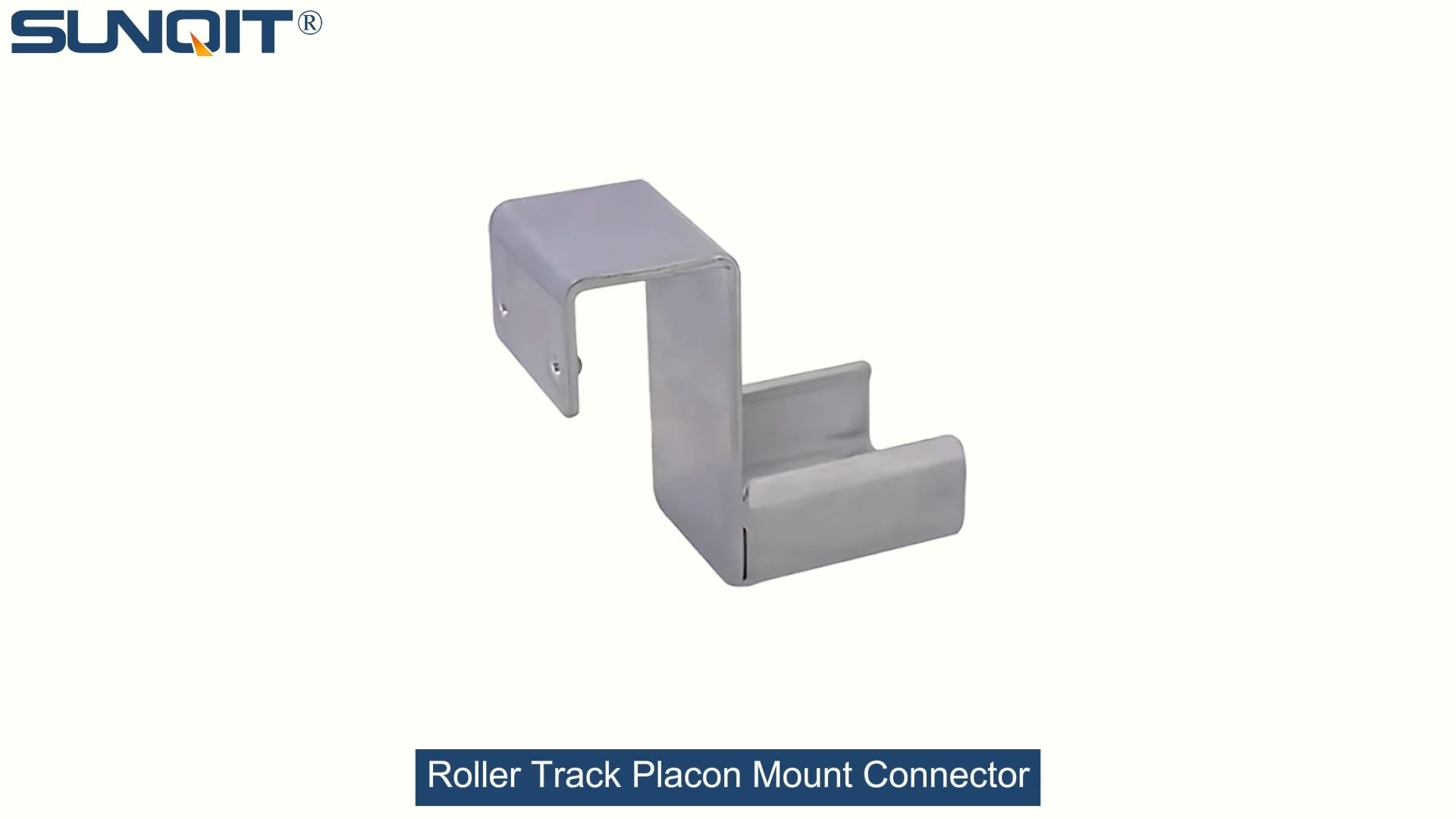
Roller Track Placon Mount Connector
Roller track placon mount work as a connector for roller track and pipe or aluminum profile in rack syetem, it is a necessary parts in rack system which widely used in industrial plant and logistic,warehouse storage.
Roller Track Placon Mount Connector
In the heart of every manufacturing facility, where the hum of machinery meets the rhythm of production, there's an unsung hero keeping things moving—literally. It's the small, unassuming components that hold your assembly lines, workbenches, and material flow systems together. Today, we're shining a spotlight on one such critical part: the roller track placon mount connector. While it might not grab headlines like a high-tech conveyor or a custom workbench, this tiny piece plays a giant role in keeping your lean pipe systems running smoothly. A faulty connector can turn a seamless production day into a frustrating halt, causing delays, wasted materials, and unnecessary stress for your team. Let's dive into how to spot these issues early, keep your lines flowing, and protect your lean manufacturing goals.

What Exactly Is a Roller Track Placon Mount Connector?

Before we jump into troubleshooting, let's make sure we're all on the same page. A roller track placon mount connector is the bridge that links your roller tracks to aluminum profiles or lean pipes in material handling systems. Think of it as the glue that holds your flow rack together—without it, those smooth-rolling tracks that move components from station to station would wobble, misalign, or even collapse.

These connectors are part of the broader family of aluminum profile accessories, designed to work with aluminum lean pipes and profiles to create flexible, durable workspaces. Whether you're using a simple flow rack for parts storage or an intricate conveyor system feeding your assembly line, placon mount connectors ensure that every section of track stays securely attached, maintaining the precise alignment needed for gravity-fed material flow. In short, they're the quiet guardians of efficiency in your lean system.

Why Does It Matter? The Cost of Overlooking Connector Issues

Imagine this: Your team is gearing up to meet a tight deadline. Components need to move from the warehouse to the workbench, then to final assembly—all on schedule. Suddenly, a bin of circuit boards gets stuck halfway along the roller track. You check the wheels, the track alignment, and finally notice it: a loose placon mount connector has shifted, tilting the track just enough to jam the flow. Your team stops, tools down, to fix it. Five minutes turn into fifteen, and before you know it, that small hiccup has rippled into missed targets for the shift.

That's the reality of a faulty connector. It's not just about a stuck bin—it's about productivity losses, increased labor costs from unplanned downtime, and the risk of damaging expensive materials. In worst-case scenarios, a broken connector could even lead to safety hazards, like falling components or unstable track sections. For manufacturers committed to lean solutions, where waste reduction is key, these issues directly contradict the "sustainable improvement" mindset. So, knowing how to spot a faulty connector isn't just maintenance work—it's an act of protecting your bottom line.

Common Fault Types: What Goes Wrong with Placon Mount Connectors?

Like any hardworking component, roller track placon mount connectors face wear and tear. Let's break down the most typical issues you might encounter:
Fault Type Visual & Functional Clues Likely Causes
Physical Damage Cracks, chips, or deformation in the connector body; bent mounting tabs Impact during material loading/unloading; accidental collisions with forklifts or tools
Loose Connections Track wobbles when touched; visible gaps between connector and aluminum profile Over-tightening during installation; vibration from heavy material flow; worn threads
Excessive Wear Thinned edges on mounting surfaces; smooth, shiny spots from friction Continuous heavy load; misalignment causing uneven pressure; low-quality material
Corrosion or Rust Orange/brown spots (metal connectors); greenish film (aluminum alloys) High humidity in warehouse; exposure to chemicals or coolant; poor storage conditions
Misalignment Track sections sit at an angle; material jams when rolling Incorrect installation (e.g., using mismatched profile sizes); shifted mounting holes

Step-by-Step Identification: How to Check for Faults Like a Pro

Now, let's get practical. Here's how to systematically inspect your placon mount connectors and catch issues early:
1. Start with a Visual Inspection
Walk the length of your roller track system with a flashlight (even in well-lit areas, shadows hide cracks!). Look for:
  • Cracks: Pay extra attention to stress points, like where the connector attaches to the track or profile. Even hairline fractures can weaken the component over time.
  • Deformation: Is the connector bent or warped? A slight curve might not seem bad, but it can throw track alignment off by millimeters—enough to cause jams.
  • Corrosion: For metal connectors, rust spots are a red flag. For aluminum, watch for white, powdery residue (oxidation) or pitting on the surface.
2. The "Hand Test" for Stability
Gently but firmly grasp the roller track near the connector and try to wiggle it. A healthy connection should feel solid—no movement or creaking. If the track shifts, or you hear a "clicking" sound, it's a sign of looseness. Check the mounting screws: Are they fully seated? Do they spin freely when you try to tighten them (a sign of stripped threads)?
3. Test Material Flow (The Ultimate Litmus Test)
The best way to spot hidden issues is to simulate real-world use. Grab a typical material bin (filled to average weight) and roll it along the track. A faulty connector will reveal itself through:
  • Uneven movement: The bin slows down or stops at the connector's location.
  • Jerky motion: The bin "hops" as it passes over the connector, indicating a height mismatch.
  • Scraping sounds: Metal-on-metal noise suggests the connector is rubbing against the track or profile.
4. Measure for Precision
For subtle misalignments, use a straightedge or laser level. Place the straightedge along the top of the roller track—if it dips or rises at the connector, that's a misalignment. For aluminum profiles, check that the connector's mounting holes align perfectly with the profile's T-slots; even a 1mm offset can cause stress over time.

Beyond the Connector: How Faults Impact Your Entire Lean System

A faulty placon mount connector rarely acts alone. Let's trace the ripple effects: When a connector fails, your roller track misaligns, which disrupts material flow to your workbench. Operators at the workbench, now waiting for parts, might switch tasks, creating bottlenecks elsewhere. The maintenance team gets pulled in for repairs, diverting them from preventive work that prevents larger issues. And if the problem isn't fixed quickly, you might rush to jury-rig a solution—like adding temporary supports—that violates lean pipe system integrity long-term.

This is where the "lean" in lean pipe systems truly matters. A well-designed system relies on every component, from the basic aluminum tube to the smallest joint, working in harmony. A single weak link breaks that harmony, turning your efficient flow into a series of stop-and-start disruptions. That's why proactive identification isn't just about fixing connectors—it's about preserving the entire ecosystem of your production line.

Prevention: Keeping Connectors (and Your Line) in Top Shape

The good news? Many connector faults are preventable with simple, consistent practices:
  • Schedule Routine Checks: Add connector inspections to your weekly maintenance checklist. Even 10 minutes per line can catch issues before they escalate.
  • Train Your Team: Teach operators to spot red flags—like jams or unusual sounds—and report them immediately. They're the first line of defense.
  • Invest in Quality: Opt for high-grade aluminum profile accessories. Cheap connectors might save money upfront, but they wear out faster, leading to more frequent replacements and downtime.
  • Follow Installation Guidelines: Avoid over-tightening screws (which can crack connectors) and ensure alignment during setup. When in doubt, consult your lean pipe supplier for specs.
  • Control the Environment: In humid or chemical-exposed areas, choose corrosion-resistant connectors or apply protective coatings to extend lifespan.

Final Thoughts: Small Parts, Big Impact

At the end of the day, manufacturing excellence isn't just about big machines or cutting-edge technology—it's about mastering the details. The roller track placon mount connector, though small, is a testament to that truth. By learning to identify its faults, you're not just fixing a part—you're upholding the principles of lean production: efficiency, sustainability, and respect for your team's hard work.

So, the next time you walk your production floor, take a moment to look down at those connectors. They might not say much, but they're talking—if you know how to listen. And when you keep them in top shape, you're not just keeping the line moving—you're moving closer to the lean, waste-free operation you strive for.


Get In Touch with us

Hey there! Your message matters! It'll go straight into our CRM system. Expect a one-on-one reply from our CS within 7×24 hours. We value your feedback. Fill in the box and share your thoughts!