- Company Articles
- Products and Technology
- Product knowledge
- How to Identify Genuine 4040D EU Standard Aluminum Profiles: Certification Checks

How to Identify Genuine 4040D EU Standard Aluminum Profiles: Certification Checks
Related Product
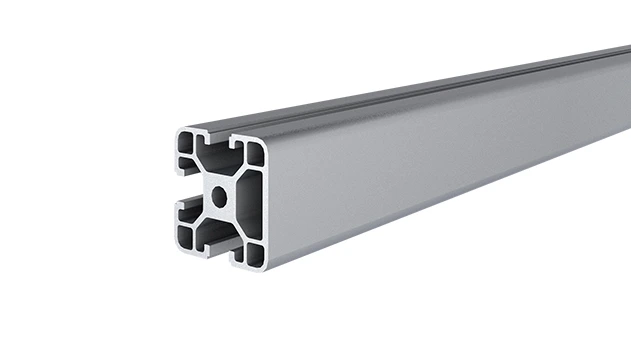
4040D EU Standard Aluminum Profile
4040D is a 4.00x4.00 CM fractional 40 series square extrusion T-slot profile with two side open T-slots, two side with closed face, each side with 4.00cm face. The profile has align-a-grooves to assist in aligning connecting profiles.
Introduction: The Backbone of Modern Workspaces
Walk into any well-organized factory, workshop, or even a tech startup's assembly area, and you'll likely spot a familiar sight: sturdy, modular structures holding tools, materials, or. Chances are, those structures are built with aluminum extrusion profiles—specifically, models like the 4040D EU standard aluminum profile. These profiles are the unsung heroes of efficient workspaces, offering the flexibility to build everything from workbenches and material racks to conveyor systems and turnover trolleys. But here's the catch: not all 4040D profiles are created equal. With the rise in demand, counterfeit products have flooded the market, posing risks to safety, durability, and long-term cost-effectiveness. So, how do you separate the genuine from the knockoffs? Let's dive in.
What Are 4040D EU Standard Aluminum Profiles, Anyway?
First, let's get clear on what we're talking about. The 4040D EU standard aluminum profile is a type of aluminum extrusion profile—meaning it's shaped by forcing heated aluminum through a die to create a consistent cross-section. The "4040" refers to its dimensions: 40mm in width and 40mm in height, making it a versatile choice for medium-load applications. The "D" denotes a specific groove design (often with T-slots) that allows for easy attachment of aluminum profile accessories like brackets, end caps, and connectors. EU standard profiles adhere to strict European norms for material quality, dimensional accuracy, and safety—standards that many manufacturers claim to meet, but not all actually do.
Why does this matter? Imagine investing in a production line workbench built with counterfeit 4040D profiles. Over time, the inferior material might warp under the weight of tools, or the T-slots could wear out, making it impossible to attach accessories securely. That's not just an inconvenience—it's a safety hazard. Genuine profiles, on the other hand, are engineered to withstand daily use, ensuring your workspace remains efficient and your team stays safe.

The High Stakes of Fake Profiles: Why Authenticity Matters
Real Consequences of Counterfeits: A small electronics manufacturer in Poland once shared their nightmare: they sourced "4040D" profiles from a low-cost supplier, only to find that after six months, the material racks holding circuit boards began to sag. Upon inspection, the profiles' wall thickness was 1.2mm instead of the required 2.0mm, and the aluminum alloy contained high levels of impurities. The result? Damaged inventory, production delays, and a costly rebuild with genuine profiles. Don't let that be you.
Authentic 4040D EU standard profiles are made from high-grade aluminum alloys (typically 6063-T5, known for its strength and corrosion resistance). They undergo rigorous testing for load capacity, thermal stability, and finish quality. Counterfeits, however, often cut corners: using recycled or low-purity aluminum, skimping on wall thickness, or skipping surface treatments like anodization. The result? Profiles that bend, corrode, or fail under stress—costing you more in replacements and repairs than the initial "savings" from buying cheap.
Step 1: Certification Checks—The Paper Trail of Authenticity
Genuine 4040D EU standard aluminum profiles come with paperwork—certifications that prove they meet European standards. Here's what to look for:
CE Marking: Non-Negotiable for EU Compliance
The CE mark is a mandatory conformity symbol for products sold in the European Economic Area (EEA). For aluminum profiles, it indicates compliance with EN 755 (the European standard for aluminum and aluminum alloy extruded profiles) and EN 15085 (for railway applications, if relevant). But beware: counterfeiters often slap fake CE marks on their products. To verify, ask the supplier for a Declaration of Conformity (DoC), which should include the manufacturer's name, product details, and reference to the specific EN standards. You can cross-check the DoC with the manufacturer's official website or contact the notified body listed (if applicable).
ISO 9001: A Stamp of Quality Management
While not specific to aluminum profiles, ISO 9001 certification is a good indicator of a supplier's commitment to quality. It means their production processes—from raw material sourcing to extrusion and finishing—are standardized and regularly audited. Reputable lean system suppliers will proudly display their ISO 9001 certificate. Ask to see a copy, and verify its validity through the certifying body's database (e.g., SGS, TÜV, or Bureau Veritas).
Material Test Reports (MTRs): Digging Deeper
For critical applications (like heavy-duty workbenches or safety barriers), request a Material Test Report (MTR) for the batch of profiles. An MTR provides detailed data on the aluminum alloy's composition (e.g., percentage of silicon, magnesium, and copper), mechanical properties (tensile strength, yield strength), and heat treatment. Genuine 4040D profiles should match the specifications of EN 755-2 (extruded profiles for general engineering purposes), with a minimum tensile strength of 160 MPa and yield strength of 110 MPa for 6063-T5 alloy.
Step 2: Physical Inspection—Trust Your Eyes (and Hands)
Certifications are important, but they're not the whole story. Counterfeiters can forge documents, but they can't easily replicate the physical qualities of genuine profiles. Here's what to check with your own senses:
Dimensional Accuracy: Measure Twice, Buy Once
Grab a caliper and measure the profile's width, height, and wall thickness. Genuine 4040D profiles will be precisely 40mm x 40mm (±0.2mm, per EU standards). Wall thickness should be consistent across the profile—typically 1.5mm to 2.0mm for standard models. Counterfeits often have uneven walls or dimensions that are off by 1mm or more. For example, a fake might measure 39.5mm in width, which might seem minor, but it can cause major issues when attaching standardized aluminum profile accessories like T-slot nuts or brackets.
Surface Finish: Smooth, Uniform, and Blemish-Free
Genuine profiles undergo anodization—a process that forms a protective oxide layer on the surface. This finish should be smooth, matte, and uniform in color (usually silver or black). Run your hand along the profile: it should feel consistent, with no rough spots, scratches, or discoloration. Counterfeits often have a shiny, uneven finish or visible tool marks from poor extrusion dies. Also, check the T-slots: they should be clean, with sharp, well-defined edges. Jagged or misaligned slots are a red flag.
Aluminum Profile End Caps: The Small Details That Matter
Aluminum profile end caps might seem like an afterthought, but they're a telltale sign of authenticity. Genuine end caps are made from high-quality plastic or aluminum, designed to fit snugly into the profile's ends without gaps. They'll have the manufacturer's logo or part number molded in (e.g., "Item 4040D End Cap"). Fake end caps, on the other hand, are often flimsy, ill-fitting, or lack branding. Try inserting an end cap into the profile: if it wiggles or falls out easily, that's a problem. Poorly made end caps can allow dust and moisture into the profile, leading to corrosion over time.
Step 3: Vetting the Supplier—Not All Lean System Suppliers Are Created Equal
Your choice of supplier is just as critical as the product itself. Reputable lean system suppliers have a track record of transparency, quality, and customer support. Here's what to look for:
Reputation and Reviews: What Do Others Say?
Check online reviews on platforms like Google, Alibaba, or industry forums. Look for patterns: Do customers praise the profiles' durability and fit with accessories? Or do they complain about warping, inconsistent sizing, or unresponsive customer service? Also, ask the supplier for references from similar businesses (e.g., manufacturers in your industry). A legitimate supplier will happily connect you with past clients.
Factory Visits (If Possible): See the Process for Yourself
If you're making a large order, consider visiting the supplier's factory. You'll get a firsthand look at their extrusion equipment, quality control processes, and inventory of raw materials. Genuine manufacturers will have clean, organized facilities with dedicated QA stations for inspecting profiles. Counterfeit operations, by contrast, often operate in unregulated workshops with minimal quality checks.
Warranty and After-Sales Support: A Safety Net
Genuine 4040D profiles usually come with a warranty (e.g., 1-5 years) against defects in material or workmanship. Ask about the warranty terms: What's covered? How do you make a claim? A supplier that stands behind their product will have clear, customer-friendly warranty policies. Avoid suppliers that offer "no warranty" or vague promises—they're unlikely to help if issues arise.
Genuine vs. Counterfeit: A Quick Comparison Table
| Feature | Genuine 4040D EU Profile | Counterfeit Profile |
|---|---|---|
| Certifications | Valid CE mark, ISO 9001, and MTRs matching EN 755 | Fake or missing CE marks; generic or forged MTRs | Dimensions | Precisely 40mm x 40mm (±0.2mm); consistent wall thickness | Off by 0.5mm+; uneven walls |
| Surface Finish | Smooth, uniform anodization; no scratches or tool marks | Shiny, uneven, or rough finish; visible defects |
| End Caps | Snug fit; branded with manufacturer's logo | Loose or flimsy; no branding |
| Supplier Support | Clear warranty; references available; responsive service | No warranty; vague responses; hard to contact |
Common Red Flags: When to Walk Away
Even with the above checks, some warning signs are too obvious to ignore. Watch out for these:
- Unrealistically low prices: If a quote is 30%+ cheaper than other suppliers, it's likely a fake. Genuine aluminum extrusion profiles cost more due to high-quality raw materials and strict manufacturing standards.
- Generic branding: Profiles with no manufacturer logo, part number, or batch code are suspicious. Reputable brands mark their products for traceability.
- Refusal to provide documentation: If a supplier hesitates to share CE certificates, MTRs, or ISO 9001 proof, take your business elsewhere.
- Inconsistent packaging: Genuine profiles are often packaged in protective film with clear labeling. Counterfeits may come in flimsy, unmarked packaging.
Case Study: The Cost of Cutting Corners
Let's wrap up with a real-world example. A automotive parts manufacturer in Germany needed 50 workbenches for their assembly line. They chose a "bargain" supplier offering 4040D profiles at half the price of a trusted lean system supplier. The initial setup looked fine, but within three months, problems arose: the workbenches began to wobble, T-slots stripped when attaching tools, and some profiles even bent under the weight of heavy components. An inspection revealed the profiles were made from recycled aluminum with a wall thickness of just 0.8mm (instead of 1.5mm). The manufacturer had to replace all 50 workbenches, costing them twice as much as if they'd bought genuine profiles upfront. The lesson? Saving a few euros today can cost you dearly tomorrow.
Conclusion: Invest in Quality, Invest in Peace of Mind
Identifying genuine 4040D EU standard aluminum profiles takes a mix of due diligence, physical inspection, and common sense. Start with certifications (CE, ISO 9001, MTRs), then check the profile's dimensions, finish, and accessories like end caps. Vet your supplier thoroughly, and don't be swayed by rock-bottom prices. Remember, these profiles are the foundation of your workspace—skimping on quality puts your team's safety, productivity, and budget at risk.
So, the next time you're sourcing aluminum extrusion profiles, take the time to verify. Your future self (and your wallet) will thank you. After all, a genuine 4040D profile isn't just a piece of aluminum—it's a promise of reliability, durability, and efficiency for years to come.