- Company Articles
- Products and Technology
- Product knowledge
- How to Identify High-Quality Four Way Straight Lean Pipe Joint Chrome

How to Identify High-Quality Four Way Straight Lean Pipe Joint Chrome
Related Product
Four Way Straight Lean Pipe Joint Chrome
Four way lean pipe joint for 4 pcs 28MM lean pipe connection in straight angle, which used widely in workbench, flow rack, hand trolley frame connection.
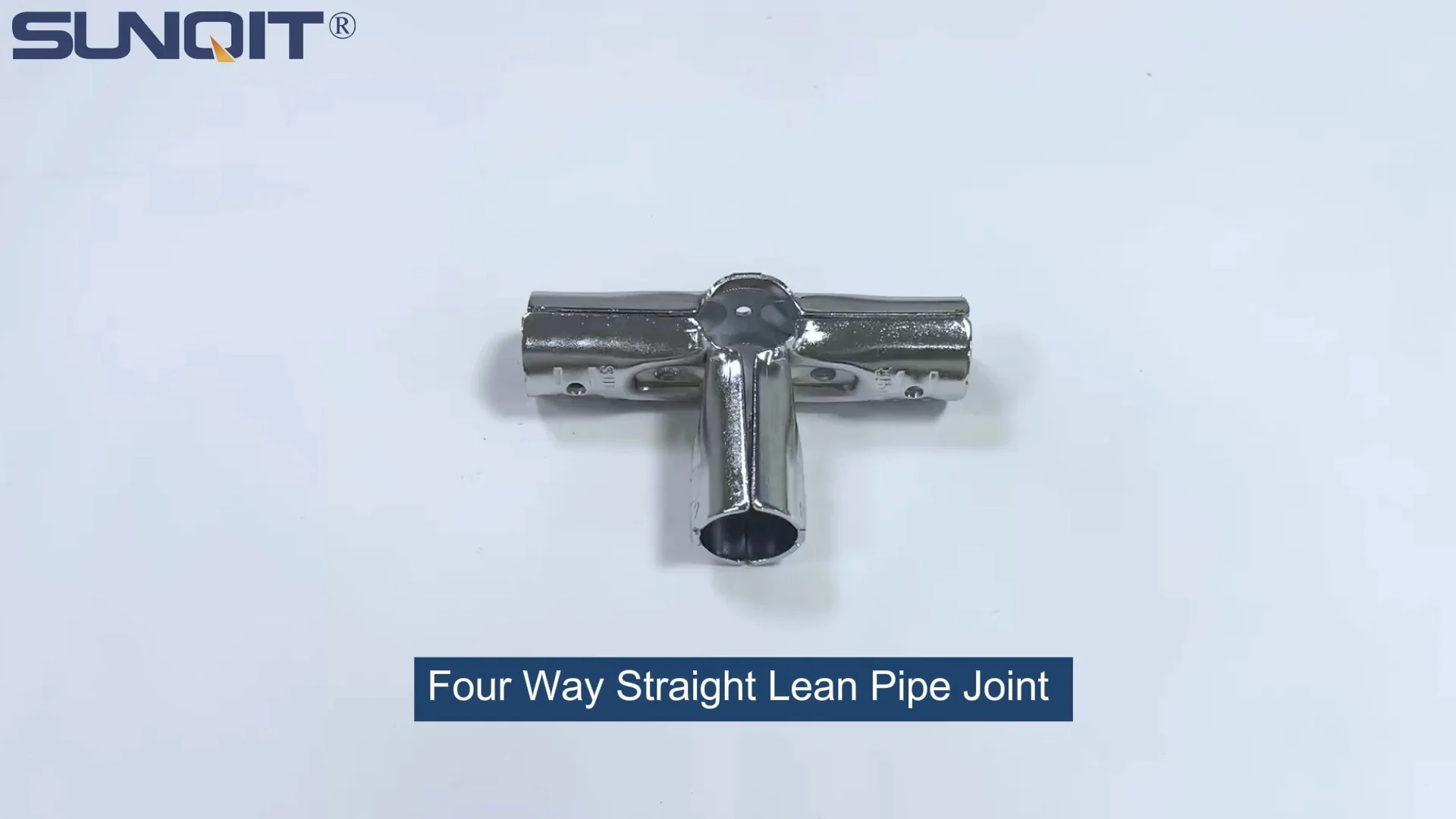
In the world of manufacturing and industrial workflow optimization, every component plays a silent yet critical role in keeping operations running smoothly. Among these unsung heroes are lean pipe joints—the unassuming connectors that hold together the backbone of lean systems, from workbenches and material racks to assembly lines and conveyor setups. Today, we're zeroing in on a specific star of this category: the four way straight lean pipe joint chrome . Often overlooked, this small but mighty component can make or break the efficiency, safety, and longevity of your entire lean setup. Whether you're a factory manager upgrading production lines, a procurement specialist sourcing parts, or a small business owner building a custom workstation, knowing how to spot a high-quality four way straight chrome joint is essential. Let's dive into the details that separate the durable, reliable options from the ones that might leave you with wobbly structures, frequent replacements, and unnecessary downtime.
Why the Four Way Straight Lean Pipe Joint Chrome Matters in Lean Systems
Before we jump into identification tips, let's take a moment to appreciate why this joint is so crucial. Lean systems are built on the principles of efficiency, flexibility, and waste reduction. A lean pipe joint —especially a four-way straight design—acts as the "hinge" that allows you to configure and reconfigure workspaces, material flow racks, and assembly stations with minimal effort. Unlike fixed metal brackets or welded connections, these joints let you adjust heights, add shelves, or rearrange layouts in hours, not days.
The "chrome" in its name isn't just for show, either. Chrome plating adds a layer of protection against corrosion, scratches, and wear—critical in busy factories where oil, coolant, or humidity can take a toll. And the "four-way straight" design? It means the joint can connect four pipes in a straight line (two along one axis, two along another), making it ideal for building sturdy frames, multi-tiered racks, or cross-braced structures. Imagine a material rack in an automotive plant: if the four-way joints holding its vertical and horizontal pipes are weak, the entire rack could sag under the weight of parts, risking damage or even injury. On the flip side, a high-quality joint ensures the rack stays stable, even when loaded with heavy components day in and day out.
Key Features of a High-Quality Four Way Straight Lean Pipe Joint Chrome
Not all four way straight chrome joints are created equal. To separate the best from the rest, we need to examine four core areas: materials , design engineering , manufacturing , and performance testing . Let's break each down.
1. Materials: The Foundation of Durability
A joint is only as strong as the materials it's made from. High-quality options start with a robust base metal—typically low-carbon steel or alloy steel—chosen for its strength and malleability. Why steel? Because it can withstand the torque required to tighten pipes into the joint without cracking, and it provides a solid foundation for the chrome plating that follows.
Next comes the chrome plating. Look for joints with trivalent chrome plating (as opposed to hexavalent, which is less environmentally friendly and often lower quality). Trivalent chrome forms a harder, more uniform layer that adheres better to the steel base. How can you tell? A high-quality chrome finish will have a mirror-like shine, with no dull spots, bubbles, or pinholes. Run your finger across the surface—it should feel smooth, not rough or grainy. Low-quality joints often skimp on plating thickness (less than 5 microns), leading to quick wear; aim for 8-12 microns for long-lasting protection.
Don't forget the internal components, either. The "grip" of the joint on the lean pipe comes from small metal teeth or a clamping mechanism inside. These should be made from hardened steel to prevent stripping, even after repeated adjustments. If the teeth are soft or poorly aligned, the pipe will slip over time, turning your sturdy workbench into a wobbly hazard.
2. Design Engineering: Precision and Load Distribution
Great materials mean nothing without smart design. A well-engineered four way straight joint will distribute weight evenly across all four connected pipes, reducing stress on any single point. Look for joints with reinforced corners —thicker metal at the intersections where the four pipe openings meet. This prevents cracking under heavy loads. For example, a joint used in a material rack b (3 row and 3 floor) (a common multi-tiered storage solution) needs to support the weight of materials across three levels; weak corners here would lead to sagging shelves.
Precision is another hallmark. The holes where the pipes insert should be perfectly round and sized to match standard lean pipe diameters (often 28mm for steel pipes or 30mm for aluminum lean pipe ). A tolerance of ±0.1mm is ideal—any larger, and the pipe will rattle or slip; any smaller, and you'll struggle to insert or adjust the pipes. The threads (if the joint uses screws to tighten the pipes) should be clean and sharp, with no burrs, to ensure a secure, wobble-free fit.
Ergonomics matter too. The joint should be easy to assemble without special tools—look for knurled screw heads or wing nuts that can be tightened by hand, saving time during setup. Some premium joints even include a "click" mechanism to signal when the pipe is fully seated, taking the guesswork out of installation.
3. Manufacturing: From Casting to Plating
The best designs fail if manufacturing cuts corners. High-quality four way straight joints are typically made using die casting —a process where molten metal is forced into a steel mold under high pressure. This creates uniform, detailed parts with minimal defects. In contrast, low-quality joints often use sand casting, which leaves rough surfaces, air bubbles, and inconsistent wall thicknesses. To check, inspect the joint's surface: die-cast parts have smooth, even edges, while sand-cast ones may have visible pits or unevenness.
After casting, the joint undergoes machining to refine the pipe holes, threads, and clamping mechanisms. Precision machining ensures that all four pipe openings are aligned at exactly 90-degree angles (for straight joints) and that the internal teeth or clamps are perfectly positioned. A misaligned joint will pull pipes out of true, leading to crooked racks or workbenches.
The chrome plating process is the final step—and one where many cheap joints fail. Proper plating involves several stages: cleaning the steel to remove oil and rust, applying a nickel undercoat (for adhesion), then electroplating the chrome layer. Skipping the nickel undercoat or rushing the cleaning process leads to plating that flakes off after a few months. Ask your lean pipe supplier about their plating process—reputable ones will provide certificates of compliance with plating thickness and adhesion standards.
4. Performance Testing: Putting It to the Test
A joint might look good on the shelf, but how does it hold up in real-world use? High-quality manufacturers subject their four way straight chrome joints to rigorous testing before they hit the market. Here are the key tests to ask about:
- Load testing : Static load tests (how much weight the joint can hold without deforming) and dynamic load tests (how it handles repeated loading/unloading, like parts being placed on and off a rack). A good joint should support at least 500kg per connection point.
- Corrosion resistance : Salt spray testing (ASTM B117 standard) is common. A quality joint should withstand 500+ hours of salt spray without rusting or plating failure—critical for humid environments or factories near the coast.
- Torque testing : How much force can be applied to the clamping screws before they strip or the joint cracks. Look for joints rated to at least 20 Nm (newton-meters) of torque.
- Cycle testing : Repeated assembly and disassembly (mimicking reconfiguring a workspace) to ensure the clamping mechanism doesn't wear out. A well-made joint should handle 100+ cycles without losing grip.
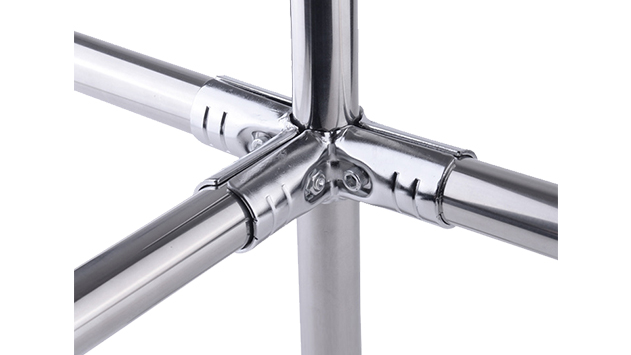
High-Quality vs. Low-Quality: A Side-by-Side Comparison
To make it easier to spot the differences, let's compare a high-quality four way straight lean pipe joint chrome with a low-quality alternative across key criteria:
| Criteria | High-Quality Joint | Low-Quality Joint |
|---|---|---|
| Base Material | Low-carbon steel or alloy steel, 2-3mm wall thickness | Cheap mild steel, 1-1.5mm wall thickness (prone to bending) |
| Chrome Plating | Trivalent chrome, 8-12μm thickness, mirror finish, no bubbles | Hexavalent chrome, <5μm thickness, dull finish, visible pinholes |
| Load Capacity | 500kg+ per connection point | <300kg, may deform under heavy loads |
| Precision Fit | ±0.1mm tolerance on pipe holes; tight, rattle-free fit | ±0.5mm+ tolerance; loose or forced fit |
| Manufacturing | Die-cast, precision-machined, no defects | Sand-cast, rough surfaces, air bubbles |
| Corrosion Resistance | 500+ hours salt spray test (no rust) | <200 hours salt spray test (rusts quickly) |
| Assembly | Tool-free, ergonomic design, "click" for secure fit | Requires tools, rough edges, hard to tighten |
| Longevity | 5-10 years with proper use | 1-2 years before plating wears or joint cracks |

Common Pitfalls: How to Avoid Low-Quality Joints
Even with the above criteria, it's easy to fall for marketing hype or rock-bottom prices. Here are red flags to watch for:
1. "Too Good to Be True" Pricing
Chrome plating, die casting, and precision machining aren't cheap. If a joint costs 50% less than reputable brands, it's likely cutting corners on materials (thinner steel, thinner plating) or manufacturing (sand casting instead of die casting). Remember: a $5 joint that fails in a year costs more than a $10 joint that lasts a decade.
2. Vague Specifications
Reputable suppliers will list detailed specs: plating thickness, load capacity, material grade, manufacturing method. If a product page only says "chrome-plated steel joint" with no numbers, proceed with caution. Ask for test reports or certificates—if the supplier can't provide them, walk away.
3. Poor Packaging
It may seem trivial, but packaging reflects quality control. High-quality joints come in labeled, sturdy boxes or bags to prevent scratches during shipping. Low-quality ones often arrive loose in a generic carton, with plating already chipped from rubbing against other parts.
4. Inconsistent Branding
Check for clear branding: a logo, part number, or supplier name stamped on the joint. Knockoffs often have or misspelled branding, or no branding at all. This makes it hard to trace the manufacturer if issues arise.
Choosing the Right Lean Pipe Supplier: What to Look For
Even the best joint is only as reliable as the lean pipe supplier behind it. When sourcing four way straight lean pipe joint chrome, prioritize suppliers who demonstrate these qualities:
1. Experience and Expertise
Look for suppliers with 5+ years in the lean manufacturing industry. They'll have a deeper understanding of what works in real-world settings and can offer advice on joint selection for specific applications (e.g., heavy-duty vs. lightweight use). Ask about their client base—do they work with reputable manufacturers or only small shops?
2. Quality Control Processes
A good supplier will have strict quality control (QC) at every stage: incoming material inspection, in-process checks during manufacturing, and final testing before shipping. Ask to see their QC documentation or even request a factory tour (virtual or in-person) to observe their processes.
3. Range of Products
Suppliers who offer a full line of lean pipe components—joints, pipes, casters, workbenches—are more likely to have standardized, compatible parts. For example, if you need a workbench e (single deck-without caster) along with four way joints, a supplier with integrated product lines ensures everything fits together seamlessly.
4. Customer Support
Even the best parts may need troubleshooting. Choose a supplier with responsive customer service—they should answer technical questions, help with returns, and offer replacement parts quickly. Read reviews or ask for references to gauge their support quality.
5. Certifications
Look for certifications like ISO 9001 (quality management) or RoHS compliance (for environmentally friendly materials). These indicate a commitment to consistent quality and safety standards.
Real-World Applications: Where High-Quality Joints Shine
To illustrate why quality matters, let's look at a few scenarios where four way straight lean pipe joint chrome plays a starring role:
1. Automotive Assembly Lines
Automotive plants rely on flexible workstations and material racks to keep pace with changing production models. A high-quality four way joint ensures that these structures can be reconfigured quickly (e.g., switching from SUV to sedan parts) without sacrificing stability. For example, a roller track and accessories setup used to move parts along the line needs joints that can withstand constant vibration and heavy loads—low-quality joints here would lead to jams or collapsed tracks.
2. Electronics Manufacturing (ESD Workstations)
In electronics factories, static electricity can damage sensitive components. ESD workstations require grounded lean pipes and joints to dissipate static. High-quality chrome joints with conductive plating ensure a continuous ground path, protecting components from static discharge. Low-quality joints with chipped plating could break this path, risking costly defects.
3. Warehouse Logistics
Warehouses use turnover trolley and rack systems to move goods efficiently. A four way joint in a trolley's frame must support heavy loads while withstanding the bumps and vibrations of being moved across the warehouse floor. A durable joint prevents the trolley from bending or collapsing, reducing the risk of damaged inventory or workplace injuries.
Caring for Your Four Way Straight Lean Pipe Joint Chrome: Maintenance Tips
Even the best joints need a little care to maximize their lifespan. Follow these tips:
- Clean regularly : Wipe joints with a soft cloth and mild detergent to remove oil, dust, or coolant. Avoid abrasive cleaners, which can scratch the chrome plating.
- Lubricate moving parts : If the joint has adjustable screws or rotating components, apply a small amount of machine oil annually to prevent seizing.
- Inspect for wear : Check for chipped plating, loose screws, or bent metal quarterly. replace any joint with visible damage—don't wait for it to fail.
- Avoid over-tightening : Over-torquing the clamping screws can strip threads or crack the joint. Tighten until snug, then add a quarter-turn—no more.
- Store properly : If storing extra joints, keep them in a dry, cool place to prevent rust. Wrap them in acid-free paper to avoid scratches.
Conclusion: Invest in Quality, Reap the Rewards
The four way straight lean pipe joint chrome may be small, but its impact on your lean system's performance is huge. By prioritizing materials like high-grade steel and thick trivalent chrome plating, design features like reinforced corners and precision machining, and manufacturing processes like die casting, you ensure a joint that's strong, durable, and easy to use. Pair this with a reputable lean pipe supplier who values quality control and customer support, and you'll build a lean system that adapts to your needs, reduces downtime, and stands the test of time.
Remember: in lean manufacturing, every component counts. Cutting corners on joints might save a few dollars today, but the cost of replacements, repairs, and lost productivity tomorrow will far outweigh the savings. Choose wisely, and your four way straight lean pipe joint chrome will quietly support your operations for years to come.