- Company Articles
- Products and Technology
- Procurement Guidelines
- How to Identify High-Quality Lean Pipe Clamp Chrome Suppliers

How to Identify High-Quality Lean Pipe Clamp Chrome Suppliers
Related Product
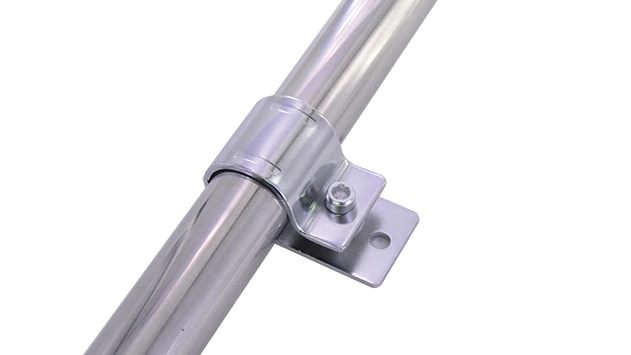
Lean Pipe Clamp Chrome
Lean pipe clamp is used for rack system hang monitor or other panel for workbenck, flowrack in production daily use.
Introduction: The Unsung Hero of Lean Manufacturing
In the fast-paced world of production lines, assembly workshops, and material handling, every component plays a role in keeping operations running smoothly. Among these, lean pipe clamp chrome might not grab headlines, but it's the quiet workhorse that holds lean systems together—quite literally. Whether you're building a sturdy workbench, a flexible flow rack, or a mobile turnover trolley, the quality of your lean pipe clamp chrome directly impacts stability, durability, and ultimately, your team's efficiency.
But here's the challenge: not all suppliers are created equal. Walk into the market, and you'll find a dizzying array of options—some promising "premium quality" at rock-bottom prices, others hiding shoddy materials behind flashy catalogs. Choosing the wrong supplier can lead to loose joints, corroded clamps, and frequent replacements, turning your lean system into a source of frustration rather than a tool for success. So, how do you separate the reliable partners from the rest? This guide breaks down the key steps to identify high-quality lean pipe clamp chrome suppliers, ensuring your lean system stands the test of time.
Understanding Lean Pipe Clamp Chrome: More Than Just a "Clamp"
Before diving into supplier vetting, let's clarify what lean pipe clamp chrome is and why it matters. At its core, this component is a fastening device designed to connect lean pipes (often steel, aluminum, or stainless steel) at various angles, forming structures like workbenches, material racks, or conveyor systems. The "chrome" in its name refers to the chromium plating—a thin layer applied to the surface to enhance corrosion resistance, durability, and a smooth, professional finish.
The Role of Lean Pipe Clamp Chrome in Lean Systems
Lean manufacturing thrives on flexibility and efficiency, and lean pipe clamp chrome is a cornerstone of that philosophy. Unlike fixed, welded structures, these clamps allow you to assemble, disassemble, and reconfigure your setup in minutes. Need to adjust a workbench height? Swap out a flow rack layout? A quality clamp will hold tight during use but release easily when modifications are needed—no special tools, no permanent damage to pipes.
In practical terms, this translates to:
- Reduced downtime during reconfigurations;
- Lower long-term costs by repurposing existing components instead of buying new ones;
- Safer work environments , as stable clamps prevent wobbling shelves or collapsing trolleys.
Pro Tip: Think of lean pipe clamp chrome as the "glue" of your lean system. Just as weak glue fails to hold paper, a subpar clamp will undermine the integrity of even the strongest lean pipe or aluminum profile. Don't skimp here—your team's productivity (and safety) depends on it.

Key Qualities of High-Quality Lean Pipe Clamp Chrome
Not all clamps are built to the same standards. To spot a quality product, you need to look beyond the shiny chrome surface and dig into the details. Here are the critical attributes to prioritize:
1. Material Quality: The Foundation of Durability
The best lean pipe clamp chrome starts with high-grade base material—typically low-carbon steel or stainless steel. Why? Steel offers the tensile strength needed to withstand the pressure of holding heavy loads (think stacks of components on a material rack or tools on a workbench). Avoid clamps made from cheap alloys or thin, flimsy metal—they'll bend or snap under stress.
Then there's the chrome plating itself. A quality plating process involves:
- Proper surface preparation: The steel base is cleaned, degreased, and etched to ensure the chrome adheres evenly;
- Thickness consistency: Look for plating between 0.0005–0.001 inches thick—thick enough to resist scratches but not so thick that it distorts the clamp's shape;
- Uniform coverage: Check for gaps or "pinholes" in the plating, which can lead to rust spots over time.
2. Precision Engineering: A Perfect Fit Every Time
Ever tried to assemble a bookshelf where the screws don't align with the holes? Frustrating, right? The same applies to lean pipe clamp chrome. A well-made clamp should fit standard lean pipe sizes (often 28mm or 30mm diameter) like a glove—no gaps, no wobbling, and no need to force it into place.
This precision matters because loose clamps create unstable structures. For example, a material rack with ill-fitting clamps might tilt when loaded, risking damage to parts or injury to workers. High-quality clamps are engineered with tight tolerances, ensuring they grip the pipe securely and align perfectly with lean pipe joints for a seamless connection.
3. Load Capacity: Built to Handle Real-World Stress
Don't be fooled by vague claims like "heavy-duty." A quality supplier will provide clear load capacity ratings—e.g., "holds up to 50kg per clamp" or "suitable for static loads of 100kg when paired with a 2.0mm stainless steel pipe." These numbers should be backed by testing, not guesswork.
To verify, ask for test reports. Reputable manufacturers will test clamps by applying gradual pressure until failure, then rate them at a safe percentage of that breaking point (usually 50–70%). For example, if a clamp breaks at 200kg, its rated capacity might be 100kg to account for wear and tear over time.
Evaluating the Supplier: Beyond the Product
A great product is only half the equation—the supplier behind it matters just as much. Even the best clamp will let you down if your supplier can't deliver on time, resolve issues, or adapt to your needs. Here's how to assess a supplier's reliability:
1. Manufacturing Expertise: In-House Control = Better Quality
Ask: Does the supplier manufacture clamps in-house, or do they outsource production to third-party factories? In-house manufacturing gives suppliers direct control over quality—from sourcing raw materials to inspecting finished products. Outsourced production, on the other hand, can lead to inconsistencies, as standards vary between factories.
Look for suppliers with dedicated production lines for lean components. Many top lean system suppliers, for example, produce not just clamps but also lean pipe joints, aluminum profiles, and stainless steel pipe series under one roof. This integration ensures component compatibility and a deeper understanding of how clamps perform in real-world systems.
2. Certifications: Proof of Compliance
Certifications are more than just paperwork—they're a signal that the supplier takes quality seriously. Key certifications to look for include:
- ISO 9001: Indicates a robust quality management system (QMS) with processes for monitoring and improving production;
- RoHS Compliance: Ensures the clamp is free from hazardous substances (critical if your products serve industries like electronics or medical devices);
- Material Safety Data Sheets (MSDS): For the base steel and chrome plating, to confirm they meet safety and environmental standards.
A supplier who hesitates to share these documents is a red flag. Transparency here builds trust—don't settle for "we follow standards" without proof.
| Evaluation Criteria | What to Look For | Why It Matters |
|---|---|---|
| Manufacturing Experience | Minimum 5+ years specializing in lean pipe components; references from automotive, aerospace, or electronics industries. | Experienced suppliers understand the unique demands of high-precision environments (e.g., ESD protection for electronics workbenches). |
| Product Range | Offers complementary parts: lean pipe joint, aluminum profile, stainless steel pipe series, and accessories like caster wheels or roller tracks. | Simplifies procurement, reduces shipping costs, and ensures all components work together seamlessly. |
| Customer Support | Responsive team (replies to queries within 24 hours); technical support for custom configurations. | Helps resolve issues quickly and adapt clamps to unique production needs (e.g., non-standard pipe sizes). |
| Lead Time Reliability | Consistent on-time delivery rate (>95% based on customer reviews or case studies). | Prevents production delays caused by missing clamps or last-minute rushes. |
3. Track Record: What Do Other Customers Say?
A supplier's reputation speaks volumes. Start by checking online reviews on platforms like Google, Alibaba, or industry-specific forums. Look for patterns—do multiple customers praise the clamp's durability, or do complaints about rusting after 6 months keep popping up?
Don't stop there. Ask the supplier for references—ideally, customers in your industry. A quick call to a fellow manufacturer can reveal insights you won't find in a sales pitch: "Their clamps held up great during our peak season," or "We had to return a batch due to inconsistent sizing—their replacement was quick, though."
For larger orders, consider a trial run. Order a small batch of clamps and test them in your facility for 3–6 months. Do they still grip tightly? Show signs of corrosion? This real-world test is worth the investment to avoid costly mistakes later.
Red Flags: Warning Signs of a Subpar Supplier
Even with thorough research, some suppliers will try to cut corners. Watch out for these warning signs:
1. Vague Product Specifications
If a supplier's product page lists "chrome-plated steel clamp" without details like base steel thickness, chrome plating thickness, or load capacity, proceed with caution. Reputable suppliers provide granular specs—e.g., "1.5mm Q235 steel base, 0.0008mm chrome plating, 80kg static load capacity."
2. Unrealistically Low Prices
Quality materials and manufacturing cost money. A clamp priced 30% below the market average is likely cutting corners—think thinner steel, minimal chrome plating, or skipped quality checks. Remember: Cheap upfront costs often lead to expensive replacements later.
3. Resistance to Facility Visits or Samples
A supplier who refuses to let you visit their factory or sends "sample only" products that look better than bulk orders is hiding something. Insist on seeing production lines, quality control stations, and storage facilities—you'll quickly spot red flags like messy workspaces, outdated machinery, or unlabeled materials.
4. Inconsistent Communication
If emails take days to reply to, or phone calls go unreturned during the sales process, imagine how slow support will be when you have a critical issue. A reliable supplier prioritizes clear, timely communication—even (especially) when things go wrong.
Practical Steps to Vet a Supplier: From Research to Partnership
Now that you know what to look for, here's a step-by-step plan to find your ideal supplier:
Step 1: Define Your Needs Clearly
Before reaching out to suppliers, outline your requirements:
- Clamp size (to fit your lean pipe diameter);
- Load capacity (static vs. dynamic loads);
- Environmental conditions (indoor/outdoor, humidity, exposure to chemicals);
- Quantity needed (bulk orders vs. small batches);
- Any custom features (e.g., ESD-safe coating, non-slip grips).
Step 2: Shortlist 3–5 Suppliers
Use directories like Alibaba, Thomasnet, or industry trade shows to find suppliers. Filter by certifications (ISO 9001), experience, and product range. Aim for 3–5 candidates to compare—too many, and the process becomes overwhelming.
Step 3: Request Detailed Proposals
Send each shortlisted supplier your requirements and ask for:
- A formal quote with unit price, shipping costs, and minimum order quantity (MOQ);
- Material test reports and certifications;
- Customer references in your industry;
- Lead time estimates for sample orders and bulk production.
Step 4: Test Samples Rigorously
Order samples from your top 2–3 suppliers. Test them for:
- Fit: Attach to your lean pipe joint and lean pipe—does it grip tightly without gaps?
- Durability: Tighten and loosen the clamp 50+ times—does the thread strip or the plating chip?
- Corrosion resistance: Place in a damp environment (e.g., a bathroom) for 2 weeks—any rust spots?
- Load capacity: Gradually add weight until the clamp slips—does it meet the rated capacity?
Step 5: Finalize and Build the Relationship
Once you've chosen a supplier, start with a small order to build trust. Monitor delivery times, product consistency, and support responsiveness. A good supplier will treat even small orders with care, showing they value long-term partnerships over quick sales.
Conclusion: Invest in Quality, Reap the Rewards
Choosing a high-quality lean pipe clamp chrome supplier isn't just about buying a product—it's about investing in your operational efficiency, team safety, and long-term success. By prioritizing material quality, precision engineering, supplier reliability, and clear communication, you'll find a partner who helps your lean system thrive, not just survive.
Remember: The best suppliers aren't just vendors—they're collaborators. They'll listen to your needs, adapt to your challenges, and grow with your business. Take the time to vet them thoroughly, test their products, and trust your instincts. In the end, a little extra effort now will save you countless headaches (and dollars) down the line.
So, go ahead—start your search, ask tough questions, and demand the best. Your lean system (and your team) deserve nothing less.