- Company Articles
- Products and Technology
- Product knowledge
- How to Identify High-Quality Lean Pipe Fixed Clamps: Quality Markers

How to Identify High-Quality Lean Pipe Fixed Clamps: Quality Markers
Related Product
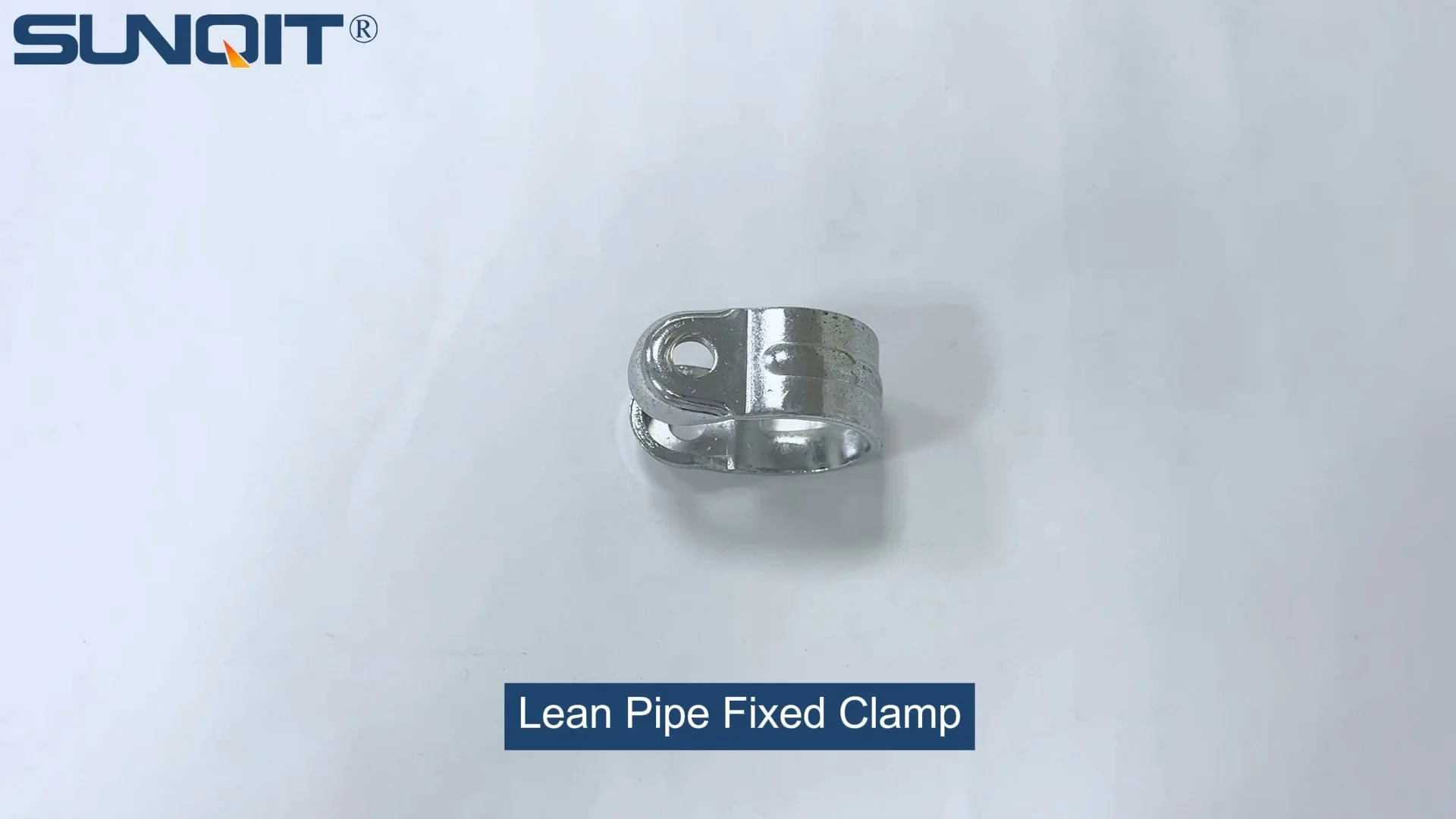
Lean Pipe Fixed Clamp
Lean pipe fixed clamp is used for pipe connector fixing the correct position during workbench flow rack hand trolley assemble work.
In the bustling world of manufacturing and production, where every second counts and efficiency is king, lean systems have become the backbone of modern operations. From the assembly line of a car factory to the packing station of a electronics plant, these systems rely on a network of components working in harmony—conveyors moving parts seamlessly, workbenches holding tools at the perfect height, and flow racks keeping materials within arm's reach. Yet, among all these visible elements, there's an unsung hero that holds the entire setup together: the lean pipe fixed clamp. These small, unassuming devices might not grab headlines, but their quality can make or break the reliability of your entire lean system. A weak clamp can loosen under vibration, causing a workbench to wobble or a material rack to shift; a poorly made one can snap under load, bringing production to a grinding halt. So, how do you separate the durable, trustworthy clamps from the flimsy, failure-prone ones? Let's dive into the key quality markers that every buyer, whether a small workshop owner or a procurement manager at a large facility, should know.
Why Quality Lean Pipe Fixed Clamps Matter More Than You Think
Before we jump into the specifics of identifying high-quality clamps, let's take a moment to understand why skimping on these components is a risky game. Imagine a busy production floor where a lean pipe workbench is used to assemble delicate circuit boards. The workbench is held together by dozens of fixed clamps, each securing the aluminum or steel pipes that form its frame. One morning, during a peak production rush, a clamp near the edge of the workbench—already weakened by months of subpar material and poor design—gives way. The bench tilts, sending tools crashing to the floor and damaging half-assembled boards worth hundreds of dollars. Worse, the downtime to repair the bench and replace the damaged parts eats into the day's output, costing the company thousands in lost revenue. This isn't just a hypothetical scenario; it's a reality for businesses that overlook clamp quality.
Beyond the financial hit of downtime, there's also the safety risk. A failed clamp can lead to collapsed structures, falling materials, or even injuries to workers. In industries where compliance with safety standards is non-negotiable, using low-quality clamps could also result in fines or legal issues. And let's not forget long-term costs: cheap clamps may save you a few dollars upfront, but they'll need frequent replacement, adding up to higher expenses over time. High-quality clamps, on the other hand, last years, maintain their grip through constant use, and keep your lean system running smoothly. So, investing in quality here isn't just about avoiding headaches—it's about protecting your bottom line, your team, and your reputation.
Quality Marker 1: Material Composition—The Foundation of Durability
The first clue to a clamp's quality lies in the material it's made from. Lean pipe fixed clamps are typically constructed from metal, but not all metals are created equal. High-quality clamps are almost always made from high-grade steel or stainless steel, chosen for their strength, rigidity, and resistance to wear. Let's break this down: high-grade steel, often labeled as "carbon steel" or "alloy steel," has a higher tensile strength (the maximum stress it can withstand before breaking) than low-grade alternatives. For example, a clamp made from SAE 1045 steel (a common high-carbon steel) can handle more load without bending than one made from cheap mild steel, which might warp under even moderate pressure.
Stainless steel is another top choice, especially in environments where moisture, chemicals, or corrosion are concerns—think food processing plants or pharmaceutical facilities. Its chromium content forms a protective oxide layer, preventing rust and degradation over time. In contrast, low-quality clamps often use "mystery metals"—generic alloys with unknown compositions, often mixed with impurities like lead or zinc to cut costs. These materials are prone to brittleness; they might feel solid at first, but after a few months of temperature changes or stress, they can crack or snap without warning.
How can you check the material? Start by asking the lean pipe supplier for a material certificate. Reputable suppliers will happily provide documentation proving the steel grade or stainless steel type (e.g., 304 or 316 stainless). If a supplier hesitates or can't produce this, it's a red flag. You can also perform a simple magnet test: most stainless steels are non-magnetic, while carbon steel is magnetic. However, note that some low-quality stainless steels (like 400-series) are magnetic, so this isn't foolproof—but it's a quick initial check. For a more hands-on approach, compare the weight of two clamps of the same size: high-quality steel is denser, so a heavier clamp is often a sign of better material (though this can vary with design, so use it as a secondary indicator).
Quality Marker 2: Design—Engineered for Grip and Longevity
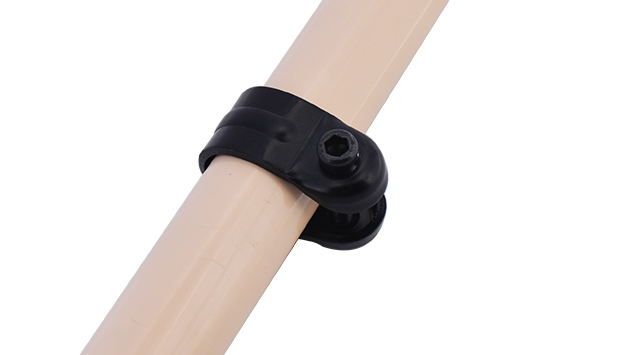
Even the best materials can be let down by poor design. A well-designed lean pipe fixed clamp isn't just a hunk of metal; it's engineered to distribute pressure evenly, grip the pipe securely, and withstand the forces of daily use. Let's break down the design features that matter most.
First, the clamping mechanism. High-quality clamps use a design that creates a "uniform grip" around the lean pipe. This often means a curved or contoured inner surface that matches the pipe's diameter, ensuring that when tightened, the clamp presses against the pipe at multiple points rather than just one. This prevents the pipe from slipping or rotating, even when the system is subject to vibration (a common issue in production environments with heavy machinery). In contrast, low-quality clamps often have flat or poorly shaped inner surfaces, which concentrate pressure on a single spot. Over time, this can dent the pipe or cause the clamp to loosen as the material deforms.
Next, the bolt or fastener. The part that tightens the clamp—usually a bolt or screw—is critical. High-quality clamps use high-tensile bolts, often with a hexagonal head (for easy tightening with a wrench) and a thread design that resists stripping. Look for bolts labeled with "8.8" or "10.9" (tensile strength ratings), which indicate they can handle higher torque without breaking. Cheap clamps, on the other hand, may use soft, low-grade bolts that strip easily when tightened, or Phillips-head screws that wear out after a few uses. Imagine trying to re-tighten a clamp and having the screw head strip—now you're stuck with a loose connection and no easy way to fix it.
Another design feature to watch is the presence of reinforcement. Many high-quality clamps have gussets (triangular metal plates) at stress points, like where the clamp body meets the bolt hole. These gussets distribute force and prevent the clamp from bending under heavy loads. Low-quality clamps often skip this step, leaving thin, weak areas that are prone to cracking. For example, a clamp used to secure a heavy material rack b (3 row and 3 floor) will experience constant downward pressure; without reinforcement, the clamp's body could bow over time, weakening the entire rack.

Quality Marker 3: Manufacturing Precision—The Devil in the Details
Even with the right material and design, a clamp is only as good as the manufacturing process that creates it. High-quality clamps are made with precision, ensuring consistency, tight tolerances, and smooth finishes. Let's explore what this looks like in practice.
Tolerances are a key indicator. Tolerance refers to the allowable variation in size—for example, a clamp designed to fit a 28mm diameter lean pipe should have an inner diameter of 28mm ± 0.1mm. If the tolerance is too loose (e.g., ±0.5mm), the clamp might be too loose on the pipe, leading to slippage; if it's too tight, it could crack when forced onto the pipe. High-quality manufacturers use CNC (Computer Numerical Control) machines to cut and shape clamps, which produce consistent results with tolerances as tight as ±0.05mm. Low-quality clamps, made with manual tools or outdated machinery, often have wild variations—one clamp might fit perfectly, the next might be too loose or too tight. To check this, measure the inner diameter of several clamps from the same batch with a caliper; if the measurements vary by more than 0.2mm, precision is lacking.
Weld quality is another telltale sign, especially for clamps with welded components (like gussets or bolt tabs). High-quality welds are smooth, uniform, and free of gaps, porosity (tiny holes), or spatter (random metal droplets). A good weld should blend into the surrounding metal, with no sharp edges or cracks. In contrast, low-quality welds are often rough, with visible gaps or uneven beads—these weak points can fail under stress. Run your finger along the weld (carefully, to avoid cuts); a smooth, consistent weld is a sign of skill and care. You can also tap the weld gently with a hammer: a solid weld will sound "ringing," while a weak one will sound dull or hollow (though this takes practice to distinguish).
Surface finish matters too. High-quality clamps often have a coating or plating to protect against corrosion and improve grip. Common finishes include zinc plating (shiny silver), powder coating (matte or textured colors), or nickel plating (dull silver). These finishes should be even, with no bubbles, chips, or bare spots. A rough or uneven finish isn't just unsightly—it can trap moisture, leading to rust, or cause the clamp to slip if the surface is too smooth. Low-quality clamps may skip plating altogether, leaving bare metal that rusts quickly, or use a thin, cheap coating that flakes off after a few months.

Quality Marker 4: Load Capacity—Proven, Not Just Promised
Every lean pipe fixed clamp comes with a "rated load capacity"—the maximum weight it's supposed to handle. But as any seasoned manufacturer knows, not all ratings are created equal. High-quality clamps have their load capacities tested and certified, while low-quality ones often inflate the numbers to make their products seem stronger than they are. So, how do you verify that a clamp can actually handle the load it claims?
Start by looking for third-party certification. Reputable manufacturers will have their clamps tested by independent labs, which issue reports confirming the breaking load (the weight at which the clamp fails) and the safe working load (usually 1/4 to 1/5 of the breaking load, to account for safety margins). For example, a clamp with a breaking load of 500kg might have a safe working load of 100kg. If a manufacturer only lists the breaking load without a safe working load, be wary—they might be trying to make the clamp seem stronger than it is for daily use.
If certification isn't available, you can perform a simple load test (though this is destructive, so only do it with a clamp you're willing to sacrifice). Secure the clamp to a pipe, attach a weight (like a bucket filled with water) to the end, and gradually add more weight until the clamp deforms or fails. Compare the result to the rated capacity; if it breaks at 50% of the claimed load, it's clearly subpar. For a non-destructive check, look for signs of deformation under normal use. After installing a clamp and applying a known load (e.g., placing a 50kg box on a workbench secured by the clamp), check if the clamp has bent or the pipe has slipped. If so, the load capacity is overstated.
To illustrate the difference between high and low quality, let's look at a comparison table of load test results for two clamps of the same size (1.5mm thick steel, designed for 28mm pipes):
| Test | High-Quality Clamp | Low-Quality Clamp |
|---|---|---|
| Claimed Safe Working Load | 120kg | 150kg (inflated) |
| Actual Breaking Load (Lab Tested) | 600kg (5x safe load) | 200kg (1.3x claimed safe load) |
| Deformation Under 120kg Load | No visible deformation after 24 hours | Bends 2mm after 1 hour; slips 5mm after 4 hours |
| Vibration Test (1000 cycles at 5Hz) | Remains tight; no loosening | Loosens by 15% after 500 cycles |
As the table shows, the low-quality clamp not only fails to meet its claimed capacity but also deforms and loosens under realistic conditions—exactly the kind of performance that leads to downtime and safety risks.
Quality Marker 5: Compatibility—Fitting Seamlessly into Your Lean System
A clamp might be made of the best steel and have a flawless design, but if it doesn't work with your existing lean pipe joint or pipe size, it's useless. High-quality clamps are designed with compatibility in mind, fitting standard pipe sizes and working with common joint types. Let's explore what this means in practice.
First, pipe size compatibility. Lean pipes come in various diameters, from 20mm to 32mm, with 28mm being the most common. A high-quality clamp will clearly state the pipe size it's designed for (e.g., "fits 28mm OD lean pipe") and will have an inner diameter that matches standard pipe tolerances. Low-quality clamps often use vague labels like "universal fit" or "fits most pipes," which usually means they're designed to fit a range of sizes poorly. For example, a "universal" clamp might be too loose on a 25mm pipe and too tight on a 30mm pipe, leading to instability.
Joint compatibility is another consideration. Lean pipe systems use various joint types, from fixed 90° joints to swivel joints that allow for adjustability. A fixed clamp should work with the joint style you're using—for example, if you're using internal rotatory aluminum joints, the clamp should not interfere with the joint's rotation or weaken its connection. High-quality clamp manufacturers often provide compatibility charts, listing which joints and pipe types their clamps work with. If a clamp doesn't come with this information, ask the supplier for guidance; if they can't confirm compatibility, it's better to look elsewhere.
Installation ease is also part of compatibility. A good clamp should be easy to install with standard tools (like a wrench or hex key) and shouldn't require modification (e.g., drilling extra holes or filing down edges) to fit. Low-quality clamps often have misaligned bolt holes or awkward shapes that make installation a struggle—wasting time and increasing the risk of improper installation (which can lead to failure down the line).
Quality Marker 6: Supplier Reputation—Trust the Experts
Finally, don't overlook the reputation of the lean pipe supplier. A supplier with a long history of providing quality components is far more likely to deliver reliable clamps than a fly-by-night company offering rock-bottom prices. So, how do you vet a supplier?
Start by checking their track record. How long have they been in business? A supplier with 10+ years of experience has likely weathered market changes and built a reputation on quality. Look for customer reviews and testimonials, especially from businesses in your industry. A quick search on Google or industry forums (like Reddit's r/manufacturing) can reveal patterns: if multiple customers mention "clamps failing after 6 months" or "poor customer service," take note. Conversely, reviews praising "durable clamps" or "responsive support" are good signs.
Certifications and compliance are another clue. Reputable suppliers often hold ISO 9001 certification (for quality management systems) or comply with industry standards like ASME (American Society of Mechanical Engineers) or DIN (Deutsches Institut für Normung). These certifications require regular audits, ensuring consistent quality. You can also ask for references: a confident supplier will put you in touch with current customers who can vouch for their products.
Customer support is the final piece of the puzzle. A good supplier doesn't just sell you a clamp—they help you choose the right one for your needs, answer technical questions, and stand behind their products with a warranty. If a supplier offers a warranty of at least 1 year (or longer), it shows they believe in their clamps' durability. In contrast, suppliers who offer no warranty or a vague "satisfaction guarantee" are less likely to help if a clamp fails.
Conclusion: Invest in Quality, Reap the Rewards
Lean pipe fixed clamps may be small, but their impact on your lean system's reliability, safety, and efficiency is enormous. By focusing on material, design, manufacturing precision, load capacity, compatibility, and supplier reputation, you can identify clamps that will stand the test of time—reducing downtime, lowering replacement costs, and keeping your production line running smoothly. Remember, the cheapest clamp isn't a bargain if it fails; the true value lies in a clamp that works quietly, reliably, and indefinitely, letting you focus on what matters most: growing your business.
So, the next time you're sourcing clamps, take the time to inspect the material certificate, check the welds, test the grip, and vet the supplier. Your lean system—and your bottom line—will thank you.