- Company Articles
- Products and Technology
- Product knowledge
- How to Identify High-Quality One Side Rotatory Chrome Parallel Lean Pipe Joints

How to Identify High-Quality One Side Rotatory Chrome Parallel Lean Pipe Joints
Related Product
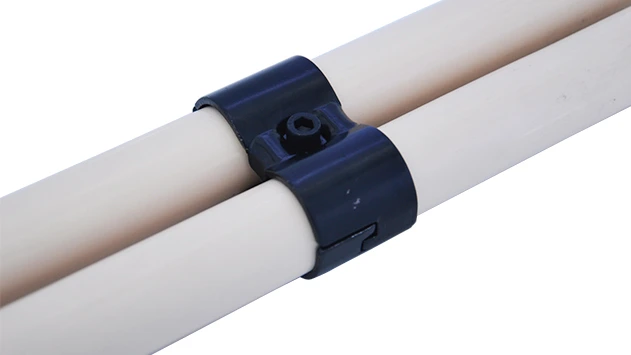
Parallel Lean Pipe Joint
Parallel lean pipe joint used for 2 pcs 28MM lean pipe connection in parallel direction to enhance frame structure, usually for heavy payload requirement for workbench. flow rack, hand trolley.
Introduction: The Unsung Hero of Lean Manufacturing
In the fast-paced world of manufacturing and production, every component in your workflow matters—even the smallest ones. If you've ever walked through a well-organized factory floor, you've probably admired the efficiency of workbenches, flow racks, and conveyor systems that seem to glide with purpose. What you might not notice, though, is the backbone holding these systems together: lean pipe joints. Specifically, the one side rotatory chrome parallel lean pipe joint is a quiet workhorse that keeps operations running smoothly, enabling flexibility and adaptability in lean systems.
But here's the thing: not all lean pipe joints are created equal. A low-quality joint can throw a wrench into your entire process—causing jams, reducing load capacity, or even compromising safety. That's why knowing how to spot a high-quality one side rotatory chrome parallel lean pipe joint is critical. Whether you're a production manager upgrading your facility, a procurement specialist sourcing components, or a small business owner building your first workbench, this guide will walk you through the key factors that separate the best joints from the rest. We'll dive into materials, design, testing, and even how to vet suppliers, ensuring you invest in joints that stand the test of time.
Understanding the Basics: What Is a One Side Rotatory Chrome Parallel Lean Pipe Joint?
Before we jump into quality checks, let's make sure we're on the same page about what these joints actually do. A one side rotatory chrome parallel lean pipe joint is a specialized connector designed to link lean pipes (also known as "lean tubes") in parallel structures—think workbench frames, material racks, or conveyor rails. The "one side rotatory" feature means one end of the joint can rotate, allowing for adjustability in angles or positioning without disassembling the entire structure. The "chrome" coating adds durability and corrosion resistance, while "parallel" refers to its ability to keep pipes aligned side-by-side, ensuring stability in horizontal or vertical setups.
These joints are part of a broader ecosystem of lean pipe and accessories , which includes everything from pipes and clamps to casters and workbench surfaces. In lean manufacturing, where efficiency and adaptability are king, these joints shine because they let you reconfigure systems quickly. Need to adjust a workbench height? Rotate the joint. Expand a flow rack to accommodate new products? Add a few more pipes and joints. But this flexibility only works if the joint itself is reliable. A flimsy joint will wobble, slip, or fail under load—turning your "lean" system into a clunky, inefficient mess.

Key Feature #1: Material Quality—The Foundation of Durability
The first clue to a high-quality joint lies in its materials. Let's break this down into two parts: the base metal and the chrome plating.
Base Metal: Strength Starts Here
Most one side rotatory chrome parallel lean pipe joints are made from steel, though some manufacturers use aluminum alloys (more on aluminum lean pipe systems later). For steel joints, look for high-carbon steel or low-alloy steel—these materials offer the best combination of strength and ductility. Avoid joints made from cheap, low-grade steel, which can bend or crack under even moderate loads.
How can you tell? Ask the supplier for material certifications. Reputable suppliers will provide documentation like material test reports (MTRs) that confirm the steel grade. If a supplier hesitates to share this info, that's a red flag. You can also perform a simple magnet test: high-carbon steel is magnetic, while aluminum (used in some lightweight joints) is not. But remember, magnetism alone isn't proof of quality—you still need to verify the steel grade.
Chrome Plating: More Than Just Shine
The chrome coating isn't just for aesthetics; it's a protective barrier against rust, corrosion, and wear. High-quality joints have a thick, uniform chrome layer—typically 0.0005 to 0.001 inches thick. To check this, inspect the joint closely under good light. The plating should be smooth, with no bubbles, pits, or discoloration. Run your finger along the surface— it should feel consistent, not rough or patchy.
Low-quality joints often skimp on plating thickness, leading to premature rust, especially in humid or industrial environments. A quick test: rub a damp cloth on the joint. If the cloth picks up any silver or gray residue, the plating is likely thin or poorly adhered. Over time, this will wear off, exposing the steel to corrosion and weakening the joint.

Key Feature #2: Structural Integrity—Does It Hold Up Under Pressure?
A joint might look good, but if it can't handle the weight or stress of daily use, it's useless. Structural integrity is all about how well the joint is designed and manufactured to withstand real-world conditions.
Load Capacity: Know Your Limits
Every joint has a maximum load rating, which is the amount of weight it can support without bending or failing. For one side rotatory chrome parallel lean pipe joints, this rating typically ranges from 50 to 200 pounds, depending on size and design. But don't just take the supplier's word for it—ask for test data. Reputable manufacturers test their joints in labs, simulating years of use with machines that apply static and dynamic loads.
For example, a good joint should handle 1.5 times its rated load for 10,000 cycles (simulating repeated use) without permanent deformation. If a supplier claims a joint can hold 100 pounds but can't show test results, proceed with caution. In practice, you can test a sample joint by clamping it to two pipes and gradually adding weight until it bends—though this is a last resort (and may void warranties, so ask first).
Rotation Smoothness: No Sticking, No Wobbling
The "one side rotatory" feature is what makes these joints flexible, so the rotation mechanism must work flawlessly. A high-quality joint will rotate smoothly, with no sticking or jerking. There should be slight resistance—enough to keep the joint in place when you let go—but not so much that you need tools to adjust it.
To test this, attach the joint to two pipes (use scrap pipes if you're testing samples) and rotate the movable end through its full range of motion. It should move evenly, without catching. If you hear grinding or feel unevenness, the internal components (like bearings or washers) are likely low-quality. Wobbling is another issue: when the joint is locked in place, there should be no side-to-side movement. A wobbly joint will cause pipes to misalign, leading to jams in flow racks or unstable workbenches.
Key Feature #3: Design Precision—The Devil in the Details
Great joints aren't just strong—they're smartly designed. Precision engineering ensures the joint fits perfectly with standard lean pipes (usually 28mm or 30mm in diameter) and works seamlessly with other accessories.
Pipe Fit: Tight but Not Too Tight
The joint's pipe sockets (the holes where the lean pipes insert) should have a precise diameter. For 28mm pipes, the socket should measure 28.1–28.3mm—tight enough to hold the pipe securely but loose enough to allow easy assembly. If the socket is too small, you'll struggle to insert the pipe; too large, and the pipe will rattle, leading to instability.
Check for burrs or rough edges inside the socket. High-quality joints are deburred and polished, so pipes slide in smoothly. Low-quality joints often have sharp edges that can scratch pipes or even cut hands during assembly—safety first!
Locking Mechanism: Secure and Reliable
Most one side rotatory joints use a locking screw or lever to hold the rotated position in place. This mechanism should be easy to operate but firm enough to prevent accidental movement. Test it by rotating the joint to different angles, locking it, and then trying to move it with gentle pressure. It shouldn't budge. If the lock slips or feels loose, the joint isn't suitable for high-stress applications.
Also, inspect the screw or lever itself. Look for high-quality materials like stainless steel (to prevent rust) and a well-machined thread. A cheap plastic lever or a screw with stripped threads is a sign of corner-cutting.
Key Feature #4: Manufacturing Standards—Precision Matters
Even the best materials can be ruined by shoddy manufacturing. High-quality joints are made with precision machining, consistent welding (if applicable), and strict quality control checks.
Machining: Smooth, Consistent, and Accurate
The best joints are CNC-machined, which ensures every part is identical. Look for uniform dimensions: the length, width, and socket diameter should be the same across multiple joints. You can measure with a caliper—if two joints from the same batch have varying dimensions, that's a sign of manual or low-precision machining.
Pay attention to the rotation mechanism's tolerances. The gap between the fixed and rotating parts should be minimal—no more than 0.1mm. A larger gap causes wobbling and reduces stability. Again, a caliper can help here: measure the gap at different points; it should be consistent all around.
Welding: Strong and Seamless (If Applicable)
Some joints have welded components, like reinforcing brackets or socket extensions. High-quality welds are smooth, uniform, and free of cracks, porosity (tiny holes), or spatter (metal droplets). Run your finger over the weld— it should feel flush with the surrounding metal. A rough, uneven weld is not just unsightly; it's a weak point that can fail under stress.
If you're unsure, ask the supplier about their welding processes. TIG (tungsten inert gas) welding is preferred for precision joints, as it produces clean, strong welds. Avoid joints with MIG (metal inert gas) welds that look messy—this often indicates rushed production.
How to Inspect a Joint Before You Buy: A Step-by-Step Guide
Now that you know what to look for, let's put it all together with a practical inspection checklist. Always ask suppliers for samples—most will send 1–2 joints for testing (you may have to pay a small fee, but it's worth it).
- Visual Inspection: Check for chrome plating uniformity (no bubbles, pits, or discoloration). Inspect for burrs, sharp edges, or uneven machining. Ensure welds (if present) are smooth and crack-free.
- Fit Test: insert a standard lean pipe into the socket. It should slide in with slight resistance and sit snugly, with no wobbling.
- Rotation Test: Rotate the movable end through its full range. It should move smoothly, with no sticking or grinding. Lock it in place and try to move it— it should stay put.
- Load Test: Clamp the joint between two fixed pipes and hang weights (start with 50% of the rated load, then increase) to check for bending or deformation. If you don't have equipment, ask the supplier for video of load testing.
- Certification Check: Request material certifications, plating thickness reports, and load test data. Verify that the supplier's claims match the documentation.
High-Quality vs. Low-Quality: A Comparison Table
| Feature | High-Quality Joint | Low-Quality Joint |
|---|---|---|
| Base Material | High-carbon or low-alloy steel; certified with MTRs | Low-grade steel or unknown alloys; no certifications |
| Chrome Plating | 0.0005–0.001 inch thickness; uniform, no bubbles/pits | Thin (<0.0003 inches); patchy, with visible defects |
| Load Capacity | 50–200 lbs (rated); test data available | Unrated or overstated; no test data |
| Rotation | Smooth, no sticking; locks securely | Jerky or stiff; lock slips under pressure |
| Machining | CNC-machined; uniform dimensions, tight tolerances | Manual machining; inconsistent sizing, large gaps |
| Supplier Support | Provides certifications, test data, and samples | Hesitates to share info; no sample policy |
Choosing the Right Supplier: Beyond the Joint Itself
Even the best joint design is useless if the supplier can't deliver consistently. When evaluating a lean pipe supplier , look for these traits:
Experience and Expertise
How long has the supplier been in business? A company with 10+ years of experience is more likely to understand the nuances of lean pipe systems than a new startup. Ask about their client base—do they work with reputable manufacturers or industries with strict quality standards (like automotive or aerospace)? This is a good indicator of their reliability.
Quality Control Processes
Reputable suppliers have rigorous QC checks at every stage: incoming material inspection, in-process testing (during machining/welding), and final inspection before shipping. Ask to see their QC checklist or visit their facility if possible. A supplier that's transparent about their processes is more likely to produce high-quality joints.
Customer Service and Support
What happens if a joint fails? A good supplier will offer warranties (typically 1–5 years) and responsive customer support. Avoid suppliers with vague warranty terms or unresponsive sales teams. You want a partner who stands behind their products, not just a vendor looking to make a quick sale.
Real-World Impact: Why Quality Joints Save You Money
It's easy to think, "Why pay more for a joint? They all look the same." But in reality, low-quality joints cost you more in the long run. Here's how:
- Downtime: A failed joint can halt production while you replace it. For a factory running 24/7, even an hour of downtime costs thousands of dollars.
- Replacement Costs: Cheap joints need to be replaced frequently—every 6–12 months, in some cases. High-quality joints last 5+ years, so the upfront cost is offset by lower replacement expenses.
- Safety Risks: A joint that bends or breaks can cause equipment damage or injuries, leading to workers' comp claims, fines, or legal issues.
- Inefficiency: Wobbly joints make workbenches and flow racks unstable, slowing down workers who have to adjust or fix things constantly.
Consider this example: A small electronics manufacturer switched from low-quality joints to high-quality one side rotatory chrome parallel lean pipe joints. Within a year, they reduced downtime by 30%, cut replacement costs by 50%, and saw a 15% increase in worker productivity. The initial investment in better joints paid for itself in just six months.
Conclusion: Invest in Quality, Reap the Rewards
One side rotatory chrome parallel lean pipe joints might seem like small components, but they play a huge role in keeping your lean manufacturing system running efficiently. By focusing on material quality, structural integrity, design precision, and supplier reliability, you can identify joints that will stand up to the demands of daily use—saving you time, money, and headaches down the line.
Remember, the goal of lean manufacturing is to eliminate waste, and low-quality joints are a hidden source of waste: waste from downtime, waste from replacements, waste from inefficiency. By choosing high-quality joints, you're not just buying a component—you're investing in the long-term success of your operation.
So the next time you're sourcing lean pipe joints, take the time to inspect, test, and verify. Your production line (and your bottom line) will thank you.