- Company Articles
- Products and Technology
- Product knowledge
- How to Identify High-Quality Turning Angle Code 3030 Products

How to Identify High-Quality Turning Angle Code 3030 Products
Related Product
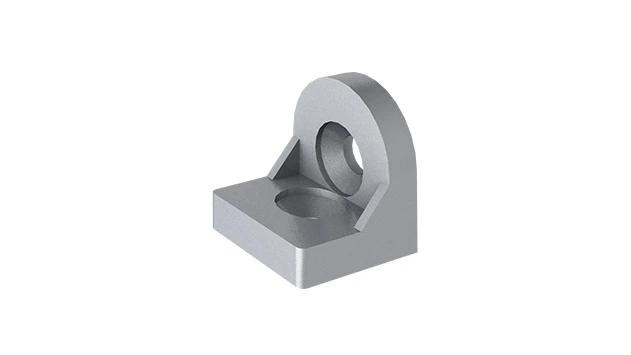
Turning Angle Code 3030
The turning angle aluminum profile connector provides a 90 degree hidden corner connection. 3030 it is means this size is used for 30 series aluminum profile.The corner code comes with set screws that allow for quick, easy connections.
If you've ever walked through a manufacturing facility, warehouse, or even a workshop, you've probably seen structures like workbenches, material racks, or assembly lines that seem to fit together with seamless precision. Behind that precision often lies a small but critical component: the turning angle code 3030. These unassuming connectors play a starring role in holding together 3030 aluminum profiles—the backbone of countless lean system setups, from production workstations to turnover trolleys. But not all turning angle codes are created equal. A flimsy, low-quality code can turn a sturdy workbench into a wobbly hazard, while a well-made one ensures stability, safety, and longevity. In this guide, we'll break down how to spot the difference, so you can invest in angle codes that keep your operations running smoothly.
Why Turning Angle Code 3030 Matters in Your Lean System
Let's start with the basics: What
is
a turning angle code 3030? Simply put, it's a specialized connector designed to join 3030 aluminum profiles at 90-degree angles (and sometimes other angles, depending on the design). Think of it as the "cornerstone" of aluminum profile structures. Whether you're building a material rack B (3 row and 3 floor), a workbench E (single deck-without caster), or a lightweight assembly line, these angle codes are what keep the vertical and horizontal profiles locked together. Without them, your structure is just a pile of aluminum tubes.
But here's the catch: not all angle codes do this job equally well. A high-quality turning angle code 3030 doesn't just "hold" profiles together—it
integrates
them into a unified, load-bearing system. It resists torque, withstands vibrations from daily use, and maintains its grip even when exposed to dust, humidity, or temperature changes. On the flip side, a low-quality code? It might loosen after a few weeks, bend under moderate weight, or fail to align properly with the 3030 aluminum profile in the first place. And in a busy production environment, that's not just an inconvenience—it's a safety risk. Imagine a material rack loaded with heavy components suddenly shifting because a weak angle code gave way. The consequences could range from damaged inventory to workplace injuries.
The Cost of Cutting Corners: Risks of Low-Quality Angle Codes
You might be tempted to opt for cheaper turning angle code 3030 options to save a few dollars upfront. After all, how different can two metal connectors really be? The answer: more different than you'd think. Let's walk through a common scenario. Suppose a small manufacturer buys a batch of low-cost angle codes to build a set of workbenches for their assembly line. At first, everything seems fine. The workbenches go up, tools are placed on them, and production starts. But within a month, the legs of the workbenches begin to wobble. A closer look reveals that the angle codes have started to deform—their holes no longer align perfectly with the 3030 aluminum profile, and the bolts are slipping loose. The team has to stop production to tighten the bolts, costing time. A few months later, one workbench collapses entirely under the weight of a heavy tool, damaging the tool and requiring the workbench to be rebuilt from scratch. What started as a "savings" ends up costing more in repairs, downtime, and replacement parts.
Low-quality angle codes often suffer from three critical flaws: poor material quality, shoddy manufacturing precision, and inadequate testing. They might be made from recycled or low-grade aluminum that lacks tensile strength, or their threading could be uneven, leading to loose connections. Over time, these flaws compound, turning minor annoyances into major problems. In contrast, high-quality angle codes are built to last, reducing maintenance costs and ensuring your structures stay safe and functional for years.

Key Factors to Evaluate When Shopping for Turning Angle Code 3030
1. Material Composition: The Foundation of Durability
The first thing to check when evaluating a turning angle code 3030 is the material it's made from. Most high-quality angle codes are crafted from 6061-T6 aluminum alloy—a material prized for its strength, corrosion resistance, and lightweight properties. Why 6061-T6? This alloy undergoes heat treatment (the "T6" designation) that enhances its mechanical properties, making it 20-30% stronger than untreated aluminum. It's also naturally resistant to rust, which is crucial if your angle codes will be used in humid environments or near liquids.
So how do you verify the material? Start by asking the supplier for a material certificate. Reputable manufacturers will provide documentation proving the alloy grade and heat treatment process. If a supplier hesitates or can't provide this, that's a red flag. You can also perform a simple "weight test": 6061-T6 aluminum has a specific density, so a high-quality angle code should feel solid but not overly heavy. Low-quality codes, often made from cheaper alloys or even plastic composites, may feel unusually light or brittle. Another trick: run a magnet over the surface. Aluminum is non-magnetic, so if the magnet sticks, the code likely contains iron or steel impurities—another sign of poor quality.
2. Manufacturing Precision: Tolerances That Make a Difference
Even the best material can be ruined by sloppy manufacturing. Turning angle code 3030 products rely on precise dimensions to function correctly, especially when paired with 3030 aluminum profiles. The holes for bolts, the angle of the "corner," and the thickness of the metal all need to meet tight tolerances. For example, the bolt holes should align perfectly with the T-slots on a 3030 aluminum profile—if they're off by even 0.5mm, you'll struggle to insert bolts, and the connection will never feel secure.
To check precision, start with a visual inspection. High-quality angle codes will have clean, burr-free edges. The corners should be sharp and consistent (no rounded or uneven edges), and the holes should be drilled straight, with no rough or chipped edges around the openings. You can also use a digital caliper to measure key dimensions: the thickness of the metal (most quality codes are 2-3mm thick), the distance between bolt holes, and the angle of the bend (it should be exactly 90 degrees for standard codes). If you have a sample 3030 aluminum profile on hand, test-fit the angle code. It should slide into place easily, with no gaps between the code and the profile. If you have to force it or if there's noticeable play, the tolerances are too loose.
3. Load-Bearing Capacity: Beyond the Numbers
Load-bearing capacity is often listed in product specs, but don't take those numbers at face value. A low-quality turning angle code 3030 might claim to support 500kg, but in reality, it could fail at half that weight. High-quality codes, on the other hand, are tested under real-world conditions to ensure they meet or exceed their rated capacity. When evaluating load capacity, look for suppliers who provide test reports from third-party labs. These reports should detail how the code was tested (e.g., static vs. dynamic loads) and at what point it started to deform or fail.
It's also important to consider how the angle code works with other components. For example, when building a heavy-duty structure like a material rack B (3 row and 3 floor), the angle code doesn't bear weight alone—it works alongside gusset alp 3030 brackets, which reinforce the corners. A high-quality angle code will distribute weight evenly across the profile and the gusset, preventing stress concentrations. Low-quality codes, however, may bend or crack under load, even if the gusset is high-quality, because they can't transfer weight effectively.
4. Compatibility: Fitting Seamlessly with 3030 Aluminum Profile and Accessories
A turning angle code 3030 is only as good as its ability to work with other components in your system. The most critical compatibility check is with the 3030 aluminum profile itself. The code should fit snugly around the profile's edges, with no gaps that could cause movement or noise. The bolt holes should align perfectly with the profile's T-slots, allowing for easy installation with standard bolts or T-nuts. If the holes are misaligned, you'll end up using extra washers or forcing bolts into place, which weakens the connection over time.
Compatibility also extends to accessories like the 3030 aluminum profile end cap. The end cap fits over the end of the aluminum profile to protect against sharp edges and debris, but it should also work with the angle code. A high-quality angle code will have a design that accommodates the end cap without interfering with the connection—for example, the code's edges won't overlap with the end cap, preventing bulges or uneven surfaces. Low-quality codes, with their imprecise dimensions, may stick out past the profile or leave gaps where the end cap should fit, creating a sloppy, unprofessional look and reducing structural integrity.
5. Surface Finish: More Than Just Aesthetics
At first glance, surface finish might seem like a purely cosmetic concern, but it's actually a key indicator of quality. High-quality turning angle code 3030 products typically have an anodized finish—a process that coats the aluminum with a protective oxide layer, enhancing corrosion resistance and durability. Anodized finishes are smooth, uniform, and free from blemishes like scratches, dents, or discoloration. They also come in consistent colors (often silver or black), which helps with brand uniformity if you're building multiple structures.
In contrast, low-quality angle codes may have a painted finish instead of anodized. Paint chips easily, exposing the underlying aluminum to rust and corrosion. You might also notice uneven coloring, drips, or bubbles in the paint—signs of rushed or low-quality finishing processes. To test the finish, run a fingernail firmly across the surface. A high-quality anodized finish will resist scratches, while paint or a cheap coating will chip or peel. You can also check for corrosion resistance by placing a drop of water on the surface and letting it sit for an hour. If the water beads up and the surface remains unchanged, the finish is good; if the water causes discoloration or spotting, the finish is inadequate.

Low-Quality vs. High-Quality: A Comparative Look
| Criteria | Low-Quality Turning Angle Code 3030 | High-Quality Turning Angle Code 3030 |
|---|---|---|
| Material | Recycled or low-grade aluminum; may contain iron/steel impurities | 6061-T6 aluminum alloy; certified for strength and corrosion resistance |
| Manufacturing Precision | Burrs, uneven edges, misaligned bolt holes; 90-degree angle may be off by 1-2 degrees | Smooth, burr-free edges; precise 90-degree angle; bolt holes aligned to ±0.1mm tolerance |
| Load Capacity | Claimed capacity often untested; deforms under 100-200kg of pressure | Tested to withstand 300+kg; no deformation under rated load |
| Compatibility | Holes misalign with 3030 aluminum profile; interferes with 3030 aluminum profile end cap | Snug fit with 3030 aluminum profile; works seamlessly with end caps and gusset alp 3030 |
| Surface Finish | Painted or cheap coating; chips, bubbles, or uneven coloring | Anodized finish; smooth, uniform, corrosion-resistant; no scratches or discoloration |
| Long-Term Cost | High: requires frequent replacement, repairs, and downtime | Low: minimal maintenance; lasts 5+ years without significant wear |
Red Flags to Watch Out For
Now that you know what to look for in a high-quality turning angle code 3030, let's cover some red flags that should make you think twice before purchasing:
Vague Product Descriptions:
If a supplier's listing for the angle code lacks details like material grade, load capacity, or manufacturing tolerances, that's a warning sign. Reputable suppliers are transparent about their products' specs.
Unusually Low Prices: If a price seems too good to be true, it probably is. High-quality aluminum and precision manufacturing cost money; codes priced 50% lower than competitors are likely cutting corners on material or labor.
Poor Packaging: High-quality products are packaged with care—often in labeled boxes with protective padding to prevent damage during shipping. Low-quality codes may arrive loose in a bag, with scratches or dents from rough handling.
No Customer Reviews or Certifications: A lack of reviews or third-party certifications (like ISO 9001) suggests the supplier hasn't been vetted by other buyers. Look for suppliers with positive feedback from customers in similar industries.
Unusually Low Prices: If a price seems too good to be true, it probably is. High-quality aluminum and precision manufacturing cost money; codes priced 50% lower than competitors are likely cutting corners on material or labor.
Poor Packaging: High-quality products are packaged with care—often in labeled boxes with protective padding to prevent damage during shipping. Low-quality codes may arrive loose in a bag, with scratches or dents from rough handling.
No Customer Reviews or Certifications: A lack of reviews or third-party certifications (like ISO 9001) suggests the supplier hasn't been vetted by other buyers. Look for suppliers with positive feedback from customers in similar industries.
Practical Tips for In-Person Inspection
If possible, request a sample of the turning angle code 3030 before placing a bulk order. This allows you to inspect the product firsthand. Here's how to test it:
Weight Test: Compare the sample to a known high-quality angle code (if you have one). A 6061-T6 aluminum code should feel solid but not overly heavy. If the sample feels lighter, it may be made from a cheaper alloy.
Magnet Test: As mentioned earlier, aluminum is non-magnetic. If a magnet sticks to the sample, it contains metal impurities.
Fit Test: Attach the sample to a piece of 3030 aluminum profile using standard bolts. The code should slide into place easily, and the bolts should tighten without resistance. Wiggle the profile gently—there should be no movement or creaking.
Load Test: Place a heavy object (like a 50kg weight) on a small structure built with the sample code. Leave it for 24 hours, then check for deformation. A high-quality code will show no signs of bending or warping.
Weight Test: Compare the sample to a known high-quality angle code (if you have one). A 6061-T6 aluminum code should feel solid but not overly heavy. If the sample feels lighter, it may be made from a cheaper alloy.
Magnet Test: As mentioned earlier, aluminum is non-magnetic. If a magnet sticks to the sample, it contains metal impurities.
Fit Test: Attach the sample to a piece of 3030 aluminum profile using standard bolts. The code should slide into place easily, and the bolts should tighten without resistance. Wiggle the profile gently—there should be no movement or creaking.
Load Test: Place a heavy object (like a 50kg weight) on a small structure built with the sample code. Leave it for 24 hours, then check for deformation. A high-quality code will show no signs of bending or warping.
Choosing the Right Supplier: Beyond the Product
Finally, remember that the quality of the turning angle code 3030 is only as good as the supplier behind it. Look for a lean pipe supplier who specializes in aluminum profile components and has a track record of reliability. A good supplier will not only provide high-quality angle codes but also offer technical support—helping you choose the right components for your project, answering questions about installation, and standing behind their products with warranties. They should also have a wide range of accessories, from gusset alp 3030 to 3030 aluminum profile end caps, ensuring you can source all your components from one trusted partner.
When evaluating suppliers, ask about their manufacturing process. Do they produce their angle codes in-house, or do they outsource to third-party factories? In-house production often means stricter quality control. Also, inquire about lead times and minimum order quantities—flexible suppliers can accommodate both small and large orders, making them ideal for businesses of all sizes.
Conclusion: Investing in Quality for Long-Term Success
Choosing the right turning angle code 3030 might seem like a small decision, but it has a big impact on the safety, efficiency, and cost-effectiveness of your operations. High-quality angle codes are more than just connectors—they're the foundation of stable, durable structures that support your team and your business. By focusing on material quality, manufacturing precision, load capacity, compatibility, and surface finish, you can avoid the pitfalls of low-quality products and invest in components that last.
Remember, the upfront cost of high-quality angle codes is offset by lower maintenance, fewer replacements, and reduced downtime. So the next time you're shopping for turning angle code 3030 products, take the time to inspect, test, and verify. Your team, your bottom line, and your peace of mind will thank you.