- Company Articles
- Products and Technology
- Product knowledge
- How to Identify High-Quality vs. Low-Quality One Way Rotatory Straight Lean Pipe Joint Chrome

How to Identify High-Quality vs. Low-Quality One Way Rotatory Straight Lean Pipe Joint Chrome
Related Product
One Way Rotatory Straight Lean Pipe Joint Chrome
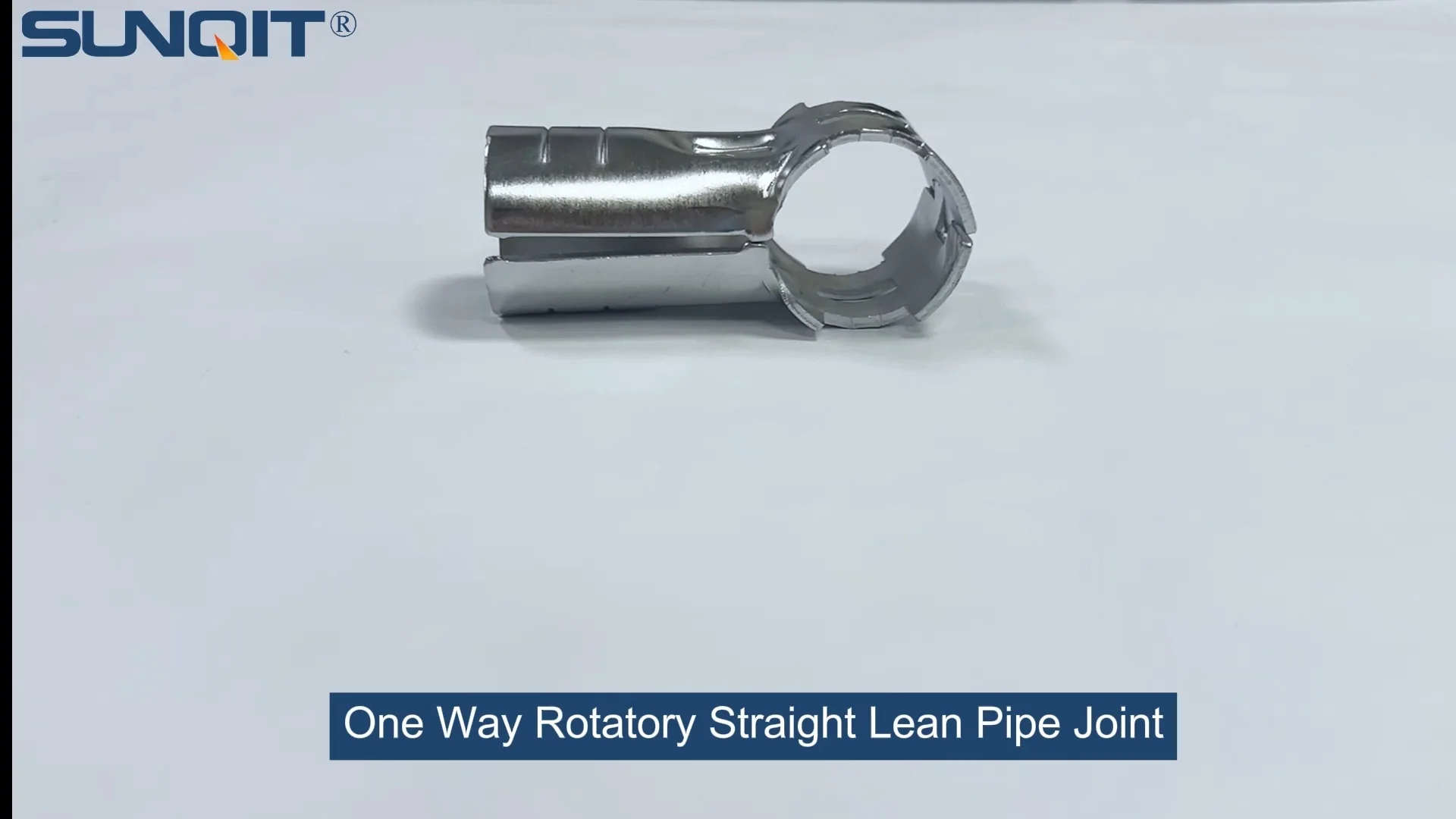
Two way lean pipe joint for 2 pcs 28MM lean pipe connection in straight angle with rotatory fucntion, which used widely in workbench, flow rack, hand trolley frame connection.
Picture this: You're standing in the middle of a bustling production floor, overseeing the setup of a new lean workbench. The team has spent hours aligning aluminum profiles, securing roller tracks, and tightening bolts—but when it comes time to attach the one way rotatory straight lean pipe joint chrome, something feels off. The joint sticks when you try to rotate it, the chrome plating looks uneven, and when you finally force it into place, there's a noticeable wobble. By the end of the day, that small joint has delayed the entire project, leading to missed deadlines and frustrated coworkers. Sound familiar?
In the world of lean manufacturing, where efficiency is king, even the smallest components can make or break your workflow. The one way rotatory straight lean pipe joint chrome might seem like a part, but it's the unsung hero that keeps your lean system flexible, your workbenches adjustable, and your material flow smooth. The problem? Not all joints are created equal. Walk into any industrial supply store or browse online, and you'll find a dizzying array of options—some priced suspiciously low, others with price tags that make you pause. How do you tell which ones will stand the test of time and which will leave you scrambling for replacements in six months?
In this guide, we're going to pull back the curtain on what makes a high-quality one way rotatory straight lean pipe joint chrome worth every penny, and how to spot the low-quality imposters before they cost you time, money, and sanity. We'll dive into materials, manufacturing, plating, and real-world performance, with practical tips you can use today—whether you're a seasoned plant manager or a small business owner setting up your first lean workstation. Let's get started.
1. Start with the Basics: What Even Is a One Way Rotatory Straight Lean Pipe Joint Chrome?
Before we jump into quality checks, let's make sure we're all on the same page. A one way rotatory straight lean pipe joint chrome is a specialized connector designed to link lean pipes (often aluminum or stainless steel) in a lean system, allowing for controlled, one-directional rotation. Think of it as the hinge that lets you swivel a workbench shelf, adjust the angle of a material rack, or guide a roller track around a corner—all without disassembling the entire structure. The "chrome" in the name refers to the protective plating, which adds durability and corrosion resistance, while "one way rotatory" means it rotates smoothly in one direction but locks or resists movement in the other, preventing accidental adjustments during operation.
These joints are the backbone of modular lean setups, used everywhere from automotive assembly lines to small-scale workshops. They're paired with lean pipes, aluminum profiles, and roller tracks to create everything from workbenches and material racks to turnover trolleys. And because they're designed to be reconfigurable, they need to handle repeated use: twisting, rotating, and supporting weight day in and day out. That's why quality isn't just a nice-to-have here—it's a necessity.
2. Material Matters: It's All About What's Inside
The Base Metal: Stainless Steel vs. "Mystery Metal"
The first clue to a joint's quality lies in its core material. High-quality one way rotatory straight lean pipe joints chrome are almost always made from stainless steel—and not just any stainless steel. We're talking about 304 or 316 grade, the same stuff used in medical equipment and marine applications because of its unbeatable corrosion resistance and strength. Why does this matter? Because your lean system might live in a factory with humidity, oil, or chemical exposure. A joint made from cheap carbon steel (even with chrome plating) will start rusting from day one, weakening the structure and eventually seizing up.
So how do you check the base metal? Start with the obvious: weight. Stainless steel is denser than carbon steel, so a high-quality joint will feel noticeably heavier than a low-quality one of the same size. If you have a magnet handy, keep it in your toolbox—stainless steel is non-magnetic, while carbon steel (the common culprit in low-quality joints) will stick like glue. Hold the magnet to the joint: if it clings, there's a good chance you're looking at carbon steel with a thin chrome coat, not real stainless steel.
Low-quality manufacturers love to cut corners here. They'll use recycled or low-grade steel, which is prone to warping under pressure. I once visited a factory where the maintenance team was replacing joints every three months because the base metal had bent under the weight of their material rack—turns out, the "stainless steel" joints were actually made from rebar with a quick dip in chrome. Don't let that be you.
3. Chrome Plating: More Than Just Shine
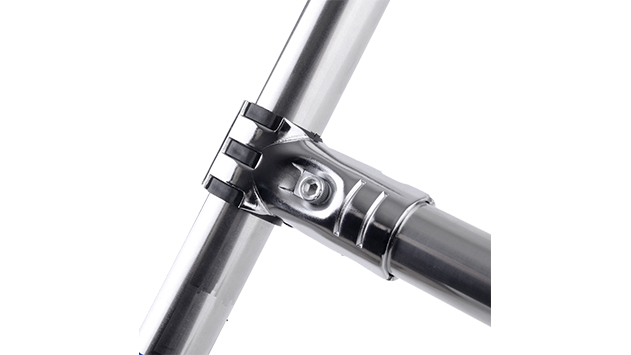
Chrome plating isn't just for looks—it's a protective barrier that shields the base metal from scratches, corrosion, and wear. But there's a world of difference between a high-quality chrome finish and a shoddy one. High-quality joints use a process called "triple plating": first, a layer of copper to fill in imperfections, then nickel for adhesion, and finally chrome for durability. The result? A finish that's thick (at least 0.0005 inches), uniform, and resistant to chipping or peeling.
So how do you spot a good plating job? Grab a flashlight and get up close. High-quality chrome should look like a mirror—no streaks, no bubbles, no dull spots. Run your fingernail gently across the surface (don't scratch too hard!)—it should feel smooth, with no rough edges or bumps. If you notice tiny pinholes or areas where the plating is thinner (like around the edges of the joint), that's a red flag. Those pinholes are entry points for moisture, which will start rusting the base metal from the inside out.
Low-quality plating is easy to spot once you know what to look for. It might have a "blotchy" appearance, with darker and lighter patches, or you might see small flakes peeling off near the corners. I've even seen joints where the plating had started to bubble before they were even installed—imagine how that holds up in a dusty, oily factory. Remember: chrome plating is a process, not a quick fix. A high-quality joint will have a plating thickness of at least 0.0005 inches (you can check this with a micrometer if you're really serious), while low-quality ones might skimp with 0.0001 inches or less—thinner than a sheet of paper.

4. Manufacturing Precision: The Devil's in the Details
You could have the best stainless steel and the thickest chrome plating, but if the joint isn't manufactured with precision, it's useless. The one way rotatory function is where this really matters—you need smooth, consistent rotation in one direction, with a firm lock in the other. High-quality joints are made using CNC machining, which cuts the metal with tolerances as tight as 0.001 inches. That means the rotating parts fit together like puzzle pieces, with no "play" or wobble.
To test this, take the joint in your hands and rotate it. It should move smoothly, with a slight but consistent resistance—like opening a well-oiled door. There should be no grinding, clicking, or sudden jerks. If it feels rough or gets stuck halfway, that's a sign of poor machining. Low-quality joints are often made with manual tools or outdated machinery, leading to misaligned holes, uneven surfaces, and parts that don't quite fit. I once tested a batch of joints where the rotating pin was so off-center that the joint wouldn't even attach to the lean pipe properly—turns out, the factory had used a hand drill instead of a CNC lathe.
Another detail to check: the threads. The joint should screw onto a standard lean pipe (usually 28mm or 30mm diameter) without forcing. If you have to cross-thread it or use a wrench to get it started, the threads are either poorly cut or the wrong size. High-quality manufacturers use thread gauges to ensure a perfect fit, while low-quality ones just guess. Over time, those mismatched threads will strip, leaving you with a joint that won't stay tight.
5. Real-World Performance: How It Holds Up When It Counts
At the end of the day, the true test of a joint is how it performs in your facility. Will it handle the weight of your material rack? Can it withstand being rotated dozens of times a day? High-quality joints are tested rigorously before they hit the market—manufacturers will subject them to thousands of rotation cycles under load to ensure they don't wear out. Low-quality joints? They're lucky if they're tested at all.
Let's talk load capacity. A good one way rotatory straight lean pipe joint chrome should handle at least 50kg of vertical load without bending or deforming. To test this, attach the joint to a lean pipe and hang a weight (a 50kg sandbag works) from it. Let it sit for 24 hours—if the joint bends or the rotation becomes stiff, it's a dud. I visited a electronics plant where they used low-quality joints on their ESD workbench, and within a month, the joints had bent under the weight of their circuit board trays, causing the trays to slide off. Not only did they lose product, but they had to shut down the line to replace all the joints.
Another test: rotation endurance. Take the joint and rotate it back and forth 100 times (mimicking daily use). Afterward, check for signs of wear: is the chrome plating chipping? Is there metal dust from friction? High-quality joints will show almost no wear, while low-quality ones will start to look ragged. Remember, this joint is going to be used every day—you need it to last years, not months.
Pro Tip:
Ask the supplier for a test report. Reputable lean pipe suppliers will have no problem sharing data on load capacity, rotation cycles, and material composition. If a supplier hesitates or says "we don't have that," walk away—they're hiding something.
6. The Visual Inspection Checklist
By now, you're probably thinking, "This all sounds great, but I don't have a micrometer or a 50kg sandbag lying around." Don't worry—you can spot most quality issues with just your eyes and a few simple checks. Here's a quick visual inspection checklist to keep in mind:
- Surface Finish: High-quality chrome plating is mirror-like, with no pits, scratches, or discoloration. Low-quality plating will have a dull, uneven finish.
- Edges: All edges should be smooth and rounded, with no burrs or sharp corners. A burr isn't just a safety hazard—it's a sign of rushed manufacturing.
- Welds (if any): If the joint has welded parts, the welds should be smooth and continuous, with no gaps or spatter. Low-quality joints often have messy, uneven welds that weaken the structure.
- Logo/Stamping: Reputable manufacturers will stamp their logo or part number on the joint. If there's no (marking), or the is smudged/unreadable, it's likely a knockoff.
I once helped a client audit their inventory and found a box of "high-quality" joints that looked perfect at first glance—until I noticed the logo was spelled wrong ("Stailess" instead of "Stainless"). Turns out, they'd been sold counterfeit joints from a supplier in a different country. Always trust your eyes—if something looks off, it probably is.
7. Why Choosing the Right Supplier Matters More Than You Think
At this point, you might be wondering, "Can't I just buy the cheapest joints and replace them when they fail?" Sure—if you enjoy wasting time and money. The reality is, a low-quality joint that costs $5 today will cost you $50 in downtime, replacement parts, and lost productivity tomorrow. That's why choosing a reputable lean pipe supplier is the best investment you can make.
High-quality suppliers stand behind their products. They'll have ISO 9001 certification (a standard for quality management), detailed quality control processes, and a customer service team that actually picks up the phone when you call. They'll also be transparent about their materials and manufacturing—ask where the stainless steel comes from, how the chrome plating is done, and if they test each batch. A good supplier will walk you through their process without hesitation.
Low-quality suppliers, on the other hand, thrive on opacity. They'll use generic product photos, vague descriptions ("high-quality material!"), and pushy sales tactics to get you to buy before you ask questions. If a deal seems too good to be true (e.g., 100 joints for $50), it is. I've seen small businesses fall for this, only to realize the joints are so poorly made that they can't even be installed. By then, the supplier is long gone, and you're stuck with a box of scrap metal.
High-Quality vs. Low-Quality: A Quick Comparison
| Feature | High-Quality One Way Rotatory Straight Lean Pipe Joint Chrome | Low-Quality One Way Rotatory Straight Lean Pipe Joint Chrome |
|---|---|---|
| Base Material | 304/316 stainless steel (non-magnetic, heavy) | Carbon steel or recycled metal (magnetic, lightweight) |
| Chrome Plating | Triple-plated (copper + nickel + chrome), 0.0005+ inch thickness, mirror finish, no bubbles | Single-plated, thin (<0.0001 inch), blotchy finish, prone to peeling |
| Rotation | Smooth, consistent resistance, no play or grinding | Rough, jerky movement, gets stuck easily |
| Load Capacity | 50kg+ vertical load without bending | Bends under <30kg load |
| Manufacturing | CNC machined, tight tolerances (0.001 inch) | Manual tools, loose tolerances, misaligned parts |
| Supplier Support | ISO certified, test reports available, responsive customer service | No certifications, vague details, unresponsive support |
Final Thoughts: Invest in the Joint, Invest in Your Team
At the end of the day, choosing a high-quality one way rotatory straight lean pipe joint chrome isn't just about avoiding headaches—it's about respecting the work your team does. When your lean system is built with parts that work as hard as they do, you're sending a message: "I value your time, your safety, and your ability to do your job well." A low-quality joint might save you a few dollars today, but it'll cost you in delays, repairs, and frustration tomorrow.
So the next time you're shopping for joints, take your time. Weigh them, test the rotation, check the plating, and ask your supplier tough questions. Your future self (and your team) will thank you. And if you're ever in doubt, remember: in lean manufacturing, quality isn't an expense—it's the best investment you can make.