- Company Articles
- Products and Technology
- Installation And Maintenance
- How to Install Gusset Alp 3030: Step-by-Step Guide for Beginners

How to Install Gusset Alp 3030: Step-by-Step Guide for Beginners
Related Product
Gusset ALP 3030
The 3030 bracket/Gusset is an external fastening method that creates a 90 degree connection. 3030 means this size is used for 30 series aluminum profile with a quick connection by bolt and nut.
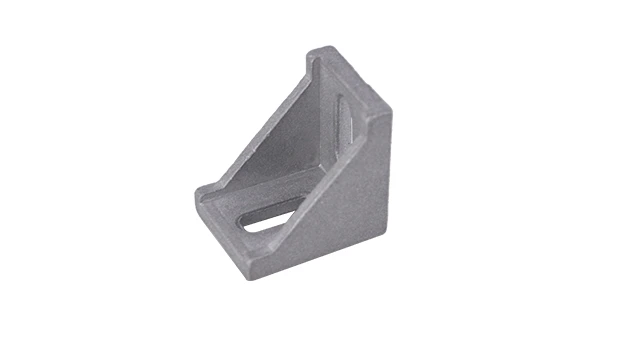
If you've ever dabbled in building or assembling structures with aluminum profiles—whether it's a sturdy workbench for your garage, a material rack for your workshop, or even a custom shelving unit—you've probably realized that stability is everything. A wobbly frame doesn't just feel unprofessional; it can be dangerous, especially if you're placing heavy tools or materials on it. That's where small but mighty components like the Gusset Alp 3030 come into play. These unassuming aluminum profile accessories might look simple, but they're the unsung heroes that turn a basic aluminum frame into a rock-solid structure. In this guide, we'll walk you through installing Gusset Alp 3030 from start to finish, even if you've never picked up a hex key before. Let's get started!
What Even Is a Gusset Alp 3030, Anyway?
First things first: let's make sure we're all on the same page. A Gusset Alp 3030 is a type of bracket designed specifically for 3030 aluminum profiles—the workhorses of DIY and industrial framing. Think of it as a reinforcement for the corners and joints of your aluminum structure. Without proper bracing, aluminum profiles (which are lightweight and versatile) can flex or twist under load. The Gusset Alp 3030 adds that critical rigidity by bridging the gap between two intersecting profiles, distributing weight evenly and preventing unwanted movement. It's like adding a backbone to your frame—small, but absolutely essential for long-term durability.
These gussets are part of the broader family of aluminum profile accessories, which includes everything from end caps to connectors. But unlike some flashier components, the Gusset Alp 3030 does its job quietly, ensuring your workbench, rack, or trolley stays stable for years. Whether you're building a home workshop setup or helping out with a small-scale industrial project, mastering how to install these gussets will level up your assembly skills in no time.
Tools and Materials You'll Need
Before we dive into the installation steps, let's gather everything you'll need. The good news? You won't need a garage full of specialized tools—just a few basics. Here's your checklist:
| Tools | Materials |
|---|---|
| Hex key (Allen wrench) – typically 4mm or 5mm (check your gusset's screw size) | Gusset Alp 3030 brackets (quantity depends on your project; plan for 1-2 per corner joint) |
| Tape measure (preferably with metric markings, since aluminum profiles use mm) | 3030 aluminum profile (cut to your desired length; ensure it's straight and undamaged) |
| Level (a small 2-foot spirit level works best for checking straightness) | Self-tapping screws (usually M5 or M6; included with most gusset kits, but double-check!) |
| Pencil or marker (for marking drill points or alignment lines) | 3030 aluminum profile end cap (optional but recommended for safety and a clean finish) |
| Rubber mallet (for gently tapping profiles into alignment, if needed) | Rubbing alcohol or a clean cloth (to wipe down profiles and remove dust/oil) |
| Work gloves (to protect hands from sharp aluminum edges) |
Pro Tip: Always check the packaging of your Gusset Alp 3030 for specific screw size recommendations. Some manufacturers include screws, while others don't. Using the wrong size can strip the threads in the aluminum profile or leave the gusset loose—both big no-nos for stability!

Pre-Installation Prep: Safety First, Then Success
Before you start (that's "tightening screws" in case you were curious), let's talk prep. Rushing into installation without setting up properly is a recipe for mistakes—like misaligned brackets or stripped screws. Here's how to get ready:
1. Clear Your Workspace
Find a flat, stable surface to work on—a table, workbench (ironic, right?), or even the floor. Remove any clutter, tools, or debris that might get in the way. You'll need enough space to lay out your aluminum profiles and move around comfortably. If you're working on the floor, lay down a soft mat or cardboard to protect the profiles from scratches.
2. Inspect Your Parts
Take a minute to check your Gusset Alp 3030 brackets and aluminum profile for defects. Look for cracks, bends, or rough edges on the gussets—even a small nick can weaken the bracket. For the aluminum profile, roll it on your flat surface to ensure it's straight (if it rocks back and forth, it might be warped). Also, check the pre-drilled holes on the profile—they should be clean and free of debris (a quick blast of compressed air can help if they're dusty).
3. Safety Gear On
Aluminum profiles can have sharp edges, especially if they're freshly cut. Slip on a pair of work gloves to avoid cuts. If you're cutting the profile yourself (we're assuming pre-cut here, but just in case), wear safety glasses too. Better safe than sorry!
4. Clean the Profiles
Oil, dust, or fingerprints on the aluminum can make it harder for the gusset to grip, and they might even prevent screws from seating properly. Wipe down the areas where the gusset will attach with a cloth dampened in rubbing alcohol. Let it dry completely before moving on—this only takes a minute, and it makes a big difference in how well the bracket adheres.

Step-by-Step Installation: Let's Get That Gusset On!
Now that you're prepped and ready, let's walk through installing the Gusset Alp 3030. We'll focus on a basic corner joint—where two 3030 aluminum profiles meet at a 90-degree angle (the most common setup for workbenches or racks). Follow these steps, and you'll have a rock-solid connection in no time.
Step 1: Mark Your Alignment Points
First, you need to figure out where the gusset will sit on the aluminum profile. Most Gusset Alp 3030 brackets are designed to fit snugly at the corner where two profiles meet, so start by placing the two 3030 profiles together at a right angle (like the corner of a square). Use your tape measure to ensure the overlap (if any) is even—for example, if building a workbench leg, the vertical and horizontal profiles should meet cleanly at their ends.
Once the profiles are positioned, hold the Gusset Alp 3030 against the corner where the two profiles meet. The gusset should have two flat sides (one for each profile) with pre-drilled holes for screws. Align these holes with the holes on the aluminum profile—this might take a little wiggling, but most gussets are designed to match the standard hole spacing on 3030 profiles (typically 30mm apart). Once aligned, use your pencil to mark the center of one or two screw holes on the profile—this will help you keep the gusset in place while you start screwing.
Beginner Hack: If the gusset keeps slipping while you hold it, use a small piece of masking tape to temporarily secure it to the profile. Just don't cover the screw holes—you need to access those!
Step 2: Start the First Screw (But Don't Tighten All the Way!)
Take one of your self-tapping screws and line it up with the marked hole on the gusset and aluminum profile. Using your hex key, start turning the screw clockwise. Self-tapping screws are designed to drill their own threads, so you'll feel some resistance at first—that's normal! Keep turning until the screw is about halfway in—just enough to hold the gusset in place, but not so tight that you can't adjust the alignment.
Why not tighten it all the way yet? Because you might need to shift the gusset slightly to align the second screw hole. If you fully tighten the first screw now, you could end up with the second hole misaligned, which means you'll have to backtrack (and possibly strip the first hole). Patience here pays off!
Step 3: Align and Secure the Second Screw
With the first screw loosely in place, adjust the gusset so that the second hole lines up with the next hole on the aluminum profile. This is where your initial pencil mark comes in handy—double-check that the gusset is straight and centered on the corner. Once aligned, insert the second screw and tighten it halfway, just like the first. Now you have two screws holding the gusset in place, but both are still loose enough to tweak if needed.
Step 4: Check for Square and Straightness
Before fully tightening the screws, grab your level. Place it along the top edge of the horizontal profile and check if the bubble is centered—this ensures the profile isn't leaning left or right. Then, place the level along the vertical profile to check for plumb (straight up and down). If the bubble is off, gently push or pull the profiles until they're straight, and adjust the gusset as needed. The gusset should sit flush against both profiles with no gaps—if there's a gap, it might mean the profiles aren't meeting at a perfect 90-degree angle, so you'll need to nudge them until they're square.
Once the level shows straight, you're ready to tighten the screws for real. Using your hex key, turn each screw clockwise until it's snug. How tight is "snug"? You'll feel the resistance increase, and the gusset will start to press firmly against the profile. Stop when the screw head is flush with the gusset's surface—over-tightening can strip the threads in the aluminum profile (which is soft compared to steel), and that's a pain to fix. A good rule of thumb: if the screw starts to "creak" or the gusset bends slightly, you've gone too far. Back off a quarter-turn and you'll be golden.
Step 5: Repeat for Additional Gussets (If Needed)
Most corner joints only need one Gusset Alp 3030, but for extra-heavy loads (like a workbench that will hold power tools or machinery), adding a second gusset a few inches away from the first can provide even more stability. Just repeat Steps 1-4 for each additional gusset, making sure they're spaced evenly (about 5-10cm apart is ideal).
Step 6: Add the 3030 Aluminum Profile End Cap (Finishing Touch!)
Once the gusset is secure, don't forget the little details that make your project look polished and safe: the 3030 aluminum profile end cap. These plastic or rubber caps snap or screw onto the ends of the aluminum profile, covering sharp edges and preventing dust, dirt, or small objects from getting inside the profile's hollow center. To install, simply align the end cap with the profile's opening and press firmly—most pop into place with a satisfying "click." If it's a screw-on cap, use a small hex key to secure it (but don't overtighten—you just want it snug).
Not only does the end cap add a professional look, but it also prevents scratches on floors, walls, or even your hands when moving the structure. Trust us—your future self will thank you for taking this extra 30 seconds!
Common Mistakes to Avoid (Learn from Our Oops Moments!)
Even seasoned DIYers make mistakes when installing aluminum profile accessories. Here are the most common pitfalls to watch out for, so you can sidestep them:
Mistake 1: Using the Wrong Screw Size
We mentioned this earlier, but it's worth repeating: using screws that are too long can poke through the other side of the aluminum profile (ouch!), while screws that are too short won't hold the gusset securely. Always check the gusset's packaging for recommended screw length—most Gusset Alp 3030 brackets work with 12-16mm screws for 3030 profiles. If in doubt, measure the thickness of the gusset and the profile wall (usually 1.5-2mm for 3030) and add a few mm for thread engagement—you want at least 6mm of screw into the profile to hold properly.
Mistake 2: Skipping the Level Check
It's tempting to eye-ball alignment, but even a tiny lean can throw off your entire structure. A workbench that's even slightly wobbly will annoy you every time you use it, and a material rack that's off-kilter might sag under weight. Take the 30 seconds to use your level—your back (and sanity) will thank you.
Mistake 3: Over-Tightening Screws
Aluminum is soft, and over-tightening screws is the #1 cause of stripped holes. If you strip a hole, you'll need to either drill a new one (which requires more tools and skill) or use a larger screw (which might not fit the gusset). Play it safe: snug is good, tight is bad.
Practical Applications: What Can You Build with Gusset Alp 3030?
Now that you know how to install Gusset Alp 3030, let's talk about why this skill matters. These brackets aren't just for show—they unlock a world of sturdy, custom projects. Here are a few ideas to inspire you:
1. Workbench
A workbench is the backbone of any workshop, and Gusset Alp 3030 brackets are key to making it stable enough for sawing, drilling, or assembling. Use them at the corners of the frame (where the legs meet the top and bottom rails) to prevent wobbling. Pair with a solid top (like plywood or aluminum honeycomb panel) and you've got a workspace that can handle years of abuse.
2. Material Rack
Whether you're storing lumber, metal sheets, or boxes of parts, a material rack needs to hold heavy loads without sagging. Gusset Alp 3030 brackets reinforce the shelf corners, ensuring the racks stay straight even when fully loaded. Add some roller track (another great aluminum profile accessory!) to the shelves, and you've got a sliding storage system that makes accessing materials a breeze.
3. Mobile Trolley
Need a way to move tools or materials around your workspace? Build a mobile trolley with 3030 aluminum profiles, casters, and Gusset Alp 3030 brackets at the base corners. The gussets will keep the trolley stable when rolling over uneven floors, preventing spills or tip-overs.
Troubleshooting: Oops, Something Went Wrong—Now What?
Even with careful installation, things can go sideways. Here's how to fix common issues:
Problem: The gusset is loose, even after tightening screws.
Solution: First, check if the screws are the right length—if they're too short, they won't grip the profile. If the screws are correct, the holes in the profile might be stripped. Try moving the gusset to a new set of holes (3030 profiles have holes every 30mm, so there should be spares nearby). If that's not possible, use a slightly larger screw (e.g., M6 instead of M5) or add a small amount of thread-locking adhesive (like Loctite) to the screw threads before re-tightening.
Problem: The profiles are misaligned, and the gusset won't sit flush.
Solution: Loosen the screws slightly and gently bend the profiles until they're square. Use your level to check, then retighten the screws. If the profiles are bent (not just misaligned), you might need to replace them—aluminum can bend, but it's hard to straighten without damaging it.
Problem: The 3030 aluminum profile end cap won't stay on.
Solution: If it's a snap-on cap, make sure the profile's end is clean and free of burrs (use sandpaper to smooth any rough edges). If it's still loose, a tiny dot of super glue (on the cap, not the profile!) can help, but be careful—you might want to remove the cap later. For screw-on caps, ensure the threads are clean and the screw is the right size.
Final Thoughts: You've Got This!
Installing Gusset Alp 3030 might seem intimidating at first, but as you've seen, it's a straightforward process with the right tools and a little patience. These small brackets are the secret to turning flimsy aluminum frames into rock-solid structures that will serve you for years. Whether you're building a workbench, a material rack, or something entirely custom, remember: alignment, gentle tightening, and checking with a level are your best friends.
And don't forget—practice makes perfect! Start with a small project, like a simple shelf, before tackling larger builds. You'll be surprised how quickly you get the hang of it. Now go grab your hex key, your 3030 aluminum profile, and those Gusset Alp 3030 brackets—and build something amazing.