- Company Articles
- Products and Technology
- Product knowledge
- How to Measure 40 Steel Roller Track White Wheel Performance: Key Metrics

How to Measure 40 Steel Roller Track White Wheel Performance: Key Metrics
Related Product
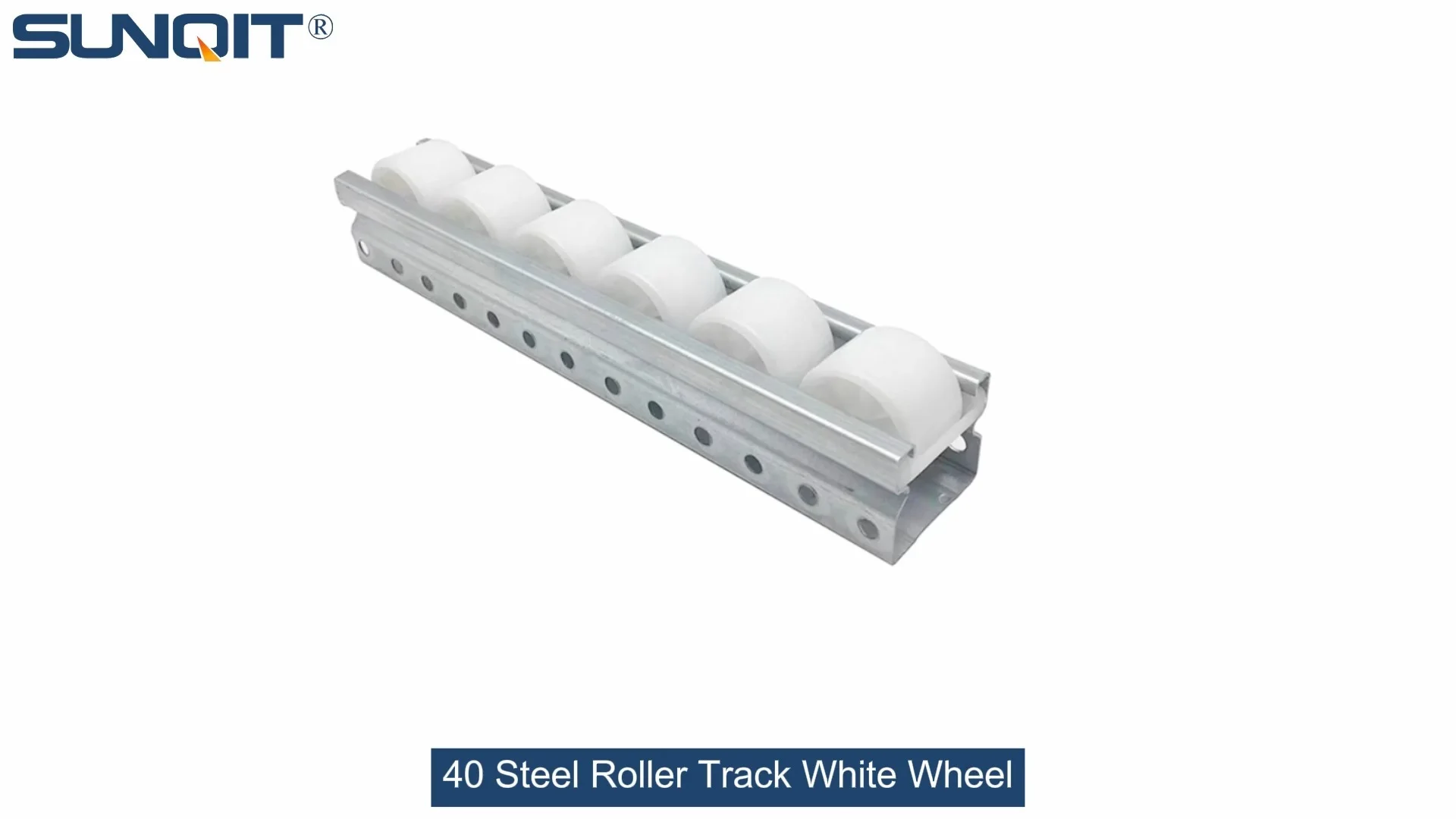
40 Steel Roller Track White Wheel
The roller track can be installed with multiple accessories to create different slopes and configurations of flow racks.All steel conveyor 40 roller track accessories are engineered to perfectly fit the sliding rail.
How to Measure 40 Steel Roller Track White Wheel Performance: Key Metrics
Why Performance Measurement Matters for Your Lean Systems
If you've ever worked in a manufacturing or warehouse setting, you know how critical smooth, reliable material flow is to keeping operations running like a well-oiled machine. Whether you're using flow racks for parts storage, conveyors for assembly lines, or lean pipe workbenches for production tasks, the small components—like the 40 steel roller track white wheel—can make or break your entire system's efficiency. These wheels aren't just pieces of metal; they're the backbone of your lean operations, directly impacting productivity, cost savings, and even workplace morale.
But how do you know if a batch of these wheels is up to par? It's not enough to just look at the price tag or the supplier's claims. You need to measure specific performance metrics that align with your lean goals—things like load capacity, rolling resistance, wear resistance, and more. In this article, we'll dive deep into the key metrics you should focus on, how to test them, and why they matter for your business.
1. Load Capacity: Can It Handle Your Daily Workload?
Static vs. Dynamic Load: What's the Difference?
First things first: How much weight can these wheels support? There are two key types of load capacity to consider—static and dynamic. Static load refers to the maximum weight the wheel can hold when it's not moving (like a stack of boxes sitting on a flow rack overnight). Dynamic load is the weight it can safely carry while rolling (e.g., pushing a cart loaded with parts along a conveyor or flow rack).
For the 40 steel roller track white wheel, typical static load capacity ranges from 300kg to 500kg per wheel, while dynamic load is around 200kg to 400kg. But these numbers aren't just arbitrary—they're determined by rigorous testing. To measure static load, you'd place increasing weights on the wheel until it deforms or breaks. For dynamic load, you'd attach the wheel to a test rig that simulates rolling under different weights over hundreds of cycles.
Real-World Application: 3C Assembly Line Example
Let's say you run a 3C assembly line (think smartphones or laptops). Your flow racks are loaded with small components—like circuit boards, batteries, and screens—each in boxes weighing 15kg. If each flow rack level uses 8 wheels, the total dynamic load per level would be 8 * 200kg =1600kg. That means you can safely place up to 106 boxes (1600/15 ≈106) on that level without worrying about the wheels failing. This kind of precision helps you avoid overloading racks, which can lead to accidents, downtime, and costly repairs.
Durability ties directly to load capacity. A wheel that can handle heavy loads without bending or breaking will last longer, reducing the need for frequent replacements. This aligns with the lean principle of sustainability—reusing components instead of replacing them saves money and reduces waste.
2. Rolling Resistance: Is It Easy to Move?
What Is Rolling Resistance?
Rolling resistance is the force that opposes the motion of a wheel as it rolls over a surface. For your lean systems, lower rolling resistance means two big wins: easier manual movement (reducing worker fatigue) and more efficient automated systems (like conveyors that use less energy).
How to Test Rolling Resistance
Testing rolling resistance is straightforward. You can use a dynamometer (a device that measures force) to pull a load over the wheels and record the force required. For example, if you have a 100kg load on a set of 4 wheels, a good rolling resistance would be less than 5N per wheel. That means the total pull force needed is around 20N—easy enough for a single worker to push without straining.
Smoothness & Noise Level
Smoothness is closely related to rolling resistance. A wheel with low resistance will roll smoothly, which also means less noise. In a busy production line, excessive noise can be a distraction and even lead to hearing damage over time. To test noise, you can use a sound level meter while the wheel is rolling. A quiet wheel (around 50dB to 60dB) is ideal—similar to the sound of a normal conversation.
Why does this matter? Let's say you have a conveyor system using these wheels. Lower rolling resistance means you can use a smaller motor, which cuts down on energy costs. Over a year, that can add up to significant savings. For manual operations, easier movement means workers can complete tasks faster, boosting overall productivity.
3. Wear Resistance: How Long Will It Last?
Abrasion Testing: Simulate Years of Use
Wear resistance is all about how well the wheel holds up to repeated use. To test this, you can use an abrasion tester that simulates thousands of rolling cycles on different surfaces (like concrete or metal). The tester measures how much material is worn away over time. A high-quality 40 steel roller track white wheel should show minimal wear after 10,000 cycles—less than 0.5mm of material loss.
Real-World Lifespan
In a medium-use environment (like a 3C assembly line that operates 8 hours a day, 5 days a week), a wheel with good wear resistance can last up to 5 years. In contrast, a low-quality wheel might need replacement every 1-2 years. Let's do the math: if each wheel costs $10, replacing 100 wheels every year is $1000. Over 5 years, that's $5000. But a high-quality wheel that lasts 5 years would cost only $1000 for the same 100 wheels—saving you $4000. That's a huge win for your bottom line, and it aligns with the lean principle of reducing waste.
Visual Inspection Tips
You don't need fancy equipment to check wear over time. Regular visual inspections can help you spot signs of damage early—like scratches, dents, or deformation. If a wheel starts to show significant wear, it's time to replace it before it fails and causes downtime.
4. Compatibility & Adaptability
Lean systems are all about flexibility and adaptability. The 40 steel roller track white wheel needs to work seamlessly with other components in your system—like roller track connectors, flow rack frames, and conveyor belts. If the wheel doesn't fit properly, it can cause jams, uneven rolling, or even damage to other parts.
Testing Compatibility
To test compatibility, try fitting the wheel into your existing roller track or flow rack. It should slide into place easily without gaps or tightness. You can also check if it works with different roller track connectors—like the ones used in a lean pipe workbench or conveyor system. A compatible wheel will integrate smoothly, allowing you to modify your system as needed (another lean principle: continuous improvement).
Custom Solutions Example
Let's say you're in the medical device manufacturing industry. You need a custom lean workstation that uses these wheels to move sensitive parts. A good supplier will help you design a system where the wheels fit perfectly with the workstation's frame and other components. This ensures that the system works efficiently and meets your specific needs.
5. ESD Performance: Safe for Sensitive Components?
If you work in industries like 3C assembly or medical device manufacturing, electrostatic discharge (ESD) is a big concern. ESD can damage sensitive electronic components, leading to costly defects. Some 40 steel roller track white wheels are designed with ESD properties—meaning they dissipate static electricity to prevent damage.
Testing ESD Performance
To test ESD performance, you use a surface resistance meter. The ideal range for ESD-safe wheels is between 10^6 ohms and 10^9 ohms. This ensures that static is dissipated slowly enough to not damage components but quickly enough to prevent buildup.
Why does this matter? Let's say you're moving circuit boards on a flow rack. If the wheels aren't ESD-safe, static could build up and damage the boards. That leads to defective products, rework, and lost revenue. An ESD-safe wheel eliminates this risk, keeping your production line running smoothly.
Quick Reference: Key Metrics & Testing Guide
| Metric | Testing Method | Optimal Range | Lean Impact |
|---|---|---|---|
| Static Load Capacity | Static weight test until deformation | 300kg-500kg per wheel | Avoids overloading, reduces accidents |
| Dynamic Load Capacity | Rolling test under weight for cycles | 200kg-400kg per wheel | Ensures safe movement of loads |
| Rolling Resistance | Dynamometer pull force test | ≤5N per wheel (100kg load) | Reduces worker fatigue, saves energy |
| Wear Resistance | Abrasion tester (10k cycles) | ≤0.5mm material loss | Lowers replacement costs, reduces waste |
| ESD Performance | Surface resistance meter | 10^6-10^9 ohms | Protects sensitive components from damage |
Conclusion: Choose the Right Wheels for Your Lean System
Measuring the performance of 40 steel roller track white wheels isn't just a technical exercise—it's a way to ensure your lean system works as efficiently as possible. By focusing on metrics like load capacity, rolling resistance, wear resistance, compatibility, and ESD performance, you can make informed decisions that save money, boost productivity, and align with your lean goals.
When choosing a supplier, look for one that provides detailed test reports for each batch of wheels. A reliable supplier will stand behind their products, ensuring that every wheel meets your performance requirements. Remember, the small components make a big difference—so don't overlook the importance of these wheels in your lean journey.