- Company Articles
- Products and Technology
- Product knowledge
- How to Measure for 3030 Aluminum Profile End Caps: Avoiding Fitting Mistakes

How to Measure for 3030 Aluminum Profile End Caps: Avoiding Fitting Mistakes
Related Product
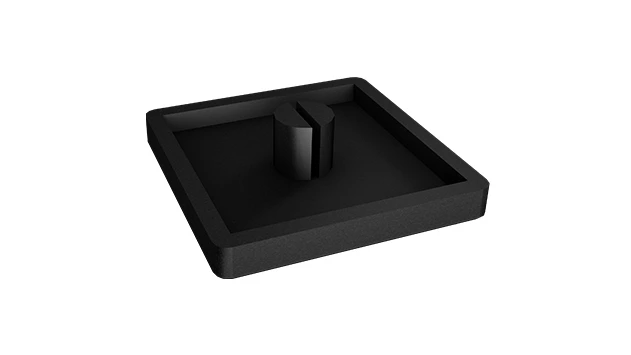
3030 Aluminum Profile End Cap
The aluminum profile end cap adds a finishing touch to your project and closes off profile ends to limit dust and debris buildup, also it can avaid some scratch for material and labor during the assemble work.
Let's set the scene: You've spent weeks planning your new workshop setup. You ordered the 3030 aluminum profiles, gathered your tools, and even cleared a weekend for assembly. The first step? Slapping on those end caps to give the profiles a clean look. But when you line them up, something's off. One cap slides right off, another gets stuck halfway, and a third cracks when you try to push it on. Cue the sighs, the eye-rolling, and the silent question: "Why is this so hard?"
If this scenario hits close to home, you're not alone. Ill-fitting end caps are one of the most common headaches for anyone working with aluminum profiles. But here's the truth: 90% of the time, the problem isn't the end caps—it's the measurement. End caps are designed to fit specific profile dimensions, and even a 1mm discrepancy can mean the difference between a snug fit and a frustrating fail. The good news? Measuring for 3030 aluminum profile end caps is a skill anyone can learn, and it only takes a few minutes once you know the ropes.
In this guide, we're going to walk through everything you need to know to measure like a pro. We'll start with the basics of 3030 profiles and end caps, then dive into tools, step-by-step techniques, and the mistakes even seasoned builders make. By the end, you'll be able to order end caps with confidence, assemble without stress, and get back to what really matters—building something awesome. Let's start with the fundamentals.
Understanding 3030 Aluminum Profiles: More Than Just "30x30"
Before we talk about end caps, let's make sure we understand the star of the show: the 3030 aluminum profile. You've probably heard it called "3030" because of its nominal dimensions—30mm in width and 30mm in height. But here's where it gets tricky: "nominal" doesn't always mean "exact." Aluminum extrusion profiles are made by forcing molten aluminum through a die, and slight variations can happen based on the manufacturer, the die's wear, or even the batch of aluminum. That's why a 3030 profile from one supplier might measure 29.8mm x 29.9mm, while another could be 30.2mm x 30.1mm.
Then there's the difference between standard and non-standard profiles. For example, the 3030 national standard profile A is a common specification in many regions, with tightly controlled dimensions and T-slot sizes. But if you're using an imported profile or a custom extrusion, the dimensions might vary. Even the T-slots—the grooves that run along the profile—can differ in width or depth, which matters because some end caps clip into these slots for a secure fit.
Pro Tip: Always check if your profile follows a national standard (like 3030 national standard profile A) or is a custom design. Standard profiles are more likely to have widely available, pre-sized end caps, while custom profiles may require ordering from the same supplier who made the profile.
Now, let's talk end caps. These small accessories might seem simple, but they're engineered for specific jobs. Most are made of plastic (PVC or nylon), aluminum, or rubber, and they come in three main styles:
- Snap-on: These have flexible tabs that clip into the T-slots or around the profile edges. They're easy to install but rely on precise slot dimensions.
- Push-fit: Designed to friction-fit into the end of the profile. They work best when the inner diameter of the cap matches the outer diameter of the profile exactly.
- Screw-on: These use small screws to attach to the profile, offering a secure fit even with minor dimension variations—but they require drilling holes, which not everyone wants to do.
No matter the style, the key is matching the end cap's dimensions to your profile's. And that starts with accurate measurement.
Why Accurate Measurement Saves You More Than Just Time
You might be thinking, "Is measuring really that important? Can't I just guess and return the ones that don't fit?" Sure, you could—but that attitude will cost you more than you think. Let's break down the real-world consequences of skipping proper measurement:
Wasted Money: End caps aren't expensive on their own, but if you order 50 of the wrong size, that's $50-$100 down the drain. Multiply that by multiple projects, and it adds up fast. Plus, return shipping? That's more time and money out of your pocket.
Delayed Projects: Few things kill momentum like stopping mid-assembly to reorder parts. You clear a weekend to build your workbench, only to spend half of it waiting for new end caps. Suddenly, that "quick project" turns into a two-week ordeal.
Safety Risks: Loose end caps aren't just annoying—they're a hazard. A cap that slides off can expose sharp, raw aluminum edges, risking cuts during use. Tight caps that crack might leave jagged plastic bits that catch on gloves or clothing.
Poor Aesthetics: Let's be honest—we build with aluminum profiles because they look clean and professional. A project with mismatched, ill-fitting end caps looks rushed and unpolished, even if the rest of the assembly is perfect.
The bottom line? Taking 5 minutes to measure your profiles before ordering end caps will save you hours of frustration, hundreds of dollars, and plenty of unnecessary stress. Now, let's talk about how to do it right.

The Tools You Need: No Fancy Equipment Required
You don't need a workshop full of high-tech gear to measure aluminum profiles accurately. In fact, you probably already own most of what you need. Here's the essential toolkit:
- Digital Caliper: This is your best friend. A $20-$30 digital caliper measures to the nearest 0.01mm, which is critical for catching those tiny dimension variations. Look for one with a stainless steel body (more durable) and an auto-off feature (saves batteries).
- Straight Edge: A metal ruler or yardstick works here. You'll use it to ensure your caliper is aligned correctly when measuring width and height.
- Marker and Paper: Jotting down measurements prevents mix-ups, especially if you're measuring multiple profiles. Pro tip: Label each measurement with the profile type (e.g., "3030 national standard profile A – left end").
- Masking Tape (Optional): If your profile is slippery, a small piece of tape can help hold the caliper steady while measuring.
What about tape measures? While they're great for length, they're too flexible for measuring the width and height of a rigid profile. A tape measure might give you a reading of "30mm," but it won't catch that the profile is actually 29.7mm on one side due to a manufacturing quirk. Stick with a caliper for the critical dimensions.

Step-by-Step: How to Measure Your 3030 Aluminum Profile
Now for the main event: measuring your profile. Follow these steps, and you'll have accurate numbers in no time. We'll use a 3030 national standard profile A as an example, but these steps work for any 3030 profile.
Step 1: Clean the Profile End
Start by wiping the end of the profile with a dry cloth. Dust, oil, or leftover machining debris can throw off your measurements, especially with a caliper. You want a clean, flat surface to get the most accurate read.
Step 2: Measure the Outer Width and Height
This is the most obvious measurement, but it's also the most critical. Here's how to do it:
- Open the caliper jaws wider than the profile's width. Place the profile on a flat surface, and gently lower the jaws until they touch the outer edges of the profile. Make sure the caliper is perpendicular to the profile—tilting it even slightly will give a larger (and incorrect) measurement.
- Read the digital display. For a standard 3030 profile, you're looking for around 30mm, but write down the exact number (e.g., 29.9mm or 30.1mm).
- Repeat the process for the height. Flip the profile 90 degrees and measure the vertical outer dimension the same way.
- Take 2-3 measurements at different points on the end (e.g., top, middle, bottom). Profiles can sometimes be slightly out of square, so averaging these measurements will give you a more reliable number.
Step 3: Measure the T-Slot (If Using Snap-On End Caps)
If your end caps snap into the T-slots (common with plastic snap-on styles), you'll need to measure the slot width and depth. Here's how:
- Find the T-slot on the profile edge. It's the groove that runs the length of the profile.
- Close the caliper jaws completely, then insert the tip into the slot. Gently open the jaws until they touch the inner sides of the slot. This gives you the slot width.
- To measure depth, use the caliper's depth gauge (the thin metal rod that extends from the end). Place the caliper's base flat against the profile surface, then lower the depth gauge into the slot until it hits the bottom. Read the measurement.
Why does this matter? Snap-on end caps have small tabs that fit into these slots. If the slot is 6mm wide but the cap's tabs are 5.5mm, they'll slip out. If the tabs are 6.5mm, they'll either break or damage the slot.
Step 4: Check for Chamfers or Rounded Edges
Many 3030 profiles have chamfered (slightly angled) or rounded edges to prevent sharp corners. These edges can affect how end caps fit, especially push-fit styles. Run your finger along the profile end—if it feels rounded, note that in your measurements. Some end caps are designed to accommodate these edges, while others are made for sharp, square ends.
Step 5: Compare with Manufacturer Specs
If you have the profile's manufacturer specs (e.g., from the supplier's website), compare your measurements to theirs. For example, a 3030 national standard profile A might list outer dimensions as 30mm x 30mm with a T-slot width of 6mm. If your measurements are off by more than 0.2mm, double-check your technique—you might have tilted the caliper or measured at an angle.
Common Measurement Mistakes (and How to Avoid Them)
Even with the right tools, it's easy to slip up. Here are the most common measurement mistakes we see, and how to dodge them:
Mistake #1: Measuring Only One End
Profiles can warp slightly during shipping or storage, meaning one end might be 30mm wide while the other is 29.8mm. Always measure both ends of the profile and use the smaller measurement when ordering end caps—it's easier to pad a slightly loose fit than to force a tight one.
Mistake #2: Ignoring Tolerances
Manufacturers list tolerances (acceptable variation) for a reason. A profile labeled "30mm ±0.2mm" could measure anywhere from 29.8mm to 30.2mm and still be "within spec." When ordering end caps, look for ones with similar tolerances. For example, if your profile is 30.1mm, an end cap with a tolerance of 29.9mm-30.3mm will fit better than one with a tighter 30.0mm-30.1mm range.
Mistake #3: Forgetting About Coating Thickness
Some profiles have anodized or powder-coated finishes, which add a thin layer (usually 0.05mm-0.1mm) to the outer dimensions. This might not sound like much, but it can make a push-fit end cap feel too tight. If your profile is coated, add 0.1mm to your measurements when ordering.
Mistake #4: Relying on "Standard" Sizes Blindly
Just because it's called a "3030 end cap" doesn't mean it fits all 3030 profiles. For example, end caps made for aluminum extrusion profiles with thick walls might be too small for hollow profiles with thinner walls. Always check the end cap's specs (usually listed as "fits profiles with outer dimensions of Xmm x Ymm") and compare to your measurements.
Choosing the Right End Cap: Matching Measurements to Style
Now that you have your measurements, it's time to pick the right end cap. Here's how to match your numbers to the three main styles:
Snap-On End Caps
Best for: Profiles with T-slots, quick assembly, and frequent disassembly.
What to check: T-slot width and depth. The cap's tabs should be 0.1mm-0.2mm wider than the slot for a snug fit. For example, if your slot is 6mm wide, look for tabs around 6.1mm-6.2mm.
Push-Fit End Caps
Best for: Permanent installations, clean aesthetics (no visible tabs).
What to check: Outer profile dimensions. The cap's inner diameter should be 0.1mm-0.3mm smaller than the profile's outer dimensions. So if your profile is 30mm x 30mm, the cap's inner opening should be 29.7mm-29.9mm. This creates friction that holds the cap in place.
Screw-On End Caps
Best for: Heavy-duty applications, profiles with non-standard dimensions.
What to check: Screw hole placement. Most screw-on caps have pre-drilled holes that align with the profile's T-slots or pre-drilled holes. Measure the distance between T-slots (e.g., 30mm center-to-center) to ensure the screws will line up.
Pro Tip: If you're unsure, order 1-2 sample end caps first. Test them on your profile before buying in bulk—it's cheaper than returning 100 caps that don't fit.
Troubleshooting: When End Caps Still Don't Fit
You measured carefully, ordered the right caps, but they still won't fit. Don't panic—here's what to do:
If the Cap Is Too Loose
Try adding a thin layer of double-sided tape to the inside of the cap. This adds just enough thickness to create a snug fit without damaging the profile. For push-fit caps, you can also use a small drop of silicone adhesive (let it dry completely before handling).
If the Cap Is Too Tight
Gently sand the inner edges of the cap with fine-grit sandpaper (400-600 grit). Sand in small circles, checking the fit frequently—you don't want to remove too much material. For plastic caps, you can also warm them with a hair dryer for 10-15 seconds to make them more flexible during installation.
If the Cap Cracks or Breaks
This usually means the cap is too small or the profile has sharp edges. Check your measurements again—if the cap's inner diameter is smaller than the profile's outer dimensions by more than 0.3mm, it's too small. For sharp edges, file them down slightly with a metal file before installing new caps.
Beyond End Caps: Why Measurement Matters for All Aluminum Profile Accessories
End caps are just the start. When you're working with aluminum profiles, accurate measurement impacts every accessory—from brackets and connectors to shelves and panels. For example, a 3030 national standard profile A has specific T-slot dimensions that match standard aluminum profile accessories like corner brackets and hinges. If you mismeasure the profile, those accessories might not attach securely, weakening your entire structure.
Think of it like building with Lego: each piece is designed to fit with others, but only if you use the right size. Measuring your profiles ensures that every accessory—from end caps to workbench frames—works together seamlessly. It's the foundation of a sturdy, professional-looking build.
Final Thoughts: Measure Twice, Build Once
At the end of the day, measuring for 3030 aluminum profile end caps is about respect—for your project, your time, and your sanity. It's a small step that prevents big headaches, turning a frustrating assembly process into a smooth, satisfying one. Remember: even the most experienced builders take the time to measure. It's not about being "perfect"—it's about being prepared.
So grab your caliper, clean off those profile ends, and take those measurements. Your future self—assembling a workbench with perfectly fitting end caps, no swearing involved—will thank you. And when you're done, step back and admire your handiwork: a project built with care, precision, and profiles that look as good as they function.
Now go build something amazing. You've got this.
Measurement Cheat Sheet: Quick Reference Table
| Profile Type | Typical Outer Dimensions | T-Slot Width (if applicable) | Recommended End Cap Style | Cap Fit Tolerance |
|---|---|---|---|---|
| 3030 national standard profile A | 30mm x 30mm ±0.2mm | 6mm ±0.1mm | Snap-on or push-fit | 0.1mm-0.3mm (inner cap smaller than profile) |
| Non-standard 3030 (imported) | 29.5mm-30.5mm | 5mm-7mm | Screw-on or custom | Measure first, order samples |
| 3030 with anodized coating | 30mm x 30mm +0.1mm (coating thickness) | 6mm ±0.1mm | Push-fit (account for coating thickness) | 0.2mm-0.4mm (inner cap smaller than profile) |