- Company Articles
- Products and Technology
- Product knowledge
- How to Measure for 4040 Aluminum Profile End Caps: Avoid Sizing Mistakes

How to Measure for 4040 Aluminum Profile End Caps: Avoid Sizing Mistakes
Related Product
4040 Aluminum Profile End Cap
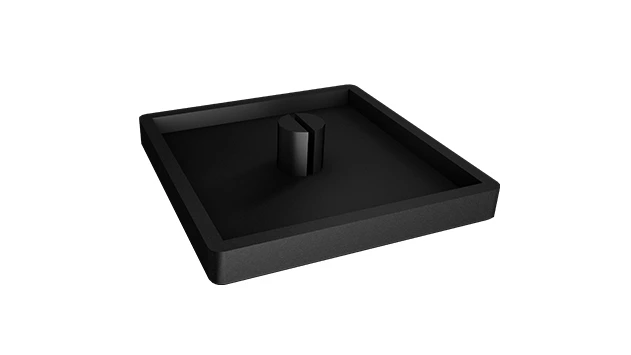
The aluminum profile end cap adds a finishing touch to your project and closes off profile ends to limit dust and debris buildup, also it can avaid some scratch for material and labor during the assemble work.
If you've ever worked with aluminum extrusion profiles—whether building a workbench, a storage rack, or a custom trolley—you know the satisfaction of seeing those sleek, modular frames come together. But here's the thing: the smallest parts often make the biggest difference. Take 4040 aluminum profile end caps, for example. Those unassuming little pieces aren't just for looks—they protect sharp edges, keep dust and debris out of the profile's T-slots, and give your project that polished, professional finish. But get the size wrong? You'll be stuck with a wobbly cap that falls off, or one that's so tight you risk damaging the profile trying to force it on. Trust me, I've seen it happen. Let's make sure that doesn't happen to you.
In this guide, we're diving deep into how to measure for 4040 aluminum profile end caps the right way. We'll break down common mistakes people make, the tools you actually need (spoiler: not just a ruler), and a step-by-step process to ensure your end caps fit like they were made for your specific profile. By the end, you'll feel confident tackling this "small" task—and you'll wonder how you ever settled for ill-fitting end caps before.
Why Bother With Exact Measurements? (Spoiler: It's Not Just About Fit)
Let's start with the obvious: a well-fitted end cap stays put. But there's more to it than that. Aluminum extrusion profiles are designed to be versatile, and their accessories—like end caps, brackets, and hinges—rely on precision to work together. A loose end cap isn't just annoying; it can catch on clothing, collect dirt, or even become a safety hazard if it pops off unexpectedly. On the flip side, an end cap that's too tight might warp the profile's edges over time, especially if you're constantly removing and reattaching it (hello, maintenance!).
Here's another angle: cost. Aluminum profile accessories aren't cheap, and ordering the wrong size means wasted money and delays. If you're running a small workshop or a DIY project, those extra days waiting for replacement end caps can throw off your timeline. And let's not forget the frustration factor—staring at a pile of parts that won't cooperate is no way to spend a Saturday afternoon.
Common Sizing Mistakes (You're Probably Making At Least One)
Before we get to the "how," let's talk about the "what not to do." Even seasoned builders fall for these traps, so don't feel bad if you recognize yourself here. Awareness is the first step!
Mistake #1: Assuming "4040" Means "One Size Fits All"
The term "4040 aluminum extrusion profile" refers to the outer dimensions, right? So it should be 40mm wide by 40mm tall—simple enough. But here's the catch: not all 4040 profiles are created equal. Different manufacturers use slightly different die specifications, especially if they're based in different regions (think EU vs. Asian standards). A profile from one supplier might measure 39.8mm wide, while another's is 40.2mm. That 0.4mm difference? It's enough to make an end cap feel either loose or impossibly tight. I once helped a friend who ordered "universal" 4040 end caps, only to find they wouldn't fit his EU-made profile—turns out, the European die was calibrated to 40.1mm, and the end caps were designed for 39.9mm. Oops.
Mistake #2: Measuring Only the Outer Dimensions
End caps fit inside the profile's open end, not just over the outside. So if you only measure how wide the profile is from left to right on the outside, you're missing half the story. The inner width (the space inside the profile where the end cap will sit) can vary based on the profile's wall thickness. A 4040 profile with thick walls (say, 2mm) will have a smaller inner width than one with thin walls (1.5mm). Ignore the inner measurement, and you might end up with an end cap that's too big to squeeze in or too small to stay put.
Mistake #3: Forgetting About T-Slots and Rubber Strips
Most 4040 profiles have T-slots—those grooves running along the length that let you attach brackets, shelves, or other aluminum profile accessories. If your profile has a T-slot near the end, the end cap needs to account for that. Some end caps are designed with notches to fit around T-slots, while others are smooth. If you don't measure the slot's position or depth, your end cap might hit the slot and not seat properly. Similarly, if your profile has an aluminum profile rubber strip in the T-slot (to reduce noise or seal out dust), that strip adds thickness. Measure without it, and the end cap might feel too tight once the strip is in place.
Mistake #4: Skipping the "Test Fit" With a Spare Profile
This one's more of a "lazy mistake," but it's surprisingly common. Even if you measure perfectly, profiles can have minor bends or dents from shipping or handling. A small dent near the end of the profile might make an otherwise correctly sized end cap fit poorly. Always test your measurements on the actual profile you'll be using—not a "similar" one from your stock. I've seen people measure a brand-new profile and then wonder why the end cap won't fit an older, slightly bent one. Ouch.

Tools You'll Need (No Fancy Equipment Required)
You don't need a lab full of tools to measure end caps accurately. In fact, you probably already have most of these lying around your workshop or garage. Here's what to grab:
- Digital calipers: These are non-negotiable. Analog calipers work, but digital ones (under $20 online) give you precise measurements down to 0.01mm. Look for a pair with both inside and outside measurement jaws—you'll need both.
- Tape measure: For quick checks, but don't rely on it for the inner dimensions. It's great for confirming outer width/height, though.
- Straightedge: A metal ruler or a flat piece of wood works. Use it to ensure the profile's end is flat (no bends!) before measuring.
- Notepad and pencil: Jot down measurements immediately—memory is unreliable, and you don't want to mix up numbers later.
Pro tip: If you're measuring multiple profiles, label each measurement with the profile's brand or batch number. Trust me, you'll thank yourself later when you're ordering end caps.

Step-by-Step: How to Measure Your 4040 Profile for End Caps
Now, the good stuff. Follow these steps, and you'll have measurements so accurate, your end caps will fit like they were custom-made (which, in a way, they will be—custom-fit to your profile).
Step 1: Prep the Profile End
First, make sure the end of your 4040 aluminum extrusion profile is clean and flat. If there's any debris (sawdust, dirt) in the end, wipe it out with a dry cloth. If the end is bent or dented (common if the profile was dropped), gently straighten it with a rubber mallet. A warped end will throw off your measurements, so take the time to fix this now.
Step 2: Measure the Outer Width and Height
Start with the basics: outer dimensions. Using your digital calipers, measure the width (left to right) and height (top to bottom) of the profile's end. Take these measurements at three points: near the top, middle, and bottom (for height), and left, middle, and right (for width). Why? Profiles can sometimes have slight tapers, especially if they're older. Write down the average of these measurements. For example, if your width readings are 40.1mm, 40.0mm, and 40.2mm, your average is 40.1mm.
Step 3: Measure the Inner Width and Height
This is where the inside jaws of your calipers come in. Open the calipers, insert the jaws into the profile's end, and gently close them until they touch the inner walls. Measure the inner width (left to right inside the profile) and inner height (top to bottom inside). Again, take three measurements and average them. This inner dimension is critical because it's the space the end cap will actually occupy. For example, if your outer width is 40mm and the walls are 2mm thick, the inner width should be around 36mm (40 - 2*2). But don't assume—measure!
Step 4: Check for T-Slots or Obstructions
Look at the end of the profile. Are there T-slots that extend all the way to the edge? These slots are for aluminum profile fixings like bolts or brackets, but they can also affect end cap fit. Measure how far the slot protrudes into the end. For example, a slot that's 5mm deep from the edge means the end cap needs a notch or recess in that area to avoid overlapping. If your profile has an aluminum profile rubber strip in the T-slot, measure with the strip in place—rubber adds thickness, and you want the end cap to fit over it, not push it out.
Step 5: Measure the End Cap Depth (Optional but Handy)
Most end caps are designed to insert 5-10mm into the profile. But if you want a specific look (e.g., a flush fit vs. a cap that sticks out slightly), measure how deep you want the end cap to go. This is less critical for fit, but it helps when choosing between "shallow" and "deep" end cap styles.
Quick Reference: Common 4040 End Cap Sizes
To help you visualize, here's a table comparing typical end cap sizes for 4040 profiles. Remember, these are averages—always use your own measurements for accuracy!
| Profile Type | Outer Width (mm) | Inner Width (mm) | Recommended End Cap Size (Inner Width) | Notes |
|---|---|---|---|---|
| Standard 4040 (Thin Wall) | 39.8–40.0 | 36.8–37.0 | 36.9mm | Common in DIY kits; flexible end caps work best |
| Heavy-Duty 4040 (Thick Wall) | 40.0–40.2 | 36.0–36.2 | 36.1mm | Used for industrial workbenches; rigid end caps recommended |
| EU-Standard 4040 | 40.1–40.3 | 36.3–36.5 | 36.4mm | Tighter tolerances; check for DIN compliance |
| 4040 with Rubber Strip | 40.0–40.2 | 36.5–36.7 | 36.6mm | Rubber adds ~0.5mm; end cap must compress slightly |
Checking Compatibility: End Caps and Aluminum Profile Accessories
End caps don't exist in a vacuum—they're part of a larger system of aluminum profile accessories. If you're using other accessories near the end of the profile (like brackets, hinges, or lights), make sure the end cap won't interfere with them. For example, if you have a bracket mounted 10mm from the end of the profile, an end cap that inserts 15mm deep will overlap with the bracket's screws. Ouch again.
Here's a quick check: After measuring, mark the end cap's insertion depth on the profile with a pencil. Then, look at any nearby accessories—do their mounting points fall within that marked area? If yes, you might need a shallower end cap or to reposition the accessory. It's a small step, but it prevents big headaches later.
Troubleshooting: What If Your End Cap Still Doesn't Fit?
Even with perfect measurements, sometimes things go wrong. Here's how to fix common post-purchase issues:
End Cap Is Too Loose
If the end cap wiggles or falls out, try adding a thin layer of double-sided tape to the inside of the end cap. This adds friction without damaging the profile. For a more permanent fix, a drop of silicone adhesive (not super glue!) around the edges can help, but only if you're sure you won't need to remove the end cap later.
End Cap Is Too Tight
Never force a tight end cap—it can warp the profile. Instead, gently sand the edges of the end cap with fine-grit sandpaper (220 grit or higher), checking the fit after each pass. Go slow! You can always sand more, but you can't undo over-sanding. If the end cap has notches for T-slots, make sure those notches are deep enough—sometimes manufacturers skimp on this detail.
Final Thoughts: Small Part, Big Impact
Measuring for 4040 aluminum profile end caps might seem like a tiny detail, but it's the kind of detail that separates a "good enough" project from a "wow, this looks professional" one. By taking the time to measure accurately, you'll save money, avoid frustration, and ensure your aluminum extrusion profiles look and function their best for years to come.
Remember: the key is to measure both outer and inner dimensions, check for variations, and never assume "4040" is a universal size. With your digital calipers in hand and this guide as your roadmap, you've got this. Now go forth and fit those end caps like a pro!