- Company Articles
- Products and Technology
- Product knowledge
- How to Optimize Assembly Speed with One Way Rotatory Straight Lean Pipe Joint Chrome

How to Optimize Assembly Speed with One Way Rotatory Straight Lean Pipe Joint Chrome
Related Product
One Way Rotatory Straight Lean Pipe Joint Chrome
Two way lean pipe joint for 2 pcs 28MM lean pipe connection in straight angle with rotatory fucntion, which used widely in workbench, flow rack, hand trolley frame connection.
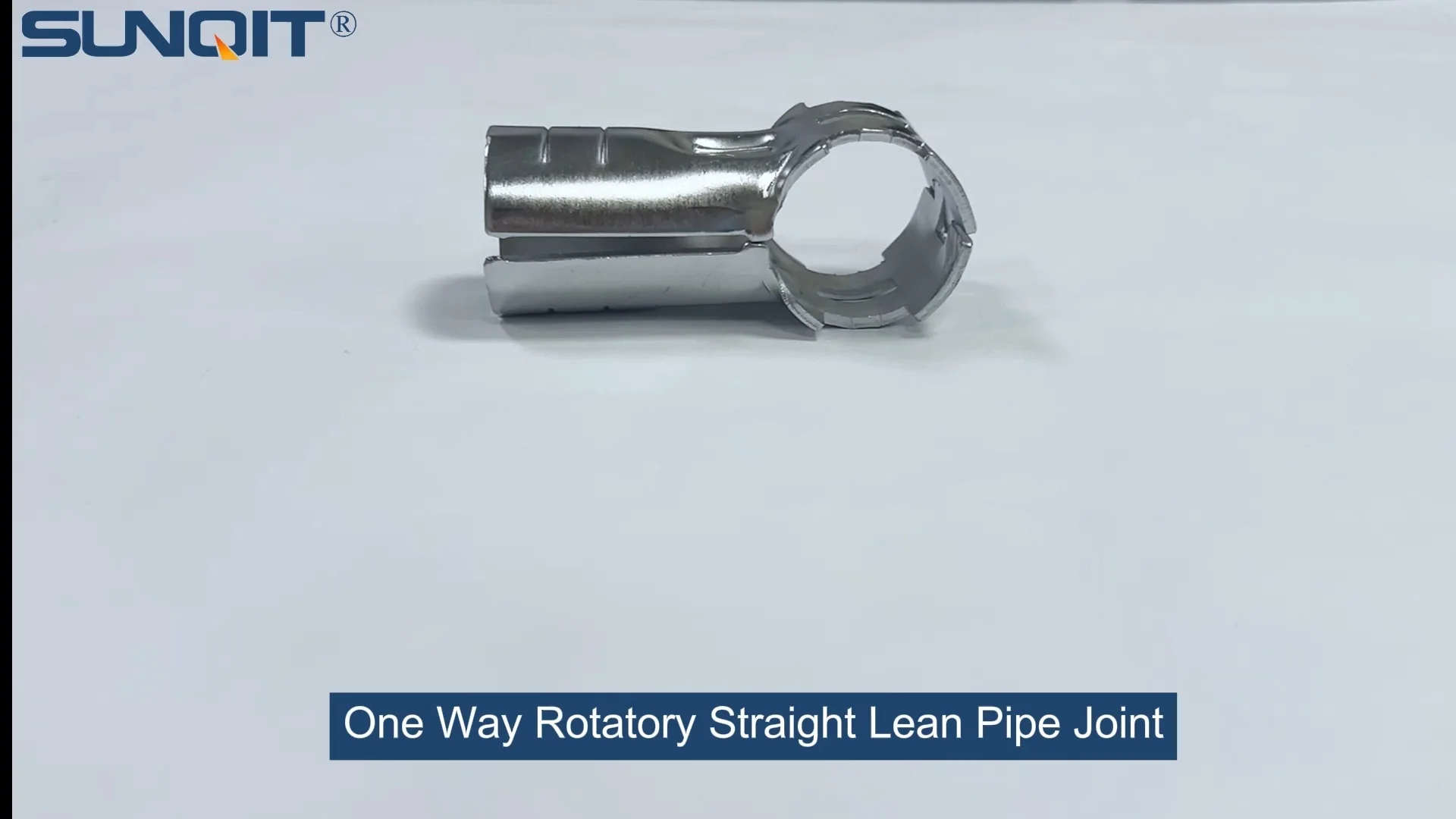
In the fast-paced world of manufacturing, every second counts. Assembly lines hum with the pressure to meet deadlines, reduce waste, and keep up with shifting production demands. Yet, one often-overlooked bottleneck lies in the very tools that hold these lines together: the joints and connectors that shape workbenches, material racks, and flow systems. For too long, rigid, cumbersome joints have forced workers to waste precious time adjusting setups, reconfiguring workstations, and fighting with components that resist quick changes. But what if there was a better way? Enter the One Way Rotatory Straight Lean Pipe Joint Chrome —a small but mighty innovation designed to transform how teams build, adjust, and optimize their assembly processes. In this article, we'll explore how this unassuming component is becoming a cornerstone of lean manufacturing, driving faster assembly speeds, reducing frustration, and unlocking new levels of efficiency on the factory floor.
The Hidden Cost of Clunky Joints: Why Traditional Assembly Setups Fall Short
To understand the impact of the One Way Rotatory Straight Lean Pipe Joint Chrome, let's first look at the problem it solves. Walk into any manufacturing facility still using traditional lean pipe joints, and you'll likely witness a familiar scenario: a worker crouched over a lean pipe workbench, wrench in hand, struggling to loosen a rusted connector. What should be a quick adjustment—lowering a shelf by a few inches, repositioning a roller track, or angling a material bin—turns into a 10-minute battle. The old joint, often made of basic steel with a fixed design, either seizes up from wear or slips out of place when pressure is applied, forcing repeated readjustments.
These delays add up. A study by the Lean Manufacturing Institute found that workers in mid-sized factories spend an average of 7% of their shift on "non-value-added" tasks related to workstation reconfiguration—time that could be spent assembling products, inspecting quality, or collaborating with teammates. Multiply that by hundreds of workers across a facility, and the cost in lost productivity becomes staggering. Worse, the frustration of wrestling with uncooperative tools leads to decreased morale, higher turnover, and even errors as tired hands rush to meet quotas.
Traditional joints also fail to align with the core principles of lean systems —the methodology focused on eliminating waste (muda) in all forms. Rigid connectors create "inflexible waste": workstations that can't adapt to new product lines, material racks that stay fixed even when demand shifts, and assembly lines that require full overhauls instead of quick tweaks. In an era where customization and rapid product cycles are the norm, this rigidity is a death knell for competitiveness.
Real Talk from the Floor: "I used to dread changeover days," says Maria, an assembly line lead at a consumer electronics plant. "We'd spend two hours reconfiguring the workbenches with old joints—loosening bolts, fighting stripped threads, then tightening everything back just to have parts slip out of place by lunch. By the time we were done, half the shift was gone, and we'd be scrambling to catch up."
Meet the Solution: One Way Rotatory Straight Lean Pipe Joint Chrome
The One Way Rotatory Straight Lean Pipe Joint Chrome was engineered with one goal in mind: to turn "adjustment time" into "assembly time." At first glance, it looks like a simple cylindrical connector, but its design hides a clever mechanism that addresses every pain point of traditional joints. Let's break down what makes it unique:
1. Chrome-Plated Durability: Built to Last in Tough Environments
First, the material: this joint is constructed from high-grade steel and coated in a smooth, corrosion-resistant chrome finish. Unlike uncoated steel joints that rust or degrade when exposed to oils, coolants, or humidity, the chrome plating acts as a shield, ensuring the joint remains smooth and functional even in the grittiest factory conditions. This durability means fewer replacements over time, reducing maintenance costs and downtime.
2. One-Way Rotation: Adjust Quickly, Stay Secure
The star of the show is its one-way rotation mechanism . Traditional joints either lock into fixed angles or require constant tightening to stay in place. This joint, however, features a spring-loaded internal cam that allows for smooth, one-directional rotation—imagine a ratchet wrench that lets you turn freely in one direction but locks tight when you reverse. When you need to adjust the angle of a lean pipe (say, tilting a shelf for better ergonomics), you simply rotate the joint in the "free" direction, position it exactly where you want, and release. The cam engages instantly, holding the pipe firmly in place without slipping. No wrenches, no bolts, no second-guessing if it will stay put.
This feature is a game-changer for speed. What once took 5 minutes of loosening, aligning, and retightening now takes 10 seconds. Workers can adjust heights, angles, and positions on the fly, adapting to new tasks or worker preferences without interrupting the flow of production.
3. Straight Design: Seamless Integration with Lean Pipes
Designed for use with standard 28mm lean pipes (the backbone of most lean manufacturing setups), this joint fits seamlessly into existing systems. Its straight profile ensures a flush connection between pipes, reducing wobble and instability—common issues with misaligned or bulky traditional joints. Whether you're building a new lean pipe workbench , retrofitting a material rack, or adding a roller track for part flow, the joint integrates without the need for adapters or custom tools.
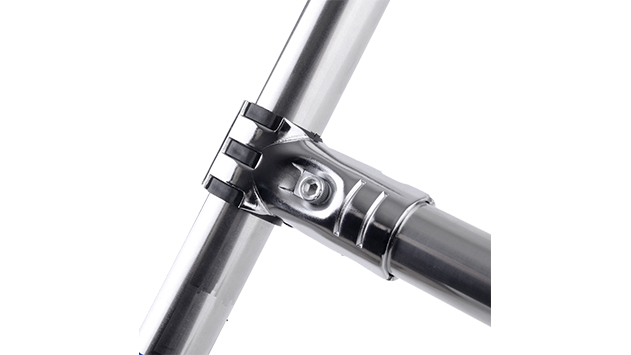
How It Works: A Closer Look at the Mechanics
To truly appreciate the ingenuity of this joint, let's peek under the chrome plating. Inside the cylindrical body, a small but robust mechanism drives its functionality: a spring-loaded pawl (a hinged, tooth-like component) that engages with a series of notches on the inner sleeve. When you rotate the joint in the "adjustment" direction, the pawl lifts, allowing the sleeve to spin freely. Rotate it the other way, and the pawl drops into a notch, locking the joint in place with a satisfying "click."
This mechanism is precision-engineered to balance two critical needs: ease of adjustment and unwavering stability . The spring tension is calibrated so that even under the weight of heavy components—like loaded material bins or power tools—the joint won't budge. Yet, it's light enough that a worker can adjust it with one hand, leaving the other free to hold the pipe in place. This balance is what sets it apart from cheaper "quick-release" joints that either slip under pressure or require excessive force to move.

Integrating with Lean Systems: From Workbenches to Roller Tracks
The One Way Rotatory Straight Lean Pipe Joint Chrome isn't just a standalone tool—it's a linchpin that amplifies the power of your existing lean infrastructure. Let's explore how it integrates with key components to supercharge assembly speed:
Lean Pipe Workbenches: Ergonomics at the Speed of Thought
The lean pipe workbench is the heart of any assembly station, and its ergonomics directly impact worker speed and accuracy. With traditional joints, setting the height, angle, or position of shelves, tool holders, or monitor arms is a chore. With the one-way rotatory joint, workers can tailor their workbenches to their body mechanics in seconds: raising a component tray to eye level to avoid bending, tilting a keyboard shelf for better wrist alignment, or lowering a parts bin to reduce reaching. When every worker can customize their space to fit their needs, fatigue decreases, focus sharpens, and assembly speed naturally rises.
Roller Tracks: Smooth Flow, No Slippage
Roller tracks are essential for moving parts between workstations, but their angle and height must be precise to ensure smooth, gravity-fed flow. A traditional joint might require trial and error—adjusting, testing, readjusting—to get the slope just right. The one-way rotatory joint lets workers set the roller track angle in one fluid motion: tilt, lock, test, and tweak in seconds. This precision reduces jams caused by misaligned tracks, cuts down on "babysitting" parts as they move, and ensures a steady, uninterrupted flow from station to station.
Lean Systems: Adapting to Change Without Waste
At its core, lean manufacturing is about being "responsive"—to customer demand, to new product designs, to shifts in supply chains. The one-way rotatory joint embodies this responsiveness. When a new product line requires a narrower workbench, workers can disassemble and rebuild the frame in minutes instead of hours. When a surge in orders demands adding a second material rack, the joint allows for quick duplication of existing setups. This agility turns "changeover days" into "changeover hours," keeping production lines aligned with real-time needs.
The Numbers Speak: How Much Speed Can You Gain?
To quantify the impact, let's look at a hypothetical (but realistic) case study. A mid-sized automotive parts manufacturer with 50 assembly workstations decides to upgrade from traditional steel joints to One Way Rotatory Straight Lean Pipe Joint Chrome. Here's what happens:
- Adjustment Time: Previously, each workstation required 15 minutes of adjustment per week (for height, tool placement, etc.). With the new joints, adjustment time drops to 2 minutes per week—a savings of 13 minutes per station.
- Changeover Efficiency: Monthly product changeovers used to take 8 hours (reconfiguring racks, workbenches, and roller tracks). With quick-adjust joints, changeovers take 2 hours—a 75% reduction.
- Worker Productivity: With less time spent adjusting and more time assembling, each worker's effective output increases by 5%. Across 50 workers, this translates to 2.5 additional "full-time" workers' worth of production per week.
The result? The manufacturer sees a 12% increase in weekly assembly volume within the first month, meets quarterly quotas ahead of schedule, and reports a 30% drop in worker complaints about "tool frustration."
A Comparison: Traditional Joints vs. One Way Rotatory Chrome Joints
| Feature | Traditional Steel Joints | One Way Rotatory Straight Lean Pipe Joint Chrome |
|---|---|---|
| Adjustment Time | 5–15 minutes per adjustment | 10–30 seconds per adjustment |
| Tools Required | Wrench, pliers, or hex key | No tools—hand-adjustable |
| Stability Under Load | Prone to slipping if not overtightened | One-way lock prevents slippage, even with heavy loads |
| Durability in Harsh Environments | Prone to rust and corrosion | Chrome plating resists rust, oil, and humidity |
| Alignment Precision | Approximate (trial and error) | Fine-tuned, one-click positioning |
| Worker Satisfaction | Often cited as a "frustration point" | Reported as "game-changing" for ease of use |
Beyond the Joint: Complementary Components for Maximum Speed
While the One Way Rotatory Straight Lean Pipe Joint Chrome is a star player, it works best when paired with other high-quality lean components. Here are a few key accessories to consider for a fully optimized assembly system:
Aluminum Profiles: Lightweight Strength for Flexible Frames
For workbenches or racks that need extra rigidity without the weight of steel, aluminum profiles are an excellent choice. The one-way rotatory joint pairs seamlessly with aluminum pipes, allowing for lightweight, easy-to-move structures that still hold up under heavy loads. Aluminum's natural resistance to corrosion also makes it ideal for cleanrooms or facilities with strict hygiene standards.
Roller Track Connectors: Smooth Transitions Between Sections
roller track connectors</strong> ensure sections align perfectly. When combined with the one-way rotatory joint, these connectors let you build custom-length tracks with precise angles, eliminating gaps that cause jams and slowdowns.</p> <h3 class=" subtitle"=""> Caster Wheels: Mobility Without Compromise
For workstations that need to move (e.g., mobile assembly carts), adding caster wheels with locking brakes turns static setups into flexible units. The one-way rotatory joint ensures that even when the cart is in motion, shelves and tool holders stay locked in place, preventing parts from shifting or falling.
Installation & Maintenance: Keeping the Momentum Going
One of the best things about the One Way Rotatory Straight Lean Pipe Joint Chrome is how easy it is to integrate into existing systems. Installation requires no special tools—simply slide the joint onto standard 28mm lean pipes, rotate to the desired position, and let the internal cam lock it in place. For best results, clean the pipes first (removing grease or debris) to ensure a tight fit.
Maintenance is equally straightforward. The chrome plating resists buildup, but an occasional wipe with a dry cloth will keep it looking and functioning like new. The internal mechanism is sealed to prevent dust and debris from interfering with the rotation, so you won't need to lubricate or disassemble it regularly. In short, it's a "set it and forget it" component that keeps working hard while you focus on production.
Conclusion: Speed, Satisfaction, and the Future of Lean Manufacturing
In the race to optimize assembly speed, it's easy to overlook the small components that hold everything together. But as we've seen, the One Way Rotatory Straight Lean Pipe Joint Chrome is more than just a connector—it's a catalyst for change. By turning frustrating, time-consuming adjustments into quick, intuitive actions, it aligns perfectly with the lean principle of "respect for people"—empowering workers with tools that make their jobs easier, safer, and more fulfilling. And when workers are happy, engaged, and equipped with the right tools, speed and quality follow naturally.
Whether you're running a small workshop or a large-scale manufacturing plant, upgrading to these joints is an investment that pays dividends in faster assembly times, lower waste, and higher morale. As Maria, the assembly line lead, puts it: "Now, when we need to adjust the line, we just do it—no groaning, no delays, no stress. We're in control, and that makes all the difference."
In the end, lean manufacturing isn't just about cutting costs—it's about creating systems that adapt, evolve, and empower. The One Way Rotatory Straight Lean Pipe Joint Chrome embodies that spirit, proving that even the smallest innovations can drive the biggest leaps forward. So why wait? It's time to unlock your assembly line's full potential—one joint at a time.