- Company Articles
- Products and Technology
- Product knowledge
- How to Optimize Space with Aluminum Profile 3 Way Connectors

How to Optimize Space with Aluminum Profile 3 Way Connectors
Related Product
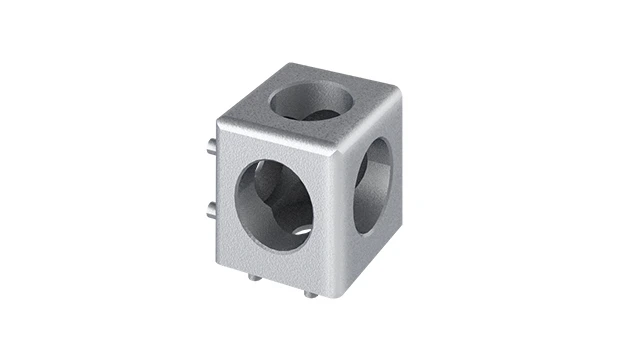
Aluminum Profile 3 Way Connector
The 3 way - squared corner connector is an external fastening method that is typically used to create a corner connection between three profiles. It is a heavy-duty connection that is simple to use and provides a polished look.
In the world of manufacturing, warehousing, and even small workshop setups, space is more than just a commodity—it's the backbone of efficiency. Whether you're running a bustling production line, managing a warehouse with ever-growing inventory, or operating a cozy home workshop, the way you use your space directly impacts workflow, productivity, and even employee morale. Yet, so many businesses struggle with the same problem: rigid, one-size-fits-all furniture and storage systems that trap them in inefficient layouts. Walls of fixed shelving that waste vertical space, workbenches that can't adapt to new tools, and material racks that leave corners collecting dust—sound familiar? The good news is, there's a modular solution that's been quietly revolutionizing how we think about space: aluminum profile 3 way connectors . These unassuming components are the unsung heroes of flexible design, turning static rooms into dynamic, adaptable environments. Let's dive into how they work, why they matter, and how you can use them to transform your space from cluttered to streamlined.
The Problem with "Permanent" Space Solutions
Before we talk about the solution, let's unpack the problem. Traditional space setups often rely on fixed structures: wooden workbenches built to a single height, steel racks welded into place, and shelving units that can't be adjusted without a saw or a wrench. These might seem sturdy, but they come with a hidden cost: inflexibility. As your business grows, your needs change. Maybe you add a new machine that requires more table space, or your inventory shifts from small parts to bulkier items. Suddenly, that "perfect" wooden workbench is too short, and those steel racks are taking up valuable floor space that could be used for a new assembly line.
Worse, these fixed systems often leave dead space unused. Corners become dumping grounds for rarely used tools, vertical space above waist height goes untouched, and narrow aisles between racks slow down material transport. In a small workshop I visited last year, the owner had a custom-built material rack that took up 60% of his floor space—but it only held half his inventory because the shelves were spaced for a product line he'd phased out two years prior. When I asked why he didn't replace it, he sighed: "Custom metalwork is expensive, and I'd have to shut down production for a day to install it." Sound like a familiar dilemma?
Key Insight: Space optimization isn't just about "fitting more in"—it's about creating systems that grow and change with your needs. Rigid structures lock you into yesterday's workflow; flexible systems let you adapt to tomorrow's challenges.
Enter Aluminum Profile Systems: The Foundation of Flexibility
If fixed structures are the problem, aluminum profile systems are the answer. You've probably seen them before—those sleek, silver or black extruded tubes with T-slots running along their length. They're lightweight but surprisingly strong, resistant to corrosion, and compatible with a universe of accessories. But what makes them truly powerful is their modularity. Unlike wood or welded steel, aluminum profiles are designed to be taken apart, reconfigured, and reused. And at the heart of that modularity? Connectors. Specifically, 3 way connectors.
Aluminum profile 3 way connectors are small, often metal or high-strength plastic components that let you join three aluminum profiles at once. Think of them as the "cornerstones" of 3D design—they allow you to build not just flat shelves or straight racks, but multi-directional structures that wrap around corners, rise vertically, and branch out horizontally. Want to add a side shelf to your workbench? A 3 way connector lets you attach a profile at a 90° angle. Need a material rack with a top shelf and a side hook for tools? A 3 way connector can join the vertical posts, horizontal beams, and diagonal supports in one secure joint. They're simple in design but revolutionary in impact.
What sets these connectors apart from other fasteners? For one, they require no welding or drilling. Most use set screws or bolts that tighten into the T-slots of the aluminum profiles, creating a secure hold without damaging the material. This means you can assemble a entire workbench in an afternoon with nothing more than a hex key. And if you need to reconfigure it next month? Just loosen the screws, move the profiles, and retighten. No waste, no hassle, no expensive contractors.

Why 3 Way Connectors Are a Space-Optimization Game Changer
So, what makes 3 way connectors specifically so useful for space optimization? Let's break down their superpowers:
1. They Turn 2D Spaces into 3D Solutions Most traditional storage systems work in two dimensions: they're either flat (like a tabletop) or vertical (like a shelf). 3 way connectors let you build in three dimensions, using height, depth, and width to maximize every inch. For example, a standard material rack might have two vertical posts and horizontal shelves—functional, but limited. With a 3 way connector, you can add a diagonal brace for stability, a side arm to hang tools, and a top shelf for rarely used items—all without increasing the rack's footprint.
2. They Adapt to Odd Spaces (Yes, Even That Awkward Corner) Corners are the bane of space optimization. Traditional square racks leave triangular gaps that are too small for most items but too large to ignore. 3 way connectors, however, can join profiles at angles other than 90° (some models allow 45°, 135°, or even adjustable angles), letting you build corner shelves, angled workbenches, or L-shaped material racks that fit snugly into those once-wasted spaces. I visited a electronics repair shop last year that used 3 way connectors to build a corner workbench with a 135° angle—suddenly, they had an extra 4 square feet of workspace, and the corner became the most popular spot for soldering stations.
3. They Grow with Your Needs (No More "Temporary" Fixes) One of the biggest frustrations with fixed systems is that they force you to choose between "good enough for now" and "perfect but expensive." With 3 way connectors, you can start small and scale up. Need a simple workbench today? Build a basic frame with four vertical posts and a top shelf. Six months later, when you add a 3D printer, use a 3 way connector to attach a side extension with additional storage. A year after that, when you hire a second technician, split the workbench into two smaller ones by removing a few connectors—no need to buy a whole new setup.
4. They're Strong Enough for Heavy Loads (No Sacrificing Durability) You might be thinking, "Modular sounds great, but will it hold my tools/parts/inventory?" The answer is a resounding yes. Aluminum profiles themselves are surprisingly strong—6063-T5 aluminum, the most common type used in these systems, has a tensile strength of around 210 MPa, which is more than enough to support heavy tools or boxes of parts. When paired with high-quality 3 way connectors (often made of die-cast aluminum or reinforced plastic), these structures can handle loads up to 200 kg or more per shelf. I've seen warehouses use them to build multi-tiered material rack systems holding everything from car parts to bulk textiles—no sagging, no wobbling, just stable, reliable storage.

From Idea to Installation: Real-World Applications
Enough theory—let's get practical. How do you actually use aluminum profile 3 way connectors to optimize space? Let's walk through three common scenarios, from small workshops to busy warehouses.
Scenario 1: The Overcrowded Workshop
Imagine a small machine shop with 500 square feet of floor space. The owner, Maria, has a cluttered workbench (too small for her drill press and grinder), a rickety wooden shelf holding tools (always falling over), and a corner filled with spare parts bins. Her biggest complaint? "I can't move around without tripping over something, and I waste 10 minutes a day just searching for tools."
Solution: A custom aluminum profile workbench with integrated storage. Using 2020 or 3030 aluminum profiles (small enough for the space but strong enough for tools) and 3 way connectors, Maria builds a workbench with:
- A main tabletop at 36" height (her ideal working height)
- A lower shelf for the drill press (using 3 way connectors to attach vertical posts and horizontal supports)
- A vertical rack on the back for hanging grinders and wrenches (3 way connectors at the top and bottom to stabilize the posts)
- A side shelf at 48" height for spare parts bins (angled at 45° with a 3 way connector to save surface space)
Result? The new workbench takes up the same floor space as the old one but triples her usable surface area. The vertical rack gets tools off the shelf and within arm's reach, and the angled side shelf turns the "wasted" corner into a functional storage spot. Maria now moves freely, and tool retrieval time drops to seconds.
Scenario 2: The Warehouse with "Too Much Inventory"
A mid-sized e-commerce warehouse handles seasonal spikes—think back-to-school supplies in August, holiday gifts in November. Their current storage system is a set of fixed steel racks with 18" deep shelves, but during peak season, they're overflowing. The warehouse manager, Raj, estimates they're using only 60% of their vertical space because the racks can't be adjusted, and they're forced to pile boxes on the floor, blocking aisles.
Solution: A modular material rack system with 3 way connectors and adjustable shelves. Using 4040 aluminum profiles (sturdier for heavy boxes) and 3 way connectors, Raj's team builds:
- Multi-tiered racks with adjustable shelf heights (using 3 way connectors to join vertical posts and horizontal beams)
- Angled "flow racks" for fast-moving items (using 3 way connectors to tilt shelves at 15°, so boxes slide forward as they're picked)
- Overhead racks above workstations (using 3 way connectors to hang from ceiling-mounted profiles, utilizing space that was previously empty)
Result? By adjusting shelf heights to fit box sizes (taller shelves for bulk items, shorter for small parts), they increase storage capacity by 40% without adding new racks. The angled flow racks reduce picking time by 25%, and the overhead racks free up floor space for pallet jacks. During peak season, they simply reconfigure the shelves to accommodate more inventory—no need for temporary storage units.
Comparing Traditional vs. Aluminum Profile Systems: The Numbers Don't Lie
Still on the fence? Let's put it in black and white. The table below compares a traditional fixed steel rack system with a modular aluminum profile system using 3 way connectors, based on real-world data from small businesses:
| Feature | Traditional Steel Rack (Fixed) | Aluminum Profile System with 3 Way Connectors |
|---|---|---|
| Assembly Time | 8–10 hours (requires welding/drilling) | 2–3 hours (hex key only) |
| Reconfiguration Cost | $500+ (hiring a welder/contractor) | $0 (DIY with existing parts) |
| Space Efficiency | 60–70% (wasted vertical/dead space) | 90–95% (3D design uses corners/height) |
| Load Capacity (per shelf) | 200–300 kg (welded joints) | 150–250 kg (adjustable based on profile size) |
| Long-Term Value (5 years) | Requires replacement after 3–4 years (welds corrode, shelves warp) | Reusable; reconfigure 5+ times with no loss in strength |
The takeaway? Aluminum profile systems with 3 way connectors aren't just "flexible"—they're often more cost-effective and space-efficient than traditional setups, especially over time. When you factor in the ability to reconfigure instead of replace, the savings add up fast.
Choosing the Right Accessories: Beyond the Connector
3 way connectors are the stars, but they can't shine alone. To get the most out of your aluminum profile system, you'll need a few key aluminum profile accessories to enhance functionality and space optimization:
End Caps: These plastic or metal caps fit over the ends of aluminum profiles, preventing dust buildup and protecting hands from sharp edges. They're small, but they make a big difference in safety and cleanliness.
Gussets: For extra stability in heavy-load applications (like material racks), gussets are triangular brackets that reinforce joints. Pair them with 3 way connectors to add rigidity to vertical posts or long horizontal beams.
Caster Wheels: Want your workbench or material rack to be mobile? Add caster wheels to the bottom of vertical posts using compatible brackets. Lockable casters keep the structure stable when in use, then roll it out of the way when you need floor space.
T-Slot Nuts and Bolts: These are the "glue" that holds the system together. High-quality T-slot nuts slide into the profile's T-slots and lock in place when tightened, ensuring a secure connection with the connectors.
Panel Inserts: For workbench tops or shelf surfaces, panel inserts (like plywood, aluminum sheets, or even anti-static mats) fit into frames built with aluminum profiles and 3 way connectors. They're easy to replace if damaged, and you can cut them to custom sizes.
Pro Tip: Start with a "core kit"—a few lengths of aluminum profile (2020, 3030, or 4040, depending on your needs), 3 way connectors, T-slot nuts, and end caps. As you build, you'll quickly see which accessories you need (casters for mobility, gussets for heavy loads). Most suppliers sell starter kits that include these basics at a discount.
Final Thoughts: Space Optimization as a Mindset
At the end of the day, optimizing space with aluminum profile 3 way connectors isn't just about buying a new tool—it's about adopting a mindset of flexibility. In a world where change is constant, your space should keep up. Whether you're a small workshop owner looking to streamline your bench or a warehouse manager aiming to squeeze more storage out of every square foot, modular systems let you adapt without starting over.
The best part? You don't need to be an engineer to get started. With a basic understanding of 3 way connectors, a few aluminum profiles, and a hex key, you can build a system that grows with you. I've seen hobbyists build custom guitar workbenches in their garages and factories reconfigure entire assembly lines in a weekend—all using these simple, powerful components.
So, take a look around your space. What's not working? Is there a corner collecting dust? A workbench that's too small? A material rack that's stuck in the past? With aluminum profile 3 way connectors, that space isn't just "empty"—it's potential. Potential to work smarter, store more, and grow faster. And in business, that potential is everything.