- Company Articles
- Products and Technology
- Product knowledge
- How to Optimize Space with Free Flow Chain Conveyors in Compact Factories

How to Optimize Space with Free Flow Chain Conveyors in Compact Factories
Related Product
Free Flow Chain Conveyor
The free flow conveyor system uses a free flow chain that can increase the speed of the tooling board that supports the products. This can improve the efficiency and quality of the production process, as well as reduce the wear and tear of the system.
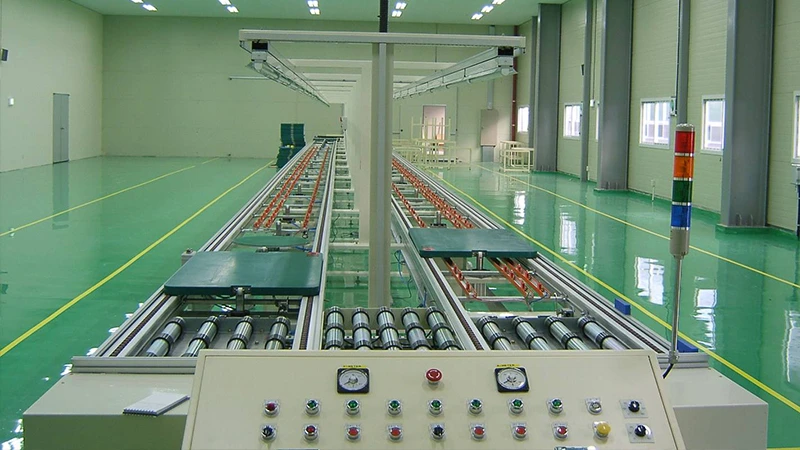
Small spaces don't have to mean small potential—here's how smart equipment turns tight quarters into productivity powerhouses
The Crunch of Compact Spaces: A Factory Owner's Daily Battle
Sarah stood in the middle of her 5,000-square-foot electronics assembly plant, staring at a cart stacked with circuit boards that had nowhere to go. To her left, a workbench overflowed with tools; to her right, a haphazard pile of empty boxes blocked the path to the shipping area. It was 2 p.m., and her team was already 40 units behind schedule—not because they weren't working hard, but because every time someone needed a part, they had to weave through a maze of equipment, and every finished product required a tedious hand-off from station to station.
"We can't expand the building," she'd told her operations manager that morning. "Rent in this industrial park is through the roof, and moving would cost a fortune. There's got to be a way to work smarter in the space we have."
Sarah's dilemma isn't unique. Across the country, small and mid-sized factories are grappling with the same challenge: how to boost output without expanding their physical footprint. In an era where efficiency is the lifeblood of competitiveness, wasted space isn't just a nuisance—it's a threat to survival. And that's where the quiet heroes of modern manufacturing come in: free flow chain conveyors, paired with lean system principles, flow racks, and adaptable workbenches. These tools don't just save space; they transform cramped, chaotic floors into streamlined, self-sustaining ecosystems where every square foot pulls its weight.
The Turning Point: When "We Can't" Became "We Can"
Three months after Sarah's frustrating afternoon, I visited her plant. The difference was staggering. Where there'd been clutter, there was now rhythm: circuit boards glided along a sleek, low-profile conveyor from the soldering station to the testing bench, no human hands needed. A flow rack near the assembly line held components at eye level, eliminating the need for workers to bend or reach. Even the workbenches looked different—they were modular, with tool holders and built-in storage that kept surfaces clear. "Our output's up 35%," Sarah said, grinning as she pointed to a digital counter above the shipping door. "And we haven't added a single square foot."
The star of the transformation? A free flow chain conveyor system that had replaced those cumbersome carts. But it wasn't just the conveyor itself that made the difference—it was how it worked in harmony with other lean tools to create a space where materials, people, and processes moved as one. Let's break down how it all comes together.
Free Flow Chain Conveyors: The Unsung Space-Savers
At first glance, a free flow chain conveyor might not seem revolutionary. It's a series of linked rollers or chains mounted on a frame, designed to move products from point A to point B using gravity or minimal power. But looks can be deceiving. What makes these conveyors game-changers for tight spaces is their ability to turn vertical and horizontal space into usable real estate—without the bulk of traditional belt conveyors.
Unlike clunky belt systems that require heavy motors and take up valuable floor space, free flow chain conveyors are lightweight and low-profile. Many models sit just a few inches off the ground, leaving room underneath for storage or even additional workstations. They're also modular, meaning you can configure them in curves, inclines, or drops to navigate around existing equipment. Sarah's team, for example, installed a 20-foot conveyor that dipped under a workbench, then rose gently to feed the packaging station—using vertical space that had previously been empty air.
But the real magic is in their "free flow" design. Unlike roller tracks (which we'll dive into later), free flow chain conveyors use a continuous chain of rollers that allow products to move smoothly, even when loaded unevenly. This means you can transport everything from small circuit boards to larger assemblies without worrying about jams or bottlenecks. And because they're often gravity-powered, they cut down on energy costs too—a bonus for factories watching their bottom line.
"We used to have two people just moving parts between stations," Sarah's lead assembler, Mike, told me. "Now, the conveyor does that work. I can focus on testing instead of hauling. It's like getting an extra team member, but one that never takes a break."
Lean System Principles: The Brain Behind the Brawn
A conveyor alone is just a moving belt. To truly optimize space, it needs to be part of a lean system—a philosophy centered on eliminating waste, streamlining flow, and empowering workers. Lean isn't about cutting corners; it's about cutting friction . And in a compact factory, friction often comes from three sources: unnecessary movement (of people or materials), overcrowded work areas, and inflexible equipment.
Free flow chain conveyors tackle all three. By automating material transport, they reduce the need for workers to walk back and forth, turning wasted steps into productive minutes. When paired with flow racks—slant-backed shelves that use gravity to feed parts to the front—they ensure components are always within arm's reach, so assemblers don't waste time rummaging through bins. And because both conveyors and flow racks are modular, they can be reconfigured as production needs change. Last month, when Sarah's team started manufacturing a new, larger component, they simply adjusted the conveyor's angle and added a few extra flow rack sections—no demolition, no downtime.
"Lean isn't a one-time fix," explains James, a lean system consultant who worked with Sarah. "It's a mindset. But tools like free flow conveyors make that mindset actionable. They turn abstract ideas like 'reduce waste' into tangible changes you can see and feel every day." For example, James helped Sarah map her factory's "value stream"—the path a product takes from raw material to shipping—and identified that 25% of her team's time was spent moving materials. By integrating a conveyor into that stream, they cut that number to 5%.
Pro Tip: Start small with lean. You don't need to overhaul your entire factory at once. Try installing a single free flow conveyor section between two bottleneck stations, or adding a flow rack to one workbench. Measure the impact (time saved, steps reduced) and build from there. Small wins create momentum.
Flow Racks and Workbenches: The Perfect Partners to Conveyors
Imagine a symphony: the conveyor is the melody, but flow racks and workbenches are the harmonies that make it unforgettable. A flow rack isn't just a shelf—it's a silent organizer. By tilting shelves at a slight angle, it ensures the oldest parts are used first (a lean principle called "first in, first out"), reducing waste from expired or obsolete inventory. And because they're designed to hold standardized bins, they keep parts visible and accessible, so workers spend less time searching and more time building.
Sarah's team installed two flow racks near their main assembly line: one for small components like resistors and capacitors, and another for larger items like power supplies. Each bin is labeled with a color-coded tag that matches the conveyor's loading stations, so there's no confusion about where parts go. "Before, we'd have bins falling off shelves, or parts getting mixed up," said Maria, who manages the assembly team. "Now, everything has a place, and the conveyor takes it where it needs to go. It's like having a traffic cop for parts."
Workbenches, too, play a starring role. Traditional workbenches are often heavy, fixed, and underutilized—built for a single task and impossible to adapt. Modern, lean-friendly workbenches, though, are modular. They come with adjustable heights, built-in tool rails, and even integrated lighting. Sarah opted for workbenches with fold-down sides, so when the team isn't using a particular station, they can collapse it to free up floor space. "We used to have a bench that was only used for testing two hours a day," she said. "Now, we fold it down, and the conveyor runs right through the space. It's like the factory breathes—it expands and contracts with our needs."
Perhaps the most powerful thing about these tools—conveyors, flow racks, workbenches—is how they work together. A part arrives via conveyor, is assembled at a workbench, and the finished product moves on to the next station—all without leaving a footprint larger than necessary. It's a dance of efficiency, and in a small factory, every dance step counts.
From Chaos to Clarity: The Numbers Behind the Transformation
Talk is cheap; results matter. So let's get concrete. When Sarah installed her free flow chain conveyor, flow racks, and modular workbenches, she tracked three key metrics: space utilization, production output, and employee satisfaction. The results? Eye-opening.
| Metric | Before Optimization | After Optimization | Improvement |
|---|---|---|---|
| Space Used for Material Storage | 30% of floor space | 15% of floor space | 50% reduction |
| Time Spent Moving Materials | 25% of labor hours | 5% of labor hours | 80% reduction |
| Daily Production Output | 120 units/day | 162 units/day | 35% increase |
| Employee Overtime | 15 hours/week | 3 hours/week | 80% reduction |
"The overtime reduction alone paid for the conveyor in six months," Sarah said. "But the best part? My team is happier. They're not exhausted from rushing around, and they can see how their work contributes to the bigger picture. When you're not fighting the space, you can focus on making great products."
It's a pattern I've seen repeatedly: factories that invest in space-optimizing tools don't just improve their bottom line—they improve their culture. When workers aren't tripping over clutter or wasting energy on menial tasks, they feel valued. And valued employees are engaged employees, which means fewer mistakes, faster training, and a team that's invested in your success.
Choosing the Right Tools: What to Look for in a Free Flow Chain Conveyor and Lean System
So, you're convinced: it's time to stop fighting your factory's space and start working with it. But where do you begin? With so many suppliers and options, choosing the right free flow chain conveyor, flow rack, or workbench can feel overwhelming. Here's what Sarah and other factory owners wish they'd known before they started:
1. Prioritize Modularity
Your needs today won't be your needs tomorrow. A new product line, a spike in demand, or a shift in materials could change everything. Look for conveyors and racks that can be easily extended, shortened, or reconfigured. Many modern systems use simple connectors or snap-on components, so you don't need a team of engineers to make adjustments. Sarah's conveyor, for example, came with extra roller sections that she stored in a closet—when her production volume increased, she added them in under an hour.
2. Think About Weight and Size
Not all conveyors are created equal. A free flow chain conveyor built for small electronics won't hold up to heavy automotive parts, and a massive steel model will waste space if you're moving lightweight items. Be honest about what you're transporting: weight, dimensions, and fragility all matter. Most suppliers will let you test a small section with your actual products—take them up on it.
3. Don't Overlook Ergonomics
A conveyor that saves space but forces workers to bend awkwardly or reach above their heads is a failure. Look for adjustable heights and angles. Sarah's team installed their conveyor at waist level for the assembly station and knee level for the packaging area, so no one has to strain. "Ergonomics isn't a luxury," James, the lean consultant, told me. "It's productivity. A worker with a sore back isn't a fast worker."
4. Ask About Maintenance
Even the best conveyor will need occasional upkeep. Does the supplier offer replacement parts? Is the system easy to clean? Sarah's conveyor has sealed bearings, so it rarely needs lubrication, and the rollers pop out for quick cleaning—critical in a factory that handles dust-sensitive electronics. "We had an old belt conveyor that needed a technician every month," she said. "This one? My maintenance guy can fix it with a wrench and a 10-minute YouTube video."
The Future of Small-Space Manufacturing: Adaptability is Key
As I left Sarah's factory, I watched a new employee assemble her first circuit board. She placed it on the conveyor, and it glided to Mike at the testing station—no confusion, no delay. "This is how it should be," Sarah said, smiling. "No one should have to fight their workspace. The space should work for them."
The lesson here isn't just about conveyors or flow racks. It's about reimagining what's possible in the space you have. Compact factories aren't at a disadvantage—they're just forced to be smarter, more creative, and more intentional with every decision. And in a world where agility is more important than size, that's a strength.
So, to the Sarahs of the world—the factory owners, the operations managers, the dreamers stuck in tight spaces—take heart. You don't need a bigger building. You need better tools: tools that move like your business moves, adapt like your team adapts, and turn every square foot into an opportunity. Free flow chain conveyors, lean systems, flow racks, and modular workbenches aren't just equipment. They're your ticket to growth—without the growing pains.
After all, the best factories aren't the biggest. They're the ones that make every inch count.