- Company Articles
- Products and Technology
- Procurement Guidelines
- How to Order Custom 3060 Aluminum Profile End Caps: Step-by-Step

How to Order Custom 3060 Aluminum Profile End Caps: Step-by-Step
Related Product
3060 Aluminum Profile End Cap
The aluminum profile end cap adds a finishing touch to your project and closes off profile ends to limit dust and debris buildup, also it can avaid some scratch for material and labor during the assemble work.
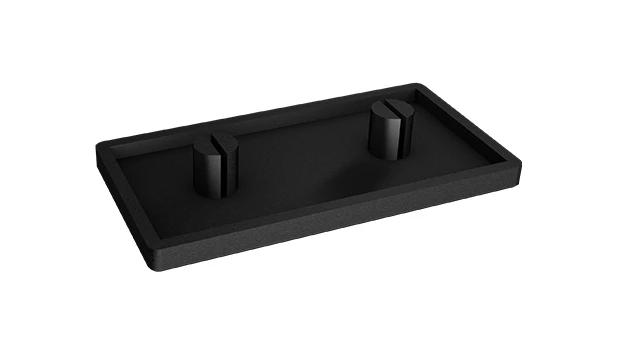
You've just wrapped up assembling a new aluminum frame for your workshop's workbench. The structure is solid, the aluminum extrusion profile looks sharp, but those raw, exposed ends of the 3060 aluminum profiles? They're not just unsightly—they catch your sleeve, collect dust, and even risk scratching tools. That's exactly why 3060 aluminum profile end caps are more than just an afterthought; they're the finishing touch that turns a functional build into a polished, professional one. But ordering custom end caps? It can feel like navigating a maze of measurements, materials, and suppliers. Let's break it down, step by step, so you can get the perfect end caps for your project—no stress, no guesswork.
Step 1: Get to Know Your 3060 Aluminum Profile (and Why End Caps Matter)
Before diving into custom orders, let's start with the basics: what even is a 3060 aluminum profile end cap? Simply put, it's a small, often unassuming component designed to fit snugly over the exposed ends of 3060 aluminum extrusion profiles. These profiles are named for their dimensions—30mm in width and 60mm in height—and are workhorses in industries from manufacturing to DIY workshops, thanks to their strength, lightweight nature, and modularity. But without end caps, those sharp, open ends become a liability.
End caps serve three critical roles: protection (for both the profile and anyone handling it), functionality (sealing out dust, debris, and moisture), and aesthetics (giving your build a clean, finished look). Standard end caps work for off-the-shelf profiles, but if your 3060 extrusion has been modified—say, with custom cutouts, thicker walls, or non-standard dimensions—you'll need a custom solution. That's where this guide comes in.
Key Measurements for 3060 Aluminum Profile End Caps
| Measurement | Tools Needed | How to Measure | Common Pitfalls |
|---|---|---|---|
| Outer Width | Digital caliper or ruler | Measure the widest point across the profile's end (should be ~30mm, but confirm!) | Forgetting to account for surface textures or coatings that add width |
| Outer Height | Digital caliper or ruler | Measure from top to bottom of the profile's end (should be ~60mm) | Misaligning the ruler, leading to off-by-1mm errors that ruin fit |
| Inner Width/Height | Calipers with depth gauge | Measure the internal cavity (critical for press-fit end caps) | Assuming "3060" means inner dimensions match outer—they rarely do! |
| Wall Thickness | Digital caliper | Subtract inner width from outer width, then divide by 2 | Profiles with uneven walls (common in custom extrusions) need multiple measurements |
| Corner Radius | Radius gauge or caliper | Check if corners are sharp or rounded (most have a small radius, e.g., R1 or R2) | Ignoring rounded corners, leading to end caps that "catch" or don't sit flush |
Pro tip: Measure at least three different points on your profile (top, middle, bottom) and take the average. Extrusion tolerances can mean slight variations, and a custom end cap needs to fit the worst-case scenario, not just the "perfect" measurement.
Step 2: Define Your End Cap's "Job Description"
Not all end caps are created equal. The right one depends on what you need it to do . Let's break down the key questions to ask yourself:
What's the Primary Purpose?
- Safety first? If the profile is in a high-traffic area (like a factory floor or retail display), prioritize soft, impact-resistant materials (rubber or flexible PVC) to prevent bumps and scrapes.
- Dust and moisture protection? For outdoor use or workshops with heavy debris, look for end caps with a tight, sealed fit—maybe even with a foam gasket or integrated aluminum profile rubber strip to block gaps.
- Aesthetics? If the end cap will be visible (e.g., on a consumer product or office furniture), color-matching and a smooth finish (matte, glossy, or textured) matter. Some suppliers even offer custom branding or logos embossed into the end cap.
- Weight or cost savings? For lightweight applications (like temporary displays), thin ABS plastic might suffice. For heavy-duty use (industrial machinery), consider denser materials like nylon or even metal.
What's the Environment Like?
Where will your 3060 profile live? A humid warehouse, a sun-baked outdoor patio, or a cleanroom? Each scenario demands different material properties:
- Indoor, dry environments: Basic PVC or ABS end caps work fine—they're affordable and come in standard colors.
- Outdoor or humid areas: Look for UV-resistant materials (to prevent fading) and corrosion-resistant options (avoid metal end caps unless they're stainless steel or coated).
- Extreme temperatures: For freezers or high-heat zones (near ovens, for example), silicone or high-temperature nylon end caps can withstand -40°C to 150°C without cracking or warping.
- Cleanrooms or medical settings: Food-grade or antimicrobial materials (like FDA-approved silicone) are non-negotiable to prevent bacterial growth.
How Many Do You Need? (And When?)
Quantity and timeline go hand in hand. If you're prototyping a single project, a small batch (10–50 units) might be enough. For mass production, you could need thousands. Keep in mind: Custom orders often have minimum order quantities (MOQs), so ask suppliers upfront what their MOQ is—some will go as low as 50 units for simple designs, while others require 500+ for complex tooling.
Lead time is another factor. Simple customizations (color changes, minor dimension tweaks) might take 1–2 weeks. Fully custom molds or materials? Plan for 4–6 weeks (or longer for international suppliers). Don't cut corners here—rushing a supplier often leads to mistakes.

Step 3: Navigate the Aluminum Profile Accessories Ecosystem
3060 aluminum profile end caps don't exist in a vacuum—they're part of a larger family of aluminum profile accessories, from brackets and connectors to gaskets and fasteners. Understanding how your end cap fits into this ecosystem will help you avoid compatibility headaches later.
Pairing End Caps with Complementary Accessories
Let's say you're building a workbench with 3060 profiles. You've already ordered aluminum profile fixings (like T-slot nuts and bolts) to assemble the frame. Now, you need end caps to finish the ends—and maybe aluminum profile rubber strip to seal the gaps between profiles and prevent dust from collecting in the T-slots. Here's how they work together:
- End caps + rubber strips: The end cap seals the profile's open end, while the rubber strip lines the T-slot along the profile's length. Together, they create a barrier against debris and moisture.
- End caps + fixings: If your end cap needs to be screwed into place (instead of press-fit), ensure the screws are compatible with your aluminum profile fixings. For example, M5 screws work with most 3060 T-slots, but confirm the thread pitch with your supplier.
- End caps + custom profiles: If your 3060 extrusion has unique features (like a built-in channel for wiring), your end cap might need cutouts to accommodate them. Share your full profile design with the supplier—including any accessories you've already purchased—to ensure everything plays nice.
Pro tip: Buy end caps and complementary accessories from the same supplier when possible. Not only does this simplify communication, but suppliers often have in-house expertise on how their products work together—saving you the guesswork of whether that generic rubber strip will fit their custom end cap.

Step 4: Find a Supplier Who Gets "Custom" (and Doesn't Cut Corners)
Choosing the right supplier is make-or-break for custom 3060 aluminum profile end caps. You need someone who understands both the technical side (dimensions, materials) and the practical side (your timeline, budget, and unique needs). Here's how to narrow down your options:
Start with Specialization
Not all suppliers are created equal. A general hardware store might stock standard end caps, but for custom work, look for specialists in aluminum extrusion or aluminum profile accessories. Many lean pipe suppliers, for example, also offer a range of aluminum profile products—their experience with modular systems (like lean pipes and workbenches) means they're familiar with the nuances of custom components.
Ask: "Do you have experience with custom 3060 aluminum profile end caps?" A good supplier will share examples of past work—photos, case studies, or even samples of similar projects. If they hesitate or only offer generic answers, move on.
Check Their Material and Manufacturing Creds
Material quality directly impacts durability. Ask what materials they recommend for your needs and why. Reputable suppliers will walk you through options (PVC, ABS, rubber, nylon, metal) and their pros/cons (cost, temperature resistance, flexibility). They should also be transparent about sourcing—look for materials that meet industry standards (e.g., RoHS compliance for electronics, FDA approval for food contact).
Manufacturing capabilities matter too. Do they have in-house tooling, or do they outsource? In-house production often means faster lead times and better quality control. If they outsource, ask about their vetting process for subcontractors—you don't want your custom end caps made by a mystery factory with no quality checks.
Communication Is Key
Custom projects thrive on clear communication. Pay attention to how responsive the supplier is during the initial inquiry. Do they ask detailed questions about your project, or do they jump straight to pricing? Are they willing to explain technical terms in plain language? A supplier who listens and clarifies is far less likely to misunderstand your specs.
Red flags: Slow response times, vague answers to specific questions, or pressure to "just pick a standard option" when you've clearly stated you need custom. Your project deserves attention—don't settle for less.
Step 5: Draft Your "Custom End Cap Blueprint" (The Spec Sheet)
Now comes the nitty-gritty: turning your needs into a detailed spec sheet that your supplier can use to create your end cap. The more specific you are, the fewer revisions (and headaches) later. Here's what to include:
1. Dimensions (Again—But More Detailed)
Include all the measurements from Step 1, plus:
- Overall length of the end cap (how far it inserts into the profile—usually 10–20mm, but adjust for your needs).
- Wall thickness of the end cap itself (thicker = more durable, but heavier).
- Any cutouts, holes, or notches (e.g., for cables, screws, or alignment with profile features).
If you have a CAD file of your 3060 profile, share it! Suppliers love visual references—they reduce the risk of misinterpretation.
2. Material and Finish
Specify the material (e.g., "PVC, Shore A hardness 70") and finish (e.g., "matte black, RAL 9005"). If color-matching is critical, provide a physical sample or Pantone/RAL code—photos on a screen can be misleading due to lighting and device settings.
3. Fastening Method
How will the end cap attach to the profile? Options include:
- Press-fit: Snaps into place via friction (best for lightweight, low-vibration use).
- Adhesive-backed: Pre-applied tape (convenient, but may fail in high heat).
- Screw-on: Screws through the end cap into the profile (secure for heavy use—use with aluminum profile fixings like T-slot nuts).
- Interference fit: Tighter than press-fit, often requiring tools to install (good for permanent applications).
4. Quantity, Lead Time, and Budget
State your desired quantity, deadline, and budget upfront. This helps the supplier recommend realistic options—for example, if you need 100 units in a week, they might suggest modifying an existing mold (faster, cheaper) instead of creating a new one (which takes 4+ weeks). Be honest about budget constraints—reputable suppliers will work with you to find alternatives (e.g., a less expensive material that still meets your needs) rather than upselling unnecessarily.
Step 6: From Quote to Sample—The Critical Middle Steps
You've shared your spec sheet; now the supplier sends a quote. But don't hit "approve" yet. Here's how to navigate the next steps:
Review the Quote Like a Detective
A detailed quote should break down costs: material, tooling (if needed), labor, shipping, and taxes. Watch for hidden fees (e.g., "mold setup" or "revision charges") and ask for clarification on anything unclear. For example, if "tooling" is listed, ask if it's a one-time fee or per-order. Some suppliers waive tooling fees for large orders—negotiate if you plan to reorder!
Compare at least 2–3 quotes, but don't just pick the cheapest. A $500 quote might seem better than $700, but if the cheaper supplier cuts corners on material or skips quality checks, you'll end up paying more in replacements later. Look for value: fair pricing + clear communication + quality guarantees.
Insist on a Prototype or Sample
Never order bulk custom end caps without first seeing a sample. Even with perfect specs, there's no substitute for holding the product in your hand and testing it on your 3060 profile. Most suppliers charge a small fee for samples (often refundable if you place a bulk order), but it's worth every penny.
What to test with the sample:
- Fit: Does it slide on easily but stay put? No gaps, no wobbling, no "sticking" halfway.
- Material: Does it feel durable? Flex it—does it crack? Scratch the surface—does the color wear off?
- Finish: Is the color consistent? Are there rough edges or blemishes?
- Function: If it has cutouts, do they align with your profile's features? If it's adhesive-backed, does the tape stick firmly?
If the sample isn't right, provide specific feedback: "The end cap is 0.5mm too narrow—it slides off easily" or "The adhesive isn't strong enough for our temperature range." A good supplier will revise the design and send a second sample—don't settle until it's perfect.
Step 7: Place the Order (and Protect Yourself with a Contract)
Once the sample is approved, it's time to place the order. But before you send payment, get a written contract that includes:
- All specs (dimensions, material, quantity, finish).
- Price breakdown (including any agreed-upon discounts).
- Lead time (with milestones, e.g., "50% production complete by X date").
- Shipping details (method, carrier, tracking, delivery address).
- Quality guarantees (e.g., "99% defect-free; defective units will be replaced at no cost").
- Payment terms (e.g., "50% deposit, 50% upon delivery").
Don't skip this step—even with a trusted supplier, a contract protects both parties if something goes wrong (delays, defects, miscommunication).
Step 8: Post-Order Support—Because the Journey Doesn't End at Delivery
Your bulk order arrives—hooray! But your relationship with the supplier shouldn't end there. Inspect the shipment immediately: Check the quantity, spot-check a few units for defects, and confirm they match the approved sample. If you find issues, contact the supplier right away—most have a window (7–14 days) for reporting problems.
Keep records of everything: quotes, contracts, sample feedback, delivery receipts. You never know when you'll need to reorder (or troubleshoot), and having a paper trail makes it easier. Plus, building a good relationship with your supplier means better service next time—they'll remember your preferences and might even offer priority lead times for repeat orders.
Common Mistakes to Avoid (So You Don't Waste Time or Money)
Even with careful planning, missteps happen. Here are the biggest pitfalls to watch for:
- Vague specs: Saying "make it fit a 3060 profile" isn't enough. Suppliers need exact measurements, material preferences, and use cases.
- Skipping samples: "It looks good on paper" doesn't mean it will work in real life. Always test before bulk ordering.
- Underestimating lead time: Rushing a supplier leads to mistakes. Build in buffer time—add 1–2 weeks to the supplier's quoted lead time.
- Ignoring the ecosystem: Forgetting that end caps work with other aluminum profile accessories (like rubber strips or fixings) can lead to compatibility issues.
- Choosing price over quality: A cheap end cap might save money now, but if it cracks or falls off, you'll pay more to replace it.
Final Thoughts: Your Custom End Cap, Your Success
Ordering custom 3060 aluminum profile end caps might seem daunting, but breaking it down into steps—from measuring your profile to testing samples—makes it manageable. The key is to be clear about your needs, choose a supplier who prioritizes communication and quality, and never skip the sample phase. With the right end cap, your 3060 aluminum project won't just be functional—it'll be finished, professional, and built to last.
So go ahead—grab your caliper, draft those specs, and start the process. Your profile (and your sleeves) will thank you.