- Company Articles
- Products and Technology
- Procurement Guidelines
- How to Source High-Quality Aluminum Guide Rail A: Key Supplier Criteria

How to Source High-Quality Aluminum Guide Rail A: Key Supplier Criteria
Related Product
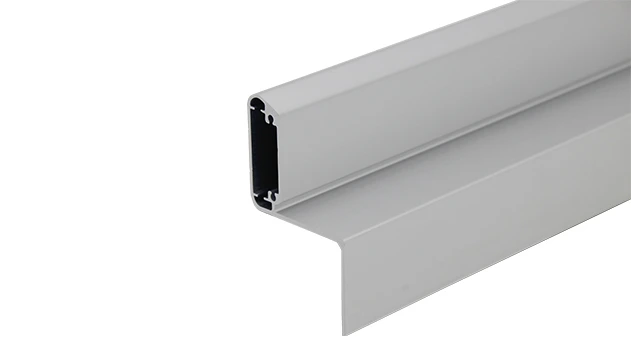
Aluminum Guide Rail A
The aluminum guide rails hold the transport goods securely on the roller track. For installation, the guide rails are simply pushed over the roller tracks.To protect sensitive products.
How to Source High-Quality Aluminum Guide Rail A: Key Supplier Criteria
If you've spent any time on a manufacturing floor, you know the unsung heroes that keep production lines moving smoothly. Aluminum Guide Rail A might not grab headlines, but this unassuming component is the backbone of flexible production systems—guiding materials, supporting workstations, and ensuring every part of your assembly process stays on track. But here's the thing: not all aluminum guide rails are created equal. A flimsy rail can throw off your entire workflow, causing jams, delays, and even safety risks. That's why choosing the right supplier isn't just about buying a product—it's about partnering with a team that understands your needs, shares your commitment to lean manufacturing, and delivers solutions that grow with your business. Let's break down how to find that partner.
Why High-Quality Aluminum Guide Rail A Matters More Than You Think
Let's start with the basics: what happens when you skimp on aluminum guide rails? I've talked to plant managers who've been there. One told me about a batch of cheap rails that warped after just three months of use, causing conveyor belts to misalign and halting production for hours. Another mentioned frequent jams in their 3C assembly line because the rail's surface finish was uneven—parts would get stuck, leading to scratched components and frustrated operators. The cost of these "budget-friendly" options adds up fast: downtime, replacement parts, wasted materials, and even damaged reputations when orders are delayed.
On the flip side, investing in high-quality Aluminum Guide Rail A pays off in ways that go beyond durability. Think about it: a well-engineered rail with precise tolerances slides smoothly, reducing friction and wear on your equipment. Its corrosion-resistant coating stands up to factory environments—whether it's the humidity of a medical device plant or the oils in an automotive workshop. And because it's built to last, you spend less time on maintenance and more time on what matters: making products. For manufacturers focused on lean principles, this isn't just a "nice-to-have"—it's the foundation of reducing waste and boosting efficiency.
5 Key Criteria to Evaluate Your Aluminum Guide Rail A Supplier
1. Material Quality: The "DNA" of a Reliable Rail
You can't build a strong rail without strong materials. When vetting suppliers, start by asking:
What's in your aluminum?
Reputable suppliers use high-grade alloys like 6063-T5 aluminum—known for its excellent strength-to-weight ratio and corrosion resistance. This isn't just marketing talk; ask for material certificates (like mill test reports) that confirm the alloy's composition, tensile strength (aim for ≥180 MPa), and hardness (typically ≥80 HB). Why does this matter? A rail made with impure aluminum or the wrong alloy will bend under heavy loads or corrode quickly, turning your "long-term investment" into a short-term headache.
Then there's the surface treatment. Aluminum Guide Rail A in manufacturing settings needs to stand up to daily wear, chemicals, and moisture. Look for suppliers that offer processes like anodizing (which creates a hard, protective oxide layer) or electrophoretic coating (for uniform color and corrosion resistance). I once visited a supplier who showed me their salt spray test results—their anodized rails lasted 1,000+ hours without rust, while a competitor's sample started corroding at 200 hours. That's the difference between a rail that lasts 5 years and one that needs replacing in 18 months.
2. Precision Engineering: Because "Close Enough" Isn't Good Enough
Imagine installing a new lean system where the rails don't line up with your conveyor or workbench. Sounds frustrating, right? That's why precision manufacturing is non-negotiable. Top suppliers use advanced extrusion dies and CNC machining to ensure every rail meets tight tolerances—think ±0.1mm on length, and hole positions accurate to within 0.05mm. This level of precision ensures your Aluminum Guide Rail A fits seamlessly with other components, like aluminum profile accessories or roller track connectors, reducing installation time and avoiding costly rework.
Another thing to check: straightness. A rail that's even slightly bent will cause parts to stick or slide unevenly. Ask suppliers about their straightness standards—look for ≤0.5mm deviation per meter. I worked with a 3C manufacturer once who switched suppliers after realizing their old rails had a 2mm bend over 3 meters; after upgrading to a precision-engineered rail, their assembly line's error rate dropped by 30%. Small details, big impact.
3. Customization Capabilities: Your Production Line Isn't "One-Size-Fits-All"
Manufacturing is all about adapting to unique needs—whether you're building tiny medical devices or large automotive parts. That's why your supplier should offer more than just off-the-shelf rails. Look for a partner that can customize Aluminum Guide Rail A to your exact specs: length, width, hole patterns, coatings (like ESD-safe options for electronics assembly), or even shapes for tight spaces. For example, a client in the medical industry once needed a U-shaped rail to fit around a sterile workstation; their supplier not only designed it but also tested its load capacity to ensure it could handle daily use with heavy instrument trays.
But customization isn't just about cutting metal—it's about problem-solving. A great supplier will ask questions:
What's the maximum weight the rail will carry? Will it be exposed to chemicals? Do you need it to integrate with an existing lean system?
They'll then use that info to recommend tweaks, like adding reinforcement ribs for extra strength or choosing a low-friction coating to speed up material flow. This collaborative approach turns a simple rail into a tailored solution that boosts your entire production process.
4. Industry Expertise: They Should Speak Your Language
There's a big difference between a supplier who sells aluminum rails and one who understands manufacturing. The best partners have deep experience in your industry—whether it's 3C assembly, medical devices, or automotive. Why does this matter? Because each sector has unique challenges. For example, in 3C manufacturing, ESD workstations require rails that dissipate static electricity to protect sensitive electronics. A supplier familiar with ESD standards will know to use conductive coatings and test surface resistance (aim for 10⁶–10⁹ Ω/sq). In contrast, a generalist might miss this detail, putting your products at risk of static damage.
Ask for case studies or client references in your field. A supplier proud of their work will happily share stories: "We helped XYZ Medical reduce assembly time by 25% with custom rails for their surgical tool line" or "Our ESD-safe rails enabled ABC Electronics to cut product defects by 40%." These real-world examples show they don't just deliver parts—they deliver results.
5. Commitment to Lean Principles: More Than a Buzzword
"Lean" isn't just about reducing waste—it's about building systems that grow with your business. The best Aluminum Guide Rail A suppliers get this. They design products that are reusable (so you can reconfigure your line without buying new rails), modular (easy to add extensions), and compatible with future upgrades. For example, their rails might work with both current and next-gen roller tracks or conveyor systems, saving you from costly overhauls down the line.
Sustainability is another piece of the puzzle. Look for suppliers who use recycled aluminum (up to 70% recycled content is common in high-quality rails) and minimize packaging waste. One supplier I know even offers a take-back program for old rails, recycling them into new products. This isn't just good for the planet—it aligns with the lean principle of "sustainable improvement," helping you meet ESG goals while reducing long-term costs.
The Ultimate Aluminum Guide Rail A Supplier Checklist
| Evaluation Category | Key Questions to Ask | Red Flags |
|---|---|---|
| Material & Quality |
- Can you provide alloy composition and mechanical property reports?
- What surface treatment do you use, and what are the test results (salt spray, abrasion resistance)? |
- Refuses to share material certificates
- Vague about surface treatment processes |
| Engineering Precision |
- What are your tolerance standards for length, straightness, and hole positioning?
- Do you use CNC machining for critical dimensions? |
- Tolerances >±0.2mm
- Uses manual measurement instead of automated tools |
| Customization |
- What's your minimum order quantity for custom lengths/designs?
- Can you help with design optimization for my specific application? |
- Only offers standard sizes
- Charges exorbitant fees for small customizations |
| Industry Experience |
- How many clients do you serve in [your industry]?
- Can you share case studies of similar projects? |
- No experience in your industry
- Can't provide client references |
| Lean & Sustainability |
- Are your rails designed for reusability/modularity?
- What percentage of your aluminum is recycled? |
- No focus on lean principles
- Uses 100% virgin aluminum with no recycling program |
Beyond the Product: Finding a Partner, Not Just a Supplier
At the end of the day, choosing an Aluminum Guide Rail A supplier is about more than specs and prices. It's about finding someone who cares about your success as much as you do. Think about it: when your production line hits a snag, do you want a supplier who sends a generic email response, or one who picks up the phone, asks questions, and sends a technician to help? When you need to scale up, do you want to start from scratch with a new vendor, or work with a team that already knows your processes and goals?
I'll leave you with this: the best suppliers don't just sell aluminum rails—they sell peace of mind. They're the ones who anticipate your needs, solve problems before they arise, and grow with you. So take your time, ask the tough questions, and don't settle for anything less than a partner who understands that your success is their success. After all, in manufacturing, the right tools (and the right people behind them) make all the difference.
P.S. If you're still unsure where to start, reach out to suppliers for samples. Testing a rail in your own environment—checking how it slides, how it holds up to daily use, how easy it is to install—will tell you more than any sales pitch ever could. Your production line (and your bottom line) will thank you.