- Company Articles
- Products and Technology
- Procurement Guidelines
- How to Source High-Quality T-Slot Rubber Seal Covers: Supplier Evaluation Checklist for Buyers

How to Source High-Quality T-Slot Rubber Seal Covers: Supplier Evaluation Checklist for Buyers
Related Product
T-slot Rubber Seal Cover
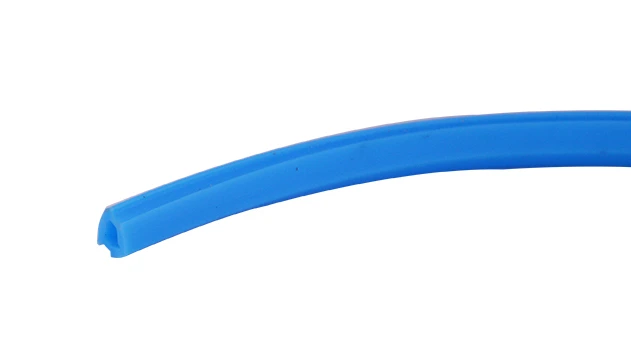
The rubber T-slot seal cover prevents dust and debris buildup, covers wires in the T-slot channel, and adds an extra layer of protection to applications. It rolls into the T-slot, making it easy to assemble.
If you've ever worked with aluminum extrusion profiles—whether building workbenches, material racks, or conveyor systems—you know the little details matter just as much as the big ones. One of those "little details" that can make a huge difference? T-slot rubber seal covers. These unassuming strips of rubber might not grab headlines, but they're the unsung heroes of any aluminum profile setup. They seal T-slots to keep out dust and debris, cushion edges to prevent scratches (on both the profile and your hands), and even add a polished, professional look to finished products. But here's the thing: not all T-slot rubber seal covers are created equal. And choosing the wrong supplier? It can turn those small details into big headaches—from cracked seals that expose sharp edges to premature wear that forces you to replace parts sooner than expected.
In this guide, we're diving deep into how to source high-quality T-slot rubber seal covers. We'll break down why these aluminum profile accessories matter, the risks of cutting corners on quality, and most importantly, a step-by-step checklist to evaluate suppliers. Whether you're a procurement manager at a manufacturing plant or a small business owner building custom workbenches, this is the roadmap to finding a supplier you can trust.
Why T-Slot Rubber Seal Covers Deserve Your Attention
Let's start with the basics: What exactly is a T-slot rubber seal cover? If you've handled an aluminum extrusion profile, you've seen the T-shaped grooves (or "slots") running along its length. These slots are designed to attach accessories—like brackets, panels, or handles—but when they're not in use, they need protection. That's where T-slot rubber seal covers come in. They're flexible strips of rubber (or sometimes silicone) that slide into those slots, creating a tight, durable seal.
But their job isn't just about aesthetics. Think about a production floor: dust, oil, and metal shavings are everywhere. Without a seal cover, those particles can work their way into the T-slot, gumming up the works when you try to attach accessories later. Or consider safety: an exposed T-slot has sharp edges that can catch on gloves, clothing, or even skin. A quality seal cover eliminates that risk. And in industries like electronics or food processing, where cleanliness is critical, seal covers prevent contaminants from lodging in the slots—helping facilities meet strict hygiene standards.
The problem? Walk into any industrial supply store or scroll through an online marketplace, and you'll find dozens of suppliers offering T-slot rubber seal covers at rock-bottom prices. But here's the catch: cheap seal covers often use low-grade rubber that cracks in cold temperatures, melts in heat, or loses elasticity after minimal use. I've heard horror stories from buyers who saved 10% upfront only to spend 30% more replacing faulty covers six months later. The moral? When it comes to T-slot rubber seal covers, quality isn't a luxury—it's a necessity.
The Cost of Cutting Corners: Real-World Risks of Poor-Quality Seal Covers
You might be thinking, "How bad can a cheap rubber strip really be?" Let's break down the risks. First, safety hazards . If a seal cover cracks or peels away, the T-slot's sharp edges are exposed. In a busy workshop, that's an accident waiting to happen—scraped hands, torn gloves, or worse. Second, equipment damage . Dust and debris in exposed slots can scratch the aluminum profile over time, weakening its structural integrity. And if you later try to insert a bracket or accessory into a dirty slot? You might bend or jam the part, leading to costly repairs.
Then there's downtime . Imagine a production line where workbenches rely on aluminum profiles with T-slot seal covers. If those covers fail, you might need to halt operations to replace them—costing your team hours (or days) of lost productivity. And let's not forget reputation . If you're selling products built with aluminum extrusion profiles—say, custom workbenches or retail displays—cheap, shoddy seal covers will make your finished product look unprofessional. Customers notice details like that, and it can erode trust in your brand.
Case Study: When "Cheap" Cost More Than Money
A mid-sized automotive parts manufacturer in Ohio learned this lesson the hard way. A few years back, they switched T-slot rubber seal cover suppliers to save $0.05 per unit on a bulk order for their assembly line workbenches. The new supplier promised "the same quality at a lower price," and the initial samples looked okay. But within three months, problems started. The seal covers, made from low-grade EPDM rubber, began to harden and crack in the cold winter temperatures of their unheated warehouse. Workers reported cuts on their hands from exposed T-slots, and the manufacturer had to pause production twice to replace the faulty covers.
By the time they switched back to their original supplier, they'd spent $12,000 on replacement parts and lost 40 hours of production time—costing them over $50,000 in total. "We thought we were being smart by cutting costs," the plant manager later told me. "Instead, we ended up paying ten times more in the long run."

The Supplier Evaluation Checklist: How to Find a Partner You Can Trust
So, how do you avoid the pitfalls of choosing the wrong supplier? It starts with a structured evaluation process. Below is a detailed checklist to guide you—broken into key categories, with actionable steps to assess each one.
1. Product Quality: The Foundation of Reliability
Quality should be your top priority. After all, even the most responsive supplier won't help if their seal covers crack after a month. Here's what to look for:
Material Selection: T-slot rubber seal covers are typically made from EPDM, silicone, or neoprene. Each has pros and cons: EPDM is affordable and weather-resistant (great for outdoor use), silicone handles high temperatures (ideal for industrial ovens or machinery), and neoprene offers excellent oil and chemical resistance (perfect for automotive or manufacturing settings). A reputable supplier will ask about your use case to recommend the right material—not just push the cheapest option.
Dimensional Consistency: T-slots come in standard sizes (e.g., 20x20mm, 30x30mm, 40x40mm profiles), and the seal cover must fit snugly. A cover that's too loose will fall out; too tight will tear when installed. Ask the supplier for tolerance specs (e.g., ±0.1mm) and request samples to test on your actual aluminum extrusion profiles.
Durability Testing: High-quality seal covers should withstand wear, temperature extremes, and exposure to common chemicals (like oils or cleaning agents). Ask the supplier for test reports: Do they test for tensile strength (how much stretch the rubber can handle before breaking)? Compression set (does the rubber return to its shape after being squeezed)? Aging resistance (how it holds up after UV exposure or heat cycling)?
Visual Inspection: Even small defects can signal poor quality. Check samples for bubbles, cracks, or uneven edges. The rubber should feel smooth and consistent—no hard spots or sticky residue. If a sample looks shoddy, imagine what a bulk order might look like.
2. Manufacturing Capabilities: Can They Deliver Consistently?
A supplier might have great samples, but can they replicate that quality in every batch? To find out, dig into their manufacturing processes:
Production Methods: Most T-slot rubber seal covers are made via extrusion (for long, continuous lengths) or molding (for custom shapes). Extrusion is more efficient for standard sizes, while molding offers flexibility for unique designs. Ask which method they use and why—it shows they understand their craft.
Quality Control (QC) Measures: A reliable supplier will have strict QC checks at every stage: raw material inspection (to ensure rubber meets specs), in-line testing during production (to catch dimensional issues early), and final inspection before shipping (to weed out defective pieces). Ask to see their QC documentation—reputable suppliers will be happy to share it.
Customization Ability: Maybe you need a seal cover in a specific color (to match your brand) or with a textured surface (for better grip). Can the supplier accommodate that? If they only offer one size or color, they might not have the flexibility to grow with your needs.
3. Certifications: Proof of Compliance
Certifications aren't just pieces of paper—they're proof that the supplier adheres to industry standards. Look for:
ISO 9001: This certification ensures the supplier has a quality management system (QMS) in place—meaning they consistently monitor and improve their processes. Avoid suppliers with expired certifications or vague excuses about "working on it."
RoHS/REACH Compliance: If you sell products in the EU or North America, your seal covers must comply with RoHS (restriction of hazardous substances) and REACH (regulation of chemicals). These standards limit lead, mercury, and other toxins—critical for safety and legal compliance. Ask for a Certificate of Compliance (CoC) and verify it with the issuing body if needed.
Industry-Specific Certifications: For specialized industries (e.g., medical device manufacturing), look for additional certifications like ISO 13485 (medical device quality management). These show the supplier understands unique regulatory requirements.
4. Track Record: Experience and Reputation
A supplier's past performance is a strong indicator of future reliability. Here's how to assess it:
Years in Business: While newer suppliers can be innovative, those with 5+ years of experience have likely weathered industry ups and downs and refined their processes. That said, don't discount startups—some bring fresh technology (like eco-friendly rubber compounds) to the table. Balance experience with adaptability.
Customer References: Ask for 2-3 references from buyers in your industry. When you call, ask: "How consistent is the quality?" "Do they meet lead times?" "How do they handle problems (e.g., a defective batch)?" A supplier who hesitates to share references is a red flag.
Online Reviews and Reputation: Check platforms like Google, Alibaba, or industry forums (e.g., Thomasnet) for reviews. Look for patterns: Are there multiple complaints about late shipments? Or praise for responsive customer service? Take negative reviews with a grain of salt (one disgruntled customer doesn't tell the whole story), but multiple similar complaints are worth investigating.
5. Pricing and Terms: Beyond the Unit Cost
Price matters, but it shouldn't be the only factor. Here's how to evaluate the true cost of working with a supplier:
Transparent Pricing: A trustworthy supplier will provide a detailed quote, including unit cost, MOQs (minimum order quantities), and any fees (e.g., tooling charges for custom designs). Watch for hidden costs—like "handling fees" or "shipping surcharges"—that pop up after you've placed an order.
MOQ Flexibility: If you're a small business, a supplier with a 10,000-unit MOQ might be impossible to work with. Look for suppliers willing to negotiate (e.g., lower MOQs for standard sizes, higher for custom orders). Some suppliers even offer "sample packs" for testing before committing to bulk.
Payment Terms: Do they require 100% upfront payment, or are they willing to offer net-30 terms for established customers? Flexible payment terms can ease cash flow—especially for large orders.
6. Customer Service: The Glue That Holds the Partnership Together
Even the best products can hit snags. A supplier with strong customer service will help you navigate those challenges—instead of leaving you to fend for yourself.
Responsiveness: How quickly do they reply to emails or calls? A supplier that takes three days to answer a simple question is unlikely to prioritize your needs when a crisis hits (e.g., a delayed shipment).
Technical Support: Do they have experts on staff who can help with questions? For example, if you're unsure whether EPDM or silicone is better for your application, a good supplier will walk you through the pros and cons—not just say, "Either works."
After-Sales Support: What happens if a batch of seal covers is defective? A reputable supplier will offer a replacement or refund—no arguments. Avoid suppliers with rigid "no returns" policies, even for faulty products.
7. Logistics and Reliability: Can They Deliver On Time?
A great product is useless if it arrives two weeks late. Here's how to assess a supplier's logistics capabilities:
Lead Times: Ask for realistic lead times (not just "we can ship next week" to win your business). A supplier with in-stock inventory for standard sizes is ideal for urgent orders. For custom designs, confirm tooling and production timelines in writing.
Shipping Partnerships: Do they work with reliable carriers (e.g., DHL, FedEx, or local freight companies)? Can they provide tracking numbers and updates? A supplier that uses unknown carriers with spotty tracking is a risk.
International Sourcing Considerations: If you're importing from overseas (e.g., China or Europe), ask about customs documentation, duties, and import regulations. A supplier with experience exporting to your country will save you headaches—they'll know how to avoid delays at the border.
Summary Table: Key Evaluation Criteria
| Evaluation Category | Key Criteria | How to Assess | Red Flags |
|---|---|---|---|
| Product Quality | Material type (EPDM/silicone/neoprene), dimensional consistency, durability testing | Request material certificates, test samples on your aluminum extrusion profiles, ask for tensile strength/aging reports | Inconsistent sizing, visible defects (bubbles/cracks), refusal to share test data |
| Manufacturing Capabilities | Production method (extrusion/molding), QC processes, customization ability | Ask about in-line inspections, request a virtual factory tour, inquire about custom color/size options | No QC documentation, inability to adjust for your needs, vague answers about production |
| Certifications | ISO 9001, RoHS, REACH compliance | Request copies of certifications, verify with issuing bodies (e.g., ISO registry) | Expired certifications, "we're working on it" instead of proof |
| Pricing & Terms | Transparent quotes, MOQ flexibility, payment terms | Compare detailed quotes from 3+ suppliers, negotiate MOQs, clarify payment terms upfront | Hidden fees, rigid MOQs with no flexibility, unclear payment policies |
| Customer Service | Response time, technical support, after-sales help | Test response time with emails/calls, ask technical questions (e.g., "Which material works best for high heat?"), inquire about return policies | Slow replies, generic answers to technical questions, "no returns" for defective products |
The Sample Test: Your Final Quality Check
Once you've narrowed down your list to 2-3 top suppliers, there's one last step: testing their samples. This is non-negotiable—even if a supplier checks all the boxes on paper, their seal covers need to perform in your real-world environment. Here's how to put those samples through their paces:
Fit Test: Slide the seal cover into a T-slot on your aluminum extrusion profile. It should fit snugly—no gaps, and it shouldn't fall out when you shake the profile. If it's too tight, it will tear during installation; too loose, and it will come out over time.
Flexibility Test: Bend the seal cover 180 degrees repeatedly (10-15 times). High-quality rubber will spring back to its original shape without cracking or creasing. Low-grade rubber will harden or develop tears.
Temperature Resistance Test: If your application involves extreme temperatures, simulate that environment. For example, place the sample in a freezer overnight (to test cold resistance) or on a heated plate (set to 80°C) for a few hours (to test heat resistance). Afterward, check for brittleness (cold) or melting/sticking (heat).
Chemical Exposure Test: If your seal covers will come into contact with oils, solvents, or cleaning agents, apply a small amount to the sample and let it sit for 24 hours. Wipe it off and check for swelling, discoloration, or loss of elasticity.

Final Thoughts: Invest Time Now to Save Headaches Later
Sourcing T-slot rubber seal covers might seem like a small part of your procurement process, but it's one that deserves careful attention. The right supplier won't just sell you a product—they'll partner with you to ensure your aluminum profile accessories perform as they should, day in and day out. By using the checklist above, you'll avoid the pitfalls of choosing based on price alone and instead find a supplier who delivers quality, reliability, and peace of mind.
Remember: The goal isn't just to "find a supplier"—it's to find a partner. And that partner will pay dividends in the long run—fewer replacements, safer workplaces, and products that stand the test of time. So take your time, ask the tough questions, and don't settle for anything less than the best. Your aluminum extrusion profiles (and your bottom line) will thank you.