- Company Articles
- Products and Technology
- Procurement Guidelines
- How to Source High-Quality Two Way Aluminum Pipe Joints for Your Manufacturing Needs

How to Source High-Quality Two Way Aluminum Pipe Joints for Your Manufacturing Needs
Related Product
Two Way Aluminum Pipe Joint
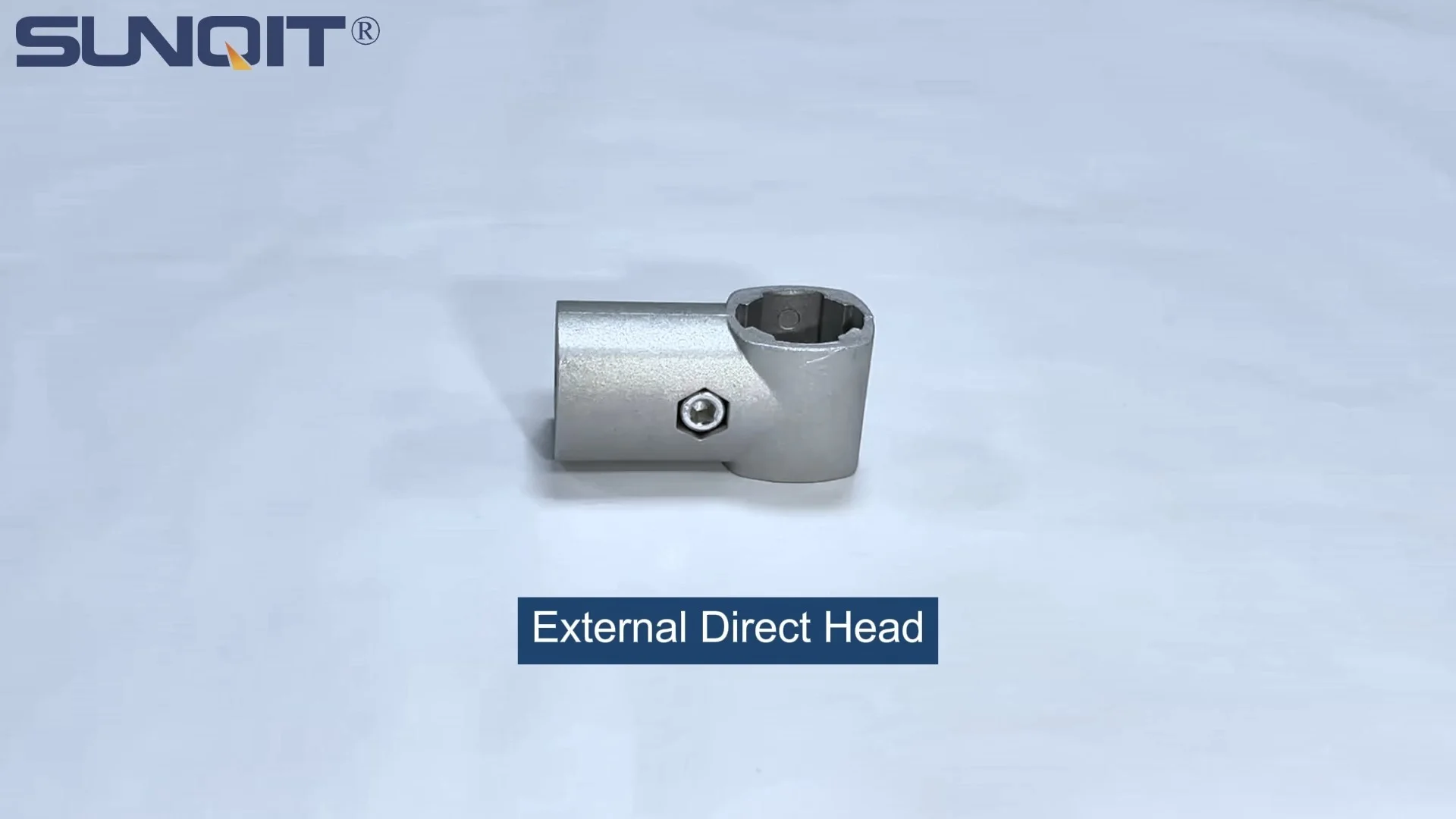
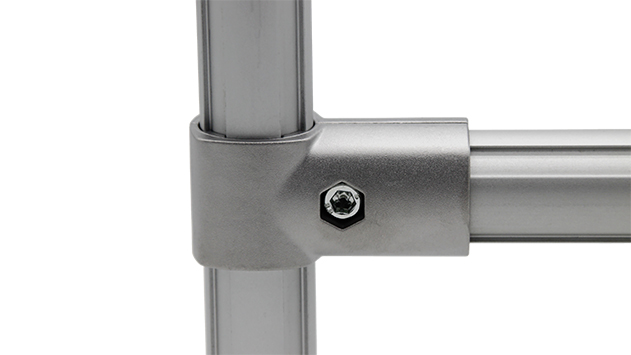
Aluminum 2 way pipe joint for 28mm aluminum pipe connection in 2 direction.
Picture this: It's a busy Tuesday morning on your factory floor. Your team is rushing to meet a critical order deadline, and the workbench at Station 3 suddenly wobbles—again. You walk over to inspect, and sure enough, the joint connecting the aluminum pipes has started to loosen. By noon, it's completely stripped, halting production for two hours while you hunt for a replacement. Sound familiar? For manufacturing teams, small components like two way aluminum pipe joints might seem insignificant until they fail. But in reality, these unassuming parts are the backbone of your lean system, holding together everything from workbenches to material racks and conveyor systems. Choosing the right ones isn't just about avoiding downtime—it's about building a production line that's efficient, reliable, and built to last.
In this guide, we'll walk through the ins and outs of sourcing high-quality two way aluminum pipe joints. We'll break down what makes a joint "good," how to spot red flags in suppliers, and why investing in quality now will save you headaches (and money) later. Whether you're a seasoned operations manager or new to lean manufacturing, by the end, you'll have the tools to make sourcing decisions that keep your production line running smoothly.
Understanding Two Way Aluminum Pipe Joints: More Than Just a "Connector"
First, let's get clear on what a two way aluminum pipe joint actually does. At its core, it's a component designed to connect two aluminum pipes at a fixed angle—most commonly 90 degrees, though some designs allow for adjustments. Think of it as the "elbow" in your modular assembly system. These joints are used in everything from simple workbenches to complex flow racks and turnover trolleys, enabling the kind of flexible, customizable structures that define modern lean manufacturing.
But why aluminum? Unlike steel, aluminum offers a winning combo of strength, lightness, and corrosion resistance—critical for factories where moisture, oils, or chemicals might be present. And when paired with aluminum pipes (often T-slot or extruded profiles), two way joints create a modular system: you can disassemble, reconfigure, and expand structures as your needs change, without welding or heavy tools. That adaptability is why lean system suppliers prioritize aluminum-based solutions for clients aiming to reduce waste and improve workflow.
Not all two way joints are created equal, though. A cheap, poorly made joint might look the part, but it won't hold up to the daily wear of a busy factory. Imagine using a plastic joint on a workbench where operators regularly place 50-pound toolboxes—the plastic will warp, the connection will loosen, and soon enough, you're back to square one. High-quality two way aluminum pipe joints, on the other hand, are engineered to handle consistent weight, vibration, and repeated assembly/disassembly. They're the difference between a workbench that lasts five years and one that needs rebuilding every six months.
Key Factors to Evaluate When Assessing Quality
So, how do you separate a durable two way aluminum pipe joint from a dud? Let's break down the critical factors to check before placing an order.
1. Material Composition: It's All About the Alloy
Aluminum isn't just aluminum. The grade of alloy used in the joint directly impacts its strength, durability, and resistance to wear. Most high-quality joints are made from 6000-series aluminum alloys (like 6061 or 6063), which are known for their excellent balance of tensile strength and machinability. These alloys contain magnesium and silicon, which form a heat-treatable structure—meaning the joint can be strengthened through processes like annealing, making it more resistant to bending or breaking under load.
Beware of suppliers who skimp on alloy quality. Some use 1000-series aluminum (pure aluminum), which is soft and prone to deformation, or recycled aluminum with unknown impurities. To verify, ask for a material certification (like a mill test report) that confirms the alloy grade. If a supplier hesitates to provide this, that's a red flag.
2. Design Precision: A Tight Fit Means Stability
Even the best alloy won't matter if the joint's design is sloppy. A well-engineered two way aluminum pipe joint should fit snugly onto your aluminum pipes with zero play. When you insert the pipe into the joint, there should be no wiggling—just a firm, secure connection. This precision is achieved through tight tolerances during manufacturing: the inner diameter of the joint's sockets should match the outer diameter of your pipes exactly (typically within ±0.1mm for standard 28mm or 40mm pipes).
Another design feature to look for is reinforcement at stress points. The area where the two sockets meet (the "corner" of the joint) is under the most strain when the structure bears weight. High-quality joints will have a thicker wall or a reinforced rib here to prevent cracking. Run your finger along this area—if it feels thin or uneven, the joint is likely to fail under heavy use.
3. Manufacturing Process: Machining Matters
The way a joint is made also affects its quality. Most reputable suppliers use a combination of extrusion and CNC machining. Extrusion shapes the raw aluminum into the joint's basic form, while CNC machining trims excess material, drills holes for fasteners, and ensures the sockets are perfectly round and smooth. This two-step process creates a joint with consistent dimensions and a clean finish.
Avoid joints made with die-casting alone. Die-casting is cheaper but often results in porous surfaces or uneven wall thickness, weakening the joint. You can spot die-cast joints by their rough, grainy texture—machined joints, by contrast, have a smooth, uniform surface.
4. Compatibility with Aluminum Profile Accessories
Your two way aluminum pipe joint doesn't work in isolation—it's part of a larger ecosystem of aluminum profile accessories. This includes T-slot bolts, end caps, pipe clamps, and other connectors. A high-quality joint should play well with these accessories, allowing you to build complex structures without needing custom parts.
For example, if your joint has pre-drilled holes for set screws, those holes should align with standard T-slot positions on your aluminum pipes. If they don't, you'll end up using extra washers or modifying the joint, which weakens the connection and wastes time. When evaluating a supplier, ask if their joints are compatible with common aluminum profile systems (like 2020, 3030, or 4040 series profiles). A reliable lean system supplier will have tested their joints with these standards.
Common Sourcing Pitfalls: What to Avoid
Now that you know what to look for, let's talk about the mistakes manufacturers often make when sourcing two way aluminum pipe joints. These missteps might save money upfront, but they almost always lead to bigger costs later.
Mistake #1: Choosing the Cheapest Option
It's tempting to opt for the lowest-priced joint, especially when ordering in bulk. But here's the math: A low-quality joint costs $1.50, while a high-quality one costs $3.00. If the cheap joint fails after 3 months and causes 2 hours of downtime (at $150/hour in labor costs), you've spent $301.50 to save $1.50 per joint. Multiply that by 50 joints on your factory floor, and the "savings" disappear fast.
Instead of focusing on upfront cost, calculate the total cost of ownership (TCO). This includes the joint's price, expected lifespan, maintenance needs, and the cost of downtime if it fails. High-quality joints often have a TCO that's 50% lower over 5 years.
Mistake #2: Ignoring Supplier Reliability
Even if a joint looks great on paper, it's useless if the supplier can't deliver on time. Many manufacturers fall into the trap of working with overseas suppliers who offer rock-bottom prices but have inconsistent lead times or poor communication. A 6-week lead time that suddenly stretches to 12 weeks can derail your production schedule, forcing you to rush-order overpriced alternatives from local suppliers.
When vetting a supplier, ask for references from other manufacturers in your industry. Call those references and ask: "How often did deliveries arrive on time?" "Did the quality stay consistent across orders?" "How did they handle defects or returns?" A reliable lean system supplier will have a track record of on-time deliveries and transparent communication.
Mistake #3: Overlooking Surface Treatment
Aluminum is naturally corrosion-resistant, but it's not impervious—especially in factories with high humidity, oils, or chemicals. A good two way aluminum pipe joint should have a protective surface treatment, like anodizing or powder coating. Anodizing creates a thin, hard oxide layer on the aluminum, enhancing corrosion resistance and giving the joint a smooth, matte finish. Powder coating adds a colored, durable layer that's ideal for environments where aesthetics matter (like customer-facing workbenches).
Avoid joints with no surface treatment or a cheap paint job. Paint can chip off easily, exposing the aluminum to rust, while untreated joints may develop white corrosion (oxidation) over time, weakening the material.

How to Vet a Supplier: 5 Questions to Ask Before Ordering
Now that you know what to look for in a joint, let's talk about finding the right supplier. Not all "aluminum pipe suppliers" are created equal—some specialize in low-cost, low-quality parts, while others focus on precision-engineered components for industrial use. Here are five key questions to ask before signing a contract:
1. "Can you provide samples for testing?"
Any reputable supplier will send free or low-cost samples so you can test the joint's quality firsthand. Use these samples to conduct simple stress tests: attach them to your pipes, apply weight (simulating a loaded workbench), and check for looseness after repeated assembly/disassembly. If the joint cracks, bends, or slips during testing, cross that supplier off your list.
2. "What's your quality control process?"
A good supplier will have a documented quality control (QC) process. Ask for details: Do they inspect every joint for dimensional accuracy? Do they test a sample from each batch for load capacity? What's their defect rate (aim for under 0.5%)? A supplier who can't answer these questions is likely cutting corners on QC.
3. "Do you offer technical support?"
Even the best joints can be misused. Maybe you're unsure if a joint is rated for a 200kg load, or you need help designing a custom structure. A reliable supplier should have a technical team that can answer these questions and provide guidance. Avoid suppliers who treat you like just another order—look for partners who invest in your success.
4. "What's your minimum order quantity (MOQ), and can you handle bulk orders?"
If you're a small manufacturer, a high MOQ (like 1000 joints) might be prohibitive. On the flip side, if you're scaling up, you need a supplier who can fulfill large orders (10,000+ joints) without sacrificing quality. Find a supplier with flexible MOQs that align with your current needs but can grow with you.
5. "What's your return policy for defective parts?"
Even the best suppliers have occasional defects. A good return policy shows they stand behind their products. Look for suppliers who offer a 30-day warranty on defects and a clear process for returns (e.g., no restocking fees for defective items). If a supplier says, "All sales are final," run—this is a sign they don't trust their own quality.

Comparing Joint Types: Which Is Right for Your Needs?
Not all two way aluminum pipe joints are designed for the same purpose. Some are built for light-duty use (like a small workbench), while others are engineered for heavy loads (like a material rack holding 500kg of parts). To help you choose, here's a breakdown of common joint types and their best uses:
| Joint Type | Material | Load Capacity | Best For | Price Range (Per Unit) |
|---|---|---|---|---|
| Standard Two Way Joint | 6063 Aluminum Alloy | Up to 150kg per joint | Light-duty workbenches, small material racks | $2.50 – $4.00 |
| Reinforced Two Way Joint | 6061 Aluminum Alloy | Up to 300kg per joint | Heavy-duty workbenches, conveyor supports | $4.50 – $6.00 |
| Swivel Two Way Joint | 6063 Aluminum Alloy + Stainless Steel Bearings | Up to 100kg per joint | Adjustable structures (e.g., tilting workbenches) | $6.50 – $8.00 |
| ESD-Safe Two Way Joint | 6063 Aluminum Alloy + Conductive Coating | Up to 200kg per joint | Electronics manufacturing (prevents static discharge) | $7.00 – $9.00 |
*Note: Load capacity is based on vertical load; horizontal load (e.g., pushing/pulling a trolley) may be lower. Always consult the supplier's technical data sheet for exact specifications.
Case Study: How One Manufacturer Saved $50k by Upgrading Their Joints
To put this all into perspective, let's look at a real-world example. A mid-sized automotive parts manufacturer in Michigan was struggling with frequent downtime due to workbench failures. Their old two way joints, sourced from a low-cost overseas supplier, were failing every 3–4 months, causing an average of 4 hours of downtime per failure. With 12 workbenches, that added up to 48 hours of lost production annually—costing the company $14,400 (based on a labor rate of $300/hour).
The manufacturer decided to switch to reinforced two way aluminum pipe joints from a local lean system supplier. The new joints cost $5.50 each (vs. $1.80 for the old ones), but they came with a 5-year warranty and a load capacity of 300kg. After six months, the team noticed zero failures. Over five years, the total cost of the new joints (12 workbenches × 4 joints per workbench × $5.50 = $264) plus zero downtime saved the company $72,000 (5 years × $14,400/year) minus the initial investment of $264—netting a savings of over $71,700. And that doesn't include the intangible benefits: happier employees, fewer missed deadlines, and a more reliable production line.
Final Tips: Building a Long-Term Sourcing Strategy
Sourcing high-quality two way aluminum pipe joints isn't a one-time task—it's an ongoing process. Here are a few final tips to ensure you're always getting the best parts for your manufacturing needs:
- Build relationships with 2–3 trusted suppliers: Don't rely on a single supplier. Having backups ensures you're covered if one faces delays or quality issues.
- Conduct quarterly quality audits: Even with a reliable supplier, spot-check batches to ensure quality stays consistent. This is especially important if they change manufacturing processes or materials.
- Train your team to inspect joints: Teach your maintenance staff to recognize signs of wear (like cracks, looseness, or corrosion). Catching issues early can prevent failures.
- Stay updated on industry trends: New materials and designs (like lightweight yet strong aluminum-lithium alloys) are constantly emerging. A good supplier will keep you informed about innovations that could benefit your line.
Conclusion: Invest in the Foundation, and the Rest Follows
At the end of the day, two way aluminum pipe joints are more than just connectors—they're the foundation of your lean manufacturing system. Skimping on quality might save you a few dollars today, but it will cost you in downtime, repairs, and lost productivity tomorrow. By prioritizing alloy quality, design precision, and supplier reliability, you're not just buying parts—you're building a production line that's efficient, resilient, and ready to grow with your business.
So the next time you're reviewing your sourcing list, take a second look at those small, unassuming joints. They might not be the flashiest part of your factory, but they're one of the most important. Choose wisely, and your production line will thank you.