- Company Articles
- Products and Technology
- Procurement Guidelines
- How to Source Reliable 2020 EU Standard Aluminum Profile Suppliers

How to Source Reliable 2020 EU Standard Aluminum Profile Suppliers
Related Product
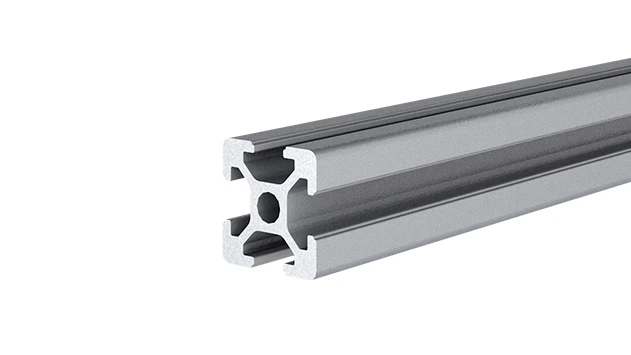
2020 EU Standard Aluminum Profile
2020 is a 2.00 x 2.00CM fractional 20 series square extrusion T-slot profile with four open T-slots, one on each 2.00 face. The profile has align-a-grooves to assist in aligning connecting profiles.
In the fast-paced world of manufacturing, automation, and industrial design, the choice of materials can make or break operational efficiency. Among the unsung heroes of modern production lines is the 2020 EU standard aluminum profile—a versatile, lightweight, and durable component that forms the backbone of everything from workbenches and material racks to automated machinery frames. But here's the catch: not all aluminum profiles are created equal, and finding a supplier you can trust is often the difference between a seamless workflow and costly delays, quality issues, or safety risks.
Whether you're a small workshop gearing up to build custom workstations or a large-scale manufacturer revamping your production floor, sourcing reliable 2020 EU standard aluminum profile suppliers requires more than just a quick Google search. It demands a strategic approach—one that balances quality, cost, scalability, and partnership. In this guide, we'll walk you through the ins and outs of identifying, evaluating, and selecting suppliers who don't just sell products, but contribute to your success. We'll cover everything from understanding the nuances of EU standards to vetting supplier credentials, and even avoiding common pitfalls that trip up even seasoned buyers.
Understanding the 2020 EU Standard Aluminum Profile: More Than Just a "Size"
Before diving into supplier sourcing, let's start with the basics: what exactly is a 2020 EU standard aluminum profile, and why does it matter? At first glance, the "2020" might seem like a simple size descriptor—and in part, it is. Typically, it refers to a square or rectangular extrusion with a cross-section of 20mm x 20mm, a dimension that strikes a sweet spot between strength and versatility. But the "EU standard" label adds layers of complexity and assurance that go far beyond measurements.
EU standards for aluminum extrusion profiles (yes, that's the technical term for how these profiles are made) are governed by strict regulations, such as EN 755 (Aluminum and aluminum alloys—Extruded profiles for general engineering purposes) and EN 12020 (Aluminum and aluminum alloys—Extruded profiles—Tolerances on dimensions and form). These standards dictate everything from the alloy composition (most commonly 6060 or 6063, known for their excellent extrudability and corrosion resistance) to surface finish (anodized, powder-coated, or mill finish), dimensional tolerances (ensuring profiles fit together precisely), and mechanical properties (tensile strength, yield strength, and elongation). For example, a 2020 EU standard aluminum profile must maintain a dimensional tolerance of ±0.1mm on its width and height—critical for applications where components need to interlock without gaps, like modular workbenches or automated conveyor systems.
But why does this matter for you as a buyer? Imagine ordering a batch of profiles to build a lean system—say, a material rack for your assembly line—only to find that the slots (used for attaching accessories like brackets or panels) are misaligned because the supplier cut corners on tolerances. Suddenly, your aluminum profile accessories—like T-slot nuts or end caps—don't fit, and your entire project grinds to a halt. EU standards exist to prevent this: they ensure consistency, reliability, and safety, making these profiles suitable for everything from light-duty shelving to heavy-duty machine frames.
Another key aspect of 2020 EU standard profiles is their compatibility with a wide range of aluminum profile accessories. From internal rotatary aluminum joints that allow for adjustable angles to caster wheels for mobile workstations, these accessories are designed to snap or bolt into the profile's T-slots seamlessly—*but only if the profile itself adheres to EU specs*. A non-standard profile might have slots that are too narrow, too shallow, or irregularly spaced, rendering even high-quality accessories useless. This interdependence between profiles and accessories is why sourcing from a supplier who understands both is so critical.
Key Factors to Evaluate When Choosing a Supplier
Now that you know what to look for in the product, let's shift focus to the supplier. Not all vendors who claim to sell "2020 EU standard aluminum profiles" are created equal. To separate the reliable partners from the fly-by-night operations, keep these critical factors in mind:
1. Quality Compliance: Certifications Are Non-Negotiable
First and foremost, a trustworthy supplier should be able to prove their adherence to EU standards. Ask for documentation: ISO 9001 certification (for quality management systems), CE marking (indicating compliance with EU health, safety, and environmental requirements), and test reports from accredited labs verifying material composition and dimensional accuracy. A supplier who hesitates to provide these is a red flag. For example, a CE mark on a 2020 profile isn't just a sticker—it's a legal declaration that the product meets all relevant EU directives, including those for mechanical strength and chemical safety (important if your profiles will be used in food processing or medical device manufacturing).
2. Production Capacity and Scalability: Can They Keep Up with Your Growth?
Your current order might be for 100 meters of 2020 profile, but what if your business expands and you need 1000 meters next quarter? A reliable supplier should have the production capacity to scale with you. Ask about their extrusion presses (do they have modern equipment capable of high-volume runs?), raw material inventory (do they stock alloy billets to avoid delays?), and lead times (what's their typical turnaround for small vs. large orders?). A supplier with limited capacity might offer great prices for small batches but leave you stranded when demand spikes.
3. Product Range: Do They Offer the Full Ecosystem?
As we mentioned earlier, 2020 profiles rarely work in isolation—you'll need aluminum profile accessories to build complete systems. A supplier who only sells profiles might force you to source brackets, connectors, and end caps from multiple vendors, increasing costs and the risk of compatibility issues. Look for suppliers who offer a full range of accessories, from basic items like aluminum guide rails (used in conveyor systems) to specialized parts like swivel roller balls (for smooth material handling). This one-stop-shop approach not only saves time but ensures that all components are designed to work together seamlessly.
4. Customer Support: Beyond the Sale
Technical questions happen. Maybe you're unsure which alloy is best for outdoor use, or you need help designing a custom workbench using 2020 profiles. A good supplier should offer more than just order fulfillment—they should act as a technical partner. Do they have engineers on staff who can assist with design? What's their after-sales support like if a batch arrives damaged or doesn't meet specs? A supplier who ignores your calls or emails post-purchase is not a partner—they're a transaction.
5. Pricing: Balancing Cost and Quality
It's tempting to go for the lowest price, but in the world of aluminum profiles, you often get what you pay for. A supplier offering 2020 EU standard profiles at 30% below market rate might be cutting corners: using lower-grade alloys, skipping anodization (which protects against corrosion), or ignoring tolerance checks. Instead of focusing solely on the per-meter cost, calculate the total cost of ownership. A slightly more expensive but higher-quality profile will last longer, require fewer replacements, and avoid downtime—ultimately saving you money.

Step-by-Step Guide to Sourcing Your Supplier
Now that you know what to look for, let's walk through the practical steps to find your ideal supplier. This process is equal parts research, verification, and relationship-building—and it's worth taking the time to do it right.
Step 1: Define Your Exact Requirements
Before reaching out to suppliers, get crystal clear on what you need. Start with the basics: profile dimensions (20mm x 20mm, but are there variations like rounded edges or extra T-slots?), alloy type (6060 for general use, 6061 for higher strength), surface finish (anodized silver, powder-coated blue, etc.), and quantity (current order and projected future needs). Don't forget accessories: will you need aluminum profile accessories like corner brackets, end caps, or caster wheels? Jotting these down will help you filter suppliers quickly—no need to waste time with a vendor who doesn't stock your required accessories.
Step 2: Research Potential Suppliers
Now, start hunting. Here are the best places to look:
- Industry Trade Shows: Events like Hannover Messe (Germany) or Automatica (Munich) are goldmines for meeting suppliers face-to-face. You can inspect their profiles firsthand, ask questions, and gauge their professionalism.
- Online Directories: Platforms like Thomasnet, Kompass, or EU-specific directories (e.g., Europages) list verified industrial suppliers. Look for those with detailed profiles, including certifications and product catalogs.
- Referrals: Ask peers in your industry—manufacturing managers, workshop owners, or procurement professionals—who they use. Word-of-mouth is often the most reliable source.
- Social Media and Forums: LinkedIn groups for manufacturing or Reddit's r/engineering can be good places to ask for recommendations (just take anonymous advice with a grain of salt).
Compile a shortlist of 5-7 suppliers who seem to align with your requirements.
Step 3: Vet Their Credentials
For each supplier on your shortlist, dig deeper. Visit their website—does it look professional, or is it riddled with typos and stock photos? Check for certifications (ISO 9001, CE) and client testimonials. Then, reach out and ask for references: a reputable supplier will happily connect you with past or current customers. When speaking to references, ask about reliability (did orders arrive on time?), quality (were the profiles consistent?), and problem-solving (how did they handle issues like damaged goods?).
Step 4: Request Samples
Never commit to a large order without testing samples. Ask for 1-2 meters of 2020 profile and a selection of accessories (e.g., a corner joint and an end cap). Inspect the samples closely: check for straightness (roll the profile on a flat surface—does it wobble?), surface finish (are there scratches or uneven coating?), and fit (do the accessories slide into the T-slots smoothly?). If possible, test the profile's strength by applying pressure (within reason!) to see if it bends or deforms. A sample that fails these checks is a clear sign to move on.
Step 5: Evaluate Communication and Flexibility
Throughout the process, pay attention to how the supplier communicates. Do they respond to emails within 24 hours? Are their representatives knowledgeable (can they explain the difference between 6060 and 6063 alloys?)? Flexibility is also key: if you need a custom cut length or a special color, are they willing to accommodate? A supplier who is hard to reach or inflexible will only cause headaches down the line.
Step 6: Negotiate Terms and Finalize the Partnership
Once you've found a supplier who passes all the above checks, it's time to negotiate. Discuss pricing (ask about volume discounts), payment terms (Net-30, letters of credit), delivery (FOB, CIF, or door-to-door), and warranty (do they guarantee against defects for a certain period?). Get everything in writing—a detailed contract protects both parties. Remember, this is the start of a partnership, not just a transaction. A supplier who is willing to work with you on terms is more likely to be invested in your success.
Common Pitfalls to Avoid
Even with careful planning, sourcing can go wrong. Here are the most common mistakes to steer clear of:
Pitfall 1: Ignoring the "EU Standard" Fine Print
Not all "EU standard" claims are equal. Some suppliers might import profiles from non-EU countries and slap a "compliant" label on them without proper testing. Always ask for a Declaration of Conformity (DoC), a legal document that lists the specific EU standards the product meets. If a supplier can't provide a DoC, walk away.
Pitfall 2: Overlooking Accessory Compatibility
We can't stress this enough: a 2020 profile is only as good as its accessories. A supplier might offer great prices on profiles but force you to buy accessories from a third party, leading to compatibility issues. Prioritize suppliers who stock the full ecosystem, or at least guarantee that their profiles work with industry-standard accessories.
Pitfall 3: Choosing Price Over Partnership
A supplier with rock-bottom prices might seem appealing, but if they cut corners on quality or support, you'll pay more in the long run. For example, a cheap profile with poor tolerance might require you to spend hours filing down edges to make accessories fit—wasting labor and delaying projects. Invest in a supplier who offers fair prices *and* reliability.
Pitfall 4: Neglecting Logistics
Even the best profile is useless if it arrives damaged or late. Ask about the supplier's packaging (do they use protective sleeves or crates?) and shipping partners (do they work with reputable carriers?). For international orders, clarify customs documentation—delays at the border can cost you dearly.
Supplier Comparison Table: A Practical Example
| Supplier | Certifications | Product Range | Lead Time | Customer Support | Sample Cost |
|---|---|---|---|---|---|
| Supplier A | ISO 9001, CE, EN 755 | 2020 EU profiles, full range of aluminum profile accessories (brackets, casters, guide rails) | 5-7 days (small orders), 15-20 days (large orders) | 24/7 technical support, dedicated account manager | Free (returnable with first order) |
| Supplier B | ISO 9001 (no CE) | 2020 profiles only (no accessories) | 3-5 days (all orders) | Email support only (48-hour response time) | €50 (non-refundable) |
| Supplier C | CE, EN 755 (no ISO) | 2020 profiles, limited accessories (only end caps and brackets) | 10-12 days (small orders), 30+ days (large orders) | Phone support (9am-5pm GMT), no dedicated account manager | €25 (refundable with order over €1000) |
As you can see, Supplier A stands out with full certifications, a complete product range, and strong support—even if their lead times are slightly longer. Supplier B is fast but lacks accessories and compliance, while Supplier C falls short on scalability and support. This table illustrates how weighing multiple factors helps you make a balanced decision.
Conclusion: Your Supplier is Your Partner in Success
Sourcing reliable 2020 EU standard aluminum profile suppliers isn't just about buying a product—it's about building a partnership that fuels your operational efficiency, quality, and growth. By understanding the nuances of EU standards, carefully evaluating suppliers on quality, capacity, and support, and avoiding common pitfalls, you can find a vendor who doesn't just meet your needs but exceeds them.
Remember, the best suppliers are those who see themselves as an extension of your team—who take the time to understand your goals, offer technical expertise, and stand behind their products. So take the time to research, test samples, and ask tough questions. Your future self (and your production line) will thank you.
In the end, the right 2020 EU standard aluminum profile supplier isn't just a vendor—they're a key ingredient in your success story.