- Company Articles
- Products and Technology
- Procurement Guidelines
- How to Source Reliable Aluminum Profile 3 Way Connector Suppliers

How to Source Reliable Aluminum Profile 3 Way Connector Suppliers
Related Product
Aluminum Profile 3 Way Connector
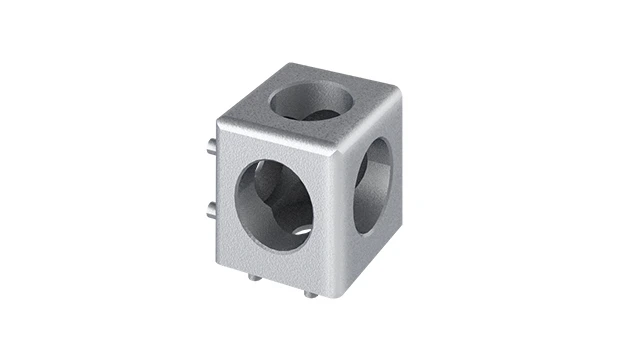
The 3 way - squared corner connector is an external fastening method that is typically used to create a corner connection between three profiles. It is a heavy-duty connection that is simple to use and provides a polished look.
Let's start with a scenario we've all lived through (or heard horror stories about): You're in the final stretch of setting up a new production line. The deadline is days away, and your team is racing to assemble workbenches, material racks, and flow racks using aluminum extrusion profiles. You reach for the aluminum profile 3 way connectors—the unsung heroes that hold everything together—only to find half of them don't fit snugly. Some are warped; others have threads so poorly cut they strip the moment you tighten a bolt. Suddenly, that "great deal" from a new supplier feels like a disaster in the making. Downtime creeps in, frustration mounts, and your lean system—meant to boost efficiency—grinds to a halt. Sound familiar? If so, you know the stakes: sourcing reliable suppliers for critical components like aluminum profile 3 way connectors isn't just a procurement task—it's a make-or-break decision for your operation.
In the world of lean manufacturing and modular workspaces, aluminum profiles and their accessories are the building blocks of productivity. And at the heart of those accessories? The aluminum profile 3 way connector. These small but mighty parts join profiles at precise angles, ensuring stability in workbenches, rigidity in material racks, and smooth flow in conveyor systems. But not all connectors are created equal. A flimsy connector can compromise an entire structure, leading to wobbly workstations, damaged goods, or even safety risks. That's why choosing the right supplier—one that prioritizes quality, consistency, and partnership—isn't just about buying a product. It's about investing in the reliability of your entire operation.
Why Reliable Suppliers Matter: Beyond the "Good Price"
Let's cut through the noise: Price tags are tempting, but they're rarely the best indicator of value when it comes to aluminum profile 3 way connectors. A supplier offering rock-bottom prices might be cutting corners on material quality, skipping quality control checks, or overpromising on production capacity. The result? You save a few dollars per connector upfront, but pay exponentially more later in rework, downtime, or even replacement costs. For example, a mid-sized electronics manufacturer I worked with once switched to a cheaper supplier for their aluminum profile accessories to "trim the budget." Within three months, their assembly line workbenches started wobbling—turns out the connectors were made from low-grade aluminum that bent under the weight of equipment. The cost to replace all connectors, plus the two days of lost production? Ten times what they "saved."
Reliable suppliers, on the other hand, act as silent partners in your success. They deliver consistent quality, so you never have to second-guess if the next batch of connectors will fit your aluminum extrusion profiles. They meet lead times, keeping your production schedule on track. And when issues arise—and they sometimes do—they don't ghost you. They troubleshoot, replace faulty parts, and work with you to prevent future problems. In short, they turn a transactional purchase into a long-term relationship that strengthens your supply chain.
Key Factors to Evaluate When Sourcing Suppliers
1. Product Quality: The Foundation of Reliability
When it comes to aluminum profile 3 way connectors, quality starts with the material. Most high-quality connectors are made from 6063-T5 aluminum alloy—a grade known for its excellent strength-to-weight ratio, corrosion resistance, and machinability. Why does this matter? Because 6063-T5 aluminum can withstand the daily wear and tear of manufacturing environments, from repeated assembly/disassembly to heavy loads. A supplier that uses lower-grade aluminum (or worse, mixes in recycled materials without proper testing) will deliver connectors that warp, crack, or fail prematurely.
Ask suppliers for material certificates. Reputable ones will provide test reports showing the aluminum's composition, tensile strength, and hardness. Don't be shy about requesting samples, either. A quick visual inspection can reveal red flags: rough edges, inconsistent plating (if applicable), or misaligned holes. Even better, test the connector in your own setup. Does it fit your aluminum extrusion profiles snugly? Can it handle the torque required to secure a joint without stripping? These small tests save big headaches later.
Certifications matter, too. Look for suppliers with ISO 9001 certification—this ensures they follow standardized quality management processes, from raw material sourcing to production and shipping. For industries like electronics or medical device manufacturing, RoHS compliance (restriction of hazardous substances) is non-negotiable. A supplier that can't provide these certifications is a supplier that's cutting corners.
2. Manufacturing Capabilities: Can They Keep Up with Your Needs?
Let's say you've verified a supplier's material quality—great. But what happens when your production ramps up? A supplier with a tiny factory and limited machinery might deliver perfectly on small orders but crumble when you need 10,000 connectors in a month. That's why evaluating manufacturing capabilities is critical. Start by asking about production capacity: How many connectors can they produce weekly? What's their lead time for standard orders vs. rush orders? Do they have backup machinery in case of breakdowns?
Customization is another key factor. Maybe your operation uses non-standard aluminum profile sizes, or you need connectors with specific finishes (like anodized coatings for ESD protection). A supplier with in-house engineering and tooling capabilities can adapt to these needs, whereas a "box reseller" (someone who just repackages products from a third party) will leave you stuck with off-the-shelf options. For example, a automotive parts manufacturer I advised needed 3 way connectors with longer threads to attach to thick-gauge aluminum profiles. Their original supplier said "impossible"—but a new supplier with CNC machining capabilities modified the design in days, saving the manufacturer from a costly redesign of their entire material rack system.
3. Range of Accessories: The Value of a "One-Stop Shop"
Aluminum profile 3 way connectors rarely work alone. They're part of a ecosystem that includes other aluminum profile accessories: end caps, brackets, hinges, casters, and more. Sourcing these from multiple suppliers is a logistical nightmare—different lead times, inconsistent quality, compatibility issues. That's why prioritizing suppliers who offer a full range of aluminum profile accessories is a game-changer. Imagine ordering connectors, joint brackets, and leveling feet from the same supplier: you streamline your procurement process, reduce shipping costs, and ensure everything works together seamlessly.
Compatibility is key here. A supplier might sell "universal" connectors, but if their aluminum profile accessories use proprietary sizing, you could end up with parts that don't fit. Ask for a product catalog or sample kit that includes connectors, profiles, and accessories. Test how they interact—do the connectors slide easily into the profile slots? Do the brackets align with the connector holes? A supplier that designs its entire product line to work together is a supplier that understands modular systems.
4. Technical Support: When "How-To" Matters More Than "What"
You've got the right connectors, the right quantity, and they fit perfectly—then you hit a snag during assembly. Maybe you're trying to build a corner workbench and can't figure out the optimal angle for the 3 way connectors, or you're unsure how to reinforce a joint for heavy loads. This is where technical support separates good suppliers from great ones. A reliable supplier doesn't just sell you a product—they equip you to use it effectively.
What should you look for? Access to engineering support, for starters. Do they have a team that can help with design questions? Can they provide CAD drawings or 3D models of their connectors to integrate into your own designs? Installation guides, video tutorials, or even on-site training (for large orders) are bonuses. I once worked with a small manufacturer that was struggling to assemble a flow rack using 3 way connectors and roller tracks. Their supplier sent an engineer to the facility for a half-day workshop, walking the team through best practices. The result? The rack was assembled in half the time, with zero rework.
5. Reputation & Reviews: What Do Their Customers Say?
In the age of Google, there's no excuse for skipping due diligence on a supplier's reputation. Start with a simple search: "[Supplier Name] reviews" or "[Supplier Name] complaints." Look for patterns—are multiple customers complaining about late shipments? Or raving about their customer service? Industry forums (like Reddit's r/manufacturing or LinkedIn groups for lean professionals) are goldmines for unfiltered feedback. You can also ask the supplier for references—preferably from companies in your industry or of similar size.
Don't discount the "vibe" during initial interactions, either. Does the sales team return calls promptly? Are they transparent about limitations (e.g., "We can't deliver that rush order, but we can do half now and half next week")? Or do they oversell and underdeliver? Trust your gut—if a supplier feels evasive or pushy, it's a red flag.

A Practical Comparison: Supplier Types to Consider
Not all aluminum profile 3 way connector suppliers are the same. To help you narrow down your options, let's compare three common types: local specialized suppliers, international bulk suppliers, and general industrial distributors. Each has pros and cons, depending on your needs.
| Supplier Type | Product Quality | Lead Time | Customization | Technical Support | Price (Per Unit) | Best For |
|---|---|---|---|---|---|---|
|
Local Specialized Supplier
(Focuses on aluminum profiles/accessories) |
High (often made with premium materials; rigorous QC) | Short (1-5 days for standard orders) | Excellent (in-house engineering; quick prototyping) | High (local teams; on-site support available) | Higher (but lower total cost of ownership) | Businesses with custom needs, tight deadlines, or complex setups (e.g., aerospace, medical device mfg.) |
|
International Bulk Supplier
(Large-scale manufacturers, often in Asia/Europe) |
Variable (depends on the supplier; some meet ISO standards, others cut corners) | Long (4-8 weeks, including shipping) | Limited (bulk production; custom orders require high MOQs) | Low to Moderate (time zone delays; support via email/chat) | Lowest (best for high-volume, standard orders) | Large corporations with predictable demand, no customization needs, and long lead time buffers |
|
General Industrial Distributor
(Sells a wide range of parts, including aluminum accessories) |
Moderate (sources from multiple factories; inconsistent quality) | Moderate (2-7 days, depending on stock) | None (only sells off-the-shelf products) | Basic (limited product knowledge; refers to manufacturer for issues) | Mid-Range (convenience premium for one-stop shopping) | Small businesses with low-volume needs and simple setups (e.g., small workshops, startups) |

Common Pitfalls to Avoid (Because Hindsight Isn't Always 20/20)
Even with careful planning, sourcing missteps happen. Let's highlight a few common pitfalls—and how to steer clear of them.
Pitfall #1: Choosing Based Solely on Price
We get it—budgets are tight. But when it comes to aluminum profile 3 way connectors, "cheap" almost always means "costly later." A connector that costs $0.50 less might save you $500 on a 1,000-unit order, but if 10% of them fail, you're looking at $5,000 in rework and downtime. Instead of fixating on the per-unit price, calculate the total cost of ownership: quality (how long will they last?), compatibility (will they work with your existing aluminum profile accessories?), and support (will the supplier help if there's an issue?). Often, a slightly pricier supplier with better quality and support will save you money in the long run.
Pitfall #2: Overlooking Compatibility
Not all aluminum extrusion profiles are created equal—some have T-slots of different widths, others have varying wall thicknesses. A 3 way connector that works with a 20x20mm profile might not fit a 40x40mm profile, even if the supplier claims it's "universal." Always confirm dimensions (slot width, hole spacing, thread size) before ordering. If possible, send the supplier a sample of your aluminum profile and ask them to test the connector for fit. It's a small step that prevents big headaches.
Pitfall #3: Ignoring After-Sales Support
A supplier's job shouldn't end when your order ships. What if a batch of connectors arrives damaged? Or you realize halfway through assembly that the thread pitch is wrong? A reliable supplier will replace defective parts quickly, no questions asked. Look for clear warranty policies (e.g., "1-year warranty against manufacturing defects") and a dedicated customer service team. Avoid suppliers that make excuses ("It must be how you're using them") or require mountains of paperwork to process a claim.
Building a Long-Term Partnership: Your Supplier as a Strategic Asset
Sourcing aluminum profile 3 way connectors isn't a one-time transaction—it's the start of a relationship. The best suppliers become strategic partners, invested in your success. Here's how to nurture that partnership:
Be Transparent About Your Needs: Share your production forecasts, upcoming projects, and pain points. If you know you'll need a big order in Q4, tell your supplier months in advance—they can plan production and secure materials, avoiding price hikes or delays. If a connector design isn't working as well as you hoped, explain the problem (e.g., "We need more torque resistance")—they might have a better solution or be able to modify the design.
Provide Feedback: Suppliers can't improve if they don't know what's working and what's not. Did a batch of connectors arrive with exceptional quality? Tell them—positive feedback reinforces good practices. Did you notice a few connectors with rough edges? Be specific ("About 5% of the last order had burrs on the T-slot edges")—most suppliers will appreciate the chance to fix issues before they become widespread.
Celebrate Wins Together: If a project succeeds because of a supplier's contribution (e.g., their custom connectors helped you launch a new assembly line on time), let them know. Send a thank-you note or mention them in a LinkedIn post. Suppliers remember customers who value their work, and that goodwill often translates into better service, priority treatment, or even exclusive access to new products.
Final Thoughts: Your Turn to Take Action
Sourcing reliable aluminum profile 3 way connector suppliers isn't easy, but it's essential. It requires looking beyond price tags, asking tough questions, and prioritizing quality and partnership over convenience. Remember: every connector you buy is a building block for your operation. Choose wisely, and you'll build a foundation of efficiency, reliability, and growth. Choose poorly, and you'll be stuck fixing problems instead of moving forward.
So, what's your next step? If you're currently using a supplier that's causing headaches (inconsistent quality, slow support, etc.), start researching alternatives. Request samples from 2-3 potential suppliers, test them rigorously, and compare not just their products but their responsiveness and expertise. If you're happy with your current supplier, take a moment to review your relationship—are you communicating openly? Are they meeting all your needs, or could there be room for improvement? Whatever your situation, remember: the right supplier isn't just a vendor. They're a partner in your success.