- Company Articles
- Products and Technology
- Product knowledge
- How to Test the Durability of Roller Track Placon Mount Joints

How to Test the Durability of Roller Track Placon Mount Joints
Related Product
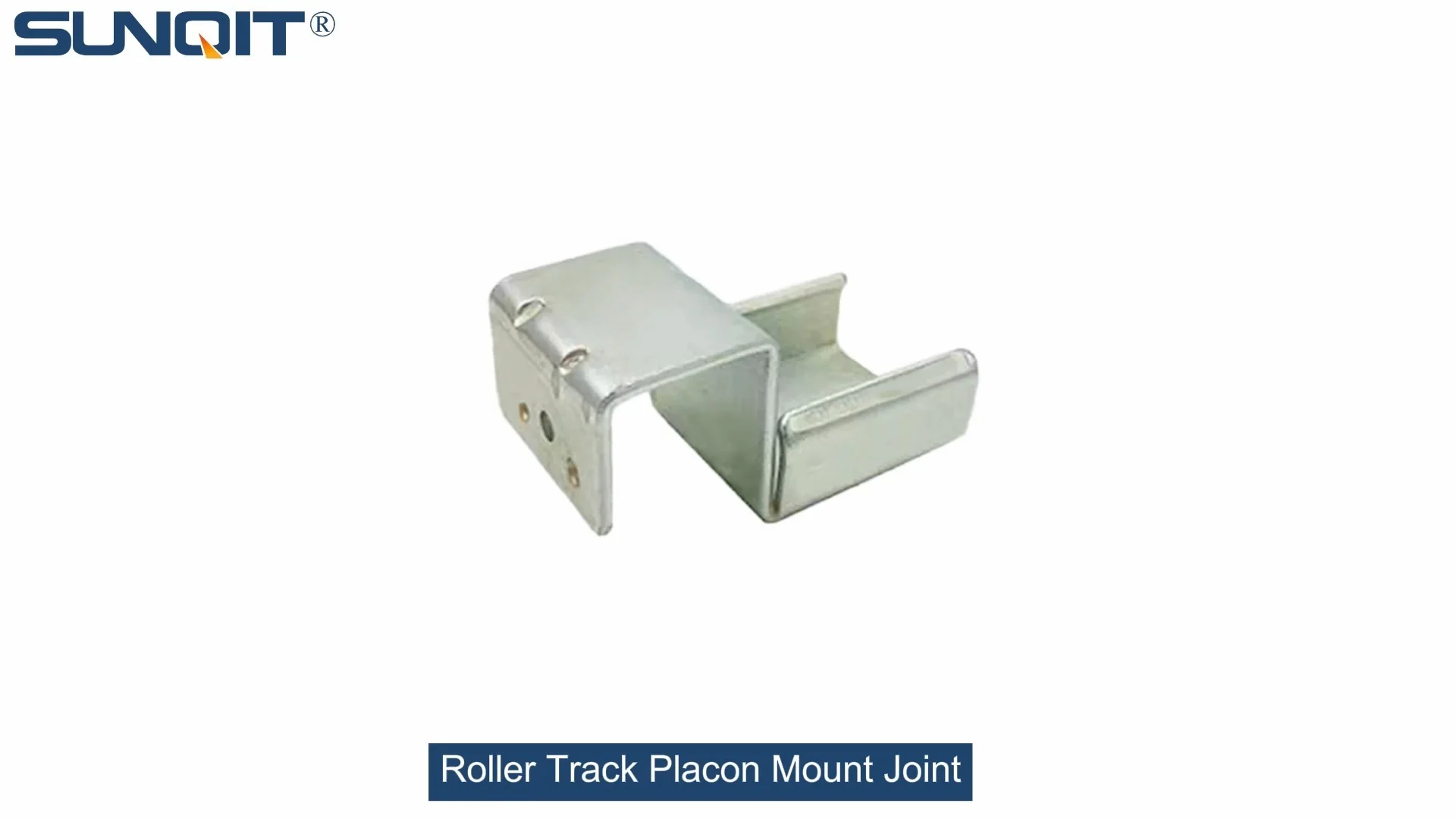
Roller Track Placon Mount Joint
Roller track placon mount work as a connector for roller track and pipe or aluminum profile in rack syetem, it is a necessary parts in rack system which widely used in industrial plant and logistic,warehouse storage.
In the world of lean manufacturing, every component plays a critical role in keeping production lines running smoothly. Roller track placon mount joints might not be the most visible parts of a lean system, but they are the unsung heroes that hold everything together. These small yet sturdy connectors link roller tracks, aluminum profiles, and other components in flow racks, conveyors, and workbenches, ensuring materials glide seamlessly and operations stay efficient. But what happens when these joints fail? Production halts, maintenance costs spike, and the entire lean philosophy of minimizing waste goes out the window. That's why testing their durability isn't just a quality check—it's a cornerstone of building reliable, long-lasting lean solutions. In this guide, we'll walk through the key steps to test these joints, ensuring they can stand up to the demands of real-world manufacturing environments.
Understanding Roller Track Placon Mount Joints: More Than Just a Connector
Before diving into testing, let's get clear on what these joints are and why they matter. Roller track placon mount joints are specialized components designed to connect roller tracks to aluminum profiles or other structural elements in lean systems. Made from high-grade aluminum (a material chosen for its strength-to-weight ratio and resistance to corrosion), they come in various designs—like flat mounts, drop-high mounts, and center support brackets—to fit different track configurations. Whether you're building a flow rack for warehouse logistics or a conveyor system for 3C assembly lines, these joints ensure the roller track stays securely attached, even as heavy boxes, components, or products slide across it day in and day out.
Their role becomes even more critical in dynamic environments. Imagine a busy automotive parts facility: flow racks loaded with engine components, conveyors moving assemblies between workstations, and operators relying on smooth, consistent motion to meet production targets. A weak joint here could lead to misaligned tracks, jamming materials, or even track detachment—all of which disrupt workflow and compromise safety. That's why durability testing isn't just about checking if a joint "works"; it's about verifying it can perform under the specific stresses of your operation, whether that's constant vibration, heavy loads, or extreme temperature fluctuations.
Core Testing Methods: Putting Joints Through Their Paces
Testing roller track placon mount joints requires a mix of controlled lab experiments and real-world simulations. Below are the most critical tests to ensure these components meet the demands of lean manufacturing systems.
1. Static Load Testing: How Much Weight Can They Handle?
Static load testing measures how well a joint withstands constant, stationary weight—think of a fully loaded flow rack where materials sit for hours before being moved. This test reveals the joint's breaking point and helps determine its safe working load (SWL).
Step-by-Step Process:
-
Sample Preparation:
select 5-10 joints (to account for manufacturing variability) and mount them to standard aluminum profiles (like 4040 or 3030 series) using the same bolts and torque specifications recommended by the supplier.
-
Testing Setup:
Secure the mounted assembly to a rigid frame, ensuring the joint is positioned to mimic real-world use (e.g., horizontal for flow rack tracks or angled for inclined conveyors).
-
Load Application:
Use a hydraulic press or calibrated weights to apply incremental loads to the roller track (attached to the joint). Start at 50kg and increase by 25kg increments, holding each load for 5 minutes.
-
Measurement:
Use a dial indicator or strain gauge to measure deflection (bending) at the joint. Stop when deflection exceeds 2mm (a common industry threshold for permanent deformation) or when visible cracks appear.
-
Data Recording:
Note the maximum load the joint sustained before failure and compare it to the manufacturer's load rating.
Key Metrics to Track: Maximum static load capacity, deflection at 50% of maximum load, and failure mode (e.g., bending, bolt shearing, or profile cracking).
2. Dynamic Cyclic Load Testing: Simulating Real-World Wear and Tear
Static testing tells you how much weight a joint can hold, but in reality, joints rarely experience constant, stationary loads. In a typical factory, roller tracks see materials sliding over them hundreds—if not thousands—of times per day. Each slide creates a small impact, and over time, these impacts add up. Dynamic cyclic load testing mimics this repetitive stress to see how joints hold up over the long haul.
Step-by-Step Process:
-
Setup:
Mount the joint and roller track assembly on a test rig with a motorized pusher that simulates material sliding. Use a standard test weight (e.g., 20kg, common for small parts in 3C assembly) attached to a sled that slides along the track.
-
Cycle Parameters:
Set the pusher to move the sled back and forth at a speed of 0.5m/s (mimicking typical operator pushing speeds) for 100,000 cycles—roughly equivalent to 6 months of daily use in a medium-volume facility.
-
Monitoring:
After every 10,000 cycles, inspect the joint for looseness, corrosion, or cracks. Use a torque wrench to check if bolts have loosened and retighten them to the recommended torque (if needed) to simulate real-world maintenance.
-
Failure Criteria:
The test ends if the joint fails (e.g., track detachment, bolt breakage) or if deflection increases by more than 1mm compared to initial measurements.
Key Metrics: Number of cycles before failure, change in deflection over time, and bolt loosening frequency.
3. Environmental Resistance Testing: Surviving the Factory Floor
Factories are tough places for metal components. Humidity in warehouse logistics areas, coolants in automotive plants, and static electricity in electronics assembly—all these factors can degrade joints over time. Environmental resistance testing ensures joints can handle the specific conditions of their intended use.
4. Material Fatigue Testing: Ensuring Long-Term Strength
Even if a joint passes static and dynamic tests, material fatigue can cause sudden failure down the line. Aluminum—while strong—can develop microscopic cracks when subjected to repeated stress, leading to "fatigue failure." Material fatigue testing targets this by putting the joint's raw materials (aluminum alloy, bolts, coatings) through rigorous stress tests.
Key Tests for Materials:
-
Tensile Fatigue Test:
Cut a sample from the joint's aluminum body and subject it to repeated tensile stress (pulling) at 70% of its ultimate tensile strength until it breaks. Record the number of cycles to failure.
-
Coating Adhesion Test:
Use a cross-cut tester to score the joint's surface coating (if applicable) and apply adhesive tape. If the coating peels off, it may fail in corrosive environments.
-
Bolt Shear Test:
Test the joint's bolts by applying lateral force until they shear. Compare results to industry standards (e.g., ISO 898 for bolt strength).
Pro Tip:
Always test materials from multiple batches. Manufacturing variations (e.g., alloy composition, heat treatment) can affect fatigue resistance, so sampling from different production runs ensures consistency.
5. Real-World Application Simulation: Testing in Context
Lab tests are valuable, but nothing beats seeing how joints perform in a real lean system. For this final test, integrate the joints into a complete setup—like a flow rack with 3 rows and 3 floors (similar to Material Rack B) or a conveyor line with 40 steel roller tracks. Run the system with actual production materials (e.g., plastic components for consumer electronics or metal parts for automotive assembly) for 2 weeks, monitoring joint performance daily.
What to Watch For:
-
Noise:
Unusual squeaking or rattling may indicate loose joints.
-
Track Alignment:
Misalignment (e.g., track tilting) suggests joint deformation.
-
Maintenance Needs:
How often do bolts need retightening? Frequent adjustments mean the joint may not hold torque well over time.
-
Operator Feedback:
Ask operators if materials slide smoothly or if they notice any sticking—this real-user input often reveals issues lab tests miss.

Interpreting Test Results: What's a "Good" Joint?
After running all these tests, you'll have a mountain of data—but how do you know if a joint passes? Start by comparing results to industry standards: for example, the International Organization for Standardization (ISO) has guidelines for structural components in conveyor systems (ISO 10504). Additionally, align results with your specific use case: a joint for a light-duty workbench in a medical device lab won't need the same load capacity as one for a heavy-duty conveyor in an automotive plant.
Red Flags to Watch For:
- Static load capacity below 75% of the manufacturer's rating.
- Dynamic failure before 50,000 cycles (for high-volume applications).
- Visible corrosion after humidity testing.
- More than 2mm deflection in real-world simulation.
Green Lights:
- Static load capacity meets or exceeds the manufacturer's rating.
- Completes 100,000 dynamic cycles with ≤0.5mm deflection.
- No corrosion or coating peeling in environmental tests.
- Smooth operation in real-world simulation with minimal maintenance.

Why This Matters: The Cost of Cutting Corners
Skipping durability tests might save time upfront, but it's a false economy. A single joint failure in a busy production line can cost thousands in downtime. For example, if a joint in a conveyor system for 3C assembly fails, the line stops, and 20 operators sit idle for 2 hours—costing ~$2,000 in labor alone, not counting lost production. Multiply that by multiple failures across a factory, and the numbers add up quickly. On the flip side, investing in thorough testing ensures joints last 3-5 years (or longer) with minimal maintenance, aligning perfectly with the lean principle of "sustainable improvement."
Final Thought:
Roller track placon mount joints may be small, but their impact on your lean system is huge. By following these testing steps, you're not just ensuring durability—you're building a foundation for efficient, waste-free production. After all, in lean manufacturing, the strongest systems are built on the strongest details.