- Company Articles
- Products and Technology
- Product knowledge
- How to Test the Quality of Three Way Lean Pipe Joint Chrome Before Purchase

How to Test the Quality of Three Way Lean Pipe Joint Chrome Before Purchase
Related Product
Three Way Lean Pipe Joint Chrome
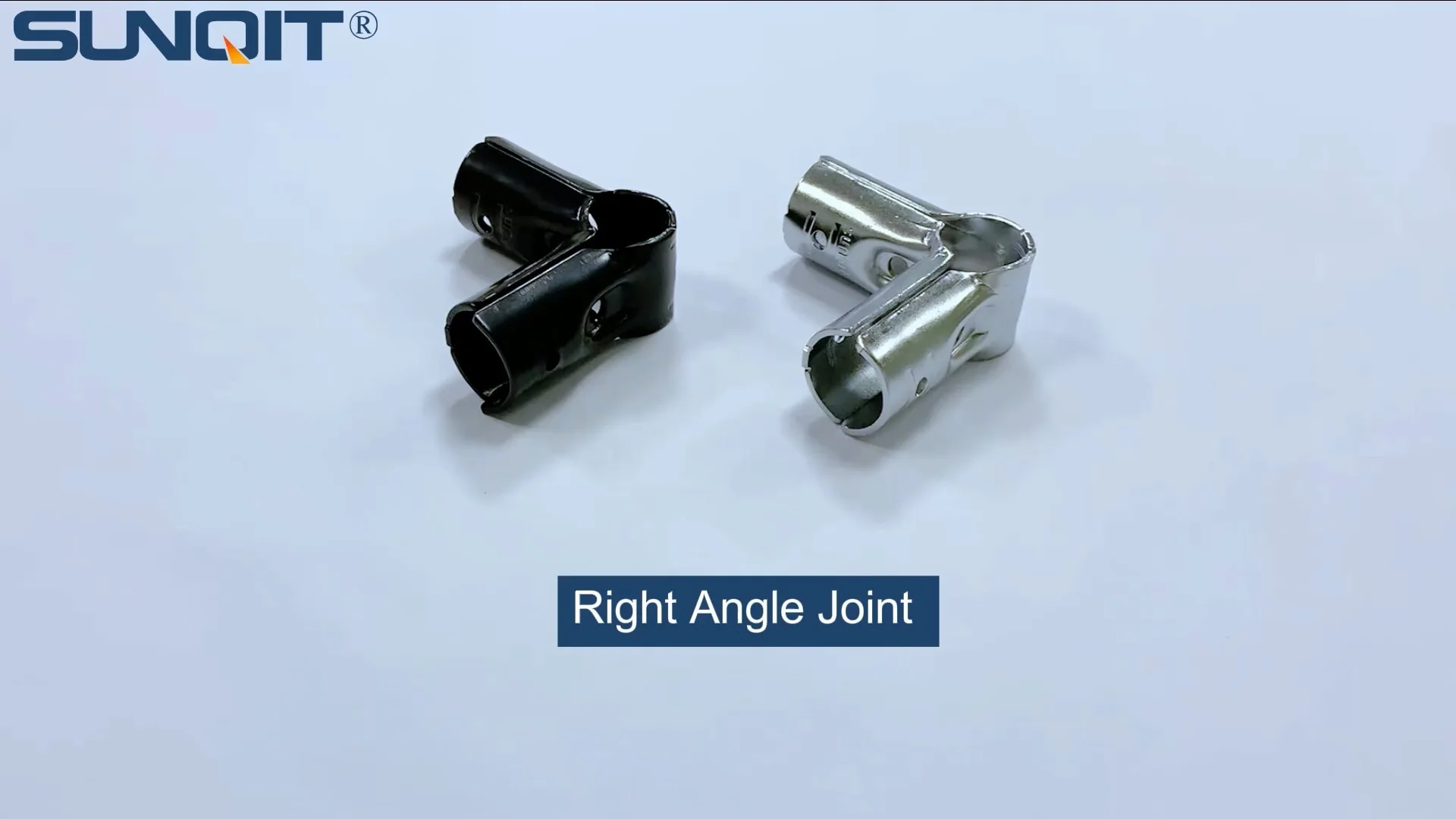
Three way lean pipe joint for 3 pcs 28MM lean pipe connection in straight angle, which used widely in workbench, flow rack, hand trolley frame connection.
Walk into any modern manufacturing plant, and you'll likely see a maze of sleek, modular structures: workbenches where assemblers piece together electronics, flow racks carrying components to the production line, and turnover trolleys shuttling finished goods to the warehouse. These structures are the backbone of lean manufacturing systems, designed to boost efficiency, reduce waste, and keep operations running like clockwork. But what holds them all together? More often than not, it's a network of lean pipes and joints—small but mighty components that bear the weight of daily operations. Among these, the three way lean pipe joint chrome stands out as a workhorse, connecting pipes at three angles to form stable, multi-directional frameworks. Yet, if this unassuming joint fails, the consequences can ripple through the entire facility: wobbly workbenches slowing down assembly, flow racks sagging under material weight, or even safety hazards that put workers at risk. That's why testing the quality of three way lean pipe joint chrome before you buy isn't just a good idea—it's critical to keeping your lean system strong and your production line moving.
Why the Three Way Lean Pipe Joint Chrome Deserves Your Attention
At first glance, a three way lean pipe joint might seem simple: a metal connector with three openings to slot in lean pipes. But its role is far more complex. Unlike straight or elbow joints, which connect pipes in one or two directions, three way joints are the "hubs" of lean structures, distributing weight evenly across multiple axes. Think of a typical workbench : its legs, shelves, and side rails often meet at three way joints, which must support the weight of tools, materials, and even workers leaning on the surface. In a busy facility, that joint might endure thousands of pounds of pressure daily, not to mention vibrations from nearby machinery and the occasional bump from a forklift or trolley.
Then there's the chrome plating. Chrome isn't just for shine—it's a protective barrier. Manufacturing environments are rarely pristine: oil, coolant, moisture, and even chemicals can splash onto lean structures. Chrome plating resists corrosion, ensuring the joint doesn't rust or degrade over time. A poorly plated joint, however, will start flaking or pitting within months, turning a once-sturdy connection into a weak link. Imagine a flow rack in a food packaging plant: if the three way joints holding up its shelves rust, the rack could sag, causing boxes to tip or jam. Suddenly, your "lean" system becomes a bottleneck, with workers stopping to fix fallen items instead of focusing on production.
The cost of cutting corners on joint quality is steeper than you might think. A cheap, low-quality three way joint might save you a few dollars per unit upfront, but it could cost hundreds in downtime when it fails. Let's say a joint on a material trolley cracks, causing the trolley to tip and spill components. Not only do you lose the damaged parts, but you also halt the production line while workers clean up and replace the joint. Multiply that by dozens of joints across your facility, and the "savings" disappear fast. On the flip side, a high-quality three way lean pipe joint chrome—one that's well-made, properly plated, and rigorously tested—can last for years, even in harsh environments. It's an investment that pays off in fewer replacements, less downtime, and a more reliable lean system.
5 Steps to Test Three Way Lean Pipe Joint Chrome Quality Like a Pro
Testing a three way lean pipe joint chrome doesn't require a lab full of equipment, but it does demand attention to detail. Below are five actionable steps to evaluate whether a joint is built to last—or destined to fail.
Step 1: Start with a Visual Inspection—The Devil's in the Details
Your first test is the simplest: look closely. A high-quality joint will show signs of careful craftsmanship, while a shoddy one will reveal its flaws immediately. Begin with the chrome plating. Run your finger along the surface—it should feel smooth and uniform, with no rough patches or bumps. Hold the joint under a light and tilt it; the plating should reflect evenly, with no dull spots, bubbles, or peeling. These imperfections are red flags: bubbles mean the plating didn't adhere properly, and peeling will only get worse once the joint is exposed to moisture or friction.
Next, inspect the joint's base material (usually steel, though some suppliers use aluminum). Check the casting for defects: tiny cracks around the openings, sharp burrs that could scratch pipes or hands, or uneven edges where the metal wasn't properly polished. A well-made joint will have clean, rounded edges and a solid, consistent shape. If you see pits or voids in the metal, that's a sign of poor casting quality—these weak points will expand under stress, leading to cracks down the line.
Don't forget the threads (if the joint uses screws to secure pipes). The threads should be crisp and evenly spaced, with no stripped sections or metal shavings. A joint with mangled threads won't grip pipes tightly, leaving your structure wobbly. Finally, check the openings where the pipes insert: they should be round and smooth, with no dents or warping. A misshapen opening will make it hard to insert pipes, and once inserted, the pipe won't sit flush, creating uneven stress on the joint.
Step 2: Verify Material and Plating Quality—Don't Let "Chrome" Fool You
Chrome plating is only as good as the metal underneath. Some suppliers cut costs by using thin, low-grade steel for the joint and slapping on a thick layer of chrome to hide weaknesses. Over time, that steel will corrode from the inside out, even if the plating looks intact. To avoid this, ask the lean pipe supplier for material specifications: what grade of steel is used? Ideally, you want a high-carbon or alloy steel that's strong and ductile (meaning it bends slightly under stress instead of snapping). A quick test: use a magnet. Most steel joints will stick firmly to a magnet, while cheaper materials like aluminum (which is weaker for heavy-duty joints) won't. If the joint is non-magnetic and the supplier claims it's steel, proceed with caution—they may be using a steel alloy with low iron content, which is often less durable.
For the chrome plating, thickness matters. A good plating should be at least 8-10 microns thick (a micron is 1/1000th of a millimeter). You can check this with a simple plating thickness gauge (available online for under $50), or ask the supplier for a plating certificate. Thinner plating (less than 5 microns) will wear off quickly, especially if the joint rubs against pipes or gets scratched during installation. Another trick: gently scrape the plating with a key (in an inconspicuous spot). High-quality plating will resist scratching; if it flakes off easily, it's too thin or poorly applied.
Step 3: Test Load-Bearing Capacity—Will It Hold When the Pressure's On?
A joint that looks good might still crumble under real-world weight. To test load-bearing capacity, you'll need to simulate the stress it will face in your facility. Here's a simple DIY method: take two lengths of standard lean pipe (the same diameter you'll use in your structures) and insert them into two openings of the three way joint. Tighten any set screws or clamps as you would during installation. Then, secure the free ends of the pipes to a stable surface (like a workbench) so the joint is suspended horizontally. Now, hang weights from the third opening—start with 50 lbs, then gradually increase to 100, 150, or even 200 lbs (depending on your needs). A quality joint will flex slightly but return to its original shape when the weight is removed. If it bends permanently, cracks, or the pipes slip out, it's not up to the task.
For a more precise test, use a force gauge to measure deflection (how much the joint bends under load). Most industrial three way joints should deflect no more than 1-2 mm under 100 lbs of downward force. To put this in context: a joint that deflects 5 mm under 100 lbs will likely fail within a year of heavy use. The table below compares load-bearing performance of a high-quality vs. low-quality three way lean pipe joint chrome:
| Test Condition | High-Quality Joint | Low-Quality Joint |
|---|---|---|
| 50 lbs load (1 hour) | Minimal deflection (0.5 mm), returns to shape | Noticeable sag (3 mm), slight permanent bend |
| 100 lbs load (1 hour) | Deflection (1 mm), no permanent damage | Severe sag (8 mm), visible cracks around openings |
| 150 lbs load (30 minutes) | Deflection (2 mm), stable with no cracks | Fails completely—pipes slip out or joint snaps |
Step 4: Check Corrosion Resistance—Because Rust Isn't Just Ugly
In a factory with high humidity or frequent exposure to liquids, a rusty joint isn't just an eyesore—it's a ticking time bomb. Chrome plating should prevent rust, but only if it's applied correctly. To test this, try a simplified salt spray test (you don't need a lab for this). Mix 5% saltwater (about 1 teaspoon of salt per cup of water) in a spray bottle, then spray the joint thoroughly. Place it in a sealed container with a damp paper towel (to keep humidity high) and leave it for 48 hours. Afterward, wipe it dry and inspect: there should be no red rust, pitting, or discoloration. Even a tiny rust spot means the plating has pinholes, which will grow over time.
If you're short on time, check for plating adhesion. Use a piece of tape (masking or duct tape) and press it firmly onto the chrome surface. Rip it off quickly—if any plating comes off with the tape, the adhesion is poor, and moisture will seep in, causing rust. For extra peace of mind, ask the supplier if the joint meets corrosion resistance standards like ASTM B117 (the industry standard for salt spray testing). A reputable supplier will have test reports on hand.
Step 5: Test Fit and Compatibility—A Joint That Doesn't Fit Is Useless
Even the strongest joint is useless if it doesn't fit your lean pipes. Lean pipes come in standard diameters (often 28mm or 30mm), but tolerances vary between manufacturers. A joint with openings that are too loose will let pipes wiggle, while openings that are too tight will make installation a nightmare (and may crack the pipe when forced). To test fit, grab a sample of your lean pipe and insert it into the joint. It should slide in with slight resistance—snug enough that it doesn't fall out on its own, but not so tight that you need a hammer to push it in. Once inserted, wiggle the pipe gently: there should be no play (side-to-side movement). If the joint uses set screws, tighten them and check again—they should bite into the pipe firmly, preventing rotation or slipping.
Also, check for compatibility with other components. If your lean system uses roller track or caster wheels attached via three way joints, ensure the joint's openings align with the pipe's position relative to these accessories. A misaligned joint could cause the roller track to slope unevenly, leading to jams, or make a trolley lean to one side, increasing wear on caster wheels.

What to Ask Your Supplier—Don't Be Shy About Demanding Answers
Testing samples is crucial, but your due diligence shouldn't stop there. A reliable lean pipe supplier will be transparent about their manufacturing process and quality control. Here are questions to ask before placing an order:
- Do you have ISO or other quality certifications for your three way lean pipe joint chrome?
- What's the thickness of the chrome plating, and what process do you use (hard chrome vs. decorative chrome)?
- Can you provide material test reports (MTRs) for the steel used in the joints?
- What's the maximum load rating for these joints, and how was it tested?
- Do you offer a warranty, and what does it cover (defects, corrosion, breakage)?
A supplier who hesitates to answer these questions or provides vague responses is a red flag. Reputable suppliers will happily share test data, certifications, and even invite you to visit their factory to see production firsthand.

Common Pitfalls to Avoid—Don't Let Price Blind You
It's easy to get lured by rock-bottom prices, but when it comes to three way lean pipe joint chrome, you usually get what you pay for. Here are mistakes to steer clear of:
Assuming "chrome" means "corrosion-proof": Not all chrome plating is equal. Decorative chrome (used on car parts, for example) is thin and prone to chipping, while industrial hard chrome is thicker and more durable. Make sure your joint uses hard chrome for industrial use.
Ignoring sample testing: Never buy in bulk without testing a sample first. A single sample might cost a few dollars, but it could save you thousands in failed joints later.
Overlooking after-sales support: If a joint fails six months in, will the supplier replace it? A warranty isn't just a piece of paper—it's a sign the supplier stands behind their product.
Final Thoughts: Invest in Strength Today to Avoid Headaches Tomorrow
In the fast-paced world of manufacturing, it's tempting to cut corners on "small" components like three way lean pipe joints. But as we've seen, these joints are the unsung heroes of your lean system , holding together the structures that keep your production line efficient and safe. By taking the time to visually inspect, test load-bearing capacity, check corrosion resistance, and verify fit, you're not just buying a joint—you're investing in the reliability of your entire operation.
So the next time you're sourcing three way lean pipe joint chrome, remember: a few extra minutes of testing today can mean years of trouble-free operation tomorrow. Your lean system deserves nothing less than the best—and neither do the workers who rely on it every day.