- Company Articles
- Products and Technology
- Product knowledge
- How to Test the Strength of Two Way Aluminum Pipe Joint Connections

How to Test the Strength of Two Way Aluminum Pipe Joint Connections
Related Product
Two Way Aluminum Pipe Joint
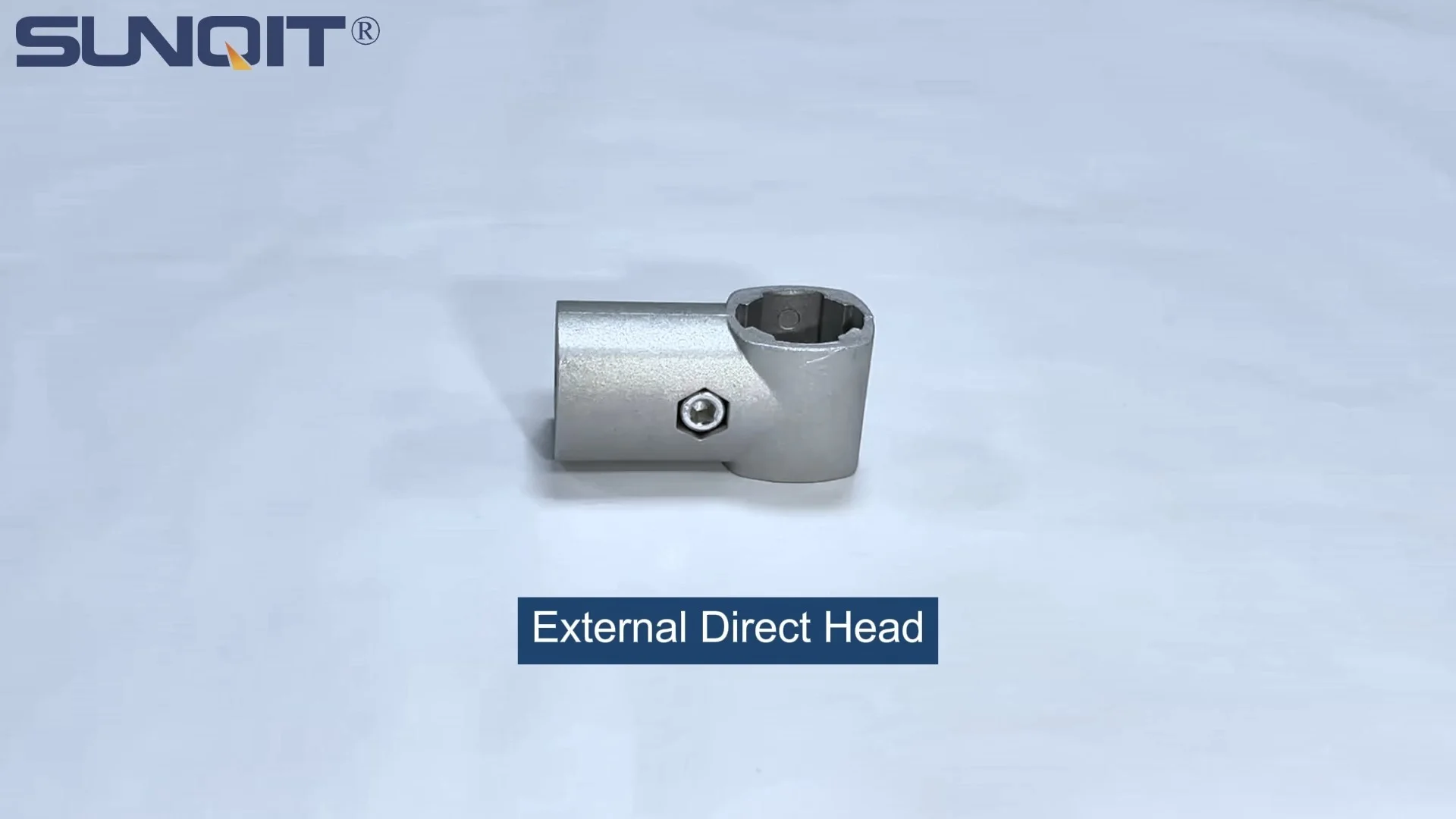
Aluminum 2 way pipe joint for 28mm aluminum pipe connection in 2 direction.
Introduction: Why Joint Strength Matters in Every Workshop
Walk into any manufacturing plant, warehouse, or assembly line, and you'll likely see a familiar sight: workbenches, material racks, and flow racks built from aluminum pipes and joints. These structures are the backbone of lean systems, quietly supporting the day-to-day operations that keep production moving. But what holds these systems together? More often than not, it's the humble two way aluminum pipe joint—a small component that carries an enormous responsibility. A weak joint isn't just a minor inconvenience; it can lead to wobbly workbenches, collapsed material racks, or even workplace accidents. That's why testing the strength of these joints isn't just a "nice-to-do"—it's critical for safety, efficiency, and the longevity of your lean system.
If you've ever assembled furniture at home, you know the frustration of a loose screw or a wobbly leg. Now imagine that same frustration scaled up to an industrial setting, where a single unstable joint could disrupt an entire production line, damage expensive materials, or put workers at risk. In lean manufacturing, where every second and every resource counts, downtime caused by joint failure is something no team can afford. That's why understanding how to properly test two way aluminum pipe joints is essential for anyone who designs, builds, or maintains these systems. Whether you're a small workshop owner or a procurement manager at a large facility, knowing the strength of your joints gives you confidence that your structures can handle the demands of daily use.
Understanding Two Way Aluminum Pipe Joints: What Makes Them Tick?
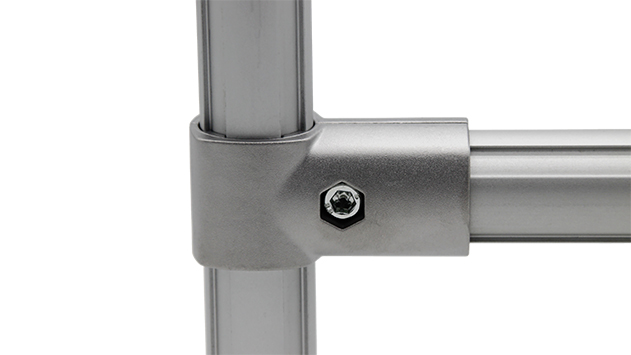
Before diving into testing, let's take a moment to get to know the star of the show: the two way aluminum pipe joint. As the name suggests, this joint is designed to connect two aluminum pipes at a fixed angle (usually 90 degrees, though some designs allow for adjustments). It's part of a broader family of aluminum pipe accessories that includes connectors, clamps, and end caps—all working together to turn simple pipes into robust structures like workbenches and material racks.
What makes these joints unique? Unlike welded connections, which are permanent and rigid, two way aluminum pipe joints are typically modular. They use friction, set screws, or locking mechanisms to secure pipes, making them easy to assemble, disassemble, and reconfigure. This modularity is a big reason they're so popular in lean systems: it allows teams to adapt structures as needs change, without the hassle of cutting or welding. But this flexibility comes with a trade-off: the joint's strength depends entirely on how well it grips the pipe and withstands the forces it will face in use.
Not all two way joints are created equal, either. Some are made from die-cast aluminum, others from reinforced plastic; some use threaded bolts, others rely on compression. The materials, design, and even the quality of the manufacturing process can all affect a joint's strength. That's why testing isn't a one-size-fits-all process—you need to tailor your approach to the specific joint you're using. For example, a joint with a set screw might fail if the screw loosens over time, while a compression-based joint might weaken if the pipe isn't inserted fully. Testing helps you identify these vulnerabilities before they become problems.
Key Tests for Two Way Aluminum Pipe Joint Strength
Testing joint strength isn't about randomly pulling or pushing on a structure until it breaks (though that might be tempting!). Instead, it's a systematic process that targets the specific forces a joint will face in real-world use. Below are the most critical tests you should perform, along with step-by-step guidance on how to do them.
1. Tensile Strength Test: Can the Joint Resist Pulling Forces?
Tensile strength refers to a joint's ability to resist forces that pull the connected pipes apart. Think of a material rack holding heavy boxes: the weight of the boxes pulls downward, creating tension in the joints that connect the vertical and horizontal pipes. If the joint can't handle this tension, the rack might sag or collapse.
How to perform it: Start by assembling a simple test structure: two aluminum pipes connected by a two way joint, forming a "T" shape (one vertical pipe, one horizontal pipe). Secure the vertical pipe to a stable base (like a workbench clamped to the floor) so it can't move. Attach a hook or clamp to the end of the horizontal pipe, then connect it to a pulley system or a hand-crank winch with a force gauge. Slowly apply upward force to the horizontal pipe, simulating the tension of a heavy load. Record the force at which the joint starts to slip, loosen, or deform. A good joint should handle at least 50-100 kg of tensile force, depending on the intended use (check the manufacturer's specs for guidance).
What to watch for: Notice if the joint slips gradually or fails suddenly. Gradual slipping might mean the locking mechanism (like a set screw) is weak, while sudden failure could indicate a flaw in the joint's material or design. Also, check if the pipe itself bends—if the pipe deforms before the joint fails, the pipe is the weak link, not the joint.
2. Shear Strength Test: Handling Sideways Pressure
Shear strength is all about resisting forces that push the joint sideways, perpendicular to the pipes. Imagine a workbench where a worker leans against the edge, or a flow rack where boxes slide off at an angle—these are shear forces in action. A joint with poor shear strength might twist or separate under this pressure, making the structure unstable.
How to perform it: Build another test structure, this time with two pipes connected in a straight line (using the two way joint to form a 180-degree angle, though most two way joints are for 90 degrees—if that's the case, use a "L" shape and apply force perpendicular to the corner). Secure one end of the structure to a fixed object (like a wall or heavy machine) and attach a force gauge to the other end. Push or pull sideways (perpendicular to the pipes) and measure the force needed to make the joint shift or fail. For most industrial applications, a joint should withstand 30-70 kg of shear force before showing signs of weakness.
Pro tip: If you don't have a force gauge, you can use weights as a rough guide. For example, hang buckets of water from the joint (1 liter = ~1 kg) until the joint slips. It's not as precise as a gauge, but it works for a basic check.
3. Bending Resistance Test: Can It Support a Load Without Buckling?
Bending forces are everywhere in lean systems. A workbench with tools stacked on one end, a conveyor with a heavy box resting in the middle—both put bending stress on the joints that hold the structure together. The bending resistance test checks if the joint can maintain its shape and grip when the connected pipes flex under load.
How to perform it: Assemble a horizontal pipe (about 1 meter long) supported at both ends by vertical pipes, connected with two way joints. This mimics a workbench or shelf. Place a weight (like a sandbag or a stack of metal plates) in the middle of the horizontal pipe, gradually increasing the load. Observe the joint: does it start to tilt? Do the pipes wiggle inside the joint? If the joint holds firm even when the pipe bends slightly, it has good bending resistance. If the joint shifts or the pipes slip, it's time to reassess.
Key metric: Most manufacturers specify a "maximum bending moment" for their joints, which is the product of the load and the distance from the joint (e.g., a 50 kg load 0.5 meters from the joint creates a 25 kg·m bending moment). Compare your test results to this number to see if the joint meets the mark.
4. Fatigue Testing: What Happens Over Time?
So far, we've tested joints under "static" forces—loads applied once and held. But in real life, joints face "dynamic" forces: repeated vibrations, occasional bumps, and loads that go on and off (like workers placing and removing items from a workbench). Over time, these repeated stresses can weaken even strong joints—a process called fatigue. Fatigue testing checks if the joint can withstand these long-term stresses without failing.
How to perform it: This test is a bit more involved, but you can simulate it with a simple setup. Use the same horizontal pipe-and-joint structure from the bending test. Instead of placing a static load, attach a small motor with an eccentric weight (like a rotating wheel with a bolt off-center) to create vibrations. Run the motor for several hours (or even days), periodically checking the joint for looseness or wear. Alternatively, manually apply and release a moderate load (e.g., 30 kg) 1,000 times—this mimics the repeated use of a workbench. If the joint stays tight and secure, it has good fatigue resistance.
Why it matters: A joint that passes a static test might still fail after weeks of daily use. Fatigue testing ensures your structure will hold up not just on day one, but for months (or years) to come.
| Test Type | Forces Tested | Tools Needed | Key Metric to Measure | Pass/Fail Indicator |
|---|---|---|---|---|
| Tensile Strength | Pulling forces (tension) | Force gauge, pulley/winch, stable base | Maximum force before slipping/deformation | Meets or exceeds manufacturer's tensile rating (e.g., 50-100 kg) |
| Shear Strength | Sideways forces (perpendicular to pipes) | Force gauge, fixed anchor point | Force at which joint shifts or twists | Withstands 30-70 kg without permanent damage |
| Bending Resistance | Flexing forces (pipe bending under load) | Weights, measuring tape (for deflection) | Bending moment before joint loosens | No visible shifting/slipping under rated bending moment |
| Fatigue Testing | Repeated dynamic forces/vibrations | Motor with eccentric weight (or manual load application) | Joint tightness after 1,000+ load cycles | No loosening or wear after extended testing |

Common Issues in Two Way Aluminum Pipe Joints (and How Testing Catches Them)
Even with careful testing, joints can fail—but testing helps you spot the red flags early. Here are some common problems and how each test reveals them:
- Loose set screws: Many two way joints use set screws to grip the pipe. If the screw is too short, or if the thread is stripped, the joint will slip under tension. The tensile strength test will immediately reveal this—you'll notice the pipe pulling out of the joint at lower-than-expected force.
- Poor material quality: Joints made from cheap, brittle aluminum may crack under shear or bending forces. The shear test or bending test will show this as sudden, catastrophic failure (e.g., the joint snapping) rather than gradual slipping.
- Misaligned holes: If the joint's holes for the pipes are slightly off-center, the pipes won't seat properly, reducing contact area and grip. This will show up in the tensile test as uneven slipping—one pipe might pull out before the other.
- Worn threads: For joints that screw onto pipes, worn threads will cause the joint to loosen quickly under fatigue. The fatigue test will reveal this as the joint gradually becoming wobbly after repeated load cycles.
By catching these issues during testing, you can avoid installing faulty joints in your lean system. It's far easier to swap out a bad joint in the workshop than to replace a collapsed workbench in the middle of a production run.

Beyond Testing: Best Practices for Strong Joint Connections
Testing is critical, but it's only part of the equation. Even the strongest joint will fail if it's installed incorrectly. Here are a few tips to ensure your two way aluminum pipe joints are as strong as possible:
1. Clean the pipes first: Dust, oil, or rust on the pipe surface can reduce friction between the pipe and joint, weakening the connection. Wipe the pipes with a clean cloth (and a mild solvent, if needed) before assembly.
2. insert pipes fully: Most joints have a "stop" inside that marks how far the pipe should be inserted. Ignore this, and you'll reduce the contact area between the pipe and joint, making it easier for the pipe to slip. Push the pipe in until it hits the stop—you should feel a firm resistance.
3. Tighten set screws evenly: If the joint has multiple set screws (common in higher-quality models), tighten them in a crisscross pattern, like you would with a car tire. This ensures even pressure on the pipe, preventing warping or uneven gripping.
4. Use threadlocker (if allowed): For joints with threaded screws, a drop of threadlocker (like Loctite) can prevent loosening due to vibration. Just check the manufacturer's instructions—some joints use plastic components that threadlocker might damage.
5. Inspect regularly: Even after testing and proper installation, joints can loosen over time. Make it a habit to check key joints monthly (or more often for high-use structures) and retighten as needed. A quick 5-minute inspection can save hours of downtime later.
Conclusion: Strong Joints, Stronger Lean Systems
At the end of the day, two way aluminum pipe joints might not be the most glamorous part of your lean system, but they're undoubtedly one of the most important. Testing their strength isn't just about ticking a box—it's about protecting your workers, your materials, and your bottom line. By performing tensile, shear, bending, and fatigue tests, you can ensure these small but mighty components will hold up to the demands of daily use.
Remember, a lean system is only as strong as its weakest link. For most structures, that link is the joint. So take the time to test, inspect, and install with care. Your team, your production line, and your peace of mind will thank you.
Whether you're building a simple workbench or a complex material handling system, the strength of your two way aluminum pipe joints is the foundation of it all. Test rigorously, install carefully, and rest easy knowing your lean system is built to last.