- Company Articles
- Products and Technology
- Procurement Guidelines
- How to select the Right 3030a EU Standard Aluminum Profile Supplier

How to select the Right 3030a EU Standard Aluminum Profile Supplier
Related Product
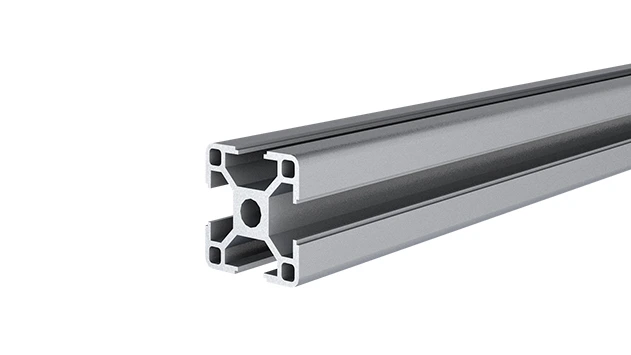
3030A EU Standard Aluminum Profile
3030 is a 3.00 x 3.00CM fractional 30 series square extrusion T-slot profile with four open T-slots, each side with 3.00cm face. The profile has align-a-grooves to assist in aligning connecting profiles.
In the world of manufacturing, automation, and modular design, the 3030a EU Standard Aluminum Profile has emerged as a workhorse material. With its precise 30x30mm dimensions, compliance with strict EU standards, and exceptional versatility, it's the backbone of everything from factory workbenches and lean manufacturing systems to automated conveyor setups and custom machinery. But here's the thing: not all aluminum profiles are created equal, and neither are the suppliers who provide them. Choosing the right 3030a EU Standard Aluminum Profile supplier can mean the difference between a seamless production process, durable end products, and long-term cost savings—or frustrating delays, subpar quality, and unexpected headaches.
Whether you're a small workshop building custom workbenches, a mid-sized manufacturer revamping your production line with flow racks, or a large enterprise scaling up automation systems, the supplier you partner with plays a critical role in your success. In this guide, we'll walk through the key factors to consider when selecting a supplier, how to vet potential candidates, common pitfalls to avoid, and why focusing on value over just cost will pay off in the long run. Along the way, we'll touch on essential elements like aluminum profile accessories, the importance of a reliable lean system supplier, and how aluminum extrusion profile quality impacts everything from structural integrity to assembly efficiency.
Why the 3030a EU Standard Aluminum Profile Matters
Before diving into supplier selection, let's take a moment to understand why this specific profile has become so indispensable. The 3030a EU Standard Aluminum Profile is part of the broader family of aluminum extrusion profiles—products shaped by forcing heated aluminum through a die to create consistent, complex cross-sections. Its 30x30mm size strikes a perfect balance: sturdy enough for structural applications (like supporting heavy equipment on a workbench) yet lightweight enough for modular, movable setups (think turnover trolleys or adjustable material racks).
EU standards ensure uniformity in dimensions, material composition, and performance. For example, the "a" in 3030a often refers to specific groove dimensions or wall thickness, which guarantees compatibility with standard aluminum profile accessories—things like brackets, connectors, and end caps. This compatibility is a game-changer for businesses: it means you can mix and match components from the same supplier (or even across suppliers, if they adhere to the standard) to create custom solutions without worrying about fit issues. Imagine ordering a workbench frame and then deciding to add a side shelf six months later—with EU-standard profiles, the new shelf brackets will slide right into the existing profile grooves, no re-engineering needed.
Real-World Example: A automotive parts manufacturer in Germany recently switched to 3030a profiles for their assembly workbenches. Previously, they used non-standard steel frames, which were heavy, hard to modify, and prone to rust. With aluminum extrusion profiles, they reduced bench weight by 40%, making it easier to reconfigure lines for new car models. Plus, by sourcing from a supplier that also provided aluminum profile accessories (like adjustable feet and cable management clips), they cut assembly time by 25% and eliminated the need to source parts from three different vendors.
Key Factors to Consider When Choosing a Supplier
Selecting a supplier isn't just about finding someone who can deliver a box of aluminum profiles. It's about finding a partner who understands your needs, prioritizes quality, and adds value beyond the product itself. Here are the critical factors to evaluate:
1. Quality: The Foundation of Reliability
When it comes to aluminum extrusion profiles, quality is non-negotiable. A poorly made profile can lead to loose connections, sagging structures (like a workbench that bends under tool weight), or even safety hazards. So, what should you look for?
Material Grade: Most 3030a profiles are made from 6063-T5 aluminum alloy, a popular choice for structural applications. T5 tempering (artificial aging) gives it excellent strength-to-weight ratio and corrosion resistance—ideal for factory environments where moisture or chemicals might be present. Avoid suppliers using lower-grade alloys (like 1000-series, which is too soft) or un-tempered material, as these will fail under stress.
Extrusion Precision: EU standards specify tight tolerances for dimensions like width, height, and groove depth. A profile that's even 0.5mm off can cause problems when attaching accessories. Ask suppliers about their extrusion die maintenance schedule—worn dies lead to inconsistent profiles. Reputable suppliers will have documentation (like CMM reports) proving their profiles meet EU dimensional standards.
Surface Treatment: The finish of the profile affects both aesthetics and durability. Anodizing (a process that creates a protective oxide layer) is standard for 3030a profiles, as it resists scratches and corrosion. Look for suppliers who offer consistent anodization thickness (typically 10-15 microns for industrial use) and uniform color (no blotches or streaks). Some suppliers also offer powder coating for custom colors, which can be useful for branding or color-coding work zones.
2. Access to Aluminum Profile Accessories: Convenience and Compatibility
A profile is only as useful as the accessories that bring it to life. Aluminum profile accessories—think brackets, hinges, end caps, and connector joints—turn raw extrusion into functional systems. That's why choosing a supplier who offers a comprehensive range of accessories is a smart move. Here's why:
- Compatibility: Accessories from the same supplier are guaranteed to fit their profiles perfectly. Mixing accessories from different suppliers (even if they claim to be "EU standard") can lead to loose fits or misalignment. For example, a corner bracket that's slightly too thick won't slide into the profile groove, forcing you to file it down or buy new brackets.
- Cost Savings: Buying profiles and accessories from one supplier often qualifies you for bulk discounts. It also reduces shipping costs and administrative hassle (one purchase order instead of five).
- Design Support: A supplier with in-house accessory expertise can help you optimize your design. Maybe you need a custom bracket for a unique workbench setup—they might already have a similar product or can modify an existing one, saving you from designing it from scratch.
When evaluating a supplier's accessory lineup, check for basics like T-slot nuts (used to secure components to the profile), angle brackets (for joining profiles at 90°), and end caps (to protect workers from sharp edges). Bonus points if they offer specialized accessories, like ESD (electrostatic discharge) components for electronics manufacturing or heavy-duty casters for mobile workbenches.
3. Customization Capabilities: Flexibility for Your Unique Needs
While standard profiles and accessories work for many projects, most businesses eventually need something custom. Maybe you need profiles cut to exact lengths (down to the millimeter) for a tight-fitting machine guard, or holes drilled at specific intervals for mounting sensors. A supplier with strong customization capabilities can turn these needs into reality—without forcing you to compromise on quality or pay exorbitant fees.
Key Customization Services to Look For:
- Precision Cutting: Suppliers with CNC cutting machines can cut profiles to length with tolerances as tight as ±0.1mm. This is critical for projects where components must align perfectly (like a flow rack where shelves must be level to ensure materials slide smoothly).
- Hole Drilling/Tapping: Pre-drilled holes save time during assembly. Look for suppliers who can drill, tap, or countersink holes at custom positions—no more measuring and drilling on-site (and risking mistakes).
- Special Finishes: Beyond standard anodizing, some suppliers offer custom colors, brushed finishes, or even anti-microbial coatings for medical or food industry applications.
- Low Minimum Order Quantities (MOQs): Small businesses or those testing new designs often don't need 100+ profiles. A supplier with low MOQs for custom cuts or finishes lets you prototype without overspending.
Case Study: A startup in France developing automated packaging systems needed 3030a profiles cut into 12 unique lengths for their prototype machine frame. They approached two suppliers: one required a 50-unit MOQ for custom cuts, while the other offered MOQs of 5 units. The startup chose the second supplier, ordering 10 of each length. When they needed to tweak three lengths after testing, the supplier re-cut the profiles at no extra charge (since the total order was still under their bulk threshold). Six months later, when the startup scaled to production, they stayed with the same supplier—valuing the flexibility as much as the quality.
4. Reliability as a Lean System Supplier
Many businesses use 3030a profiles as part of broader lean manufacturing systems—processes designed to minimize waste, improve efficiency, and boost productivity. Lean systems rely on consistent, on-time delivery of components. If your flow rack supplier can't deliver the aluminum extrusion profiles you need for a new line setup, your entire lean initiative could stall, leading to production bottlenecks and missed deadlines.
What makes a supplier a strong lean system partner? Look for:
- Inventory Management: Do they maintain stock of standard 3030a profiles and accessories? A supplier with a well-stocked warehouse can fulfill rush orders in days, not weeks. Some even offer "just-in-time" (JIT) delivery, where they ship components exactly when you need them, reducing your on-hand inventory and storage costs.
- Transparent Lead Times: A reliable supplier will give you clear, realistic lead times—no vague "2-4 weeks" estimates. They'll also communicate proactively if delays arise (e.g., "A die repair will push your order back by 3 days, but we can expedite half the shipment if that helps").
- Experience with Lean Environments: Suppliers who work with lean manufacturers understand the importance of minimizing waste. For example, they might use reusable packaging to reduce cardboard waste, or offer kitting (pre-packing all components for a project into one box) to streamline your receiving process.
5. Pricing and Total Cost of Ownership
Let's be honest: cost matters. But focusing solely on the lowest per-meter price for 3030a profiles can be a costly mistake. Instead, think about "total cost of ownership" (TCO)—the sum of the purchase price, shipping, assembly time, maintenance, and potential replacement costs over the product's life.
For example, a supplier offering profiles at €10/m might seem cheaper than one at €12/m. But if the €10/m profiles have inconsistent dimensions, requiring you to spend 2 extra hours per workbench adjusting components, the labor cost alone could make the €12/m option cheaper. Or if the cheaper supplier doesn't offer accessories, forcing you to buy them elsewhere at a premium, the TCO skyrockets.
To compare TCO, ask suppliers for a detailed quote that includes:
- Profile price per meter (including any volume discounts)
- Accessory prices (if needed)
- Customization fees (cutting, drilling, etc.)
- Shipping and handling costs
- Warranty terms (longer warranties can reduce replacement costs)

Comparing Supplier Types: Which Is Right for You?
Not all 3030a EU Standard Aluminum Profile suppliers are the same. They come in different sizes, with different specialties, and each has pros and cons. To help you narrow down your options, here's a comparison of common supplier types:
| Supplier Type | Quality Consistency | Aluminum Profile Accessories Range | Lead Time | Customization Flexibility | Best For |
|---|---|---|---|---|---|
| Large International Extruders | Excellent (strict quality control, EU certifications) | Extensive (full line of standard and specialty accessories) | 2-4 weeks (longer for custom orders) | High (in-house CNC, die modification capabilities) | Large enterprises with high-volume, long-term needs; projects requiring specialized accessories |
| Regional Distributors | Good (source from reputable extruders) | Standard range (may outsource specialty accessories) | 1-2 weeks (stock local inventory) | Moderate (basic cutting/drilling; custom orders may go to their extruder partners) | Mid-sized businesses needing reliable stock and faster delivery; regional lean system suppliers |
| Local Small Suppliers | Variable (may lack strict quality checks) | Limited (focus on profiles, few accessories) | 3-5 days (small inventory, local delivery) | Low (basic cutting only; no custom extrusion) | Small workshops with low volumes; emergency replacement parts |
| Online-Only Retailers | Mixed (check reviews for quality feedback) | Standard (imported from overseas, limited support) | 2-3 weeks (shipped from overseas warehouses) | Very low (no customization; pre-cut lengths only) | Hobbyists, DIY projects, or one-off small orders |
How to Vet Potential Suppliers
Now that you know what to look for, let's talk about how to actually evaluate suppliers. Don't just take their website claims at face value—do your due diligence.
1. Request Samples
The best way to assess quality is to see and feel the product. Ask suppliers for free or low-cost samples of 3030a profiles and a few key accessories (like a corner bracket and T-slot nut). Inspect the samples for:
- Straightness: Roll the profile on a flat surface—does it wobble? A bent profile will cause alignment issues in your builds.
- Surface Finish: Check for scratches, dents, or uneven anodization. Run your finger along the edges—they should be smooth, not sharp.
- Accessory Fit: Slide the T-slot nut into the profile groove and tighten a bolt—does it move smoothly? Attach the corner bracket—does it sit flush against the profile?
2. Check Certifications
EU standards compliance is a must, but look for additional certifications that signal quality and reliability: ISO 9001 (quality management), ISO 14001 (environmental management), or CE marking (for products sold in the EU). A supplier who invests in certifications is more likely to have rigorous processes in place.
3. Talk to References
Ask the supplier for references from customers in your industry. Call or email these references and ask:
- How long have you worked with this supplier?
- Has their product quality been consistent?
- How responsive are they to questions or issues?
- Have they ever missed a delivery deadline? If so, how did they handle it?
4. Visit Their Facility (If Possible)
If the supplier is local or within reasonable travel distance, ask to tour their facility. Look for clean, organized production areas, well-maintained machinery, and proper storage (aluminum profiles should be stored indoors to avoid weather damage). A messy, disorganized factory is a red flag for quality control.
Common Pitfalls to Avoid
Even with careful vetting, it's easy to fall into traps when selecting a supplier. Here are some common mistakes to watch out for:
1. Choosing Based Solely on Price
As we discussed earlier, the cheapest supplier rarely provides the best value. If a quote seems too good to be true, it probably is—they may be using lower-grade aluminum, cutting corners on surface treatment, or skimping on quality checks. Remember: a profile that fails after six months will cost more to replace than a slightly pricier, durable one.
2. Overlooking Communication Skills
A supplier might have great products, but if they're impossible to reach (emails go unanswered for days, phone calls go to voicemail), they'll drive you crazy. Poor communication leads to misunderstandings (e.g., "I ordered 100 profiles" vs. "We shipped 10"), missed deadlines, and frustration. Test their responsiveness during the quoting phase—if they take a week to reply to your initial inquiry, imagine how long they'll take when you have an urgent problem.
3. Ignoring Small Order Support
If you're a small business or just starting out, avoid suppliers who only care about large orders. Some big extruders treat small customers as an afterthought, offering minimal support and high MOQs. Look for suppliers who value long-term relationships, even with smaller clients—they'll grow with you as your business expands.
Conclusion: Your Supplier Is Your Partner
Selecting the right 3030a EU Standard Aluminum Profile supplier isn't a one-time transaction—it's the start of a partnership. The supplier you choose will impact your product quality, your team's efficiency, and your bottom line for years to come. By focusing on quality, accessory compatibility, customization flexibility, reliability as a lean system supplier, and total cost of ownership, you'll find a partner who doesn't just sell you profiles—they help you build better, more efficient systems.
Remember, the best suppliers aren't just vendors—they're problem-solvers. They'll answer your questions, help you optimize your designs, and stand behind their products when things go wrong. So take your time, vet thoroughly, and don't be afraid to ask tough questions. Your future self (and your production line) will thank you.
In the end, the 3030a EU Standard Aluminum Profile is a tool—but like any tool, its effectiveness depends on the hands (and the supplier) behind it. Choose wisely, and you'll unlock a world of modular, efficient, and durable solutions that drive your business forward.