- Company Articles
- Products and Technology
- Product knowledge
- How to select the Right 3030b EU Standard Aluminum Profile for Your Project

How to select the Right 3030b EU Standard Aluminum Profile for Your Project
Related Product
3030B EU Standard Aluminum Profile
3030 is a 3.00 x 3.00CM fractional 30 series square extrusion T-slot profile with two side open T-slots, each side with 3.00cm face, 2 side with open slot, 2 side with closed face. The profile has align-a-grooves to assist in aligning connecting profiles.
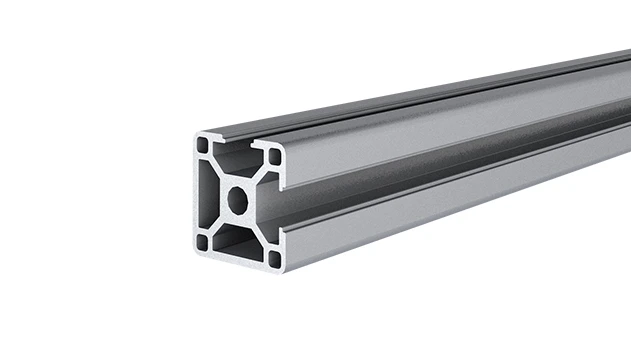
Starting a new project—whether it's building a workshop workbench, setting up a lean manufacturing system, or even creating a custom storage rack—often feels like solving a puzzle. You need pieces that fit together perfectly, stand the test of time, and don't let you down when the going gets tough. If there's one material that's become a go-to for these kinds of projects, it's aluminum extrusion profiles. Lightweight, strong, and endlessly adaptable, they're the backbone of countless industrial, commercial, and DIY builds. But with so many options out there, how do you pick the right one? Today, we're zeroing in on a fan favorite: the 3030b EU Standard Aluminum Profile. By the end of this guide, you'll know exactly what to look for to make sure this profile is the perfect fit for your project.
What Even Is a 3030b EU Standard Aluminum Profile?
Let's start with the basics. If you've never shopped for aluminum profiles before, terms like "3030b" or "EU standard" might sound like industry jargon. But break them down, and they're actually pretty straightforward. Let's unpack what makes this profile tick.
The "3030" in 3030b: Size Matters
First up: the numbers. "3030" refers to the profile's cross-sectional dimensions. In simple terms, this profile is 30 millimeters wide and 30 millimeters tall—so imagine a square tube, but with a twist (more on that later). This 30x30mm size hits a sweet spot for many projects. It's not too bulky (like a 4040 or 5050 profile) that it overcomplicates small builds, but it's sturdy enough to handle moderate loads, making it ideal for workbenches, light-duty shelving, or machine guards.
"EU Standard": Quality You Can Trust
Next, "EU standard." This isn't just a fancy label—it's a promise. EU standards for aluminum extrusion profiles set strict guidelines for things like material composition (usually high-grade aluminum alloys like 6063-T5, known for strength and corrosion resistance), dimensional accuracy (so your 30mm width is actually 30mm, not 29.5 or 30.5), and surface finish. Why does this matter? Because when you're building something that needs to last—say, a lean system for a factory floor—you don't want parts that warp, bend, or fail prematurely. EU standard profiles are tested to meet these benchmarks, so you can trust they'll perform as expected.
The "b" in 3030b: A Closer Look at Design
Now, the "b" in 3030b. This is where things get a bit more specific. Different manufacturers might use letters to denote slight variations in design—like groove type, wall thickness, or slot configuration. For 3030b EU standard profiles, the "b" typically refers to a specific T-slot design. T-slots are those long, narrow grooves running along the length of the profile, and they're what make aluminum profiles so versatile. They let you slide in accessories like brackets, connectors, or panels without drilling holes. In 3030b profiles, the T-slots are usually standardized in width and depth, ensuring compatibility with a wide range of aluminum profile accessories—more on that later.
5 Key Factors to Check Before You Buy
Okay, so you know what a 3030b EU standard profile is. But how do you make sure it's right for your project? Let's walk through the critical factors that will make or break your decision.
1. Load Capacity: How Much Weight Will It Actually Hold?
This is non-negotiable. Whether you're building a workbench that will hold tools and materials or a material rack for storing parts, you need to know if the 3030b profile can handle the load. Load capacity depends on two main things: wall thickness and alloy type. Most 3030b profiles have a wall thickness between 1.5mm and 2.0mm (EU standards often specify a minimum of 1.5mm for structural use). Thicker walls mean more strength—so a 2.0mm wall profile will carry more weight than a 1.5mm one. For reference, a typical 3030b profile with 1.5mm walls can safely support around 50-75kg per linear meter when used horizontally (like a shelf), while a 2.0mm wall might handle 80-100kg. Always check the manufacturer's load charts—don't guess!
2. T-Slot Design: Will Your Accessories Fit?
Remember those T-slots we mentioned earlier? They're the reason aluminum profiles are so adaptable. But not all T-slots are created equal. The "b" in 3030b often refers to a specific slot design—usually a "closed" or "semi-closed" slot with a standardized width (common EU slot widths are 6mm or 8mm). This matters because your accessories—like brackets, hinges, or end caps—need to slide into these slots smoothly. If you already have accessories from a previous project, double-check that their bolts or connectors match the slot width of the 3030b profile. Most EU standard profiles are designed for compatibility, but it never hurts to confirm (pro tip: ask your supplier for a sample slot gauge if you're unsure).
3. Surface Treatment: Protection Against the Elements
Aluminum is naturally resistant to rust, but that doesn't mean it's invincible. Depending on where you'll use your 3030b profile, surface treatment can make a big difference. The most common options are:
- Anodized: A layer of oxide is electrochemically bonded to the surface, giving it a matte, durable finish (often clear, black, or silver). Great for indoor use or dry environments.
- Powder-Coated: A colored powder is sprayed on and baked, creating a smooth, vibrant finish. More resistant to scratches and chips than anodizing—ideal for high-traffic areas or outdoor use (though not fully waterproof).
- Mill Finish: The raw, uncoated surface. Cheaper, but more prone to fingerprints and minor corrosion. Best for hidden structural parts.
If your project is in a damp workshop or a garage with temperature swings, anodized or powder-coated is the way to go. For a clean, professional look on a workbench, anodized silver is a classic choice.
4. Straightness and Flatness: No Wobbles Allowed
Ever tried building a shelf with a warped board? It's frustrating—everything leans, and nothing lines up. The same goes for aluminum profiles. EU standards require strict tolerances for straightness (how much the profile bends along its length) and flatness (how even the surfaces are). A good 3030b profile should be straight within 0.5mm per meter and flat enough that when you lay it on a level surface, there are no gaps bigger than a sheet of paper. Why does this matter? For one, it ensures your project looks professional. But more importantly, warped profiles can throw off your entire build—connectors won't seat properly, and load distribution becomes uneven, weakening the structure.
5. Price vs. Quality: Don't Skimp on the Basics
Let's talk money. 3030b EU standard profiles aren't the cheapest option out there—you can find cheaper, non-standard profiles from some suppliers. But here's the thing: you get what you pay for. Cheaper profiles might cut corners on wall thickness (using 1.0mm instead of 1.5mm), use lower-grade aluminum (which bends easier), or skip surface treatments. For a DIY project that's just for show, maybe that's okay. But if your project needs to last—like a lean system on a factory floor where downtime costs money—investing in a reputable EU standard profile will save you headaches (and cash) down the line. Expect to pay around $5-$10 per linear meter for a quality 3030b profile, depending on length and wall thickness.

When Should You Not Use a 3030b Profile?
We've sung the praises of 3030b, but it's not a one-size-fits-all solution. There are times when this profile might not be the best pick. Let's cover a few scenarios where you might want to look elsewhere:
Heavy-Duty Loads: Go Bigger
If your project needs to support serious weight—like a shelf for industrial tools or a platform for machinery—3030b might be too small. In that case, step up to a 4040 or 5050 profile, which have larger cross-sections and thicker walls to handle the extra heft.
Tiny Spaces: Go Smaller
On the flip side, if you're building something compact—like a mini workbench for electronics assembly or a small storage rack for hobby supplies—a 3030b might be overkill. A 2020 profile (20x20mm) is lighter and more maneuverable for tight spaces.
Outdoor Use in Extreme Conditions
While anodized or powder-coated 3030b profiles handle light moisture, they're not designed for constant exposure to rain, snow, or saltwater. For outdoor projects in harsh climates, consider stainless steel profiles or heavier-gauge aluminum with specialized coatings.
How 3030b Stacks Up Against Other Profiles
Still not sure if 3030b is right for you? Let's compare it to a few other common aluminum extrusion profiles. The table below breaks down key specs to help you see how it measures up.
| Profile Type | Dimensions (WxH) | Typical Wall Thickness | Max Load Capacity (Horizontal, per m) | Best For | Price Range (per linear m) |
|---|---|---|---|---|---|
| 3030b EU Standard | 30x30mm | 1.5-2.0mm | 50-100kg | Workbenches, lean systems, light shelving | $5-$10 |
| 2020 EU Standard | 20x20mm | 1.0-1.5mm | 20-40kg | Small DIY projects, electronics racks | $3-$6 |
| 4040a EU Standard | 40x40mm | 2.0-3.0mm | 100-150kg | Heavy shelving, machine frames | $8-$15 |
| 3060 EU Standard | 30x60mm | 1.5-2.5mm | 75-120kg | Long spans (e.g., table legs, overhead racks) | $7-$12 |
As you can see, 3030b sits right in the middle—versatile enough for most medium-duty projects without the bulk (or cost) of larger profiles. If your project fits that "middle ground," this profile is likely your best bet.
Matching 3030b with the Right Accessories
You've picked your 3030b profile—now you need the accessories to bring your project to life. Aluminum profile accessories are the unsung heroes here, turning plain tubes into functional workbenches, racks, or systems. Here are the must-haves for most projects:
Connectors: The Glue That Holds It All Together
Connectors are what let you join profiles at angles—90°, 45°, T-joints, you name it. For 3030b profiles, look for EU standard connectors designed for 30x30mm slots. Common types include:
- 90° Aluminum Profile Connectors: For joining two profiles at a right angle (e.g., workbench legs to the top frame).
- T-Slot Connectors: Slide into the T-slot and lock in place with a bolt, perfect for adding cross-braces or shelves.
- Corner Brackets: Reinforce right-angle joints for extra strength—great for load-bearing areas.
End Caps: Finish the Look (and Hide Sharp Edges)
Ever run your hand along an aluminum profile and get a little nick from the raw end? Not fun. End caps snap onto the ends of the profile, covering sharp edges and giving your project a polished look. They come in plastic (cheaper, for indoor use) or aluminum (more durable, for industrial settings). Match the color to your profile's finish—silver end caps for anodized profiles, black for powder-coated.
Panels and Sheets: Adding Surfaces
What good is a workbench frame without a top? Panels and sheets attach to the T-slots to create surfaces for working, storing, or displaying. Options include:
- Plywood/MDF: Budget-friendly, easy to cut to size—great for DIY workbenches.
- Aluminum Honeycomb Panels: Lightweight but strong, resistant to scratches—ideal for industrial workbenches.
- Acrylic/Plexiglass: Transparent, perfect for machine guards or display cases.
Casters: Make It Mobile
Want your workbench or material rack to roll? Add casters to the bottom of the profile legs. Look for heavy-duty casters with locks (to keep the unit from moving when you're working) and a load rating that matches your project's total weight. For a 3030b workbench, 50mm casters with a 100kg per caster rating should do the trick.
Real-World Example: Building a Lean System Workbench with 3030b
Let's put all this into practice with a common project: a lean system workbench for a small manufacturing shop. Here's how 3030b would shine:
- Frame: Use 3030b profiles with 2.0mm walls for the legs and frame—they'll support the weight of tools, parts bins, and a worker leaning on the bench.
- Top Surface: Mount an aluminum honeycomb panel to the frame using T-slot connectors for a flat, durable work surface.
- Shelving: Add lower shelves with 3030b cross-braces and T-slot shelves to store supplies—use 1.5mm wall profiles here since the load is lighter.
- Accessories: Attach a tool rail (another 3030b profile) to the back with T-slot connectors, then add hooks for tools. Add casters to make the bench mobile for line-side use.
The result? A sturdy, adaptable workbench that fits right into a lean system—no welding required, and easy to reconfigure if the shop's needs change. That's the power of 3030b.
Final Tips: Sourcing Your 3030b Profile
You're ready to buy—now where do you get a quality 3030b EU standard aluminum profile? Here are a few pointers:
- Stick to Reputable Suppliers: Look for suppliers who specialize in EU standard profiles and can provide material certificates (like ISO 9001) for quality assurance.
- Ask for Samples: Most suppliers will send a small section of profile so you can check straightness, surface finish, and slot fit before buying in bulk.
- Buy in Lengths You Need: Profiles come in standard lengths (often 2m, 3m, or 6m). If you don't have a saw to cut them down, many suppliers will cut to size for a small fee.
Wrapping It Up: Your Project Deserves the Right Profile
At the end of the day, choosing a 3030b EU standard aluminum profile isn't just about picking a piece of metal—it's about setting your project up for success. By focusing on load capacity, T-slot design, surface treatment, and quality, you'll ensure this profile works as hard as you do. Whether you're building a workbench, a lean system, or something entirely new, 3030b brings the versatility, strength, and reliability you need. So go ahead—grab that profile, round up your accessories, and start building. Your future self (and your project) will thank you.