- Company Articles
- Products and Technology
- Product knowledge
- How to select the Right Multi-Angle Fixed Aluminum Joint for Your Project

How to select the Right Multi-Angle Fixed Aluminum Joint for Your Project
Related Product
Multi-angle Fixed Aluminum Joint
Aluminum joint pipe connection for two pipe connection and work in mutiple angle.
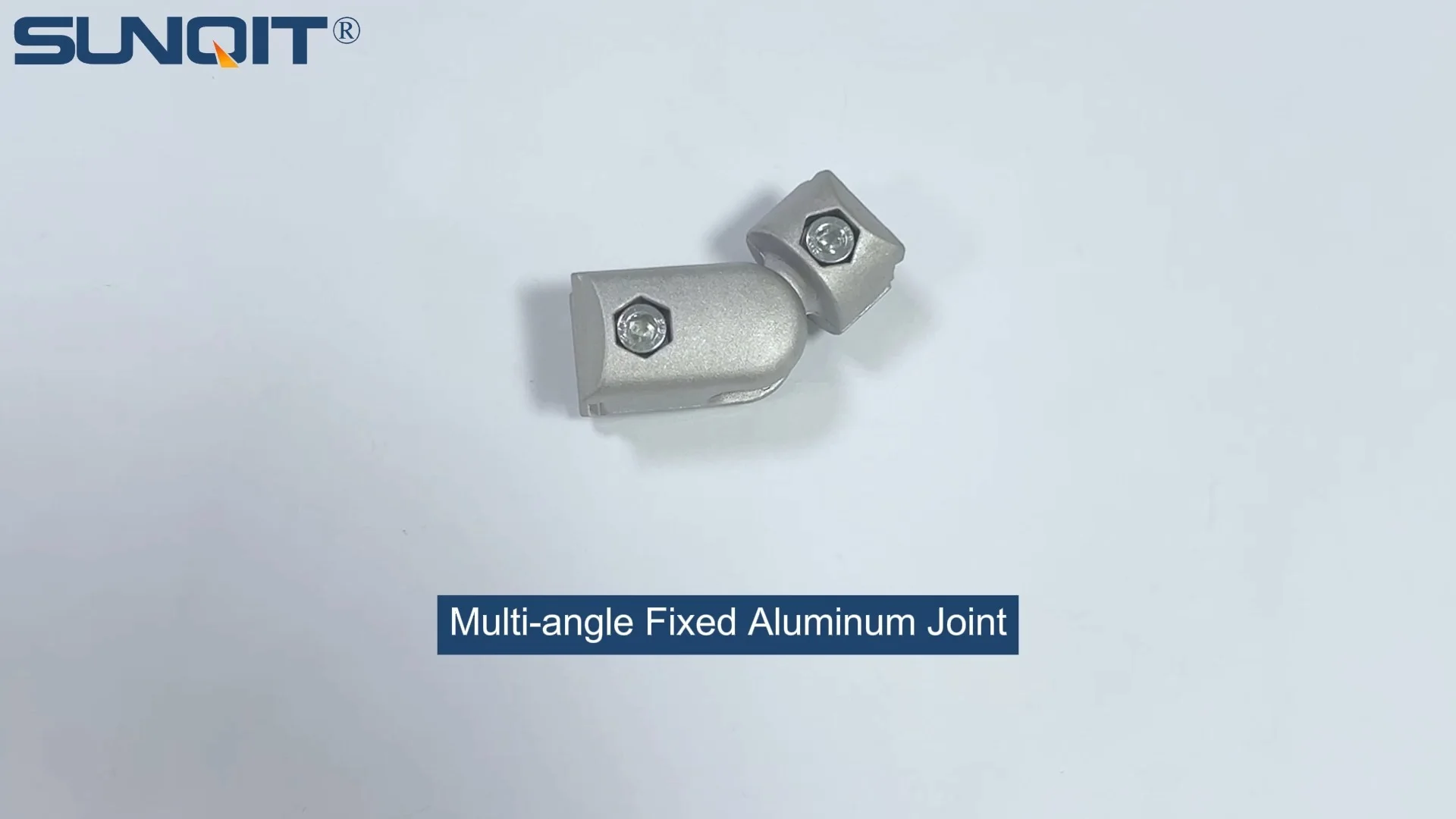
In the world of industrial and workshop design, every component matters—but few are as quietly critical as the joints that hold your structures together. Whether you're building a sturdy workbench for your garage, a flexible material rack for a factory floor, or a custom assembly line for production, the choice of joints can make or break your project. Among the many options available, multi-angle fixed aluminum joints stand out for their versatility, strength, and compatibility with aluminum systems. But with so many variations on the market, how do you pick the one that fits your needs? Let's dive into the details, from understanding their role to matching them with your aluminum pipes, profiles, and project goals.
Understanding Multi-Angle Fixed Aluminum Joints: The Backbone of Aluminum Structures
Before we jump into selection tips, let's clarify what a multi-angle fixed aluminum joint is—and why it's a staple in modern workshop and industrial setups. Simply put, these joints are engineered connectors designed to link aluminum pipes or aluminum profiles at specific, fixed angles (think 45°, 90°, 135°, or even combinations) while maintaining structural integrity. Unlike adjustable joints that can be repositioned, "fixed" here means once installed, the angle stays locked, ensuring stability for static or low-movement structures.
What makes them indispensable? Aluminum's natural lightweight yet durable properties pair perfectly with these joints, creating systems that are both easy to assemble and tough enough to handle daily use. Whether you're working with basic aluminum tubes, T-slot aluminum profiles, or specialized aluminum pipe accessories, these joints act as the glue that turns individual parts into functional, cohesive structures. From a small hobbyist's workbench to a large-scale manufacturing facility, they're the unsung heroes that keep everything upright, aligned, and reliable.
Key Factors to Consider Before Choosing a Joint
Selecting a multi-angle fixed aluminum joint isn't just about grabbing the first one you see. It requires a clear understanding of your project's unique demands. Here are the critical factors to evaluate:
1. Project Purpose and Load Requirements: How Much Weight Will It Bear?
Start with the basics: What is your structure going to do? A lightweight workbench for assembling small electronics won't face the same stress as a heavy-duty material rack holding metal parts. Multi-angle joints come in varying load capacities, often rated by manufacturers in kilograms or pounds. For example, a standard joint might handle 50kg per connection, while a heavy-duty version could support 150kg or more. Always check the load rating and err on the side of overestimating—no one wants a shelf collapsing mid-project because the joint couldn't keep up.
Pro Tip:
If your structure has multiple joints (like a workbench with four corner joints), distribute the load evenly. A joint rated for 100kg might struggle if all the weight is concentrated on one connection point.
2. Angles Needed: Which Degrees Will Your Structure Require?
The term "multi-angle" can be misleading—some joints are designed for a single fixed angle (e.g., strictly 90°), while others offer flexibility to lock into 2-3 preset angles (e.g., 45°, 90°, and 135°). Before shopping, map out your structure's design. Do you need right-angle corners (90°) for a square workbench? Sloped sides (45°) for a material chute? Or a mix of angles for a custom-shaped rack? Choosing a joint that matches your required angles eliminates the need for workarounds (like forcing a 90° joint to bend to 45°, which weakens the structure).
3. Compatibility: Matching Joints with Aluminum Pipes and Profiles
This is where many projects go wrong: a perfectly rated joint that just doesn't fit your aluminum pipes or profiles. Aluminum systems come in standard sizes—common pipe diameters include 20mm, 30mm, and 40mm, while aluminum profiles (like T-slot profiles) are measured by their cross-section (e.g., 2020, 3030, 4040, where numbers represent width and height in millimeters). A joint designed for a 30mm pipe won't snugly fit a 20mm pipe, leading to wobbling or instability.
Pay attention to the joint's connection method, too. Some clamp around the outside of the pipe (external joints), others slide inside the pipe (internal joints), and T-slot profile joints often feature tabs or bolts that lock into the profile's slots. If you're using aluminum pipe accessories like end caps or clamps, ensure the joint leaves space for these additions—for example, an external joint might overlap with a pipe end cap, making installation tricky.
4. Environmental and Usage Conditions: Will It Stand Up to Your Workspace?
Where will your structure live? A joint that works in a dry, climate-controlled workshop might fail in a humid factory or an outdoor setting. Most aluminum joints are treated with anti-corrosive coatings, but if your project involves exposure to moisture, chemicals, or heavy dust, look for joints with reinforced materials (like anodized aluminum) or added gaskets to prevent rust or wear. Similarly, if the structure will see frequent vibration (e.g., near heavy machinery), opt for joints with locking mechanisms (like set screws or Allen bolts) that won't loosen over time.

Types of Multi-Angle Fixed Aluminum Joints: Which One Fits Your Project?
Not all multi-angle fixed aluminum joints are created equal. Let's break down the most common types, their features, and ideal use cases to help narrow your options:
| Joint Type | Angles Supported | Best For | Key Features |
|---|---|---|---|
| 90° Fixed External Joint | 90° only | Square/rectangular structures (workbenches, basic racks) | Clamps around pipe exterior; easy to install with bolts/screws; high load capacity for straight corners. |
| 45°-135° Multi-Angle Joint | 45°, 90°, 135° (fixed presets) | Sloped shelves, angled material chutes, triangular frames | Adjustable via a rotating base; locks into preset angles with a pin or bolt; versatile for mixed-angle projects. |
| T-Slot Profile Multi-Angle Joint | Custom angles (via slot positions) | T-slot aluminum profile structures (modular workstations, machine guards) | Attaches to T-slot grooves; compatible with profile accessories; allows via slot alignment. |
| Heavy-Duty 3-Way Multi-Angle Joint | 90°, 120°, 180° (3-way connections) | Multi-level racks, intersection points in large structures | Supports three pipes/profiles at once; thick aluminum construction; ideal for high-weight applications. |

Practical Example: Building a Custom Workbench with Multi-Angle Joints
Let's put this knowledge into action with a real-world scenario: building a workbench for a small electronics assembly line. Here's how the selection process might play out:
Step 1: Define the Workbench's Purpose and Load
The workbench will hold tools, circuit boards, and a small soldering station—total load around 80kg. It needs a flat top, a lower shelf for storage, and a sloped side rack (45° angle) for holding manuals and small parts.
Step 2: Choose Aluminum Materials
The frame will use 30mm basic aluminum tubes for sturdiness, paired with a 4040 aluminum profile for the tabletop edge (to mount accessories like a lamp or tool holder). Aluminum pipe accessories like flat end caps will cover the tube ends to prevent snags.
Step 3: select Joints for Each Section
- Table Corners: 90° fixed external joints. These will connect the 30mm tubes at the four corners of the workbench, providing a stable base. Since the load here is vertical (the tabletop weight), external joints are ideal for their clamping strength.
- Sloped Side Rack: 45°-90° multi-angle joints. The rack needs to slope at 45°, so a joint that locks into 45° ensures the angle stays consistent. Internal joints are chosen here to keep the rack's profile sleek (no bulky external clamps).
- Tabletop to Profile Connection: T-slot multi-angle joints. These will attach the 4040 aluminum profile to the 30mm tubes, allowing to ensure the tabletop sits level—critical for precise electronics work.
Step 4: Verify Compatibility and Test
Before purchasing, the project manager checks that all joints are rated for at least 20kg per connection (well above the 80kg total load, distributed across 8+ joints). They also confirm the 30mm tube joints fit the basic aluminum tubes and that the T-slot joints align with the 4040 profile's slot spacing. A quick test assembly with spare parts ensures no wobbling or misalignment—saving time and frustration later.
Real-World Lesson:
Skipping the compatibility check here could have led to disaster. If the T-slot joints didn't fit the 4040 profile, the tabletop might have sat unevenly, making soldering or assembly work error-prone. Always test with a small section of your structure before full assembly!

Common Mistakes to Avoid When Selecting Multi-Angle Fixed Aluminum Joints
Even with careful planning, it's easy to fall into traps when choosing joints. Here are the most frequent missteps—and how to steer clear:
Mistake 1: Prioritizing Price Over Quality
It's tempting to opt for the cheapest joint to cut costs, but low-quality joints often use thin aluminum or weak locking mechanisms. A $5 joint might save money upfront, but if it bends under load or corrodes quickly, you'll end up replacing it (and possibly repairing damage to your structure). Invest in mid-range to high-quality joints from reputable suppliers—look for reviews mentioning "sturdy," "rust-resistant," or "easy to tighten."
Mistake 2: Overlooking Installation Ease
A joint might check all the boxes on paper, but if it requires specialized tools or 3+ people to install, it'll slow down your project. For small teams or DIYers, prioritize joints with user-friendly designs: quick-lock levers, standard Allen bolt sizes, or tool-free clamping systems. If you're building a large structure, factor in installation time—complex joints can add hours to assembly.
Mistake 3: Ignoring Future Adaptability
Your project might start as a simple workbench, but what if you want to add a shelf or extend the frame later? Fixed joints are, by nature, non-adjustable, but choosing a joint with extra connection points (like a 3-way joint instead of a 2-way) leaves room for expansion. For example, a 3-way 90° joint can support an additional tube later if you decide to add a lower shelf—no need to buy new joints.
Final Tips: Where to Buy and How to Validate Suppliers
Once you've narrowed down your joint type, it's time to source them. Look for suppliers specializing in aluminum pipe and profile systems—they'll have the expertise to help you confirm compatibility. Reputable suppliers often provide detailed specs (dimensions, load ratings, angle ranges) and even sample kits for testing. Avoid generic "all-purpose" joints from non-specialized retailers; these rarely meet industrial standards for strength or fit.
Don't hesitate to ask questions: "Will this joint work with 30mm basic aluminum tubes and 4040 aluminum profiles?" or "What's the maximum temperature this joint can handle?" A good supplier will answer promptly and offer alternatives if your first choice isn't ideal. If possible, request a small batch first to test in your workspace before ordering in bulk—this is the best way to ensure the joint lives up to its specs.
Conclusion: The Right Joint Makes All the Difference
Selecting a multi-angle fixed aluminum joint might seem like a small detail, but it's the foundation of a successful project. By focusing on your project's load, angles, material compatibility, and environment, you can choose a joint that not only holds your structure together but also supports its purpose for years to come. Remember: a well-chosen joint is invisible in daily use—quietly doing its job so you can focus on the work that matters. Whether you're building a workbench, a material rack, or something entirely custom, take the time to get this decision right—your project (and your future self) will thank you.