- Company Articles
- Products and Technology
- Installation And Maintenance
- How to Troubleshoot Common Issues with 40 Steel Roller Track Yellow

How to Troubleshoot Common Issues with 40 Steel Roller Track Yellow
Related Product
40 Steel Roller Track Yellow
The roller track can be installed with multiple accessories to create different slopes and configurations of flow racks.All steel conveyor 40 roller track accessories are engineered to perfectly fit the sliding rail.
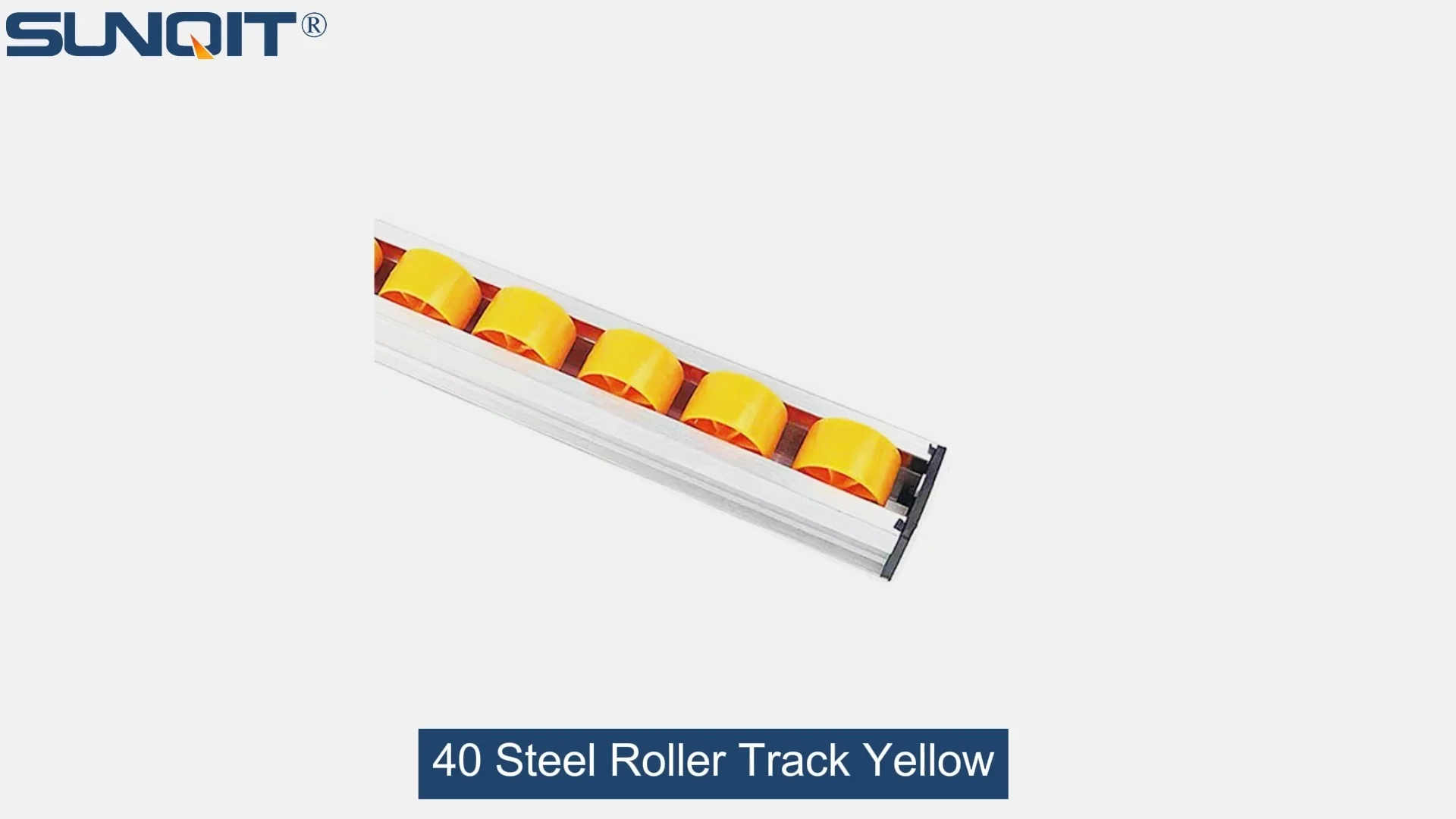
If you've ever managed a production line or worked with flow racks, you know how critical smooth roller tracks are to keeping operations moving. The 40 Steel Roller Track Yellow is a backbone of many lean systems—found in everything from small parts storage flow racks to high-volume conveyors for 3C assembly lines. But even the most durable equipment hits snags. This guide walks you through the top issues you'll face, step-by-step fixes, and preventive habits to keep your tracks running like clockwork.
Pre-Troubleshooting Prep: Tools & Safety
Before diving into fixes, gather the right tools and prioritize safety. Skipping these steps can lead to mistakes or injuries.
Must-Have Tools
- Screwdriver set (Phillips/flathead)
- Silicone-based lubricant (oil-based attracts dirt—avoid it)
- Soft bristle brush + compressed air (for deep cleaning)
- Spirit level (for alignment checks)
- Wrench set (adjustable + fixed sizes)
- ESD tester (if using ESD-sensitive tracks)
- Protective gloves + safety goggles
Critical Safety Note: Always disconnect power to motorized conveyors before working. Wear gloves to avoid sharp edges, and use compressed air with care—debris can fly into eyes.
Issue 1: Rollers Sticking or Not Spinning Freely
Sticking rollers are the #1 complaint with roller tracks. They slow down material flow and can damage products. Let's break down why this happens and how to fix it.
Cause 1: Dirt & Debris Buildup
Dust, metal shavings, or product residues get trapped between rollers or in bearings, causing friction. This is common in busy manufacturing environments.
Fix Steps:
- Power off conveyors (if applicable) to stop movement.
- Use a soft brush to sweep loose dirt from roller gaps—don't scrub hard (you might push debris deeper).
- For stubborn debris: Hold compressed air at 45° to the roller gaps and blow out dirt. Avoid direct blasts into bearings.
- Wipe each roller with a dry microfiber cloth to remove remaining dust.
- Test: Spin each roller by hand—they should rotate freely for 2-3 seconds after being flicked.
Cause 2: Misaligned Rollers
Rollers that sit at an angle rub against adjacent rollers or the track frame, creating resistance.
Fix Steps:
- Check track alignment: Place a spirit level along the track length to see if it's horizontal. Then check vertical alignment at each roller.
- Loosen roller brackets: Use the right screwdriver to loosen the screws holding the misaligned roller in place.
- Adjust position: Slide the roller until it's flush with nearby rollers. Use a straight edge (ruler) to ensure it's parallel to the track direction.
- Tighten brackets: Secure the screws firmly (but not too tight—over-tightening can warp the bracket).
- Retest: Spin the roller to confirm no more rubbing.
Cause3: Worn Bearings
Bearings inside rollers wear out over time, leading to grinding noises or stiff rotation.
Fix Steps:
- Identify worn rollers: Spin each roller and listen for grinding. Mark the problematic one with tape.
- Remove the roller: Loosen end caps or brackets (depending on track design) and slide the roller out.
- replace: If bearings are replaceable (check your supplier's manual), swap them. If not, replace the entire roller with a compatible part from your lean pipe supplier.
- Reinstall: Slide the new roller back in and tighten brackets. Align it with adjacent rollers.
- Lubricate: Apply a drop of silicone lubricant to the new roller's bearings.
Preventive Habits for Sticking Rollers
- Daily: Brush rollers to remove loose dirt.
- Weekly: Deep clean with compressed air.
- Bi-weekly: Lubricate rollers with silicone oil.
- Monthly: Check alignment and tighten brackets.

Issue2: Track Warping from Uneven Loads
The 40 Steel Roller Track Yellow is built to handle heavy loads, but overloading or uneven weight distribution can cause permanent warping. This leads to stuck products and unsafe conditions.
Cause1: Exceeding Load Capacity
Every track has a maximum load limit (e.g., 50kg/meter for many models). Ignoring this leads to warping.
Fix Steps:
- Check capacity: Refer to your product manual or contact your lean solution supplier for exact limits.
- Reduce load: Remove excess weight from the track. For heavier items, use a thicker track or add support brackets.
- replace warped sections: Warped steel can't be fixed—swap the affected part with a new track from a trusted supplier.
- Reinforce: Add cross-braces using aluminum profile accessories to support heavy loads.
Cause2: Incorrect Installation
Tracks installed off-level or with loose joints warp over time, even with normal loads.
Fix Steps:
- Level check: Use a spirit level to find tilted areas. Adjust the flow rack's adjustable leveling feet to correct this.
- Tighten joints: Check all 40 fluent flat joints (used to connect track sections) and tighten loose bolts with a wrench.
- Realign sections: If track parts are misaligned, loosen joints, adjust to flush, then retighten.
Preventive Habits for Warping
- Post load limits: Put clear labels on tracks/flow racks to remind staff.
- Monthly: Check track level and tighten joints.
- Install correctly: Follow supplier instructions—don't skip alignment steps.

Issue3: Noise During Operation (Squeaking/Rattling)
Loud tracks are a sign of trouble. They distract workers and indicate hidden issues like loose parts or worn rollers.
Cause1: Loose Connections
Vibration from daily use loosens screws, bolts, and joints—leading to rattling.
Fix Steps:
- Walk the track: Listen for rattling. Mark loose joints/brackets.
- Tighten: Use a wrench/screwdriver to secure all loose parts. Pay extra attention to 40 fluent flat joints.
- Add lock washers: For high-vibration areas, use lock washers to prevent future loosening.
Cause2: Worn Rollers
Worn bearings make a grinding or squeaking noise.
Fix Steps:
- Identify noisy rollers: Spin each roller and listen for grinding.
- replace rollers: Follow the steps from Issue1 (worn bearings).
Preventive Habits for Noise
- Weekly: Tighten all connections.
- Quarterly: Inspect rollers for wear.
- Bi-weekly: Lubricate rollers to reduce friction.

Issue4: Joints Loosening (40 Fluent Flat Joint)
40 fluent flat joints connect track sections. Loose joints cause gaps, leading to stuck products or track separation.
Cause1: Vibration Over Time
Daily use vibrates bolts loose.
Fix Steps:
- Loosen the joint: Use a wrench to loosen the bolts slightly.
- Align sections: Ensure track sections are flush and level.
- Retighten: Tighten bolts in a crisscross pattern to distribute pressure evenly.
- Add lock washers: For extra security.
Preventive Habits for Joints
- Weekly: Tighten joint bolts.
- Use high-quality joints: Buy from a trusted lean pipe supplier to get durable joints.
Maintenance Schedule for Longevity
| Frequency | Task | Details |
|---|---|---|
| Daily | Clean Rollers | Brush loose dirt from rollers and gaps. |
| Weekly | Tighten Joints/Brackets | Secure 40 fluent flat joints and roller brackets. |
| Weekly | Deep Clean | Use compressed air to remove hidden debris. |
| Bi-weekly | Lubricate Rollers | Apply silicone lubricant to bearings. |
| Monthly | Check Alignment | Use a spirit level to ensure track is horizontal/vertical. |
| Quarterly | Inspect Rollers/Joints | replace worn rollers or weak joints. |
| Annual | Professional Check | Hire a technician from your lean solution supplier for a full inspection. |
When to Call a Professional
Some issues need expert help:
- Severely warped tracks that require custom replacements.
- ESD issues that persist after grounding checks.
- Bulk roller replacements (for large conveyors).
- Unknown issues that you can't diagnose.
Final Takeaway
The 40 Steel Roller Track Yellow is a reliable tool—if you take care of it. By following these troubleshooting steps and maintenance habits, you'll reduce downtime, extend track life, and keep your lean system running efficiently. For replacement parts or expert advice, reach out to a trusted lean pipe supplier—they have the knowledge and products to keep your operations on track.