- Company Articles
- Products and Technology
- Installation And Maintenance
- How to Troubleshoot Loose Multi-Angle Fixed Aluminum Joints

How to Troubleshoot Loose Multi-Angle Fixed Aluminum Joints
Related Product
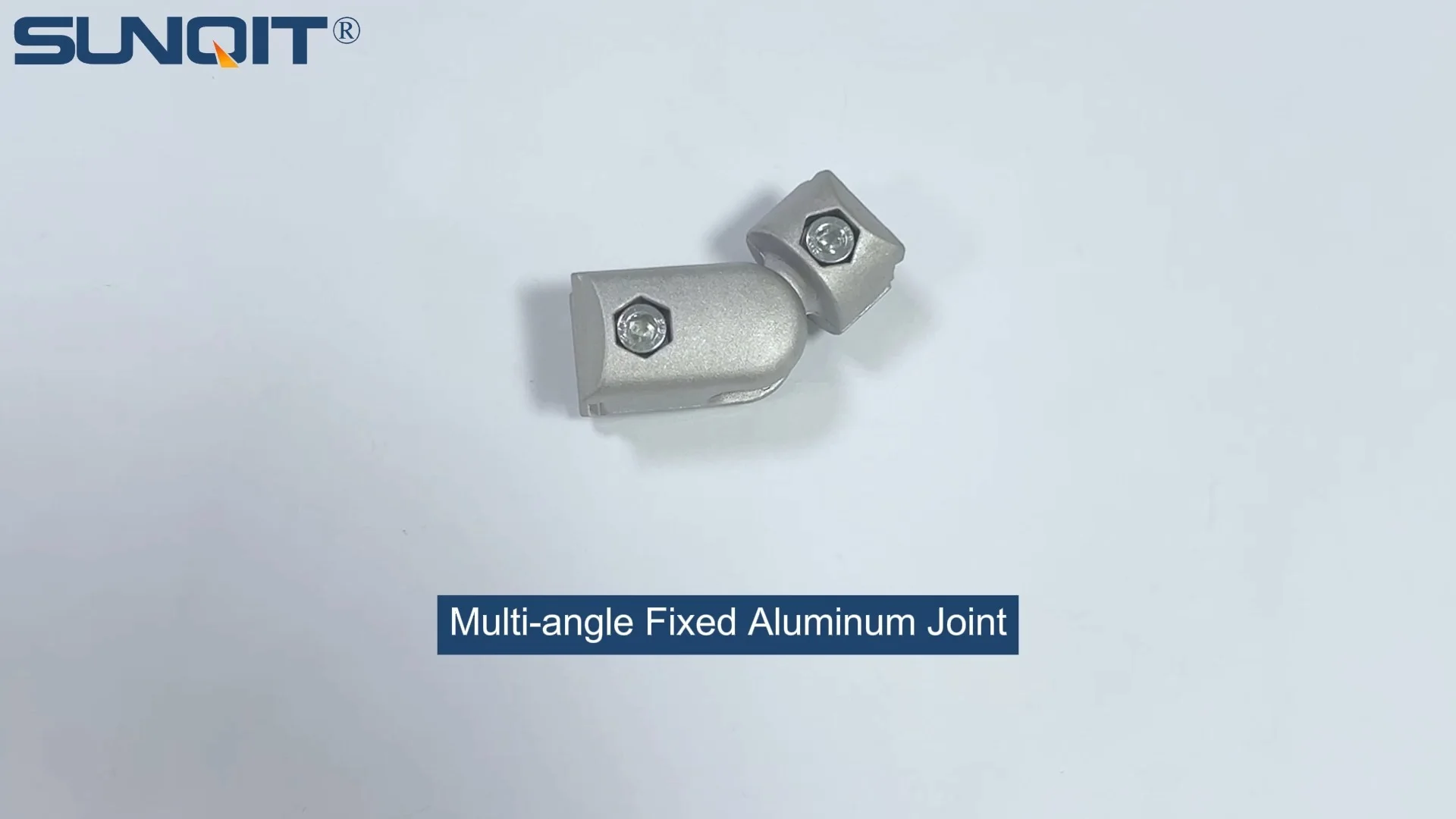
Multi-angle Fixed Aluminum Joint
Aluminum joint pipe connection for two pipe connection and work in mutiple angle.
It's a busy Tuesday morning on the assembly line. Maria, who's been overseeing the workbench station for three years, pauses mid-task. The workbench she relies on to sort components feels off—wobblier than usual. She kneels down, squints at the corner where the silver aluminum pipes connect, and spots it: the multi-angle fixed aluminum joint that holds the structure together has started to loosen. "Not again," she mutters, reaching for her toolkit. If you've ever worked with lean systems—whether it's a workbench, a material rack, or a conveyor—you know exactly what she's feeling. These joints might seem small, but they're the backbone of your setup. Let's break down why they loosen, how to fix them, and how to keep them tight for good.
First Things First: What Even Are Multi-Angle Fixed Aluminum Joints?
Before we dive into troubleshooting, let's make sure we're on the same page. Multi-angle fixed aluminum joints are the quiet workhorses of any setup built with aluminum profiles. Think of them as the "connectors" that let you piece together aluminum pipes and accessories into sturdy structures. Whether you're building a workbench, a material rack, or part of a lean system, these joints are what keep everything aligned. They're designed to lock aluminum profiles at specific angles—90 degrees, 45 degrees, sometimes even 135 degrees—hence the "multi-angle" name. And unlike some flimsy plastic connectors, these are made of aluminum, so they're built to handle the daily grind of a production floor.
Why does this matter? Well, if a joint loosens, the whole structure suffers. A wobbly workbench isn't just annoying—it can slow down tasks, damage components, or even lead to accidents. In a lean system, where efficiency and safety are everything, a loose joint is more than a minor hiccup. It's a kink in the chain that needs fixing fast.
Why Do These Joints Loosen Up, Anyway?
Let's get to the root of the problem. Maria's loose joint didn't just happen overnight. Looseness in multi-angle fixed aluminum joints usually boils down to one (or a mix) of these common culprits:
1. Rushed Installation (We've All Been There)
Imagine the end of a long shift. You're tired, the team is eager to wrap up, and the last step is securing the joints on the new aluminum profile workbench. Maybe you give the Allen wrench a quick twist instead of tightening it properly, or you skip checking if the joint is aligned straight before locking it in. Over time, that "quick twist" comes back to bite you. Vibrations from tools, the weight of materials, even the constant movement of workers leaning on the bench—all of it can wiggle a loosely installed joint free.
2. Wear and Tear (They're Tough, But Not Indestructible)
Aluminum is durable, but it's not immune to aging. If your workbench has been in use for years, the threads inside the joint (the tiny grooves that grip the bolt) might start to wear down. Think of it like a pair of old shoes—the more you use them, the more the soles thin out. Same with joints: repeated tightening and loosening (say, if you disassemble the bench for cleaning) can strip those threads, making it harder for the joint to stay tight.
3. Environmental Gremlins: Humidity and Temperature Swings
Factories and warehouses aren't always climate-controlled. If your workspace gets humid in the summer or frigid in the winter, that can play havoc with aluminum joints. Metal expands when it's hot and contracts when it's cold. Over time, these tiny expansions and contractions can create gaps between the joint and the aluminum pipe. Add in moisture, and you might even get a little rust on the bolts (if they're not stainless steel), which makes them harder to tighten properly.
4. Mismatched Parts (Using the Wrong Accessory)
Here's a rookie mistake that even veterans make: using a joint that's not designed for your aluminum profile. Aluminum profiles come in different sizes—like 2020, 3030, or 4040 (those numbers refer to the profile's width and height in millimeters). If you pair a 3030 joint with a 4040 profile, it won't grip as tightly. The same goes for bolts: using a bolt that's too short or too thin means it can't lock the joint in place. It's like trying to put a square peg in a round hole—close, but not quite right.

Troubleshooting 101: How to Fix a Loose Joint
Okay, so you've got a loose joint. Now what? Let's walk through the steps Maria took to fix her wobbly workbench. Spoiler: it's easier than you might think, and you don't need to be a mechanic to do it.
Step 1: Inspect the Joint (No Guesswork Allowed)
First, take a good look. Get down on eye level with the joint—you might need a flashlight to see clearly. What are you looking for? Gaps: Is there space between the joint and the aluminum pipe? That's a red flag. Cracks: Run your finger along the joint's edges—any rough spots or tiny fractures mean it's time to replace the joint, not just tighten it. Alignment: Is the joint sitting straight, or is it twisted to one side? A misaligned joint can't distribute weight evenly, so even if it's tight, it might still feel wobbly.
Step 2: Tighten It (But Don't Overdo It)
If there's no gap or crack, grab your Allen wrench (the tool that came with the joint—if you lost it, a standard 5mm or 6mm wrench usually works). Fit it into the bolt head and turn it clockwise. Go slow—you want to feel resistance, but stop if the wrench starts to slip or the bolt feels like it's "stripping" (that grinding, gritty feeling). Aluminum is softer than steel, so over-tightening can crack the joint or strip the threads. A good rule of thumb: tighten until it's snug, then give it a *tiny* extra twist—about a quarter-turn. That should do it.
Step 3: replace It If It's Beyond Repair
If you see cracks, or the bolt just spins without getting tight (stripped threads), it's time for a new joint. Don't try to "make do" with a damaged joint—you're just putting off the problem. Head to your storage closet (or call your aluminum pipe accessories supplier) and grab a fresh multi-angle fixed aluminum joint. When installing the new one, take your time: align the pipes straight, make sure the joint sits flush against the profile, and tighten the bolt properly. Trust us, the 5 extra minutes will save you from repeating this process next month.
Step 4: Check the Rest of the Structure (Don't Stop at One)
Here's a pro tip from Maria: "If one joint is loose, chances are others are on their way." After fixing the wobbly corner, she went around the entire workbench and checked *all* the joints. Sure enough, two more were starting to loosen. By tightening them then and there, she avoided another mid-shift surprise. It's like when you fix a leaky faucet—you don't just patch the one drip; you check the whole sink for other weak spots.

Symptom vs. Solution: A Quick Reference Table
| Symptom You Notice | Likely Cause | What to Do |
|---|---|---|
| Wobbly workbench or rack | Loose joint (no cracks or gaps) | Tighten with Allen wrench (snug + quarter-turn) |
| Bolt spins without tightening | Stripped threads in the joint | replace with a new multi-angle fixed aluminum joint |
| Gap between joint and aluminum profile | Misaligned installation or worn threads | Loosen, realign the joint, then retighten; if gap remains, replace |
| Crack in the joint's metal | Over-tightening or old age | replace immediately—cracked joints can't be fixed |

How to Keep Joints Tight for Good (Prevention > Fixing)
Now that you've fixed the loose joint, let's make sure it stays tight. A little maintenance goes a long way here:
Add Monthly "Joint Checks" to Your Routine
Set a calendar reminder—every first Monday of the month, spend 10 minutes checking joints on all your aluminum profile structures. Grab a wrench, tighten any that feel loose, and note if any need replacement. It's quick, easy, and way cheaper than fixing a broken workbench or dealing with a production delay.
Use Thread Lock (Sparingly)
For joints that *always* seem to loosen (we're looking at you, workbench near the heavy machinery), try a drop of thread lock fluid (the blue kind—avoid the red, which is permanent). Apply a tiny amount to the bolt threads before tightening. It acts like a glue that keeps the bolt from wiggling loose, but you can still remove it with a wrench if needed.
Store Spare Joints (You'll Thank Us Later)
Keep a handful of multi-angle fixed aluminum joints in your tool cabinet. You never know when a joint might fail, and waiting for a supplier to deliver can halt production. Think of it like having a first-aid kit—you hope you won't need it, but you're glad it's there when you do.
Wrapping Up: Small Joints, Big Impact
Back to Maria. After tightening the joints and replacing one cracked oldie, her workbench was solid again. "It's the little things," she said, grinning as she slid a bin of components onto the now-stable surface. "You don't think about these joints until they go wrong, but when they work, everything flows smoother."
Multi-angle fixed aluminum joints might be small, but they're the glue that holds your lean system together. By taking the time to install them properly, check them regularly, and fix issues early, you're not just maintaining equipment—you're keeping your team efficient, safe, and focused on what really matters: getting the job done right.
So the next time you pass a wobbly workbench or a sagging material rack, don't ignore it. Kneel down, check the joint, and give it a little love. Your future self (and your team) will thank you.