
- Company Articles
- Products and Technology
- Installation And Maintenance
- How to Troubleshoot Turning Angle Code 2020 Non-Compliance in Aluminum Joints
Walk into any modern manufacturing facility, and you'll likely see a symphony of aluminum profile structures hard at work: sleek workbenches where assembly lines hum, material racks stacked with components, and turnover trolleys gliding smoothly between stations. These setups are the backbone of lean system efficiency, and at their core lies a small but mighty component: the aluminum joint. Today, we're zeroing in on one specific player in this ecosystem—the Turning Angle Code 2020. It might seem, but when this little connector isn't up to par, the ripple effects can throw a wrench into your entire production flow. Let's dive into how to spot, fix, and prevent non-compliance with this critical piece of your facility's infrastructure.
First Things First: What *Is* Turning Angle Code 2020?
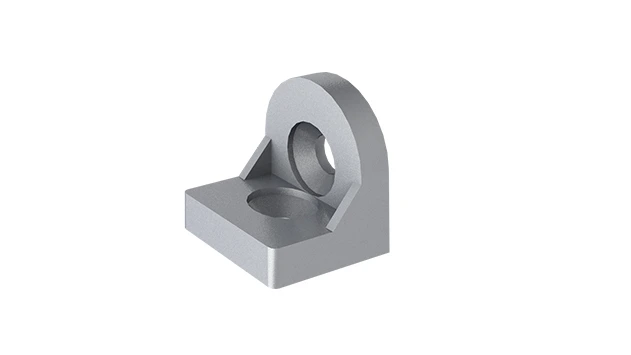
If you've ever assembled a workbench or a material rack using aluminum profiles, you've probably encountered angle codes. The Turning Angle Code 2020 is a specialized connector designed to join 2020-series aluminum profiles at (you guessed it) specific angles—most commonly 90 degrees, though some variants handle other angles too. Think of it as the hinge that holds your structure's "elbows" together, ensuring stability while allowing for the precise alignment that lean system designs demand.
Made from lightweight, durable aluminum, this joint typically features pre-drilled holes that align with the T-slots on 2020 profiles, securing with bolts or screws. Its job? To distribute weight evenly, resist lateral movement, and keep your structures rigid enough to handle daily wear—whether that's a technician leaning on a workbench or a trolley loaded with parts rolling over a bump. But here's the catch: when it's "non-compliant," meaning it fails to meet size, strength, or fit standards, it doesn't just underperform—it becomes a liability.
Why Non-Compliance Happens: The Usual Suspects
Before we jump into troubleshooting, let's talk about why Turning Angle Code 2020 might go off the rails. From the factory floor to installation day, several factors can throw this tiny component out of compliance:
1. Manufacturing Mishaps
Not all aluminum profile accessories are created equal. If your supplier cuts corners, you might end up with joints that are slightly too small (so they wobble in the profile slot), slightly too large (so they jam during installation), or made from low-grade aluminum that bends under stress. Even minor dimensional errors—like a hole drilled 0.5mm off-center—can throw off alignment, leading to gaps or uneven weight distribution.
2. Installation: When "Good Enough" Isn't
Even a perfectly manufactured Turning Angle Code 2020 can fail if installed incorrectly. Over-tightening bolts is a common culprit—strip the threads, and the joint loses its grip. Under-tightening? That leaves room for movement, which over time loosens the connection further. Misalignment during assembly (e.g., forcing a profile into the joint at a slight angle) can also warp the joint, making it non-compliant long before it should wear out.
3. Wear, Tear, and the Elements
Aluminum is resistant to rust, but it's not invincible. In humid environments or facilities where chemicals are present, corrosion can eat away at the joint's surface, weakening its grip. Physical wear matters too: constant vibration from nearby machinery, repeated impacts (like a trolley slamming into a rack), or even temperature fluctuations (expanding and contracting the metal) can gradually degrade the joint's integrity. Over time, what was once a snug fit becomes a loose, wobbly mess.
4. Mismatched Components
Here's a rookie mistake that even seasoned technicians make: mixing and matching parts from different suppliers. A Turning Angle Code 2020 from one brand might not play nice with a 2020 profile from another, especially if the T-slot dimensions or hole spacing are slightly off. This isn't just about compatibility—it's about compliance. Using mismatched aluminum profile accessories almost guarantees that your joint won't meet the structural standards your lean system relies on.

Spotting the Red Flags: Symptoms of Non-Compliance
Non-compliant Turning Angle Code 2020 joints rarely announce themselves with a loud "break." Instead, they whisper warnings through subtle (and not-so-subtle) signs. Here's what to watch for during your daily walkthroughs:
- Gaps or "play" between the joint and profile: Run your finger along the connection—if you feel a space, or if the joint shifts when you apply gentle pressure, that's a red flag. Even a 1mm gap can lead to instability over time.
- Wobbling structures: A workbench that rocks when you type on a keyboard, or a material rack that sways when you pull a bin—these are classic signs the angle code isn't holding firm.
- Difficulty assembling or disassembling: If you're struggling to slide the joint into the profile, or if bolts won't tighten without stripping, the joint's dimensions might be off.
- Visible damage: Cracks in the aluminum, bent edges, or stripped threads are obvious indicators. Even minor dents can compromise the joint's ability to distribute weight.
- Noise during use: Rattling, squeaking, or grinding when the structure is moved or loaded? That's metal-on-metal friction from a loose or misaligned joint.
Pro tip: Don't wait for these signs to become severe. Schedule monthly "joint checkups"—grab a flashlight and a wrench, and give each Turning Angle Code 2020 a once-over. Catching issues early saves you from costly downtime later.

Step-by-Step Troubleshooting: From Problem to Solution
So, you've spotted a suspect joint—now what? Let's walk through a systematic approach to diagnosing and fixing the issue.
Step 1: Confirm the Issue (It Might Not Be the Joint!)
Before you blame the Turning Angle Code 2020, rule out other culprits. Is the aluminum profile itself bent? Are the bolts loose because they weren't tightened properly, not because the joint is faulty? A quick test: swap the suspect joint with a known good one from a spare part bin. If the problem disappears, the joint is the issue. If not, you're looking at a profile, bolt, or installation problem.
Step 2: Measure for Dimensional Compliance
Non-compliance often boils down to size. Grab a caliper and measure the joint's critical dimensions: the width of the slot that fits into the profile, the distance between bolt holes, and the thickness of the aluminum. Compare these to the specs provided by your aluminum profile accessories supplier (you did keep those, right?). If measurements are off by more than 0.2mm, the joint is likely factory-defective.
Step 3: Test for Strength and Durability
Even if dimensions check out, the joint might fail under load. For this, you'll need a simple stress test: apply gradual pressure to the joint (e.g., push against the corner of the workbench) and watch for bending or movement. A compliant joint should flex minimally and return to shape. If it deforms or the profile shifts, the aluminum might be too soft (a manufacturing defect) or the joint might be worn out.
Step 4: Fix It—Permanently
Once you've the joint is the problem, here's how to address it:
- replace defective joints: If the issue is manufacturing (wrong size, weak material), swap in a new joint from a reputable aluminum profile accessories supplier . Pro tip: Keep a small stock of spare Turning Angle Code 2020 joints on hand for quick swaps.
- Adjust installation: If over-tightening stripped the threads, use a helicoil insert to repair the hole, then retighten with a torque wrench (follow the supplier's recommended torque specs—usually 3-5 Nm for 2020 joints).
- Reinforce weak points: For joints that loosen due to vibration, add a drop of thread-locking adhesive (like Loctite) to the bolts. Avoid overdoing it—you'll need to disassemble later!
- Upgrade if needed: If your facility handles heavy loads, consider switching to a reinforced Turning Angle Code 2020 (some suppliers offer versions with thicker walls or reinforced corners).
The Troubleshooting Table: Quick Reference for Common Issues
| Issue | Symptoms | Likely Cause | Recommended Fix |
|---|---|---|---|
| Joint slides loosely in profile | Gaps between joint and profile; structure wobbles | Joint width too small (manufacturing defect) | replace with a joint that matches profile T-slot dimensions |
| Bolts won't tighten fully | Threads strip; bolt spins without gripping | Over-tightening or mismatched bolt size | Use helicoil insert to repair threads; use bolts specified by supplier |
| Joint bends under load | Visible deformation; structure sags at the joint | Low-grade aluminum or undersized joint for the load | Upgrade to a reinforced joint; distribute load with additional supports |
| Joint corrodes or pits | White/greenish residue; rough surface texture | Exposure to moisture/chemicals; poor aluminum quality | replace with anodized or corrosion-resistant joint; apply protective coating |
| Profile misalignment at joint | Profiles don't meet at a clean angle; gaps on one side | Joint hole spacing off-spec (manufacturing error) | replace with a joint with correct hole spacing; verify with supplier specs |
Prevention: Keep Your Turning Angle Code 2020 Compliant Long-Term
Troubleshooting is reactive—prevention is proactive. Here's how to keep your Turning Angle Code 2020 joints in top shape for the long haul:
Choose the Right Supplier (It Matters!)
Not all aluminum profile accessories supplier s are created equal. Look for ones that provide detailed specs (tolerance levels, material grade, load ratings) and offer quality certifications (like ISO 9001). A good supplier will also test their joints for durability—ask if they can share stress test results. It might cost a few cents more per joint, but avoiding downtime is priceless.
Train Your Team on Proper Installation
Even the best joint fails if installed by someone who's never read the manual. Hold a 15-minute training session on 2020 profile assembly: demonstrate how to align the joint, torque bolts correctly, and check for gaps. Provide torque wrenches with preset limits to prevent over-tightening. Your technicians will thank you, and your structures will last longer.
Stick to Compatible Components
Mixing brands might seem harmless, but 2020 profiles and joints can vary slightly in tolerance. If you source profiles from Supplier A, get your Turning Angle Code 2020 (and all aluminum profile accessories ) from the same supplier. This ensures a snug, compliant fit every time.
Schedule Regular Maintenance
Add joint checks to your preventive maintenance calendar. Every quarter, have technicians tighten bolts (using torque wrenches), inspect for corrosion, and test structure stability. It's a small investment of time that prevents big headaches later.
Real-World Example: When a Joint Failure Cost a Production Line 8 Hours
Let's ground this in reality with a story from a client I worked with last year. A mid-sized electronics manufacturer was running a tight lean system assembly line, with a row of workbench es where circuit boards were tested. One morning, a technician noticed their workbench was wobbling more than usual—by lunch, the wobble had turned into a full-on rock, and a test fixture slid off, damaging a batch of boards. Production halted.
Upon inspection, the culprit was a Turning Angle Code 2020 joint that had developed a hairline crack (invisible to the eye until the bench was unloaded). The joint had been sourced from a new, cheaper supplier to cut costs, and the aluminum was softer than spec. By the time the crack propagated, the bench was unstable. The fix? Replacing all 12 joints on the line (as a precaution), re-aligning the workbenches, and retesting the fixtures. Total downtime: 8 hours, plus the cost of the damaged boards. The lesson? Skimping on joint quality costs far more than it saves.
Wrapping Up: Small Component, Big Responsibility
The Turning Angle Code 2020 might be small, but it's a linchpin in your facility's efficiency. Non-compliance here isn't just a nuisance—it's a threat to safety, productivity, and your bottom line. By knowing how to spot the signs, troubleshoot systematically, and prevent issues through smart sourcing and maintenance, you'll keep your aluminum profile structures—and your lean system —running like clockwork.
Remember: In manufacturing, the details matter. And when it comes to keeping your production line moving, even the tiniest joint deserves your attention. So grab that caliper, check those bolts, and make sure your Turning Angle Code 2020 joints are always up to the task.