- Company Articles
- Products and Technology
- Solution
- How Turning Angle Code 2020 Enhances Modularity in Lean Workstations

How Turning Angle Code 2020 Enhances Modularity in Lean Workstations
Related Product
Urning Angle Code 2020
The turning angle aluminum profile connector provides a 90 degree hidden corner connection. 2020 it is means this size is used for 20 series aluminum profile.The corner code comes with set screws that allow for quick, easy connections.
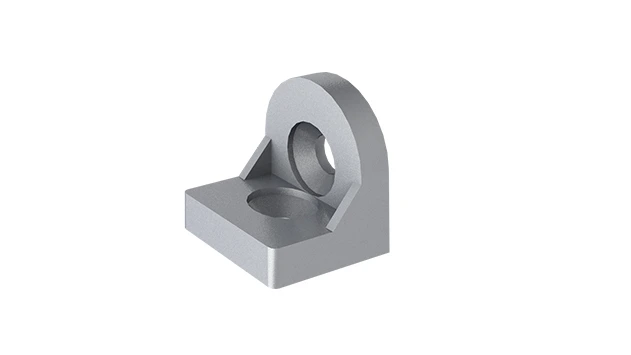
Walk into any modern manufacturing facility, and you'll notice a quiet revolution happening on the factory floor. Gone are the days of, one-size-fits-all workstations bolted to the ground—permanent fixtures that resist change like a stubborn bolt rusted in place. Today's manufacturers are demanding something different: flexibility. They need workstations that can pivot with production needs, adapt to new product lines, and grow alongside their business. This is where modularity takes center stage, and at the heart of this modular revolution lies a small but mighty component: the Turning Angle Code 2020 .
In the world of lean manufacturing, where efficiency and waste reduction are king, the workstation isn't just a table—it's the nerve center of productivity. A well-designed workstation minimizes movement, reduces errors, and keeps tools and materials within arm's reach. But what happens when a new product comes along, with larger parts or different assembly steps? A rigid workstation becomes a bottleneck, forcing teams to either (and sacrifice efficiency) or invest in costly, custom-built replacements.
This is where modularity solves the problem. Modular workstations are built from interchangeable components that can be rearranged, added to, or reconfigured in hours—not weeks. And the unsung hero making this possible? The Turning Angle Code 2020. This unassuming aluminum connector is the glue that holds modular systems together, allowing manufacturers to build, break down, and rebuild workstations with the ease of solving a puzzle. In this article, we'll dive deep into how Turning Angle Code 2020 transforms static workbenches into dynamic, adaptable hubs, and why it's become a cornerstone of modern lean workstation design.
What is Modularity, and Why Does It Matter for Lean Workstations?
Before we zoom in on Turning Angle Code 2020, let's clarify what "modularity" really means in the context of workstations. At its core, modularity is about designing systems from independent, standardized parts that can be combined in multiple ways. Think of it like building with Lego bricks: each brick (or component) is simple on its own, but together, they can create everything from a small car to a towering castle.
For lean workstations, modularity translates to three key benefits:
- Adaptability: When production needs change—whether it's a new product, a shift in batch sizes, or updated ergonomic requirements—a modular workstation can be reconfigured without replacing the entire setup. Need a taller shelf? Swap out a short aluminum profile for a longer one. Adding a tool rail? Attach it to the existing frame with a few connectors.
- Cost Efficiency: Custom-built workstations are expensive, and they lose value the moment your needs change. Modular components, by contrast, are reusable. A single set of aluminum profiles and connectors can be repurposed for years, reducing long-term costs.
- Speed: Traditional workstation construction involves cutting, welding, or drilling—processes that take time and skilled labor. Modular systems, with pre-engineered components like Turning Angle Code 2020, can be assembled or reconfigured by any team member in hours, minimizing downtime.
But modularity doesn't just happen by accident. It requires components that are designed to work together seamlessly. This is where aluminum extrusion profiles and their accessories—like Turning Angle Code 2020—shine. Aluminum profiles, with their signature T-slot grooves, act as the "bones" of the workstation, while connectors like Turning Angle Code 2020 are the "joints" that hold these bones together, allowing for flexible movement and secure attachment.
Meet Turning Angle Code 2020: The Connector That Powers Modularity
If aluminum profiles are the bones of a modular workstation, then Turning Angle Code 2020 is the flexible yet sturdy joint that lets those bones move and lock into place. At first glance, it might look like a simple L-shaped bracket, but its design is deceptively clever. Let's break down what makes this small component so critical.
What is Turning Angle Code 2020?
Turning Angle Code 2020 is a type of aluminum profile accessory specifically engineered to connect two aluminum extrusion profiles at a 90-degree angle (though with creative use, it can also handle other angles). It's part of a family of angle codes, including Turning Angle Code 3030 and 4040, each designed for use with corresponding aluminum profile series (e.g., 2020 profiles, 3030 profiles, etc.). The "2020" in its name refers to the size of the aluminum profile it's designed to fit: profiles with a 20mm x 20mm cross-section.
Made from high-grade aluminum alloy, Turning Angle Code 2020 is lightweight yet surprisingly strong. Its L-shaped body features pre-drilled holes that align with the T-slots of 2020 aluminum profiles, allowing it to be secured with bolts or screws. Unlike welded joints, which are permanent and prone to cracking under stress, the angle code creates a rigid connection that's still—perfect for modular systems.
Anatomy of a Modular Joint: How It Works
To understand why Turning Angle Code 2020 is so effective, let's walk through how it connects two aluminum profiles. Imagine you're building a simple lean pipe workbench frame: two vertical profiles (legs) and two horizontal profiles (top rails). To join the top rail to the leg at a right angle, you'd slide the Turning Angle Code 2020 into the T-slot of the vertical profile. Then, you'd align the horizontal profile with the angle code, insert a bolt through the angle code's hole and into the horizontal profile's T-slot, and tighten it with a wrench. In seconds, you've created a secure, stable joint that can support the weight of tools, materials, or even the workbench surface itself.
What makes this design genius is its simplicity. There's no need for specialized tools or training—even a new team member can learn to assemble a joint in minutes. And if you need to reconfigure the workbench later? Just loosen the bolt, slide the angle code out, and reposition it. This ease of use is what makes Turning Angle Code 2020 a favorite among manufacturers looking to empower their teams to adapt quickly.
Another key feature is its versatility. While it's designed for 90-degree angles, Turning Angle Code 2020 can also be used to create other angles by adjusting the position of the bolt in the T-slot. For example, tilting a profile slightly and securing the angle code at an offset creates a sloped surface—ideal for a workstation where materials need to slide toward the operator. This flexibility means one component can solve multiple design challenges, reducing the need for specialized parts.

Turning Angle Code 2020 and Aluminum Profiles: A Match Made in Modularity
Turning Angle Code 2020 doesn't work in isolation—it's part of a ecosystem built around aluminum extrusion profiles. To truly appreciate its impact, we need to understand how these two components work together to create modular magic.
The Role of Aluminum Profiles in Lean Workstations
Aluminum profile is the backbone of modular workstations. These extruded aluminum beams come in various sizes (like 2020, 3030, 4040) and feature T-shaped slots running along their length. These slots are the secret to their versatility: they allow accessories—like Turning Angle Code 2020, end caps, shelves, and tool holders—to slide in and lock into place without drilling or welding.
Aluminum is the material of choice for several reasons: it's lightweight (making workstations easy to move if needed), strong (able to support heavy loads), and resistant to corrosion (ensuring longevity in factory environments). It's also recyclable, aligning with the sustainability goals of many modern manufacturers.
Why 2020 Profiles and Turning Angle Code 2020 Are a Winning Combo
While larger profiles (like 4040) are better suited for heavy-duty applications, 2020 profiles and their Turning Angle Code 2020 are ideal for light to medium-duty workstations—think assembly lines for small electronics, lab benches, or packing stations. Here's why they work so well together:
- Balanced Strength and Weight: 2020 profiles are sturdy enough to support tools, materials, and workbench surfaces (up to around 150-200 kg per shelf, depending on configuration) but light enough that even a single person can handle them during assembly.
- Cost-Effective: Smaller profiles use less material, making 2020 systems more affordable than larger 4040 setups—perfect for small to medium businesses or departments with tight budgets.
- Space-Saving: With a compact 20mm x 20mm cross-section, 2020 profiles create workstations that are sleek and space-efficient, ideal for crowded factory floors or labs where every square inch counts.
Turning Angle Code 2020 complements these benefits by providing a secure, low-profile connection between 2020 profiles. Its L-shaped design sits flush against the profiles, creating a clean, unobtrusive joint that doesn't add unnecessary bulk. This is especially important for workstations where space is limited—no one wants a clunky connector getting in the way of tools or materials.

The Tangible Benefits of Turning Angle Code 2020 for Manufacturers
So, what does all this mean for manufacturers on the ground? Let's break down the real-world benefits of using Turning Angle Code 2020 in lean workstations.
1. Faster Setup and Reconfiguration
Traditional workstations often require custom fabrication: cutting wood or metal, welding frames, drilling holes. This can take days or even weeks, especially if you need to hire outside contractors. With Turning Angle Code 2020 and aluminum profiles, a basic workbench can be assembled in under an hour. Need to add a shelf? Grab a few profiles, angle codes, and bolts, and you're done in 15 minutes.
For example, a medical device manufacturer we worked with recently needed to reconfigure their assembly line to produce a new, smaller device. Using their existing 2020 profiles and Turning Angle Code 2020, their team disassembled the old workstation, shortened the frame, and added a lower shelf for smaller tools—all in a single shift. By the next morning, production was up and running on the new setup. With traditional workstations, this process would have taken a week and cost three times as much.
2. Reduced Downtime During Changes
In manufacturing, downtime is the enemy. Every minute a workstation is out of commission costs money. Turning Angle Code 2020 minimizes downtime by making reconfiguration a quick, in-house process. There's no need to wait for a welder or carpenter—your existing team can handle it with basic hand tools (a hex key or wrench).
3. Improved Ergonomics and Worker Satisfaction
Ergonomics is a critical factor in workstation design. Poorly designed workstations lead to fatigue, injuries, and high turnover. With modular workstations using Turning Angle Code 2020, you can easily adjust the height, depth, and layout to fit each worker's needs. For example, a taller operator might need a higher work surface, while a shorter one might prefer a lower shelf. Instead of forcing everyone to adapt to a one-size-fits-all setup, you can tailor the workstation to the individual.
This level of customization doesn't just benefit workers—it boosts productivity. When tools and materials are within easy reach, and the workstation feels comfortable, employees can focus on the task at hand, not on straining or searching for items.
4. Scalability for Growing Businesses
Startups and small manufacturers often begin with a single workstation, then expand as orders grow. With modular systems, scaling up is easy. You can add more aluminum profiles and Turning Angle Code 2020 to extend an existing workstation, or build entirely new ones using the same components. This scalability means you don't have to overinvest in equipment upfront—you can grow your workstation fleet as your business grows.
Turning Angle Code 2020 vs. Other Angle Codes: How Does It Stack Up?
Turning Angle Code 2020 is just one of several angle codes available. To understand when it's the best choice, let's compare it to two common alternatives: Turning Angle Code 3030 (for 30mm x 30mm profiles) and Turning Angle Code 4040 (for 40mm x 40mm profiles).
| Feature | Turning Angle Code 2020 | Turning Angle Code 3030 | Turning Angle Code 4040 |
|---|---|---|---|
| Compatible Aluminum Profile Series | 2020 (20mm x 20mm) | 3030 (30mm x 30mm) | 4040 (40mm x 40mm) |
| Max Load Capacity (per joint) | 100-150 kg | 200-250 kg | 300-400 kg |
| Material Thickness | 2.0 mm | 2.5 mm | 3.0 mm |
| Approx. Weight (per unit) | 25 grams | 45 grams | 75 grams |
| Installation Time (per joint) | 2-3 minutes | 3-4 minutes | 4-5 minutes |
| Approx. Cost (USD per unit) | $1.50-$2.50 | $2.00-$3.50 | $3.00-$5.00 |
| Best For | Light to medium-duty workstations, small parts assembly, lab benches | Medium to heavy-duty workstations, material racks, tool storage | Heavy-duty workstations, industrial shelving, automated systems |
As the table shows, Turning Angle Code 2020 is the most lightweight and cost-effective option, making it ideal for applications where heavy loads aren't a concern. If you're building a workstation for assembling small electronics, packing boxes, or lab work, 2020 is the way to go. For heavier tasks—like automotive parts assembly or storing large materials—3030 or 4040 might be better suited. The key is matching the angle code to the profile and the application.
Beyond the Angle Code: Aluminum Profile Accessories That Complete the Workstation
Turning Angle Code 2020 is powerful, but it's just one piece of the modular puzzle. To build a fully functional lean workstation, you'll need a range of aluminum profile accessories that work seamlessly with 2020 profiles and angle codes. Let's explore some of the most essential ones:
End Caps
These simple plastic or aluminum caps slide onto the ends of aluminum profiles to cover sharp edges, preventing injuries and giving the workstation a clean, finished look. 2020 end caps are designed to fit perfectly with 2020 profiles, snapping into place without tools.
Gussets
Gussets (like Gusset Alp 2020) are triangular brackets that reinforce joints, adding extra stability to workstations. They're especially useful if your workstation will be supporting heavier loads or if it's prone to vibration. Gussets attach to the same T-slots as Turning Angle Code 2020, making installation a breeze.
Shelving and Work Surfaces
From plywood to aluminum panels, work surfaces can be attached to the profile frame using brackets that slide into the T-slots. For added flexibility, some shelves are adjustable—simply loosen the brackets, move the shelf up or down, and retighten.
Tool Holders and Hooks
Keep tools within arm's reach with tool holders that clip into the T-slots. These come in various styles: pegboards, magnetic strips, or custom holders for specific tools like screwdrivers or wrenches.
Casters
For mobile workstations, add casters to the base of the profile frame. Casters with brakes ensure the workstation stays put when needed, while swivel casters allow for easy maneuvering.
The beauty of these accessories is that they're all designed to work with the same T-slot system as Turning Angle Code 2020. This means you can mix and match, adding or removing components as your needs change—no special tools or expertise required.
The Future of Modular Workstations: Where Turning Angle Code 2020 Fits In
As manufacturing continues to evolve—with trends like automation, customization, and sustainability driving change—modular workstations will only grow in importance. So, what does the future hold for Turning Angle Code 2020 and its role in this landscape?
Smarter Connectors
We may see the integration of smart technology into connectors like Turning Angle Code 2020. Imagine angle codes with built-in sensors that monitor joint tightness, alerting maintenance teams if a bolt starts to loosen. Or RFID tags that track components, making inventory management easier for large facilities with hundreds of workstations.
Sustainable Materials
While aluminum is already recyclable, manufacturers are exploring even more eco-friendly options. We might see angle codes made from recycled aluminum or biodegradable composites, aligning with the circular economy goals of many industries.
3D-Printed Customization
3D printing could revolutionize angle code production, allowing for on-demand, custom designs. Need an angle code for a non-standard angle or a unique profile size? Print it in-house. This would reduce lead times and open up new possibilities for workstation design.
No matter how technology evolves, the core principle behind Turning Angle Code 2020—enabling flexible, efficient, and affordable modular workstations—will remain essential. It's a testament to the power of simple, well-designed components in driving industrial innovation.
Conclusion: Small Component, Big Impact
In the grand scheme of manufacturing, Turning Angle Code 2020 might seem like a component. But as we've explored, its impact is anything but small. By enabling quick, secure connections between aluminum profiles, it transforms static workbenches into dynamic, adaptable hubs that can keep pace with the ever-changing demands of modern production.
Whether you're a small business just starting out or a large manufacturer looking to optimize your workflow, modular workstations built with Turning Angle Code 2020, aluminum profiles, and accessories offer a winning combination of flexibility, cost-efficiency, and ergonomic design. They empower your team to work smarter, adapt faster, and focus on what really matters: creating high-quality products.
So, the next time you walk onto a factory floor and see a workstation that looks simple but works like a well-oiled machine, take a closer look. Chances are, there's a Turning Angle Code 2020 holding it all together—quietly revolutionizing manufacturing, one joint at a time.