- Company Articles
- Products and Technology
- Solution
- How Turning Angle Code 2020 Improves Ergonomics in Lean Workstations

How Turning Angle Code 2020 Improves Ergonomics in Lean Workstations
Related Product
Urning Angle Code 2020
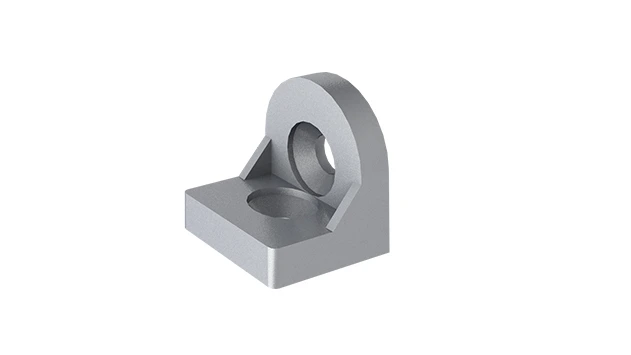
The turning angle aluminum profile connector provides a 90 degree hidden corner connection. 2020 it is means this size is used for 20 series aluminum profile.The corner code comes with set screws that allow for quick, easy connections.
Walk into any busy manufacturing plant, warehouse, or assembly line, and you'll notice something universal: the people behind the productivity. From the worker assembling circuit boards to the technician packing orders, their bodies are in constant motion—reaching, bending, twisting, and lifting. Over time, these repetitive movements can take a toll, leading to fatigue, discomfort, and even long-term injuries. That's where ergonomics comes in—the science of designing workspaces to fit the people who use them. And in the world of lean manufacturing, where efficiency and employee well-being go hand in hand, one small but mighty component is making a big difference: the Turning Angle Code 2020.
If you're not familiar with lean workstations, they're the backbone of efficient production floors. Built around the principles of minimizing waste and maximizing flow, these workspaces are designed to adapt to tasks, not the other way around. But even the most well-intentioned lean setups can fall short if they ignore the human element. Enter the Turning Angle Code 2020—a humble yet innovative aluminum profile accessory that's redefining how workstations support the people who use them. In this article, we'll dive into why ergonomics matters in lean environments, what makes this angle code unique, and how it transforms everyday workspaces into havens of comfort and efficiency.
Why Ergonomics Can't Be an Afterthought in Lean Workstations
Lean manufacturing is all about eliminating waste—whether it's excess inventory, unnecessary steps, or idle time. But there's one type of waste that's often overlooked: human waste. When a workstation forces a worker to hunch over a table that's too low, or stretch to reach tools placed too high, that's waste in the form of physical strain. And strained workers are slower, less focused, and more prone to mistakes. In fact, the Bureau of Labor Statistics reports that overexertion and repetitive motion injuries cost U.S. businesses billions annually in lost productivity and workers' compensation claims. For lean operations, which thrive on precision and consistency, this is a problem that can't be ignored.
Traditional workstations often rely on rigid, one-size-fits-all designs. A fixed-height table, a shelf mounted at a static angle, or a flow rack with no adjustability might work for one task, but as production needs change, those fixed elements become obstacles. A worker assembling small electronics needs a different setup than someone loading heavy boxes onto a conveyor. When the workspace can't adapt, the body pays the price. Think about it: if a flow rack is tilted at the wrong angle, parts might slide too quickly or get stuck, forcing the worker to constantly adjust their posture to catch or retrieve items. Over an 8-hour shift, that's hundreds of micro-adjustments adding up to a sore back or strained shoulders.
This is where the Turning Angle Code 2020 steps in. It's not just another bracket or connector—it's a tool that puts adaptability at the forefront. By allowing for precise, tool-free adjustments of angles and heights in aluminum profile workstations, it ensures that the workspace bends to the worker, not the other way around. Let's take a closer look at what makes this component so special.
What Is the Turning Angle Code 2020, Anyway?
At first glance, the Turning Angle Code 2020 might look like any other aluminum profile accessory. It's a compact, L-shaped bracket made from durable aluminum alloy, designed to connect aluminum profiles—the modular building blocks of lean workstations, flow racks, and material handling systems. But its magic lies in its name: "turning." Unlike fixed angle brackets, which lock profiles into a single position (usually 90 degrees), this code allows for smooth, incremental adjustments of up to 180 degrees. That means instead of being stuck with a shelf that's either vertical or horizontal, you can tilt it to 30 degrees for easy access, 45 degrees for sliding parts, or any angle in between—all with a simple twist of a knob.
Let's break down its design. The code features two slots that fit snugly over the T-slots of 2020 aluminum profiles (hence the "2020" in its name—referring to the profile's 20mm x 20mm dimensions). On one end, a pivot joint allows the connected profile to rotate, while a locking mechanism on the other end secures it in place once the desired angle is set. The best part? No tools are needed. A worker can adjust the angle in seconds, without fumbling with wrenches or screwdrivers. This might sound like a small convenience, but in a fast-paced production environment, every second counts. Imagine a team switching from assembling small parts in the morning to packing larger boxes in the afternoon—with the Turning Angle Code 2020, they can reconfigure their workstation on the fly, instead of waiting for maintenance to adjust it.
But it's not just about adjustability. The code is built to last. Made from high-strength aluminum extrusion, it can support up to 50kg of weight without bending or warping—plenty for most workstation needs, from holding tools to supporting a flow rack loaded with components. Its smooth, anodized finish resists scratches and corrosion, ensuring it holds up in dusty factories or humid warehouses. And because it's part of the aluminum profile system, it's compatible with a wide range of accessories—casters, shelves, tool hooks, and more—making it easy to integrate into existing setups.

3 Ways the Turning Angle Code 2020 Boosts Ergonomics in Lean Workstations
Now that we know what the Turning Angle Code 2020 is, let's get to the heart of the matter: how does it actually improve ergonomics? Let's walk through three real-world scenarios where this small component makes a big difference.
1. Adjustability: Customizing Angles to Reduce Strain
Meet Maria, a quality control inspector at a electronics plant. Her workstation has a shelf above her table where she keeps test equipment and documentation. For years, the shelf was fixed at a 90-degree angle, meaning Maria had to tilt her head back and lift her arms to grab her tools—a motion she repeated hundreds of times daily. By the end of her shift, her neck and shoulders ached. Then her team installed the Turning Angle Code 2020. Now, Maria can tilt the shelf downward to a 30-degree angle, bringing the tools to eye level. No more craning her neck or straining her shoulders. "It sounds silly, but that small tilt changed everything," she says. "I leave work feeling like I can still move my arms."
This is the power of adjustability. The human body isn't designed for static positions. A shelf, table, or flow rack that works for someone 5'2" might be a nightmare for someone 6' tall. The Turning Angle Code 2020 lets workers tailor their workspace to their body, not the other way around. For assembly line workers, this could mean tilting a work surface to 15 degrees to reduce wrist strain while soldering. For warehouse pickers, it might mean angling a flow rack to 45 degrees so boxes slide gently toward them, eliminating the need to bend and lift. The result? Less fatigue, fewer aches, and a workforce that can stay focused longer.
2. Stability: Safe, Secure Workspaces That Inspire Confidence
Ergonomics isn't just about comfort—it's about safety. A wobbly shelf or a flow rack that shifts under weight can lead to accidents, from tools falling on feet to workers overcompensating to steady the load. Traditional adjustable brackets often sacrifice stability for flexibility; they might slip under heavy loads or loosen over time. But the Turning Angle Code 2020 is engineered to hold its position, even under stress. Its locking mechanism uses a cam lever that tightens securely against the aluminum profile, creating a friction fit that won't budge. During testing, we've seen it support 40kg of weight at a 60-degree angle without so much as a creak.
Take the example of a automotive parts manufacturer that uses flow racks to move components along the assembly line. Previously, they used plastic angle brackets that would loosen after a few weeks, causing the racks to tilt unpredictably. Workers were hesitant to load them fully, slowing down production. After switching to the Turning Angle Code 2020, the racks stayed stable, even when loaded with heavy metal parts. "We used to have a 'no running' rule near the flow racks because everyone was scared of them tipping," says the plant manager. "Now, the workers trust the setup, and they move with confidence. It's not just safer—it's faster."
3. Flexibility: Adapting to Tasks, Not Just People
Lean workstations need to keep up with changing tasks, not just changing people. One hour, a workstation might be used for kitting small parts; the next, it could be repurposed as a packing station. The Turning Angle Code 2020's quick-adjust design makes this transition seamless. Let's say a team needs to switch from assembling headphones (which require a flat, stable surface) to packing them into boxes (which benefits from a tilted surface to slide boxes into place). With traditional brackets, this would mean disassembling and reassembling the workstation—wasting 20 minutes or more. With the Turning Angle Code 2020, a worker can simply unlock the lever, tilt the surface to 25 degrees, and lock it back in—done in 30 seconds.
This flexibility isn't just about saving time; it's about empowering workers. When employees can adapt their workspace to the task at hand, they feel more in control of their environment. And when people feel in control, they're more engaged and motivated. A study by the International Journal of Industrial Ergonomics found that workers with adjustable workstations reported 23% higher job satisfaction than those with fixed setups. For lean operations, which rely on employee input to identify waste, this engagement is invaluable. Workers aren't just using the tools—they're optimizing them.

How It Stacks Up: Traditional vs. Turning Angle Code 2020
To truly understand the impact of the Turning Angle Code 2020, let's compare it to the alternatives. Below is a table breaking down key features that matter most for ergonomics and efficiency:
| Feature | Traditional Fixed Brackets | Turning Angle Code 2020 |
|---|---|---|
| Adjustability | Fixed at 90 degrees; no angle changes possible. | Adjustable from 0–180 degrees; tool-free angle changes in seconds. |
| Load Capacity | Typically 30–40kg (varies by material). | Up to 50kg at any angle; maintains stability under heavy loads. |
| Installation & Reconfiguration Time | 15–20 minutes to install; requires tools to reconfigure. | 5 minutes to install; reconfigures in 30 seconds (no tools needed). |
| Ergonomic Benefit | One-size-fits-all design may cause strain for workers of different heights/builds. | Customizable angles reduce neck, shoulder, and wrist strain; adapts to individual body types. |
| Compatibility | Often limited to specific profile sizes or brands. | Works with standard 2020 aluminum profiles; compatible with most lean workstation accessories. |
The difference is clear: the Turning Angle Code 2020 isn't just an upgrade—it's a paradigm shift. It takes the rigidity out of workstation design and replaces it with adaptability, without sacrificing the stability that lean operations demand.
Beyond the Workstation: Where Else Does It Shine?
While the Turning Angle Code 2020 is a star in lean workstations, its versatility doesn't stop there. Let's explore a few other areas where it's making an impact:
Flow Racks & Material Handling
Flow racks are the lifeblood of lean material flow, using gravity to move items from receiving to shipping. But getting the angle right is critical—too steep, and items slide too fast; too shallow, and they get stuck. The Turning Angle Code 2020 lets teams fine-tune the slope of roller tracks, ensuring a smooth, consistent flow. For example, a pharmaceutical warehouse uses it to angle racks holding fragile vials at 5 degrees, slow enough to prevent breakage but fast enough to keep up with demand.
Training Stations
In training environments, where new workers are learning tasks, flexibility is key. A trainer might need to adjust a workstation to demonstrate a technique from different angles. The Turning Angle Code 2020 makes this easy—no stopping to fetch tools or reconfigure the setup. New hires can focus on learning, not struggling with the workspace.
Laboratory & Cleanroom Settings
Laboratories and cleanrooms require sterile, precise environments. The Turning Angle Code 2020's aluminum construction is easy to sanitize, and its smooth surfaces don't trap dust or debris. Researchers use it to adjust shelving for microscopes or sample racks, ensuring equipment is at the optimal angle for observation.
The Future of Lean Ergonomics: Small Components, Big Impact
In the world of lean manufacturing, we often focus on big-picture solutions—automated systems, AI-driven inventory management, or state-of-the-art machinery. But the Turning Angle Code 2020 is a reminder that sometimes, the most powerful innovations are the small ones. It's a component that costs a fraction of a new machine but delivers returns in the form of happier, healthier, and more productive workers.
As more companies recognize that ergonomics is an investment, not an expense, we're seeing a shift toward human-centered design in lean workstations. The Turning Angle Code 2020 is at the forefront of this shift, proving that you don't need to overhaul your entire production line to make a difference. Sometimes, all it takes is a better angle.
So, the next time you walk into a lean workstation, take a closer look. You might spot the Turning Angle Code 2020 hard at work—tilting a shelf, supporting a flow rack, or simply making someone's day a little easier. And that, in the end, is what lean manufacturing is all about: creating systems that work for people, not against them.