- Company Articles
- Products and Technology
- Technology Sharing
- How Turning Angle Code 2020 Improves Lead Times in Lean Production

How Turning Angle Code 2020 Improves Lead Times in Lean Production
Related Product
Urning Angle Code 2020
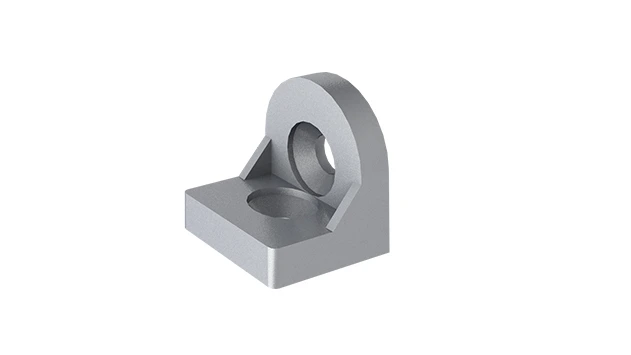
The turning angle aluminum profile connector provides a 90 degree hidden corner connection. 2020 it is means this size is used for 20 series aluminum profile.The corner code comes with set screws that allow for quick, easy connections.
Walk into any modern manufacturing facility, and you'll likely hear the hum of machines, the clink of tools, and the steady rhythm of production lines moving toward a common goal: getting products out the door faster, better, and with less waste. In this high-stakes environment, "lead time"—the total time from order to delivery—isn't just a metric on a spreadsheet. It's the pulse of the business, the difference between meeting a client's urgent deadline and watching them take their business elsewhere. For companies embracing lean production, every second shaved off lead time is a victory against inefficiency, and surprisingly, some of the biggest victories come from the smallest components. Enter the Turning Angle Code 2020: a but powerful aluminum profile accessory that's quietly revolutionizing how lean systems are built, reconfigured, and optimized.
In this article, we'll dive into the world of lean production, unpack why lead time reduction matters, and explore how the Turning Angle Code 2020—often overlooked in favor of flashier machinery—plays a starring role in making lean systems more agile, responsive, and ultimately, faster. We'll look at real-world scenarios, compare it to traditional methods, and show how this tiny component fits into a larger ecosystem of aluminum profiles, workbenches, and flow racks that together create a lean production powerhouse.
Understanding Lean Production: More Than Just a Buzzword
Before we get to the Turning Angle Code 2020, let's ground ourselves in what lean production really means. At its core, lean is a philosophy born from the Toyota Production System (TPS), designed to eliminate "muda"—the Japanese word for waste. Waste, in lean terms, isn't just physical trash; it's any activity that doesn't add value to the customer. That includes waiting time, overproduction, unnecessary movement, defects, and yes, long lead times. The goal? To create a system where every action, every component, and every minute serves a purpose.
Lead time is the sum of all these activities. If a workbench takes 8 hours to assemble, that's 8 hours of waste if it could be built in 2. If a production line can't be reconfigured quickly to switch between products, that's downtime waste. If components don't fit together seamlessly, that's frustration and rework waste. Lean production isn't about working harder—it's about working smarter by designing systems that flow like water: smoothly, adaptively, and without stagnation.
But here's the catch: building such a system requires the right tools. For decades, manufacturers relied on rigid, welded steel structures for workbenches, flow racks, and material handling equipment. These were sturdy, sure, but they were also slow to build, impossible to reconfigure without cutting and rewelding, and expensive to replace when production needs changed. Enter modular systems built with aluminum profiles—lightweight, strong, and infinitely customizable. And at the heart of these modular systems? Components like the Turning Angle Code 2020.
What Is the Turning Angle Code 2020, Anyway?
Let's start with the basics. The Turning Angle Code 2020 is a small, L-shaped bracket made from high-grade aluminum alloy, designed specifically to connect 2020 aluminum profiles at (you guessed it) various angles—most commonly 90 degrees, but also adjustable for custom configurations. It's part of a broader family of "aluminum profile accessories," the unsung heroes that hold modular systems together. Think of it as the glue of lean systems, but instead of messy adhesives or time-consuming welding, it uses precision-engineered slots and screws to create a tight, secure bond between profiles.
So why "2020"? That refers to the size of the aluminum profile it's designed for: 20mm x 20mm, a common in modular systems for its balance of strength and versatility. The "turning" part comes from its ability to pivot slightly during assembly, allowing for minor adjustments to ensure perfect alignment—no more forcing profiles into place or dealing with misaligned holes. And "code"? That's just industry jargon for a standardized component, ensuring compatibility across different manufacturers and systems.
But don't let its small size fool you. The Turning Angle Code 2020 is built to last. Its aluminum alloy construction resists corrosion, stands up to the wear and tear of daily production, and weighs next to nothing compared to steel brackets. Installing it requires nothing more than a hex key (Allen wrench) and a few minutes of time—no welding torches, no heavy machinery, no specialized training. That simplicity is its superpower, especially in lean environments where time is the most valuable resource.

The Lean Connection: How Turning Angle Code 2020 Slashes Lead Times
Now, let's connect the dots: How does a tiny bracket reduce lead times in lean production? It all comes down to three key lean principles: eliminating waste , flexibility , and continuous improvement . Let's break down each one.
1. Eliminating Waste: From Hours to Minutes
In traditional manufacturing setups, building a simple workbench might involve cutting steel pipes, welding them into a frame, sanding down rough edges, and painting to prevent rust. That process could take a skilled worker half a day or more. If the workbench needs to be adjusted later—say, to accommodate a taller operator or a new machine—you'd have to start over: cut the steel again, reweld, and repeat. That's hours of non-value-added work, all contributing to longer lead times for setting up or reconfiguring production lines.
The Turning Angle Code 2020 flips this script. With modular aluminum profiles and angle codes, assembling a workbench becomes a matter of "click and connect." You cut the profiles to length (or order pre-cut lengths), slide the angle codes into the T-slots of the profiles, tighten the screws, and you're done. A basic workbench that once took 4 hours to weld can now be built in under an hour by a single worker with minimal training. And when you need to adjust the height or width? Just loosen the screws, reposition the angle codes, and retighten. No cutting, no welding, no wasted materials. That's waste elimination in action—turning hours of labor into minutes.
2. Flexibility: Adapting to Change Without Missing a Beat
Lean production thrives on flexibility. Customer demands change, product designs evolve, and production schedules shift—often with little notice. A rigid production line that can't adapt becomes a bottleneck, forcing teams to choose between delaying orders or rushing through tasks (and risking defects). The Turning Angle Code 2020, by enabling quick reconfiguration, turns rigid systems into flexible ones.
Consider a scenario: A electronics manufacturer suddenly gets a rush order for a new smartphone model. The existing assembly line uses flow racks designed for the old model, with shelves spaced 12 inches apart. The new phone's components are bulkier, requiring 18-inch spacing. With traditional steel flow racks, this would mean ordering new racks (waiting weeks for delivery) or spending a day cutting and rewelding the old ones (delaying production). With aluminum profiles and Turning Angle Code 2020? The team can disassemble the existing flow rack, reposition the angle codes to widen the shelves, and have the new setup ready in under 2 hours. The line is back up and running, and the rush order ships on time.
This flexibility isn't just about reacting to emergencies—it's about embracing continuous improvement. In lean systems, teams regularly analyze workflows and make small adjustments to reduce waste. Maybe a workbench is better suited 6 inches to the left, or a flow rack needs an extra shelf. With the Turning Angle Code 2020, these adjustments are quick and painless, turning "what if" ideas into action without disrupting production.
3. Compatibility: Building a Lean Ecosystem
No component works in isolation, and the Turning Angle Code 2020 is no exception. Its real power lies in how well it plays with others—specifically, aluminum profiles, workbenches, and flow racks. Together, these components form a lean ecosystem where every part is designed to work seamlessly with the others, reducing friction and increasing efficiency.
Take workbenches, for example. A typical lean workbench needs to support tools, materials, and workers comfortably. With aluminum profiles and Turning Angle Code 2020, manufacturers can customize the height, add shelves, attach tool holders, or even integrate ESD (electrostatic discharge) mats for sensitive electronics—all without starting from scratch. The angle codes ensure that every add-on is secure and aligned, so the workbench remains stable and functional, even as it evolves.
Flow racks, which move materials from one workstation to the next, benefit similarly. The angle codes allow for easy adjustment of roller tracks (another key component in lean systems), ensuring materials glide smoothly without jamming. If a roller track starts to wear, you can replace just the damaged section instead of the entire rack, saving time and money. It's this modularity that makes the lean system so resilient—and the Turning Angle Code 2020 is the linchpin holding it all together.

The Numbers Speak: A Real-World Comparison
To truly appreciate the impact of the Turning Angle Code 2020, let's look at a side-by-side comparison with traditional welded steel brackets. The table below breaks down key metrics for assembling a basic flow rack—common in warehouses and production lines—using both methods. The data is based on industry averages and case studies from manufacturers who've made the switch to modular systems.
| Metric | Traditional Welded Steel Brackets | Turning Angle Code 2020 + Aluminum Profiles |
|---|---|---|
| Assembly Time (per unit) | 4–6 hours (requires skilled welder) | 45–60 minutes (can be done by unskilled labor) |
| Reconfiguration Time (to adjust shelf height) | 2–3 hours (cutting, welding, repainting) | 15–20 minutes (loosen screws, reposition, retighten) |
| Tool Requirements | Welding machine, grinder, paint, safety gear | Hex key (Allen wrench) only |
| Cost Over 5 Years (including reconfigurations) | $1,200 (initial $800 + $400 in rework) | $650 (initial $500 + $150 in adjustments) |
| Lead Time for Setup (from order to operation) | 7–10 days (waiting for welding schedule) | 1–2 days (same-day assembly with in-stock parts) |
The difference is stark. Using Turning Angle Code 2020 reduces assembly time by over 80%, slashes reconfiguration time by 90%, and cuts long-term costs by nearly half. Perhaps most importantly, it reduces lead time for setting up new equipment from a week to a day, allowing manufacturers to respond faster to changing needs. For a company with multiple production lines, these savings multiply quickly—freeing up labor, reducing downtime, and enabling faster delivery to customers.
Beyond the Angle Code: Building a Lean Mindset
It's easy to focus on the Turning Angle Code 2020 as a "silver bullet," but its true value lies in how it enables a lean mindset. Lean production isn't just about tools and components—it's about a culture of continuous improvement, where every team member is empowered to identify waste and suggest solutions. The modularity of aluminum profiles and angle codes makes it possible for frontline workers to make changes themselves, without waiting for maintenance or engineering teams. That sense of ownership is powerful: when workers can adjust their own workbenches or flow racks to eliminate inefficiencies, they become more engaged, more productive, and more invested in the success of the company.
Consider Maria, a line operator at a small electronics manufacturer. For months, she'd been struggling with a workbench that was too low, causing back strain and slowing her down. With a traditional welded workbench, she'd have to fill out a maintenance request, wait for approval, and then wait again for a technician to adjust it—likely taking days. With a modular workbench built with aluminum profiles and Turning Angle Code 2020, she simply asked her supervisor for a hex key, loosened the angle codes, raised the bench to a comfortable height, and retightened them. Total time: 10 minutes. That day, her productivity increased by 15%, and she went home without back pain. That's the human impact of lean components—small changes that make a big difference in people's lives and the company's bottom line.
The Future of Lean: Small Components, Big Dreams
As manufacturing continues to evolve—with trends like automation, IoT, and customization driving demand for faster, more flexible production—the role of components like the Turning Angle Code 2020 will only grow. Imagine a future where modular systems are not just reconfigurable but "smart," with angle codes embedded with sensors that alert teams when a connection is loose or a component is wearing out. Or where AI-driven design tools suggest optimal configurations for workbenches and flow racks, with angle codes that auto-adjust to maintain alignment. While these innovations are still on the horizon, the foundation is already here: modular systems built on precision, flexibility, and simplicity.
Even today, the Turning Angle Code 2020 is helping manufacturers stay competitive in a global market. Small and medium-sized enterprises (SMEs), in particular, benefit from its low cost and ease of use, allowing them to compete with larger companies that have more resources. By reducing lead times, these SMEs can take on smaller, more frequent orders, improving cash flow and customer satisfaction. In a world where speed and agility are everything, the ability to adapt quickly is a superpower—and the Turning Angle Code 2020 is the key to unlocking it.
Conclusion: The Unsung Hero of Lean Production
In the grand scheme of manufacturing, the Turning Angle Code 2020 may seem. It's small, it's simple, and it rarely gets mentioned in boardrooms or trade show keynotes. But for those on the front lines—for the workers assembling products, the supervisors managing production, and the customers waiting for their orders—it's a game-changer. It's a reminder that lean production isn't about grand gestures or expensive machinery; it's about the details: the components that make systems flow, the tools that save time, and the mindset that every second counts.
As we've explored, the Turning Angle Code 2020 reduces lead times by eliminating waste in assembly and reconfiguration, enabling flexibility in the face of change, and fostering a culture of continuous improvement. It's a critical part of the lean system, working in harmony with aluminum profiles, workbenches, and flow racks to create production lines that are faster, more efficient, and more adaptable than ever before.
So the next time you walk through a manufacturing facility, take a closer look at the workbenches, the flow racks, and the aluminum structures that hold everything together. Chances are, you'll spot a Turning Angle Code 2020—or a dozen of them—quietly doing their job. And now, you'll know: that tiny bracket isn't just holding up a shelf. It's holding up a lean system, a company's ability to compete, and the promise of a faster, better future for manufacturing.