- Company Articles
- Products and Technology
- Product knowledge
- How Turning Angle Code 4040 Enhances Reusability in Lean Manufacturing

How Turning Angle Code 4040 Enhances Reusability in Lean Manufacturing
Related Product
Turning Angle Code 4040
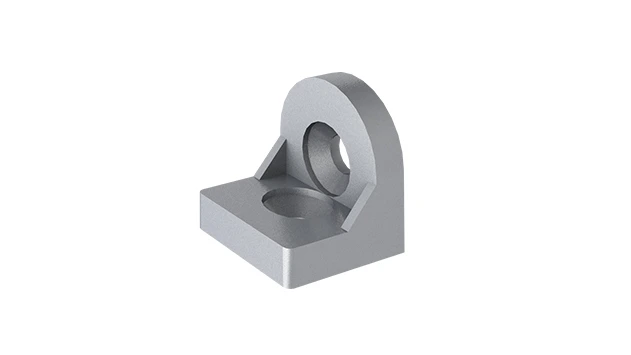
The turning angle aluminum profile connector provides a 90 degree hidden corner connection. 4040 it is means this size is used for 40 series aluminum profile.The corner code comes with set screws that allow for quick, easy connections.
Walk into any manufacturing facility that claims to follow lean system principles, and you'll likely hear buzzwords like "waste reduction," "continuous improvement," or "value stream mapping." These are the pillars of lean—ideas that promise to streamline operations, cut costs, and boost efficiency. But there's one critical element often missing from the conversation: reusability. In a world where production lines shift overnight, product designs evolve monthly, and customer demands swing like a pendulum, the ability to reuse equipment and components isn't just a "nice-to-have"—it's the backbone of sustainable lean manufacturing. And that's where a small but mighty component called the Turning Angle Code 4040 comes into play.
Imagine a factory floor where every workbench, material rack, and assembly station is bolted down, welded together, or custom-built for a single purpose. When the next product launch requires a new layout, those once-essential structures become expensive paperweights. Workers waste hours dismantling them, materials end up in scrap heaps, and managers cringe at the cost of replacing them. This is the reality for far too many "lean" operations—stuck in a cycle of rigid setups and wasteful replacements. But it doesn't have to be this way. The Turning Angle Code 4040, a unassuming connector designed for aluminum profile systems, is quietly revolutionizing how factories adapt, reuse, and thrive in an era of constant change.
The Reusability Gap in Modern Lean Manufacturing
To understand why the Turning Angle Code 4040 matters, let's first unpack the reusability problem. Lean manufacturing, at its core, is about eliminating waste—whether that's excess inventory, unnecessary motion, or defects. But one of the most insidious forms of waste is "obsolescence waste": the cost of equipment, tools, or structures that become useless when processes change. For example, consider a workbench built to assemble smartphones. Its height, shelf positions, and tool holders are all tailored to that specific model. When the company launches a larger phone with new components, the workbench can't be adjusted. It either gets stored (taking up valuable space) or scrapped (wasting materials and money). Multiply this across an entire factory, and the numbers add up fast.
Traditional solutions to this problem have been Band-Aids at best. Some factories use generic, one-size-fits-all workbenches, but these often compromise ergonomics or efficiency. Others rely on temporary fixes like clamps or zip ties to modify old setups, creating safety hazards and unstable work environments. The root issue? Most manufacturing components—from metal frames to fixed joints—are designed for permanence, not flexibility. They're built to "last forever" in a single configuration, which is great until "forever" lasts only six months.
Enter the Turning Angle Code 4040. Part of a broader ecosystem of aluminum profile accessories, this small connector is engineered to turn rigidity into flexibility. It's not just a joint; it's a gateway to a modular manufacturing world where almost anything can be reconfigured, repurposed, and reused. Let's dive into how it works, why it matters, and how it's changing the game for lean operations.
What Is the Turning Angle Code 4040, Anyway?
At first glance, the Turning Angle Code 4040 might look like just another metal bracket. It's compact—roughly the size of a deck of cards—with a few holes, slots, and a rotating mechanism. But don't let its simplicity fool you. This little component is the linchpin of modular aluminum profile systems, which have become the gold standard for flexible manufacturing setups. To understand its role, let's break down the basics:
Aluminum Profiles 101: Aluminum profiles are lightweight, durable, and versatile metal rails with T-shaped slots running along their length (think of them as industrial-grade Legos for adults). These slots allow accessories—like brackets, shelves, or wheels—to be attached without drilling or welding. The "4040" in Turning Angle Code 4040 refers to the profile size: 40mm by 40mm, a common standard in factories for workbenches, racks, and assembly lines.
The Role of the Turning Angle Code 4040: While aluminum profiles provide the "bones" of a structure, the Turning Angle Code 4040 is the "joint" that holds them together—with a twist. Unlike fixed joints (which lock profiles at 90-degree angles permanently) or basic hinges (which only bend in one direction), the Turning Angle Code 4040 lets users adjust the angle between two profiles on the fly . Need a 30-degree slope for a material chute? Done. Want to reposition a shelf from vertical to horizontal? Just loosen a bolt, rotate, and retighten. It's tool-free adjustability in its simplest form.
Durability Meets Flexibility: Made from high-grade aluminum alloy (the same material as aircraft parts), the Turning Angle Code 4040 is built to withstand the wear and tear of factory life—heavy loads, constant adjustments, and even exposure to oils or coolants. Its rotating mechanism uses precision-machined gears that lock securely in place, so once you set an angle, it stays put until you decide to change it. This combination of strength and adaptability is what sets it apart from flimsy plastic hinges or rigid welded joints.

How Turning Angle Code 4040 Solves the Reusability Problem
Let's cut to the chase: How does this tiny connector actually make factories more reusable? Let's walk through a real-world scenario. Meet Sarah, a production manager at a mid-sized electronics plant. Last quarter, her team assembled smartwatches on a set of custom workbenches. This quarter, they're shifting to fitness trackers—smaller, lighter, with different tool requirements. The old workbenches are too tall, have shelves in the wrong places, and can't accommodate the new testing equipment. In the past, Sarah would have ordered new workbenches, costing $15,000 and taking three weeks to deliver. Today, she's using Turning Angle Code 4040-equipped aluminum profile workbenches. Here's how it plays out:
1. Adjust, Don't replace: Adapting Workbenches in Hours (Not Weeks)
Sarah's team starts by loosening the bolts on the Turning Angle Code 4040 joints that connect the workbench legs to the frame. With a quick twist, they lower the tabletop from 90cm to 75cm—perfect for the smaller fitness trackers. Next, they reposition the side shelves: instead of fixed vertical brackets, the shelves are attached using Turning Angle Code 4040s, so they pivot from under the table to above it, making room for new testing tools. Finally, they add a sloped material chute by angling two aluminum profiles at 45 degrees with the connectors, letting components slide smoothly to the assembly line. Total time? 2 hours. Total cost? $0 in new materials. The workbenches are now reused, not replaced.
2. Reconfigure Racks for New Inventory (No Scrap Needed)
It's not just workbenches. Sarah's material storage area is also due for a makeover. The old racks, built with welded steel, had fixed shelves spaced 30cm apart—great for smartwatch boxes, but wasted space for the smaller fitness tracker packaging. With aluminum profile racks connected by Turning Angle Code 4040s, her team adjusts the shelf heights in minutes. They even repurpose a few extra profiles and connectors to build a new mobile cart for transporting components, using casters from the old workbenches (yes, those are reusable too, thanks to compatible T-slot connections). No welding, no cutting, no scrap. Just reconfiguration.
3. Scale Up (or Down) Without New Investments
Six months later, demand for fitness trackers spikes. Sarah needs to add two more assembly stations. Instead of buying new workbenches, she borrows components from the storage room—extra aluminum profiles, spare Turning Angle Code 4040s, and leftover shelves. In an afternoon, her team builds two identical workbenches, using the same connectors to replicate the successful design. When demand cools down, those stations can be disassembled, and the parts stored for the next peak. This "build, use, break down, reuse" cycle is the epitome of lean reusability—and it's only possible because the Turning Angle Code 4040 turns static materials into a flexible toolkit.

The Numbers Behind the Magic: Quantifying Reusability Savings
Sarah's story isn't an anomaly. Factories that adopt Turning Angle Code 4040 and modular aluminum profile systems report eye-opening savings. Let's crunch the numbers:
| Metric | Traditional Fixed Setups | Turning Angle Code 4040 + Aluminum Profiles | % Improvement |
|---|---|---|---|
| Time to reconfigure a workbench | 8 hours (dismantle + rebuild) | 1 hour (adjust connectors) | 87.5% |
| Cost to adapt to new product lines | $15,000 (new workbenches/racks) | $0 (reuse existing components) | 100% |
| Material waste from obsolete equipment | 200kg/year (scrapped steel/wood) | 10kg/year (minimal wear on connectors) | 95% |
| Setup time for new production lines | 2 weeks (wait for custom builds) | 2 days (reconfigure on-site) | 85.7% |
These numbers come from case studies across industries—automotive, aerospace, consumer goods—where reusability with Turning Angle Code 4040 has translated to tangible savings. One automotive parts supplier, for example, reduced its annual equipment costs by $40,000 after switching to modular workbenches, while a medical device manufacturer cut waste by 60% by reusing racks and carts via adjustable connectors.
Why Turning Angle Code 4040 Beats Traditional Alternatives
You might be thinking: "Aren't there other adjustable connectors out there?" The short answer: yes. But the Turning Angle Code 4040 stands out for three key reasons:
1. Precision Adjustability (No Guessing Games)
Unlike basic hinges or generic brackets, the Turning Angle Code 4040 features incremental angle markings (0°, 15°, 30°, 45°, 90°, etc.), so users can set exact angles every time. This is critical for consistency—if you need 10 workbenches all sloped at 30 degrees, you won't get 8 at 28° and 2 at 32° with these connectors. Traditional joints, by contrast, often require trial-and-error or custom machining to hit specific angles, leading to uneven setups and wasted time.
2. Compatibility with the Aluminum Profile Ecosystem
The Turning Angle Code 4040 isn't a one-trick pony. It works seamlessly with hundreds of aluminum profile accessories—casters, roller tracks, tool holders, even LED light strips. This means a single workbench can evolve from a simple assembly station to a fully equipped testing hub, just by swapping out accessories. Traditional connectors, like bolt-on hinges or plastic clips, often work with only one type of material or system, limiting their reusability.
3. Durability That Outlasts Multiple Product Cycles
Cheap plastic connectors might save money upfront, but they crack under heavy loads or wear out after a few adjustments. The Turning Angle Code 4040, made from hardened aluminum alloy, can withstand thousands of adjustments and support loads up to 200kg per joint. This durability ensures that even after years of reuse, the connectors remain reliable—no more wobbly workbenches or safety risks from degraded components.
Tips for Adopting Turning Angle Code 4040 in Your Lean System
Ready to start reusing instead of replacing? Here's how to integrate Turning Angle Code 4040 into your operations:
Start Small, Then Scale
Don't overhaul your entire factory at once. Pick a high-impact area—like a frequently changing assembly line or a workbench that's always being modified—and pilot modular aluminum profiles with Turning Angle Code 4040s. Measure the savings (time, cost, waste) and use those results to justify expanding to other areas.
Train Your Team to "Think Modular"
Reusability thrives when everyone on the floor understands the system. Host a 30-minute workshop on how the Turning Angle Code 4040 works: how to adjust angles, attach accessories, and troubleshoot loose joints. Encourage workers to suggest reconfiguration ideas—they're the ones who know the pain points best.
Standardize on 4040 Aluminum Profiles (At Least to Start)
While aluminum profiles come in sizes like 2020, 3030, or 4080, sticking to 4040 for your initial rollout ensures maximum compatibility with Turning Angle Code 4040 and other accessories. Once your team is comfortable, you can expand to other sizes for specialized needs.
Store Spare Components (They're Your Future Toolkit)
Set aside a "modular parts bin" with extra aluminum profiles, Turning Angle Code 4040s, bolts, and accessories. When a new project comes up, your team won't waste time waiting for deliveries—they'll grab what they need from the bin and start building.
The Future of Lean: Turning Angle Code 4040 and Beyond
As manufacturing grows more agile—with shorter product lifecycles, smaller batch sizes, and custom orders becoming the norm—reusability will only grow in importance. The Turning Angle Code 4040 is just the beginning. We're already seeing innovations like smart connectors with built-in sensors (to track usage and predict maintenance) and 3D-printed adapter plates that let older equipment work with modular systems. But even without these high-tech add-ons, the core idea remains: flexibility wins.
In the end, lean manufacturing isn't just about eliminating waste—it's about creating value from what you already have. The Turning Angle Code 4040 embodies this idea. It turns "one and done" into "use and reuse," "scrap" into "spare parts," and "fixed" into "flexible." So the next time you walk your factory floor, take a look at those rigid workbenches and welded racks. Imagine what they could become with a few well-placed connectors. Then ask yourself: Is your lean system truly lean if it's not reusable? With the Turning Angle Code 4040, the answer can finally be yes.