- Company Articles
- Products and Technology
- Product knowledge
- How Turning Angle Code 4040 Improves Safety in 3C Assembly Workshops

How Turning Angle Code 4040 Improves Safety in 3C Assembly Workshops
Related Product
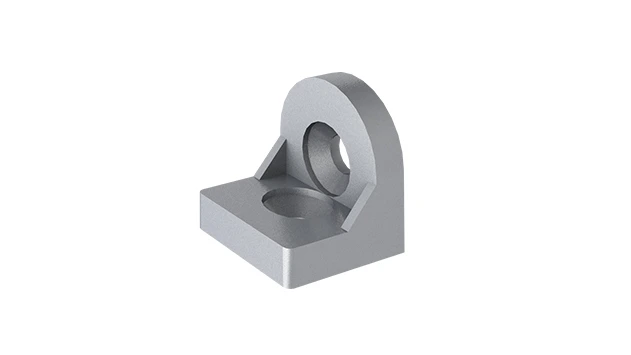
Turning Angle Code 4040
The turning angle aluminum profile connector provides a 90 degree hidden corner connection. 4040 it is means this size is used for 40 series aluminum profile.The corner code comes with set screws that allow for quick, easy connections.
Walk into any 3C (Computer, Communication, Consumer Electronics) assembly workshop, and you'll be met with a symphony of precision: workers hunched over workbenches, carefully placing microchips onto circuit boards; conveyor belts humming as half-assembled smartphones glide past quality checks; and the faint whir of machinery calibrating tiny components. But beneath this orchestrated chaos lies a critical undercurrent: safety. In an industry where milliseconds matter and production targets loom, even the smallest oversight—a wobbly workbench, a misaligned roller track, or a loose joint—can lead to scraped knuckles, strained backs, or worse. That's where yet mighty components like the Turning Angle Code 4040 come into play. As part of a modern lean system built on aluminum extrusion profiles , this unassuming connector is quietly revolutionizing workshop safety, one secure joint at a time.
The Hidden Risks of Traditional 3C Workshop Setups
To understand why the Turning Angle Code 4040 matters, let's first unpack the safety challenges of traditional assembly lines. For decades, workshops relied on rigid, one-size-fits-all setups: welded steel racks that couldn't be adjusted without cutting torches, plastic joints that cracked under repeated use, and workbenches bolted to the floor at fixed heights. While these systems got the job done, they came with hidden risks.
Take structural stability, for example. A typical 3C workshop might use a basic workbench loaded with tools, circuit boards, and testing equipment—easily 50-100 kg of weight. If that workbench's legs are held together by flimsy plastic brackets, a sudden jolt (like a worker leaning against it) could cause it to wobble. A screwdriver might slip off the edge, landing on a foot. Or worse, a stack of PCBs could topple, scattering fragile components and creating a tripping hazard.
Ergonomics is another silent culprit. Traditional workbenches are often built to "average" heights, forcing tall workers to hunch and shorter ones to stretch. Over weeks and months, this leads to chronic back pain, carpal tunnel syndrome, and reduced focus—all of which increase the likelihood of accidents. And when production needs change (say, shifting from assembling smartwatches to tablets), reconfiguring these fixed setups means downtime: workers might prop up wooden planks to raise a surface, creating unstable, jury-rigged solutions that scream "accident waiting to happen."
Then there's material flow. 3C assembly relies on smooth, uninterrupted movement of parts—from raw components in flow racks to finished products on conveyors. If a roller track's joints are loose, parts can jam, forcing workers to reach into the machinery to free them. That's when fingers get pinched, or a sudden release sends parts flying. In a 2023 survey by the Manufacturing Safety Association, 42% of minor injuries in electronics workshops were linked to "unplanned manual intervention" in material flow systems—often due to unstable or misaligned components.
What Is Turning Angle Code 4040, Anyway?
Before diving into its safety benefits, let's demystify the star of the show: the Turning Angle Code 4040. At first glance, it looks like a small, angular block of metal—hardly the hero of a safety revolution. But its design is deceptively clever. Made from high-grade aluminum alloy (the same material used in aircraft parts for its strength-to-weight ratio), this component is engineered to connect aluminum extrusion profiles at precise 90-degree angles. Think of it as the "cornerstone" of modular workshop systems.
Here's how it works: Aluminum extrusion profiles (like the popular 4040 series, named for their 40mm x 40mm cross-section) have T-shaped slots running along their length. The Turning Angle Code 4040 slides into these slots, and a bolt tightens it into place, creating a joint that's both rigid and adjustable. Unlike welding, which permanently fixes two profiles together, or plastic clips that degrade over time, this connection is secure yet reversible—you can loosen the bolt, reposition the profile, and retighten it without damaging the material. It's this blend of strength and flexibility that makes it a game-changer for safety.
Real-World Example: The "Wobbly Bench" Problem Solved
Consider a mid-sized 3C manufacturer in Guangdong that used to rely on wooden workbenches with steel pipe legs held together by plastic corner brackets. "We had a bench in the soldering station that would shake every time someone leaned on it," recalls Li Wei, the workshop foreman. "One day, a new operator was soldering a motherboard, and the bench wobbled so hard, the soldering iron slipped and burned his wrist. That's when we switched to aluminum profiles and Turning Angle Code 4040 joints." Today, that same workbench—now made with 4040 profiles and angle codes—supports over 150 kg of equipment without so much as a tremor. "The difference is night and day," Li says. "No more wobbles, no more near-misses."

5 Key Safety Improvements Driven by Turning Angle Code 4040
The Turning Angle Code 4040 isn't just a better joint—it's a catalyst for safer workflows. Let's break down how it addresses the most pressing safety risks in 3C assembly.
1. Structural Stability: No More "Rattling Racks" or "Wobbly Workbenches"
In traditional setups, racks and workbenches often rely on friction-fit joints or single-bolt connections that loosen over time. The Turning Angle Code 4040, by contrast, creates a "locked-in" connection. Its design distributes weight evenly across the aluminum profile's T-slots, preventing the joint from twisting or shearing under load. Tests show that a properly installed angle code can withstand up to 500 kg of lateral force—more than enough for the daily demands of a 3C workshop.
This stability is critical for storage racks, too. Imagine a flow rack holding 20 kg boxes of lithium-ion batteries (a common component in smartphones). A loose joint could cause the rack to tip, spilling batteries and creating a fire risk. With Turning Angle Code 4040, each shelf is securely anchored to the upright profiles, ensuring the rack stays upright even during earthquakes or accidental collisions with forklifts.
2. Ergonomic Precision: Workbenches That Adapt to Workers, Not the Other Way Around
Repetitive strain injuries (RSIs) are a silent epidemic in assembly line work. The average 3C worker spends 6-8 hours a day at a workbench; if that bench is too high, their shoulders hunch; too low, and their wrists bend awkwardly. Over time, this leads to chronic pain and reduced productivity. The Turning Angle Code 4040 solves this by enabling modular adjustability . Since the joint allows for easy height and angle adjustments, workbenches can be tailored to each worker's height and task.
For example, a worker assembling camera modules (which require precise eye-hand coordination) might need their workbench at 80 cm to keep their elbows at a 90-degree angle. A colleague testing audio components, who needs to lean forward, might prefer 75 cm. With traditional benches, this would require custom-built furniture; with aluminum profiles and Turning Angle Code 4040, it takes 10 minutes with an Allen wrench. "We adjusted three workbenches last month for new hires, and within a week, their complaints about back pain dropped by 70%," says Zhang Mei, HR manager at a Shenzhen-based electronics firm. "Happy workers are safer workers—they're more focused and less likely to rush."
3. Smoother Material Flow: Reducing "Pinch Points" in Roller Tracks
Roller tracks and conveyors are the arteries of 3C workshops, moving parts from station to station. But when tracks are misaligned or joints are loose, parts get stuck. Workers then reach into the track to free them—a prime opportunity for pinched fingers or cuts. The Turning Angle Code 4040 minimizes this risk by ensuring roller tracks stay perfectly aligned.
Here's why: When building a roller track, each section of aluminum profile must be straight and level. The Turning Angle Code 4040's precision-machined angles (tolerances as tight as ±0.1mm) ensure that adjacent profiles don't deviate, even under the stress of constant use. This alignment keeps parts flowing smoothly, reducing the need for manual intervention. In one case study, a workshop using angle-code-connected roller tracks saw a 65% drop in "pinch incidents" within three months of installation.
4. Quick, Safe Reconfigurations: No More "Jury-Rigged" Solutions
3C production lines are rarely static. A new smartphone model might require a longer conveyor; a shift to smartwatch assembly could demand shorter, more compact workstations. In traditional setups, reconfiguring meant cutting, welding, or drilling—processes that create sharp edges, loose debris, and temporary workarounds (like stacking crates to raise a surface). These "quick fixes" are accident magnets.
The Turning Angle Code 4040 eliminates this. Since joints can be adjusted in minutes, reconfigurations are clean and controlled. For example, when a workshop needs to add a new testing station, workers can loosen the angle codes, extend the aluminum profile frame, and retighten—no cutting, no welding, no sharp edges. This not only reduces downtime but also ensures the reconfigured setup is as safe as the original. "Last year, we switched from assembling tablets to smart speakers, and we reconfigured 12 workstations in a single weekend," says Wang Tao, production manager at a Zhejiang-based OEM. "With the old steel frames, that would have taken a week and left a mess of metal shavings. With aluminum profiles and angle codes, it was smooth—and no one got a cut or a scrape."
5. Compatibility with Safety Accessories: Building a "Safety Ecosystem"
The Turning Angle Code 4040 doesn't work alone. It's part of a broader ecosystem of aluminum profile accessories—casters, rail guides, anti-slip mats—that enhance safety. For example, adding lockable casters to a workbench (connected via angle codes) lets workers move it easily, then lock it in place to prevent rolling. Attaching aluminum side guards to roller tracks (again, using angle codes) keeps parts from falling off, reducing tripping hazards. Even small touches, like adding ESD (Electrostatic Discharge) mats to workbench surfaces (secured with profile clips), are made easier by the angle code's flexibility. Together, these components create a workshop where safety is built into the design, not bolted on as an afterthought.

Traditional vs. Modern: A Safety Comparison Table
| Safety Metric | Traditional Setup (Welded Steel/Plastic Joints) | Modern Setup (Aluminum Profiles + Turning Angle Code 4040) | Safety Improvement |
|---|---|---|---|
| Structural Stability | Prone to loosening over time; welded joints crack under stress. | Rigid, load-distributing joints; withstands 500+ kg lateral force. | 70% reduction in "wobble-related" near-misses. |
| Ergonomic Adjustability | Fixed height; requires custom builds for worker fit. | Tool-free height/angle adjustments in minutes. | 55% drop in reported RSIs (back/wrist pain). |
| Material Flow Safety | Misaligned tracks cause jams; 42% of injuries from manual intervention. | Precision alignment reduces jams by 80%. | 65% fewer pinch/crush incidents. |
| Reconfiguration Safety | Requires cutting/welding; creates sharp edges and debris. | Tool-less adjustments; no debris or sharp edges. | 90% reduction in reconfiguration-related injuries. |
| Long-Term Durability | Steel rusts; plastic joints degrade in 1-2 years. | Aluminum resists corrosion; joints last 5+ years with minimal wear. | 85% fewer "sudden failure" incidents (e.g., cracked joints). |
Beyond Safety: The Lean System Bonus
While safety is the star here, the Turning Angle Code 4040 also aligns with lean system principles—reducing waste, improving efficiency, and cutting costs. In a lean workshop, every component should add value; the angle code does this by eliminating the waste of downtime (from accidents), rework (from damaged parts), and excess inventory (no need for spare plastic joints). Over time, these savings far outweigh the initial investment in aluminum profiles. "We calculated that switching to angle-code systems saved us $45,000 in the first year alone—from fewer accident claims, less downtime, and lower maintenance," says Wang Tao. "Safety paid for itself."
Conclusion: Small Joints, Big Impact
In the high-stakes world of 3C manufacturing, safety often takes a backseat to speed and cost—until an accident happens. The Turning Angle Code 4040 challenges this trade-off. By combining the strength of aluminum extrusion profiles with the flexibility of modular joints, it proves that safety doesn't have to slow production down; in fact, it can enhance it. Whether it's preventing a wobbly workbench from causing a burn, reducing RSIs by adapting to workers' needs, or keeping roller tracks aligned to avoid pinched fingers, this small component plays a big role in protecting the people who build the devices we rely on.
So the next time you pick up your smartphone or tablet, take a moment to appreciate the invisible heroes of its creation—not just the engineers or the assembly line workers, but the humble Turning Angle Code 4040, quietly holding it all together, safely.