- Company Articles
- Products and Technology
- Solution
- How Turning Angle Code 4040 Reduces Material Waste in Custom Lean Solutions

How Turning Angle Code 4040 Reduces Material Waste in Custom Lean Solutions
Related Product
Turning Angle Code 4040
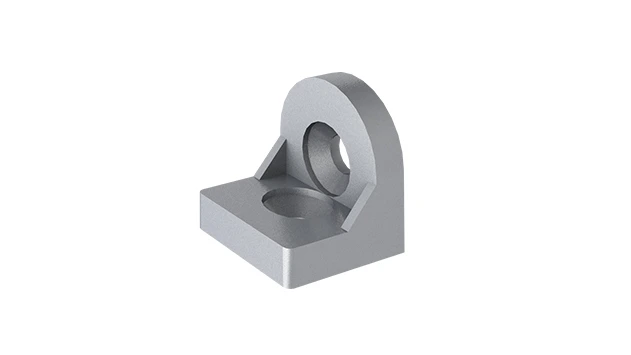
The turning angle aluminum profile connector provides a 90 degree hidden corner connection. 4040 it is means this size is used for 40 series aluminum profile.The corner code comes with set screws that allow for quick, easy connections.
In the fast-paced world of manufacturing, where every second and every cent counts, material waste has long been the silent profit killer. Whether it's excess scrap from ill-fitting parts, unused components gathering dust in storage, or custom-made frames that become obsolete after a single production run, the cost of wasted materials adds up—fast. For companies striving to embrace lean principles, the challenge isn't just about cutting costs; it's about building a system that respects resources, minimizes waste, and adapts to change without skipping a beat. Enter the unsung hero of modular manufacturing: the Turning Angle Code 4040. This small but mighty aluminum profile accessory is quietly revolutionizing how factories design, build, and reconfigure their workspaces, proving that sometimes the smallest components make the biggest difference in reducing material waste.
Lean Systems: More Than a Buzzword—A Culture of Efficiency
Before diving into the specifics of the Turning Angle Code 4040, let's take a step back and understand the "why" behind lean systems. Lean manufacturing isn't just about streamlining processes or cutting corners; it's a philosophy centered on eliminating waste in all its forms—from overproduction and waiting times to defects and, yes, excess material. At its core, lean is about creating value for the customer while using fewer resources, and a key pillar of this philosophy is modularity. Modular systems, built from standardized components, allow teams to adapt quickly to changing production needs without starting from scratch. This is where aluminum profiles and their accessories shine. Unlike rigid steel frames or custom-welded structures, aluminum profiles—especially the popular 4040 series (named for their 40x40mm cross-section)—are designed to be flexible, reusable, and infinitely configurable. And the Turning Angle Code 4040? It's the glue that holds this modularity together, ensuring that every connection is precise, strong, and easy to adjust.
Meet the Turning Angle Code 4040: The Connector That Changes Everything
If you've ever walked through a modern factory floor, you've probably seen aluminum profile structures without even realizing it. They're in workbenches where assemblers piece together electronics, in flow racks that carry components from station to station, and in material trolleys that zip between production lines. What makes these structures so versatile is their T-slot design—longitudinal grooves that run along the profiles, allowing accessories like brackets, panels, and connectors to slide in and lock into place. The Turning Angle Code 4040 is one such accessory, specifically engineered to join two 4040 aluminum profiles at (you guessed it) a turning angle—typically 90 degrees, though some designs allow for adjustments. But it's not just any connector. Made from high-strength aluminum extrusion, it's lightweight yet durable, with a precision-machined design that ensures a snug fit into the T-slots of 4040 profiles. Unlike traditional bolt-on brackets or welded joints, it requires no drilling, cutting, or specialized tools to install. Simply slide it into the profile's slot, tighten a set screw, and you've got a connection that's strong enough to support heavy loads but easy enough to disassemble when it's time for a change.
At first glance, it might seem like just another piece of hardware, but the magic of the Turning Angle Code 4040 lies in its simplicity and adaptability. Let's break down why this small component is a game-changer for reducing material waste.

Precision Fit = Less Scrap, Less Waste
One of the biggest sources of material waste in manufacturing is imprecision. When components don't fit together perfectly, teams end up trimming excess material, discarding misaligned parts, or using extra fasteners to compensate for gaps. Traditional steel frames, for example, often require on-site cutting and welding, which leaves room for human error—even a 1mm miscalculation can result in a frame that's too short, forcing workers to cut a new piece and scrap the old one. The Turning Angle Code 4040 eliminates this problem by design. Because it's engineered to fit 4040 aluminum profiles exactly—no more, no less—there's no need for guesswork or on-the-fly adjustments. The T-slot connection ensures that the angle code locks into place with minimal play, creating a tight, stable joint without the need for trimming or filing. This precision translates directly to less scrap: fewer offcuts, fewer discarded profiles, and fewer "oops" moments that eat into your material budget.
Consider this: A mid-sized electronics manufacturer previously used welded steel workbenches for their assembly lines. When they decided to reconfigure their layout to accommodate a new product, they had to cut and weld new frames, resulting in approximately 15% material waste from mismeasured steel pipes and welding errors. After switching to 4040 aluminum profiles with Turning Angle Code 4040 connectors, their waste dropped to less than 2%—and that 2% was mostly from minor trimming to adjust profile lengths, which was reused for smaller projects like tool holders. That's a 13% reduction in material waste, just from switching to a more precise connector.

Reusability: When "Old" Becomes "New Again"
Another major source of material waste is the "use once and discard" mentality of traditional manufacturing setups. Custom-built structures, whether for a workbench, a flow rack, or a storage system, are often designed for a single purpose. When production needs change—say, a product line is retired or a new model is introduced—those structures become obsolete. They're too big, too small, or the wrong shape, so they end up in the scrapyard or collecting dust in a corner. The Turning Angle Code 4040 flips this script by making reusability the default. Because it connects profiles without permanently altering them, disassembly is as easy as loosening a screw. That means when your workbench is no longer needed, you can take it apart, collect the profiles and angle codes, and reassemble them into something new—a flow rack for incoming parts, a material trolley, or even a temporary storage shelf. Nothing goes to waste because nothing is permanently fixed.
Take the example of a automotive parts supplier that produces seasonal components. In the summer, they need large flow racks to handle high-volume orders; in the winter, production slows, and they need smaller, more compact storage. With traditional wooden or steel racks, they'd have to build new racks each season and discard the old ones, wasting wood, steel, and labor. With 4040 aluminum profiles and Turning Angle Code 4040 connectors, they simply disassemble the summer racks and reassemble them into winter-friendly configurations. The angle codes, profiles, and even accessories like roller tracks are reused year after year, eliminating the need for new materials and cutting seasonal waste by over 80%.
Adaptability: No More "One-Size-Fits-None" Custom Parts
Custom-made components might seem like the solution to unique production needs, but they're often a hidden source of waste. Designing, prototyping, and manufacturing a custom bracket or joint takes time, and if the design changes even slightly, all those custom parts become useless. The Turning Angle Code 4040, by contrast, is a standardized accessory that works with a wide range of 4040 aluminum profile configurations. Need to build a workbench with a sloped top for better ergonomics? The angle code can adjust to support the incline. Want to add a side shelf to a flow rack? Just slide in another angle code and attach a new profile. Because it's designed to work with the T-slot system, it eliminates the need for custom parts almost entirely. This adaptability means you can solve unique problems with standard components, reducing the number of one-off parts that end up in the trash when requirements change.
A furniture manufacturer learned this lesson the hard way. They once commissioned custom steel brackets to connect shelves at a 45-degree angle for a specialized product line. When the product was discontinued six months later, they were left with 200 unused brackets—wasted steel, time, and money. Today, they use 4040 aluminum profiles and Turning Angle Code 4040 connectors to build those angled shelves. The angle codes adjust to any angle needed, and when the line changes, the brackets are reused elsewhere. No more custom orders, no more waste.
Traditional vs. Turning Angle Code 4040: A Waste Comparison
To really see the impact of the Turning Angle Code 4040, let's put it head-to-head with traditional connection methods in a side-by-side comparison. The table below breaks down key metrics like material waste, reusability, and installation time for common manufacturing setups:
| Metric | Traditional Methods (Welded Steel/Bolted Brackets) | Turning Angle Code 4040 + 4040 Aluminum Profiles |
|---|---|---|
| Material Waste | High (10-20% waste from cutting, welding errors, and misalignment) | Low (<2% waste, mostly from minor profile trimming) |
| Reusability | Very Low (Permanently welded or bolted; disassembly damages components) | Very High (Easily disassembled and reused in new configurations) |
| Installation Time | Long (Requires cutting, welding, or drilling; 2-3 hours for a basic workbench) | Short (Tool-free assembly; 30-45 minutes for a basic workbench) |
| Custom Part Dependency | High (Often requires custom brackets for non-standard angles) | Low (Standardized design works with most 4040 profile configurations) |
| Long-Term Cost | High (Frequent replacement of damaged/worn components; ongoing material purchases) | Low (Reusable components reduce need for new materials; minimal maintenance) |
Beyond the Angle Code: Building a Lean Ecosystem
While the Turning Angle Code 4040 is a star player in reducing material waste, it's important to note that it doesn't work alone. It's part of a larger ecosystem of aluminum profile accessories—things like roller tracks, casters, and workbench panels—that together create a fully lean system. For example, when paired with roller track guide rails (another common accessory), the Turning Angle Code 4040 helps build flow racks that smoothly transport materials, reducing the need for manual handling and the risk of damaged components (which would otherwise become waste). When combined with casters, it transforms static workbenches into mobile stations that can be repositioned in minutes, eliminating the need to build new benches for different line layouts.
This ecosystem approach is what makes lean systems so powerful. By using standardized components that all work together, manufacturers can mix and match parts to create exactly what they need, without overbuying or overbuilding. The Turning Angle Code 4040 is the connector that ties this ecosystem together, ensuring that every piece fits, every joint is strong, and every structure can evolve with the business.
Future-Proofing with Modularity: Why Small Components Matter
In today's manufacturing landscape, change is constant. New products, shifting consumer demands, and evolving safety regulations mean that production lines can't stay static for long. The companies that thrive are those that can adapt quickly—and that adaptability starts with their physical infrastructure. Rigid, one-and-done systems simply can't keep up, but modular systems built with components like the Turning Angle Code 4040 can. Because they're reusable, adjustable, and compatible with a wide range of accessories, they future-proof your operations against whatever comes next. Need to expand a workbench to accommodate a larger product? Add a few more profiles and angle codes. Want to reconfigure a flow rack to handle smaller components? Disassemble and rebuild with shorter profiles. There's no need to buy new materials or discard old ones—just repurpose what you already have.
Sustainability is also a growing concern for manufacturers and consumers alike, and reducing material waste is a key part of that. By choosing reusable components like the Turning Angle Code 4040, companies aren't just saving money—they're reducing their environmental footprint. Less scrap means fewer resources extracted, less energy used in production, and less waste sent to landfills. It's a win-win: good for the bottom line, good for the planet.
Conclusion: Small Components, Big Impact
Material waste might be a silent profit killer, but it's not an unstoppable one. The Turning Angle Code 4040 proves that even the smallest components can drive meaningful change in how we design and build manufacturing systems. By prioritizing precision, reusability, and adaptability, it embodies the very principles of lean manufacturing—eliminating waste, creating value, and empowering teams to do more with less. So the next time you walk through a factory, take a closer look at those aluminum profile structures. The workbenches, the flow racks, the trolleys—they're more than just tools. They're a testament to how smart design and thoughtful engineering can turn waste into efficiency, one connection at a time. And at the heart of it all? A little angle code that's quietly changing the game.