- Company Articles
- Products and Technology
- Technology Sharing
- How Turning Angle Code 4040 Supports IoT Integration in Smart Factories

How Turning Angle Code 4040 Supports IoT Integration in Smart Factories
Related Product
Turning Angle Code 4040
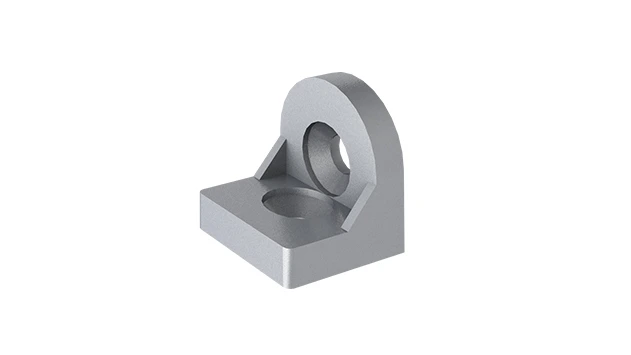
The turning angle aluminum profile connector provides a 90 degree hidden corner connection. 4040 it is means this size is used for 40 series aluminum profile.The corner code comes with set screws that allow for quick, easy connections.
Bridging Mechanical Precision and Digital Connectivity in Modern Manufacturing
Walk into any smart factory today, and you'll likely notice a subtle but powerful shift: the once-static production lines now hum with data. Sensors track inventory levels in real time, AI algorithms predict maintenance needs, and robots collaborate seamlessly with human workers. At the heart of this transformation lies a quiet hero—mechanical components that don't just hold things together, but enable the flexibility and connectivity that IoT (Internet of Things) demands. Among these unsung champions is the Turning Angle Code 4040 , a unassuming yet critical piece of hardware that's redefining how factories build, adapt, and scale their smart systems.
For manufacturers, the journey to smart manufacturing isn't just about adding sensors or software. It starts with the physical infrastructure—the workbenches, material racks, and conveyor systems that form the backbone of production. These structures need to do more than withstand daily wear and tear; they must accommodate evolving IoT technologies, support modular upgrades, and integrate with digital tools that drive efficiency. This is where Turning Angle Code 4040 comes in. Paired with aluminum profile systems, it creates a foundation that's both mechanically robust and digitally ready, turning traditional production setups into dynamic, data-driven ecosystems.
What Is Turning Angle Code 4040, Anyway?
Let's start with the basics. If you've ever assembled a modular shelf or a DIY workbench, you're familiar with the concept of connectors—small parts that join pieces together to form a stable structure. Turning Angle Code 4040 is a specialized type of connector, but it's far from ordinary. Designed specifically for aluminum profile systems—those sleek, T-slot extruded aluminum rails common in factories—it serves as the "hinge" that allows profiles to be joined at precise angles, typically 90 degrees, with unmatched stability.
Picture this: an aluminum profile is like a backbone, and Turning Angle Code 4040 is the joint that connects two backbones at a right angle. Unlike generic connectors, which might loosen over time or limit adjustability, this code is engineered for industrial use. It's made from high-strength aluminum alloy, often with a surface treatment to resist corrosion, and features a design that locks profiles firmly in place while still allowing for disassembly and reconfiguration. Think of it as a mechanical Swiss Army knife—strong enough to support heavy loads, yet flexible enough to adapt when production needs change.
But why "4040"? The numbers refer to the size of the aluminum profile it's designed for. In the world of aluminum extrusions, "4040" denotes a profile with a 40mm x 40mm cross-section—one of the most versatile sizes in manufacturing, used for everything from lightweight workbenches to heavy-duty material racks. Turning Angle Code 4040 is tailor-made for this profile, ensuring a snug fit that minimizes wobble, a critical factor when you're mounting sensitive IoT devices like cameras, barcode scanners, or vibration sensors.
Aluminum Profile: The Foundation of Smart Flexibility
To understand Turning Angle Code 4040's role in IoT integration, we first need to appreciate the star of the show: aluminum profile . For decades, manufacturers relied on rigid, welded steel structures for production lines. These were durable, but they were also fixed—changing a workbench height or reconfiguring a conveyor system meant cutting, welding, and repainting, a process that could take days and disrupt production. Aluminum profiles changed all that.
Extruded aluminum profiles are lightweight yet strong, with T-slots running along their length that allow for easy attachment of brackets, shelves, and accessories. They're modular by design: you can cut them to length, join them with connectors like Turning Angle Code 4040, and disassemble them just as easily. This flexibility is a game-changer for smart factories, where adaptability is key. A single aluminum profile frame can start as a workbench , be reconfigured into a material rack next month, and then modified again to support a new conveyor system—all without welding or specialized tools.
But aluminum profiles aren't just about physical flexibility. Their T-slot design is a hidden asset for IoT integration. Those slots can house cable management systems, allowing wires for sensors, cameras, and actuators to be routed cleanly and protected from damage. They also provide mounting points for IoT devices themselves—no need for drilling holes or using adhesives that damage the structure. When you pair aluminum profiles with Turning Angle Code 4040, you get a system that's not just adaptable in shape, but also ready to support the digital tools that make a factory "smart."

Turning Angle Code 4040: The Glue That Binds Physical and Digital Worlds
Now, let's circle back to Turning Angle Code 4040. How does this small connector play a role in IoT integration? It all comes down to three key strengths: precision, stability, and compatibility.
Precision: Aligning for Accurate Data
IoT sensors thrive on accuracy. A misaligned camera might misread a barcode, a wobbly vibration sensor could send false alerts, and a mispositioned temperature probe might give inaccurate readings. Turning Angle Code 4040 ensures that aluminum profiles are joined with exacting precision, typically within a fraction of a degree. This level of accuracy is critical when mounting IoT devices that require precise alignment, like laser scanners or robotic arms.
For example, consider a roller track system used to move components along an assembly line. If the track is even slightly misaligned, parts might jam, slowing production. With Turning Angle Code 4040, the aluminum profile supports of the roller track can be positioned with pinpoint accuracy, ensuring smooth movement. Add IoT sensors to monitor speed and jams, and you've got a system that not only works flawlessly but also provides real-time data to optimize flow.
Stability: Keeping IoT Devices Secure
Factories are noisy, vibrating environments. Heavy machinery, moving parts, and constant foot traffic create vibrations that can loosen connectors over time. For IoT devices, which often have delicate internal components, instability is a threat to reliability. A sensor that shifts position might stop working, or worse, provide incorrect data that leads to costly mistakes.
Turning Angle Code 4040 addresses this with its robust locking mechanism. Unlike some connectors that rely on friction alone, it uses bolts or set screws to clamp firmly onto the aluminum profile's T-slot, creating a connection that resists vibration and wear. This stability is especially important for mounted devices like cameras or RFID scanners, which need to maintain a fixed position to function correctly. In one case study, a automotive parts manufacturer reported a 40% reduction in sensor downtime after switching from generic connectors to Turning Angle Code 4040, simply because the sensors stayed securely in place.
Compatibility: Working with the IoT Ecosystem
Smart factories are built on ecosystems of interconnected components: roller track systems that move materials, workbenches equipped with smart tools, and material racks with inventory-tracking sensors. For these systems to work together, their physical structures must be compatible. Turning Angle Code 4040 acts as a universal translator, allowing different aluminum profile-based components to connect seamlessly.
For example, a workbench built with 4040 aluminum profiles and Turning Angle Code 4040 can easily connect to a roller track system using the same connector. This means materials can flow directly from the track to the workbench, with IoT sensors along the way tracking each component's journey. The connector's standardized design also ensures compatibility across brands, so manufacturers aren't locked into a single supplier—they can mix and match components from different vendors to build the perfect smart system.

Key Components of an IoT-Enabled Workbench Using Turning Angle Code 4040
| Component | Function | Integration with Turning Angle Code 4040 |
|---|---|---|
| 4040 Aluminum Profile | Forms the structural frame of the workbench; provides T-slots for mounting accessories. | Joined at 90-degree angles by Turning Angle Code 4040 to create a stable, modular frame. |
| IoT Sensor Mount | Holds sensors (e.g., temperature, vibration, or occupancy) to monitor workbench conditions. | Attached to aluminum profile via T-slot; Turning Angle Code 4040 ensures the frame remains stable, preventing sensor misalignment. |
| Roller Track Section | Facilitates material flow onto/off the workbench. | Connected to the workbench frame using Turning Angle Code 4040, ensuring alignment with the work surface for smooth material transfer. |
| Cable Management Tray | Organizes and protects wires for sensors, power tools, and displays. | Mounted to the underside of the workbench frame; Turning Angle Code 4040 supports the tray's weight without compromising frame integrity. |
Real-World Applications: How Factories Are Using Turning Angle Code 4040 Today
To see Turning Angle Code 4040 in action, let's look at a real-world example: a consumer electronics manufacturer in Southeast Asia that recently upgraded its assembly line to support IoT integration. The factory produces smart speakers, and its production process involves multiple steps: circuit board assembly, component testing, speaker installation, and final packaging. Each step requires a different setup, and with product lines changing every 6–12 months, flexibility was a top priority.
Previously, the factory used welded steel workbenches and fixed conveyor systems. When a new product line was introduced, workers had to spend 2–3 days disassembling and rebuilding the line, often with help from external contractors. This downtime cost the company an estimated $50,000 per changeover. Worse, the rigid setup made it hard to add IoT tools like barcode scanners or automated testing equipment—there was no easy way to mount sensors or route cables without damaging the steel frames.
The solution? A complete overhaul using 4040 aluminum profiles and Turning Angle Code 4040 connectors. The factory replaced its steel workbenches with modular aluminum frames joined by Turning Angle Code 4040, allowing workers to reconfigure the line in hours instead of days. They added roller track sections to move components between stations, connected via the same Turning Angle Code 4040 connectors to ensure alignment. IoT sensors were mounted directly to the aluminum profiles' T-slots, with cables routed through integrated cable trays—no drilling or welding required.
The results were striking. Changeover time dropped from 3 days to 4 hours, saving over $300,000 annually. IoT sensors now track component flow in real time, reducing inventory waste by 25%. And because the aluminum frames are lightweight, workers can adjust the height of workbenches to reduce ergonomic strain, leading to a 15% decrease in workplace injuries. "Turning Angle Code 4040 was the unsung hero here," said the factory's operations manager. "It's not flashy, but without it, we couldn't have built a system that's both strong enough for our production needs and flexible enough to support our IoT tools."
The Benefits of Turning Angle Code 4040 for Smart Factories
So, what makes Turning Angle Code 4040 stand out in the crowded market of industrial connectors? Let's break down its key benefits for smart factories:
1. Reduced Time-to-Market for New Products
In today's fast-paced manufacturing landscape, the ability to launch new products quickly is a competitive advantage. Turning Angle Code 4040's modular design cuts down on the time needed to reconfigure production lines, allowing factories to adapt to new product requirements in hours instead of days. This agility is especially valuable for industries like consumer electronics or automotive, where product lifecycles are short.
2. Lower Total Cost of Ownership
While aluminum profiles and quality connectors like Turning Angle Code 4040 may have a higher upfront cost than welded steel, they more than pay for themselves over time. Their modularity means you can reuse components across multiple setups, reducing the need to purchase new equipment for each product line. They also require less maintenance—no repainting or welding repairs—and their compatibility with IoT tools reduces the cost of adding smart features later.
3. Improved Data Accuracy and Reliability
IoT systems are only as good as the data they collect. Turning Angle Code 4040's precision and stability ensure that sensors and cameras stay aligned, providing accurate, consistent data. This leads to better decision-making—whether it's optimizing production flow, predicting maintenance needs, or reducing waste. In one study, manufacturers using modular aluminum systems with precision connectors reported a 35% improvement in data accuracy compared to those using traditional setups.
4. Scalability for Future Growth
Smart factories aren't a one-time upgrade—they're a journey. As technology evolves, factories will need to add new IoT tools, expand production lines, or integrate with advanced systems like digital twins. Turning Angle Code 4040 and aluminum profiles provide a scalable foundation that can grow with your needs. Need to add a new workbench? Just cut a few more profiles and connect them with Turning Angle Code 4040. Want to integrate a collaborative robot? Mount it to the existing aluminum frame. The system grows with you, avoiding the need for costly overhauls down the line.
Challenges and Considerations
While Turning Angle Code 4040 and aluminum profiles offer significant benefits, they're not a one-size-fits-all solution. Manufacturers considering a switch should keep a few things in mind:
Weight Capacity: Aluminum profiles are strong, but they have lower weight capacity than steel. For extremely heavy applications—like automotive assembly lines handling engine blocks—manufacturers may need to use reinforced profiles or hybrid systems that combine aluminum with steel components.
Training: While aluminum profile systems are easy to assemble, workers still need training to use them effectively. This includes understanding how to properly tighten connectors like Turning Angle Code 4040 to ensure stability, as over-tightening can damage the profile, and under-tightening can lead to looseness.
Supplier Quality: Not all aluminum profiles and connectors are created equal. Cheap, low-quality Turning Angle Code 4040 knockoffs may not provide the same precision or durability, leading to instability and increased maintenance costs. It's worth investing in components from reputable suppliers with a track record in industrial applications.
The Future: Turning Angle Code 4040 in the Age of Industry 4.0
As we move deeper into Industry 4.0, the line between physical and digital manufacturing will continue to blur. Factories will rely on digital twins—virtual replicas of production lines—to simulate changes before implementing them, and AI-driven systems will autonomously adjust workflows based on real-time data. In this future, the role of mechanical components like Turning Angle Code 4040 will only grow more important.
Imagine a scenario where a factory's digital twin identifies a bottleneck in the production line. The system automatically generates a new layout, and workers use augmented reality (AR) glasses to guide them as they reconfigure the aluminum profile frames using Turning Angle Code 4040. Sensors in the connectors themselves could even provide feedback to the digital twin, confirming that the new setup matches the virtual design. This level of integration between physical and digital worlds is already possible, and Turning Angle Code 4040 is the mechanical foundation that makes it all work.
We're also likely to see advances in the materials and design of connectors like Turning Angle Code 4040. Manufacturers are experimenting with carbon fiber-reinforced aluminum alloys to reduce weight while increasing strength, and 3D-printed connectors that can be customized for specific applications. These innovations will make aluminum profile systems even more versatile, opening up new possibilities for IoT integration in smart factories.
Conclusion: The Quiet Catalyst of Smart Manufacturing
In the grand scheme of smart factories—with their robots, AI algorithms, and cloud-based analytics—Turning Angle Code 4040 might seem like a small detail. But as any engineer will tell you, the smallest details often make the biggest difference. This unassuming connector, paired with aluminum profiles, roller tracks, and workbenches, provides the flexibility, stability, and compatibility that IoT integration demands. It's the quiet catalyst that turns static production lines into dynamic, data-driven ecosystems.
For manufacturers looking to embrace Industry 4.0, the message is clear: don't overlook the mechanical foundation. Investing in modular systems built with precision components like Turning Angle Code 4040 isn't just about upgrading your physical infrastructure—it's about future-proofing your factory for the digital age. As one plant manager put it, "We used to think of connectors as just nuts and bolts. Now, we see them as the bridge between our machines and our data. And Turning Angle Code 4040 is the strongest bridge we've found."