- Company Articles
- Products and Technology
- Solution
- How Turning Angle Code 4040 Supports Just-In-Time (JIT) Manufacturing

How Turning Angle Code 4040 Supports Just-In-Time (JIT) Manufacturing
Related Product
Turning Angle Code 4040
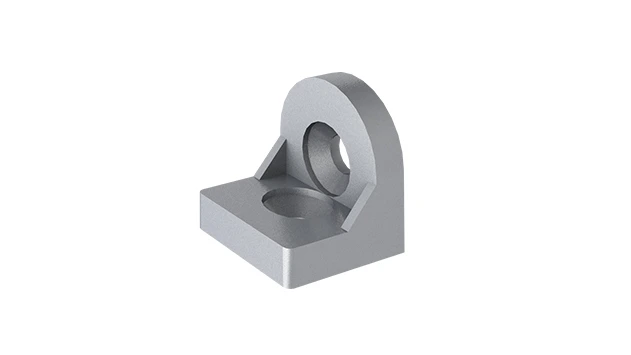
The turning angle aluminum profile connector provides a 90 degree hidden corner connection. 4040 it is means this size is used for 40 series aluminum profile.The corner code comes with set screws that allow for quick, easy connections.
Walk into any modern manufacturing facility today, and you'll notice a shift—gone are the days of cluttered workspaces and rigid production lines. Instead, there's a rhythm, a flow that feels almost intentional. This isn't by accident; it's the result of Just-In-Time (JIT) manufacturing, a philosophy that prioritizes efficiency, waste reduction, and adaptability. And at the heart of making this rhythm possible? components like the Turning Angle Code 4040. It's easy to overlook such a small part, but in the world of JIT, where every second and every square inch counts, even the tiniest pieces play a starring role. Let's dive into how this unassuming aluminum profile accessory becomes a silent hero in keeping production lines lean, flexible, and ready to meet the demands of modern manufacturing.
Understanding Just-In-Time (JIT) Manufacturing: More Than a Buzzword
To appreciate the Turning Angle Code 4040's role, we first need to grasp what JIT is really about. Born in post-WWII Japan, pioneered by Toyota, JIT isn't just a production method—it's a mindset. At its core, JIT asks:
Why waste time, space, or resources on anything that doesn't add value to the customer?
It's about producing the right amount of product, with the right materials, at exactly the right time. No excess inventory gathering dust, no workers waiting around for parts, no clunky equipment slowing down the flow.
The enemy here is "muda," a Japanese term for waste. JIT identifies seven types of muda, from overproduction (making more than needed) to unnecessary motion (workers walking across the plant to fetch tools). To eliminate these, JIT relies on three pillars:
flow
(materials and products moving smoothly from one step to the next),
pull
(production is triggered by customer demand, not forecasts), and
perfection
(constantly improving processes).
But here's the catch: You can't achieve flow, pull, or perfection with rigid, one-size-fits-all infrastructure. Traditional manufacturing setups—think welded steel workbenches or fixed conveyor belts—are like trying to dance in concrete boots. They're strong, but they can't adapt when a new product is introduced, a customer order changes, or a better workflow is discovered. That's where modular systems come in, and that's where the Turning Angle Code 4040 enters the story.
What Is the Turning Angle Code 4040? Small Part, Big Impact
Let's get up close with the star of the show. The Turning Angle Code 4040 is a type of aluminum profile accessory, specifically designed to connect two aluminum extrusion profiles at a 90-degree angle. Picture this: aluminum extrusion profiles—long, hollow beams with T-shaped slots running along their length—are the building blocks of modern modular workstations, material racks, and conveyor systems. To join these profiles into sturdy, functional structures, you need reliable connectors. That's where angle codes like the Turning Angle Code 4040 shine.
Made from high-grade aluminum, this small component (typically around 40mm x 40mm, hence the "4040" in its name) is engineered for precision. Its design features pre-drilled holes that align perfectly with the T-slots in aluminum profiles, allowing it to be secured with bolts or screws. Unlike welding, which permanently fuses metal, the Turning Angle Code 4040 creates a strong yet connection. This means you can assemble, disassemble, and reconfigure structures without cutting, welding, or specialized tools.
But why aluminum? Aluminum is lightweight, corrosion-resistant, and surprisingly strong—qualities that make it ideal for manufacturing environments where equipment needs to be moved, cleaned, or adapted regularly. The Turning Angle Code 4040 leverages these properties, ensuring that the structures it helps build are both durable and easy to handle. It's not just a connector; it's a bridge between rigidity and flexibility, two traits that JIT manufacturing demands in equal measure.

Turning Angle Code 4040 in Action: Supporting JIT Principles
Now, let's connect the dots: How does this small aluminum angle code directly support the goals of JIT manufacturing? Let's break it down into key areas where JIT thrives, and see how the Turning Angle Code 4040 makes a difference.
1. Flexibility: Adapting to Change Without Disruption
JIT manufacturing lives and dies by its ability to adapt. A customer might suddenly increase an order, or a new product variant might require a different assembly process. In such cases, rigid workstations or fixed material racks become bottlenecks. The Turning Angle Code 4040 solves this by enabling
modular reconfiguration
.
Take workbenches, for example. A typical JIT facility might use aluminum profile workbenches (like the "workbench e (single deck-without caster)" from our keyword list) that can be adjusted for height, width, or added with shelves as needed. The Turning Angle Code 4040 is what holds the legs of the workbench to the tabletop frame, or the shelves to the vertical supports. If a new tool needs to be mounted, or if the workbench needs to be shortened to fit a new production layout, workers can simply loosen the bolts on the angle codes, reposition the profiles, and tighten them back up—all in minutes, not hours. No need for a maintenance crew or welding equipment.
The same logic applies to material racks. Consider "material rack b (3 row and 3 floor)," a common setup for storing parts in JIT lines. Using aluminum profiles connected by Turning Angle Code 4040, this rack can be modified to hold larger or smaller parts by adjusting the spacing between shelves. If a product line is phased out, the rack can be disassembled and repurposed into a new structure, rather than being scrapped. This flexibility eliminates the waste of "unused space" and "unnecessary inventory" (two of the seven muda), keeping the facility lean and responsive.
2. Flow: Keeping Materials Moving Smoothly
In JIT, "flow" means materials move from one production step to the next without stopping. Any delay—whether from a jammed conveyor or a misplaced part—creates "waiting" waste, which JIT aims to eliminate. Roller tracks (another keyword) are a critical tool for maintaining flow, as they allow parts to glide from storage to assembly stations with minimal effort. And guess what holds roller tracks together? You guessed it: aluminum profiles connected by Turning Angle Code 4040.
Roller tracks are often built using aluminum guide rails (like "aluminum guide rail a" or "aluminum guide rail b") mounted on aluminum profiles. The Turning Angle Code 4040 ensures that these rails are aligned perfectly—no kinks, no gaps—so parts slide smoothly without getting stuck. If a roller track needs to be extended or rerouted to connect a new assembly station, the angle codes make it easy to add new sections. This precision in alignment is key to reducing "motion" waste, as workers don't have to manually lift or push heavy parts; gravity (aided by well-aligned roller tracks) does the work.
Even small adjustments matter. For example, if a roller track is slightly misaligned, parts might slow down or tip over, causing workers to stop and fix the issue. The Turning Angle Code 4040's tight fit and secure connection prevent this misalignment, ensuring consistent flow. In JIT, consistency is everything—every second a part is in motion instead of waiting is a second added to productivity.
3. Durability: Longevity Without the Weight
JIT isn't just about being flexible; it's about being reliable. A workstation that falls apart after a few months, or a material rack that bends under the weight of parts, creates "downtime" waste and undermines the entire system. Here, the Turning Angle Code 4040's aluminum construction shines. Aluminum is naturally resistant to corrosion, so it holds up well in manufacturing environments where spills or humidity might be a concern. It's also strong enough to support heavy loads—think of a material rack stacked with metal components—without bending or warping.
Compare this to traditional steel angle brackets, which can rust over time or require painting to maintain. The Turning Angle Code 4040's durability means less maintenance, fewer replacements, and lower long-term costs. In JIT terms, this eliminates "maintenance waste" and ensures that production lines stay up and running, even with constant use.
4. Lean Systems Integration: A Piece of the Puzzle
The Turning Angle Code 4040 doesn't work alone. It's part of a larger ecosystem of lean system components—aluminum profiles, roller tracks, casters (like "caster wheel" and "caster accessories"), and more. Together, these components create the modular infrastructure that JIT relies on. For example, a lean system might include a mobile workstation (with casters) built from aluminum profiles, connected by Turning Angle Code 4040, and topped with an ESD workbench surface to protect sensitive electronics. This workstation can be rolled to different parts of the line as needed, reducing "motion waste" and supporting the "pull" principle of JIT (only moving to where it's needed when it's needed).
Even better, because all these components are standardized (many from the same lean pipe supplier), they work seamlessly together. A Turning Angle Code 4040 from one supplier will fit an aluminum profile from another, ensuring that facilities aren't locked into a single vendor. This interoperability keeps costs low and innovation high, as manufacturers can mix and match components to find the best solution for their unique needs.

Traditional vs. JIT: A Comparison Table
| Aspect | Traditional Manufacturing | JIT with Turning Angle Code 4040 |
|---|---|---|
| Flexibility | Rigid, welded structures; hard to reconfigure. | Modular; reconfigurable in minutes using angle codes. |
| Assembly Time | Hours to days (requires welding/tools). | Minutes to hours (bolt-on connections). |
| Durability | Steel prone to rust; high maintenance. | Aluminum resists corrosion; low maintenance. |
| Waste Reduction | High (unused space, scrapped equipment). | Low (reusable components, adaptable layouts). |
Real-World Impact: A Day in the Life of a JIT Facility
To bring this to life, let's walk through a hypothetical day at a electronics manufacturing plant that uses JIT and relies on Turning Angle Code 4040.
7:00 AM:
The morning shift starts, and the production manager receives a last-minute order: 500 units of a new smartphone model, to be shipped by the end of the day. The existing line is set up for a different model, so the team needs to reconfigure two workstations and adjust the material rack holding components.
7:15 AM:
Workers gather around the first workstation—a "workbench e" with aluminum profile legs. Using electric screwdrivers, they loosen the Turning Angle Code 4040 bolts connecting the legs to the frame, adjust the height to fit the new assembly jigs, and retighten. The whole process takes 10 minutes.
7:30 AM:
Next, the material rack (a "material rack b (3 row and 3 floor)") needs to be modified to hold smaller circuit boards. Workers remove the middle shelf by detaching the Turning Angle Code 4040 brackets, reposition the vertical supports, and add new angle codes to secure the shelf at a lower height. Now, the rack fits twice as many circuit boards in the same footprint.
8:00 AM:
The roller track feeding parts to the assembly line is slightly misaligned, causing jams. A technician checks the aluminum guide rails and finds a loose Turning Angle Code 4040 where the track connects to the support frame. Tightening the bolt fixes the alignment, and parts start flowing smoothly again.
5:00 PM:
The 500 units are assembled and shipped on time. Without the flexibility of the Turning Angle Code 4040, reconfiguring the line would have taken hours, possibly missing the deadline. Instead, the team adapted quickly, eliminating "waiting" and "overproduction" waste.
Conclusion: Small Components, Big Results in JIT
Just-In-Time manufacturing is often celebrated for its big-picture philosophy, but its success hinges on the details—the small, often invisible components that make flexibility, flow, and efficiency possible. The Turning Angle Code 4040 is one such component. It may not grab headlines, but in the hands of workers on the factory floor, it's a tool that turns rigid spaces into adaptable ecosystems, eliminates waste, and keeps production lines humming to the rhythm of customer demand.
As manufacturing continues to evolve—with shorter product lifecycles, higher customization, and the rise of smart factories—the need for modular, flexible infrastructure will only grow. And in that future, the Turning Angle Code 4040 and its kin (aluminum profiles, roller tracks, and lean system accessories) will remain essential. They're not just parts; they're the building blocks of a manufacturing world where waste is minimized, workers are empowered, and every resource is used exactly as it should be—just in time.