- Company Articles
- Products and Technology
- Product knowledge
- How Two Way Aluminum Pipe Joints Enable Quick Reconfiguration of Production Lines

How Two Way Aluminum Pipe Joints Enable Quick Reconfiguration of Production Lines
Related Product
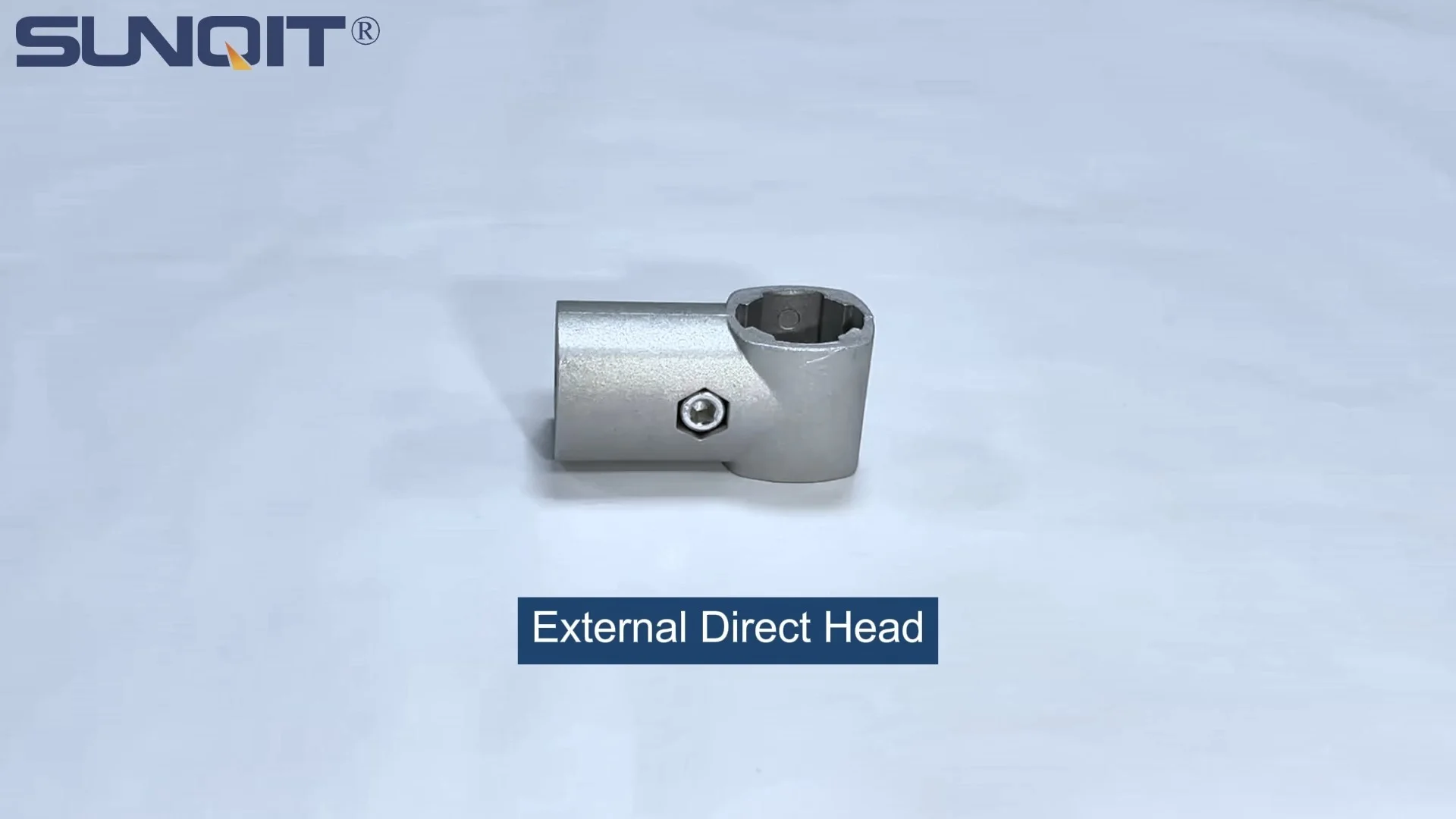
Two Way Aluminum Pipe Joint
Aluminum 2 way pipe joint for 28mm aluminum pipe connection in 2 direction.
Empowering modern manufacturing with flexibility, speed, and adaptability
Introduction: The Need for Agility in Modern Manufacturing
In today's manufacturing landscape, the rules of the game have changed. Gone are the days of mass-producing a single product for years on end; today's consumers demand customization, and markets shift at a pace that leaves little room for stagnation. A smartphone model may be updated within months, a clothing line reimagined for seasonal trends, or a medical device redesigned to meet new regulatory standards. For manufacturers, this means one thing: rigidity is the enemy.
Traditional production lines, built with welded steel frames, fixed workbenches, and permanent conveyor systems, were never designed for this level of change. Reconfiguring them to accommodate a new product or process often involves cutting metal, rewelding structures, or even replacing entire workstations—tasks that take days, if not weeks, and come with a hefty price tag. During that downtime, competitors race ahead, and opportunities slip through the cracks.
Enter the era of modular manufacturing solutions. Among the most transformative innovations in this space are two way aluminum pipe joints—unassuming yet powerful components that have redefined how production lines are built, modified, and optimized. Lightweight, durable, and infinitely adaptable, these joints serve as the backbone of flexible systems that can be reconfigured in hours, not weeks. When paired with aluminum profile, aluminum pipe accessories, and other modular components, they create production environments that grow, evolve, and pivot alongside your business needs.
This article explores how two way aluminum pipe joints work, why they've become indispensable in modern manufacturing, and how they enable the quick reconfiguration of production lines—ultimately driving efficiency, reducing costs, and keeping manufacturers competitive in a fast-moving world.
The Cost of Rigidity: Why Traditional Production Lines Fall Short
To understand the value of two way aluminum pipe joints, it's first critical to recognize the limitations of traditional production setups. For decades, manufacturers relied on fixed systems built from heavy steel, where every workstation, material rack, and conveyor was welded or bolted into place. While these systems were robust, their permanence became a liability as market demands evolved.
Consider a hypothetical electronics manufacturer producing smartwatches. Their assembly line includes a series of welded steel workbenches, each designed to hold specific tools and components for the current model. When the next generation of smartwatch—with a larger screen and new sensor layout—arrives, the existing workbenches are suddenly obsolete. The team must either: (1) purchase entirely new workbenches, tying up capital; (2) hire welders to cut and rework the old frames, causing days of downtime; or (3) with suboptimal setups, leading to inefficiencies and errors.
This scenario plays out across industries, from automotive parts to consumer goods. According to a 2023 survey by the Manufacturing Flexibility Institute, 68% of manufacturers report losing 5–15% of annual productivity due to time spent reconfiguring rigid production lines. Worse, 42% admit turning down custom orders or short-run projects because their infrastructure couldn't adapt quickly enough.
The problem isn't just time and money—it's missed opportunity. In a market where first-mover advantage can mean the difference between market leadership and obscurity, the ability to pivot quickly is invaluable. Traditional systems, by their very nature, were built for stability, not speed. To thrive today, manufacturers need a better way.
What Are Two Way Aluminum Pipe Joints? A Closer Look at the Game-Changing Component
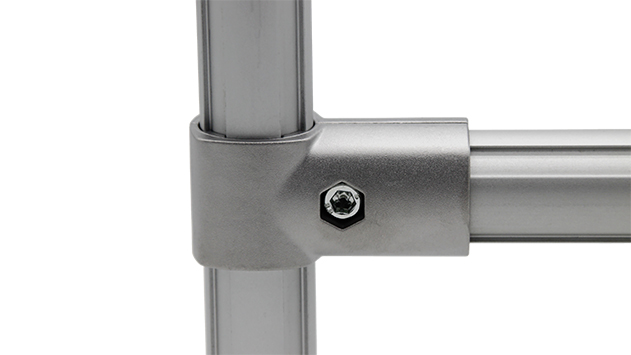
At first glance, two way aluminum pipe joints might seem simple—a small, unassuming piece of metal designed to connect two pipes. But their simplicity is their strength. These joints are engineered to be the building blocks of modular systems, enabling quick assembly, disassembly, and reconfiguration without specialized tools or expertise.
Constructed from high-grade aluminum alloy, two way aluminum pipe joints are lightweight yet surprisingly strong. Unlike steel, aluminum resists corrosion, making it ideal for factory environments where moisture, oils, or chemicals might be present. The joints feature a precision-machined design with internal threads or clamping mechanisms that securely fasten to aluminum lean pipe (also known as aluminum profile), the lightweight, extruded aluminum tubes that form the "bones" of modular systems.
What truly sets two way aluminum pipe joints apart is their modularity. As the name suggests, they connect two pipes at a fixed or adjustable angle (typically 90 degrees, but some designs allow for rotation). This allows manufacturers to build everything from workbenches and material racks to conveyor supports and turnover trolleys by simply sliding pipes into the joints and tightening a screw or lever. No welding, no drilling, no cutting—just a hex key or standard wrench is all that's needed.
Modern designs take this flexibility further. Many two way aluminum pipe joints feature T-slot compatibility, meaning they can integrate with aluminum pipe accessories like brackets, casters, and tool holders. This turns a basic joint into a hub for customization: add a caster wheel to a workbench leg for mobility, attach a shelf bracket to create storage, or mount a tool hook for easy access to equipment. The possibilities are limited only by the user's needs.

How Two Way Aluminum Pipe Joints Work with Aluminum Profile and Accessories
Two way aluminum pipe joints don't work in isolation—they're part of a larger ecosystem of modular components, with aluminum profile serving as the foundation. Aluminum profile (also called aluminum extrusion profile) is extruded into long, hollow tubes with a T-slot design running along their length. These slots allow accessories like brackets, shelves, and even electronic components to be attached anywhere along the pipe, without drilling or welding.
Here's how the system comes together: Imagine building a basic workbench. You start with four lengths of aluminum profile for the legs. Using two way aluminum pipe joints, you connect horizontal crossbars to the top of the legs, forming the frame. Then, you add vertical supports midway up the legs for stability, again using two way joints. Finally, you attach a work surface (like an aluminum honeycomb panel or plywood) to the frame using T-slot nuts and bolts, which slide into the profile's slots and tighten securely.
Need to adjust the workbench height? Simply loosen the joints, slide the legs up or down, and retighten. Want to add a shelf below? Attach shelf brackets to the vertical supports using T-slot accessories, then lay a second aluminum panel across them. Need to move the workbench to a new location? Swap out the fixed feet for caster wheels (attached via, you guessed it, two way joints) and roll it into place.
Aluminum pipe accessories expand this functionality even further. Roller track, for example, can be mounted to aluminum profile using specialized brackets, creating gravity-fed material flow systems for assembly lines. Swivel roller balls (small, omnidirectional wheels) can be attached to workbench surfaces to allow easy sliding of heavy components. Even ESD (electrostatic discharge) accessories, like ESD workbench tops, can be integrated into the system to protect sensitive electronics during assembly.
The key to this ecosystem is standardization. Most aluminum profile and two way aluminum pipe joints follow industry-wide sizing standards (e.g., 20x20mm, 30x30mm, or 40x40mm profiles), meaning components from different suppliers are often compatible. This interoperability gives manufacturers the freedom to mix and match parts, avoiding vendor lock-in and ensuring they can source the best components for their needs.

Real-World Applications: How Manufacturers Are Using Two Way Aluminum Pipe Joints Today
To truly grasp the impact of two way aluminum pipe joints, let's look at how they're transforming production lines across industries. These case studies highlight the versatility and value of modular systems in action.
Case Study 1: Electronics Assembly Plant Reduces Reconfiguration Time by 80%
A mid-sized electronics manufacturer in California, specializing in printed circuit boards (PCBs), faced a familiar challenge: frequent product changes. With clients demanding PCBs for everything from smart home devices to industrial sensors, the plant's production lines needed to switch between different board sizes and component layouts every 2–3 weeks.
Previously, the team used welded steel workbenches and fixed conveyor rails. Reconfiguring for a new PCB size took 3 days: welders would cut and reposition the conveyor rails, carpenters would build new workbench tops, and electricians would reroute tools and lighting. During this time, the line sat idle, costing the company an estimated $40,000 in lost production per reconfiguration.
In 2022, the plant switched to a modular system built with aluminum lean pipe, two way aluminum pipe joints, and aluminum profile. Today, reconfiguring the line takes just 4 hours. The team disassembles the old setup by loosening the joints, reconfigures the aluminum profile into the new layout, and reattaches the conveyor rails, workbench tops, and tools using T-slot accessories. No welders, no carpenters—just the production team itself, trained in basic modular assembly.
"We used to dread product changes," says Maria Gonzalez, the plant's operations manager. "Now, we can switch from a 6-inch PCB to a 12-inch PCB before lunch and be back to full production by the afternoon. We've taken on 30% more custom orders this year alone, and our clients love that we can meet tight deadlines."
Case Study 2: Automotive Parts Supplier Cuts Costs with Reusable Components
A Michigan-based supplier of automotive interior components (door panels, dashboards, etc.) was struggling with seasonal demand fluctuations. During peak production (Q3 and Q4, ahead of the holiday season), the company needed 12 assembly lines; during slower months, it needed just 6. Maintaining 12 fixed lines year-round was costly, but storing unused equipment took up valuable warehouse space.
The solution? A modular system using two way aluminum pipe joints, aluminum profile, and portable workbenches. During peak season, the team assembles 12 lines in days by connecting aluminum lean pipe with two way joints, adding casters for mobility, and mounting tool holders and conveyor roller track. When demand drops, they disassemble the excess lines, stacking the aluminum profile and joints in a small storage area (about the size of two pallets). The components are then reused when peak season returns.
"We used to spend $150,000 every year on temporary workbenches and storage racks for peak season," says James Chen, the company's supply chain director. "Now, we've invested in a modular system that costs the same as two years of temporary equipment, and we reuse it indefinitely. The two way joints are tough—we've reassembled the lines 15+ times, and they still lock as securely as the day we bought them."
Case Study 3: Medical Device Maker Improves Ergonomics and Safety
A medical device manufacturer in Minnesota produces surgical instruments, which require precise assembly in a clean, ergonomic environment. The company's old workbenches were fixed-height, leading to discomfort and even repetitive strain injuries among workers of different heights. Adjusting the height meant replacing the entire bench frame—a costly and time-consuming process.
By switching to modular workbenches built with two way aluminum pipe joints and aluminum profile, the company solved this issue overnight. The new workbenches feature adjustable legs: loosening the two way joints allows workers to raise or lower the bench height by simply sliding the aluminum profile up or down, then retightening the joints. Each worker can now customize their workstation to their height, reducing injuries and boosting productivity by 12% (according to internal ergonomic assessments).
Additionally, the modular system made it easy to add ESD protection. The team attached ESD-safe workbench tops and grounding clips (using T-slot accessories) to the aluminum profile, ensuring sensitive electronic components in the surgical instruments weren't damaged by static electricity.
The Benefits of Two Way Aluminum Pipe Joints: Beyond Just Flexibility
While quick reconfiguration is the most obvious benefit of two way aluminum pipe joints, their value extends far beyond flexibility. Let's break down the key advantages that make these systems a smart investment for manufacturers.
1. Reduced Downtime, Increased Productivity
As seen in the case studies, the biggest impact is on downtime. Traditional reconfiguration can take days; with two way aluminum pipe joints, it takes hours. A 2024 report by McKinsey & Company found that manufacturers using modular systems reduce reconfiguration time by an average of 70%, translating to 5–10 additional production days per year. For a line producing $10,000 worth of goods per hour, that's up to $800,000 in recovered revenue annually.
2. Lower Long-Term Costs
Modular systems have a higher upfront cost than welded steel or wood, but they pay for themselves quickly. Aluminum profile and two way joints are reusable—unlike welded frames, which are often scrapped when no longer needed. A study by the Modular Manufacturing Association found that modular systems have a 5-year ROI of 230%, compared to 85% for traditional fixed systems.
3. Improved Ergonomics and Worker Satisfaction
Fixed workbenches and material racks force workers to adapt to the equipment; modular systems let equipment adapt to workers. Adjustable heights, movable workstations (via casters), and customizable tool placement reduce fatigue and injuries, leading to higher morale and lower turnover. A 2023 Gallup poll of manufacturing workers found that those using modular systems reported 35% higher job satisfaction than those using fixed setups.
4. Scalability for Growth
As a business grows, modular systems grow with it. Need to add a new assembly line? Simply purchase additional aluminum profile and two way joints, and build it in a day. No need to redesign the entire facility or invest in custom infrastructure. This scalability is especially valuable for startups and small manufacturers looking to expand without overcommitting capital.
5. Sustainability and Environmental Responsibility
Aluminum is 100% recyclable, and modular systems generate far less waste than traditional setups. When a welded steel frame is scrapped, it ends up in a landfill or requires energy-intensive recycling; aluminum profile and joints can be reused indefinitely, and when they finally reach the end of their life, they're melted down and repurposed with minimal environmental impact. This aligns with the growing trend of sustainable manufacturing, helping companies meet ESG goals and appeal to eco-conscious customers.
Traditional vs. Modular: A Comparison of Production Line Setups
Key metrics comparing rigid, traditional production systems with modular systems using two way aluminum pipe joints
| Metric | Traditional Fixed Systems (Welded Steel/Wood) | Modular Systems (Two Way Aluminum Pipe Joints) |
|---|---|---|
| Initial Setup Time | 1–2 weeks (requires welding, cutting, custom fabrication) | 1–2 days (tool-free assembly with basic hand tools) |
| Reconfiguration Time | 3–5 days (demolition, welding, rework) | 2–8 hours (disassemble, reposition, reassemble) |
| Cost per Reconfiguration | High ($5,000–$20,000 for labor, materials, downtime) | Low ($100–$500 for labor, no new materials needed) |
| Adaptability to Product Changes | Limited (designed for specific product dimensions/processes) | High (easily adjusted for size, weight, workflow changes) |
| Worker Ergonomics | Poor (fixed heights, limited customization) | Excellent (adjustable heights, movable components) |
| Portability | None (permanently fixed to floor or structure) | High (casters can be added for mobility) |
| Longevity/Reusability | Low (often scrapped when reconfigured) | High (components reused for 5–10+ years) |
| Maintenance Requirements | High (rust, weld fatigue, wood rot) | Low (aluminum resists corrosion; joints require occasional tightening) |
Future Trends: Where Modular Manufacturing Is Headed
As manufacturing continues to evolve, two way aluminum pipe joints and modular systems are poised to play an even bigger role. Here are three trends shaping the future of modular manufacturing:
1. Integration with Industry 4.0 and Smart Manufacturing
Industry 4.0—with its focus on IoT, automation, and data-driven decision-making—is transforming factories into "smart" environments. Modular systems are becoming part of this revolution, with two way aluminum pipe joints and aluminum profile designed to accommodate sensors, cameras, and smart tools. For example, workbenches built with T-slot aluminum profile can now integrate RFID scanners to track components, or IoT-enabled monitors to display real-time production metrics. As these technologies become more accessible, modular systems will serve as the physical backbone of smart factories, enabling quick reconfiguration of both hardware and software.
2. Advanced Materials and Design Innovations
While aluminum remains the material of choice for modular systems, advances in alloys and coatings are making two way aluminum pipe joints even more durable and versatile. New aluminum-lithium alloys, for example, offer 10–15% higher strength-to-weight ratios, allowing joints to support heavier loads without adding bulk. Additionally, 3D printing is enabling custom joint designs for niche applications—e.g., joints with built-in cable management channels for electronics assembly, or antimicrobial coatings for medical device manufacturing. These innovations will expand the use cases for modular systems into new industries.
3. Democratization of Manufacturing: Smaller Players Gain Access to Enterprise-Grade Tools
Historically, flexible production lines were the domain of large manufacturers with deep pockets. Modular systems are changing that. Today, even small businesses and startups can afford to build agile production lines using two way aluminum pipe joints, aluminum profile, and off-the-shelf accessories. This democratization is fueling innovation, as smaller players can now compete with larger firms by quickly adapting to market trends. Online marketplaces and suppliers offering pre-configured kits (e.g., "basic workbench kit" or "conveyor starter set") are making it easier than ever to get started, further lowering the barrier to entry.
Conclusion: Two Way Aluminum Pipe Joints—The Key to Manufacturing Agility
In a world where change is the only constant, two way aluminum pipe joints have emerged as a quiet revolutionary. They've transformed production lines from rigid, static structures into dynamic, adaptable ecosystems that grow, evolve, and pivot alongside business needs. By combining lightweight aluminum profile, versatile accessories, and tool-free assembly, these joints enable manufacturers to reduce downtime, cut costs, improve ergonomics, and seize new opportunities—all while staying competitive in a fast-moving market.
The case studies speak for themselves: electronics plants reconfiguring in hours, automotive suppliers slashing costs with reusable components, medical device makers prioritizing worker health. These aren't isolated success stories—they're the new norm for manufacturers who understand that flexibility isn't a luxury; it's a necessity.
As we look to the future, the role of two way aluminum pipe joints will only grow. With advances in materials, integration with smart technologies, and increased accessibility for small businesses, modular systems will continue to redefine what's possible in manufacturing. For companies ready to embrace change, the message is clear: the future of production isn't rigid—it's modular. And at the heart of that future are two way aluminum pipe joints.
So, whether you're a large enterprise looking to streamline reconfigurations or a startup building your first production line, consider the power of modular systems. Your bottom line, your workers, and your ability to adapt to tomorrow's challenges will thank you.