- Company Articles
- Products and Technology
- Technology Sharing
- How Two Way Lean Pipe Joint Enables Lean Manufacturing's Continuous Improvement Cycle

How Two Way Lean Pipe Joint Enables Lean Manufacturing's Continuous Improvement Cycle
Related Product
Two Way Lean Pipe Joint
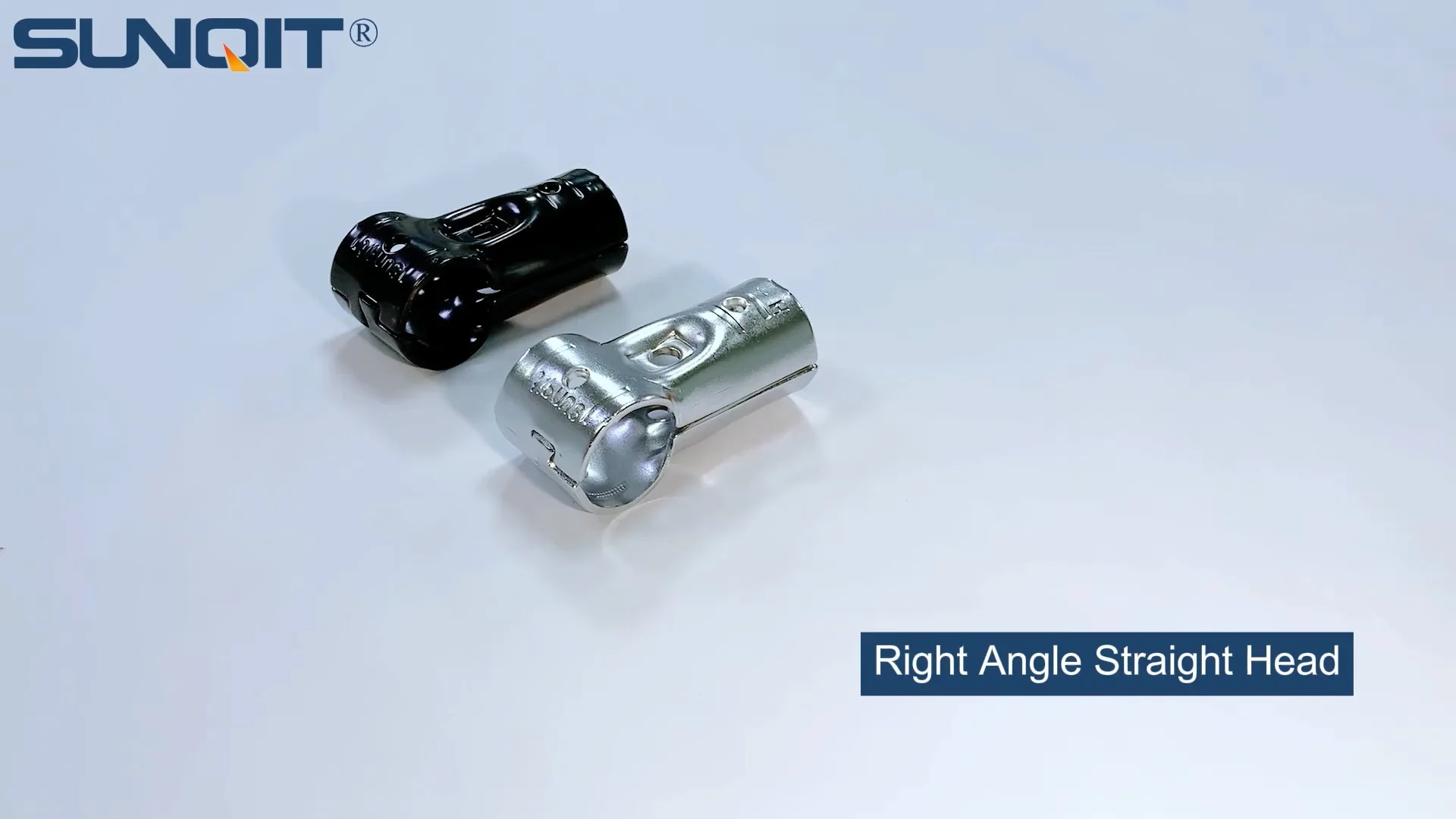
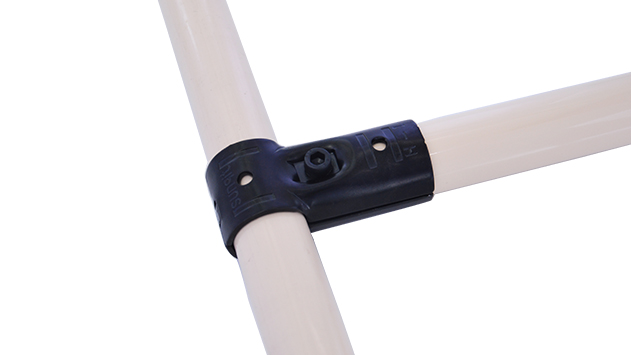
Two way lean pipe joint for 2 pcs 28MM lean pipe connection in straight angle, which used widely in workbench, flow rack, hand trolley frame connection.
Walk into any modern manufacturing facility, and you'll likely notice a subtle but powerful shift: gone are the days of rigid, one-size-fits-all production lines. Instead, floors hum with dynamic workstations, flexible flow racks, and modular structures that adapt as quickly as customer demands change. At the heart of this transformation lies lean manufacturing—a philosophy built on eliminating waste, streamlining processes, and fostering continuous improvement. Yet, for all its high-level principles, lean manufacturing's success often hinges on the smallest components. Enter the two way lean pipe joint: a deceptively simple connector that acts as the backbone of modular lean systems, enabling the agility and adaptability modern factories need to thrive.
In this article, we'll explore how this unassuming component—often overlooked amid flashier technologies—plays a pivotal role in sustaining lean manufacturing's continuous improvement cycle. From its design and functionality to real-world applications, we'll uncover why the two way lean pipe joint isn't just a part of the system; it's the enabler of the system itself.
Lean Manufacturing: The Pursuit of Perfection Through Small Wins
Before diving into the specifics of the two way lean pipe joint, it's critical to ground ourselves in the core principles of lean manufacturing. Developed from Toyota's Production System (TPS), lean is more than a set of tools—it's a mindset centered on kaizen , or continuous improvement. The goal? To create more value for customers with fewer resources by identifying and eliminating eight types of waste: overproduction, waiting, transportation, defects, inventory, motion, overprocessing, and underutilized talent.
To achieve this, lean manufacturing relies on flexible infrastructure . Unlike traditional manufacturing setups, which are built for static, high-volume production, lean systems must adapt to fluctuations in demand, product design changes, and process optimizations. This is where physical tools—like lean pipes, workbenches, and flow racks—come into play. These tools aren't just about holding parts or supporting assembly; they're about creating environments where waste is visible, processes are streamlined, and teams can iterate quickly.
Here's the catch: for infrastructure to support continuous improvement, it must be as adaptable as the processes it enables. A workstation that takes weeks to reconfigure can't keep up with a team that identifies a waste reduction opportunity today. A flow rack that can't adjust to a new part size becomes a bottleneck, not a solution. This is where modular components step in—and none are more critical than the two way lean pipe joint.
What Is a Two Way Lean Pipe Joint? The Unsung Hero of Modular Design
At first glance, a two way lean pipe joint might seem like little more than a metal or plastic connector. But its design is a masterclass in lean thinking: simple, functional, and focused on enabling change. Let's break it down.
A two way lean pipe joint is a fastening component designed to connect two lean pipes (also called "lean tubes") at a fixed or adjustable angle, typically 90 degrees or 180 degrees, though some models allow for rotation. Made from materials like galvanized steel, stainless steel, or aluminum (depending on the application), these joints are engineered to balance strength with flexibility. Most feature a clamping mechanism—often a screw or lever—that tightens around the lean pipe, creating a secure connection that can still be loosened and repositioned when needed.
The "two way" designation refers to its ability to join two pipes, distinguishing it from three-way or four-way joints (which connect three or more pipes). This simplicity is intentional: by focusing on pairwise connections, two way joints form the building blocks of larger structures. Think of them as the Lego bricks of lean manufacturing—small, standardized, and infinitely combinable.
But what makes this design so special? Unlike welded or glued connections, which are permanent and require tools to modify, two way lean pipe joints allow operators to disassemble, reconfigure, and reassemble structures by hand, often in minutes. This ease of use transforms how teams interact with their workspace. No longer do they need to wait for maintenance crews or external contractors to make changes; they can take ownership of their environment, testing new layouts and refining processes in real time.
The Two Way Lean Pipe Joint in Action: Enabling the Continuous Improvement Cycle
To understand the two way lean pipe joint's impact, let's map its role to lean manufacturing's continuous improvement cycle: plan-do-check-act (PDCA) . This iterative process—planning a change, implementing it, checking the results, and acting on lessons learned—is the engine of kaizen. The two way lean pipe joint accelerates each stage of this cycle, making improvement not just possible, but routine.
1. Plan: Enabling Rapid Prototyping of Workspace Designs
The first step in PDCA is planning a change to eliminate waste. For example, a team might notice that operators are walking 10 extra steps per hour to retrieve tools from a distant shelf—a classic case of "motion waste." Their plan? Redesign the workstation to include a built-in tool rack within arm's reach.
With traditional fixed infrastructure, this plan would require engineering drawings, material orders, and days (or weeks) of installation. But with two way lean pipe joints and a set of lean pipes, the team can prototype the new design in hours. They can sketch a layout, connect pipes using two way joints, and test the height, position, and accessibility of the tool rack—all without disrupting production. This rapid prototyping turns abstract ideas into tangible solutions, reducing the time between "problem identified" and "solution tested."
2. Do: Implementing Changes Without Downtime
Once a plan is finalized, the next step is implementation. In lean manufacturing, minimizing downtime during changes is critical—every minute a line is idle is waste. Here, the two way lean pipe joint's modularity shines. Unlike welded frames, which require cutting and re-welding to modify, structures built with two way joints can be disassembled and reconfigured on the fly.
Consider a scenario where a manufacturer needs to switch from producing Product A to Product B, which has a different assembly sequence. The existing workbench, built with fixed shelves, isn't optimized for Product B's tools. With two way lean pipe joints, the team can loosen the joints, adjust the shelf heights, add a new flow rack for parts, and reposition the work surface—all in under an hour. There's no need for power tools, no need to shut down the line for a full shift, and no risk of damaging the underlying structure. The change is made, and production resumes with minimal interruption.
3. Check: Measuring Impact Through Iteration
After implementing a change, the "check" phase involves measuring whether the solution actually reduced waste. Did the new tool rack cut down on operator motion? Did the reconfigured workbench speed up assembly time? If not, the team needs to adjust—and fast.
Two way lean pipe joints make iteration painless. Suppose the initial tool rack prototype is too low, causing operators to bend awkwardly (introducing new motion waste). The team can simply loosen the two way joints, raise the rack by a few inches, and retighten—no disassembly required. This ability to tweak designs incrementally means teams don't have to get it perfect on the first try. They can test, learn, and adjust, turning each "failure" into a data point for improvement.
4. Act: Scaling Success Across the Organization
The final step in PDCA is acting on what's been learned—standardizing successful changes and sharing them across the organization. A workstation improvement that works on Line 1 might benefit Line 3, but only if the solution is replicable.
Because two way lean pipe joints are standardized (most follow industry-wide dimensions), successful designs can be easily replicated using the same components. A lean pipe supplier can provide consistent joints and pipes, ensuring that a tool rack that works in the automotive department can be duplicated in electronics assembly. This scalability turns local improvements into company-wide gains, multiplying the impact of each kaizen event.

Real-World Impact: How One Joint Transformed a Manufacturer's Productivity
To put this into perspective, let's look at a hypothetical (but representative) case study of a mid-sized electronics manufacturer we'll call "TechFlow."
TechFlow's Challenge: Rigid Workstations Stifling Improvement
TechFlow produced printed circuit boards (PCBs) for consumer electronics. Like many manufacturers, they'd adopted lean principles but struggled with their physical infrastructure. Their workstations were built with fixed wooden shelves and metal frames, installed by contractors. When the team identified waste—such as parts piling up due to poor flow—redesigning the workstation took 2–3 weeks, requiring maintenance to cut wood, weld metal, and repaint. By the time the change was made, the production mix had shifted, rendering the new design obsolete.
Employee engagement was also low. Operators had ideas to improve their workspaces but felt powerless to act, leading to frustration and missed improvement opportunities.
The Solution: Adopting Two Way Lean Pipe Joints and Modular Lean Systems
TechFlow partnered with a lean pipe supplier to replace fixed workstations with modular setups built using lean pipes, two way lean pipe joints, and accessories like casters and tool hooks. The transition was gradual: they started with one assembly line, training operators to use the joints and reconfigure structures themselves.
The Results: A 30% Boost in Improvement Cycles
Within three months, the impact was clear:
•
Faster changeovers:
Redesigning a workstation went from 2–3 weeks to 2–3 hours. Operators could now adjust shelf heights, add flow racks, or reposition tools during breaks, without halting production.
•
More kaizen events:
With the barrier to entry lowered, employee-led improvement suggestions increased by 40%. One team reconfigured their workbench to reduce operator walking time by 15 minutes per shift—a 5% productivity gain for that line.
•
Reduced waste:
By optimizing part flow with adjustable flow racks (built using two way joints), inventory levels at workstations dropped by 25%, freeing up floor space and reducing the risk of damage to components.
•
Scalability:
Successful designs from the pilot line were replicated across three other lines in weeks, not months. The two way lean pipe joint's standardization meant parts ordered from the lean pipe supplier fit seamlessly, regardless of the line.
TechFlow's maintenance manager summed it up: "We used to see workstations as 'finished' once installed. Now, they're living, breathing systems that evolve with us. The two way joint turned our workspace into a tool for improvement, not a barrier to it."
TechFlow's story isn't unique. Across industries—automotive, aerospace, medical devices—manufacturers are discovering that modular infrastructure, enabled by components like the two way lean pipe joint, is the missing link between lean principles and tangible results.

Why Traditional Joints Fall Short: A Comparison
To appreciate the two way lean pipe joint's value, it helps to compare it to traditional alternatives. Below is a breakdown of how it stacks up against welded joints, bolted brackets, and plastic snap-fit connectors:
| Feature | Two Way Lean Pipe Joint | Welded Joints | Bolted Brackets | Plastic Snap-Fit Connectors |
|---|---|---|---|---|
| Reconfigurability | High: Loosen/tighten by hand; no tools needed | None: Permanent; requires cutting/welding to modify | Low: Requires tools (wrenches, drills); time-consuming | Medium: Can be snapped apart, but prone to wear over time |
| Installation Time | Minutes per joint | Hours per joint (including setup and cooling) | 30–60 minutes per joint (drilling, bolting) | 5–10 minutes per joint (snapping into place) |
| Durability | High: Steel/aluminum construction; withstands repeated use | High: Strong, but inflexible | Medium: Bolts can loosen over time; brackets may bend | Low: Plastic degrades with heavy loads or UV exposure |
| Cost (Long-Term) | Low: Reusable across multiple configurations; no replacement costs | High: Requires new materials and labor for each redesign | Medium: Brackets are reusable, but tools and labor add up | High: Needs frequent replacement due to wear |
| Operator Empowerment | High: Operators can make changes independently | None: Requires specialized labor | Low: Operators need training and tools | Medium: Easy to use, but limited load capacity reduces utility |
The table makes clear: while other joints have their uses, the two way lean pipe joint is uniquely suited to lean manufacturing's need for speed, flexibility, and employee engagement. It's not just a better connector—it's a better enabler of the lean mindset.
Beyond the Joint: Building a Lean Ecosystem
Of course, the two way lean pipe joint doesn't work in isolation. It's part of a broader ecosystem of lean components, including:
•
Lean pipes:
Typically made of steel (with a plastic coating for ESD protection) or aluminum, these form the structure's backbone.
•
Workbenches:
Modular tables built using lean pipes and joints, often with adjustable heights and accessories like tool rails.
•
Flow racks:
Sloped racks with roller tracks (another keyword from the list) that use gravity to feed parts to operators, reducing motion waste.
•
Casters:
Wheels attached to workbenches or trolleys, enabling mobility and on-demand repositioning.
Together, these components create a system where the whole is greater than the sum of its parts. For example, a workbench built with two way lean pipe joints can be paired with casters to become a mobile station, allowing operators to move materials directly to the assembly line, eliminating transportation waste. Add a flow rack using roller tracks, and parts flow smoothly to the operator, reducing waiting time.
This ecosystem also supports sustainability—a key pillar of modern manufacturing. Unlike fixed structures, which end up in landfills when obsolete, modular components can be repurposed indefinitely. A two way lean pipe joint from a retired workbench can find new life in a flow rack, reducing material waste and lowering environmental impact.
Choosing the Right Two Way Lean Pipe Joint: Key Considerations for Manufacturers
Not all two way lean pipe joints are created equal. To maximize their impact, manufacturers should consider these factors when selecting joints from a lean pipe supplier:
•
Material:
Steel joints offer durability for heavy loads, while aluminum joints are lighter and corrosion-resistant, ideal for cleanrooms or food processing. ESD-safe options (with conductive coatings) are critical for electronics manufacturing to prevent static damage.
•
Load capacity:
Ensure the joint can support the weight of the structure and materials. Overloading can lead to instability or failure.
•
Ease of use:
Look for joints with ergonomic tightening mechanisms (e.g., wing nuts or levers) that operators can adjust without tools.
•
Compatibility:
Verify that the joint fits standard lean pipe sizes (typically 28mm or 30mm diameter) to avoid compatibility issues with existing components.
•
Supplier support:
Choose a lean pipe supplier that offers training, design assistance, and a range of accessories to support continuous improvement.
Conclusion: Small Components, Big Impact—The Two Way Lean Pipe Joint as a Catalyst for Change
In the world of lean manufacturing, success is measured in inches: an inch less walking, an inch more space, an inch faster changeover. The two way lean pipe joint, though small in size, enables these incremental gains to add up to transformative results. By making reconfiguration easy, empowering employees, and accelerating the PDCA cycle, it turns the abstract principles of lean into concrete action.
As manufacturers continue to navigate volatility—from supply chain disruptions to shifting consumer demands—the ability to adapt quickly isn't just a competitive advantage; it's a survival skill. The two way lean pipe joint, and the modular systems it enables, is more than a tool for today's challenges. It's an investment in tomorrow's ability to improve, innovate, and thrive.
So the next time you walk through a lean manufacturing facility, take a moment to notice the joints connecting the pipes. They may not grab headlines, but they're writing the story of continuous improvement—one small, powerful connection at a time.