- Company Articles
- Products and Technology
- Solution
- How Two Way Lean Pipe Joint Supports Just-In-Time (JIT) Production

How Two Way Lean Pipe Joint Supports Just-In-Time (JIT) Production
Related Product
Two Way Lean Pipe Joint
Two way lean pipe joint for 2 pcs 28MM lean pipe connection in straight angle, which used widely in workbench, flow rack, hand trolley frame connection.
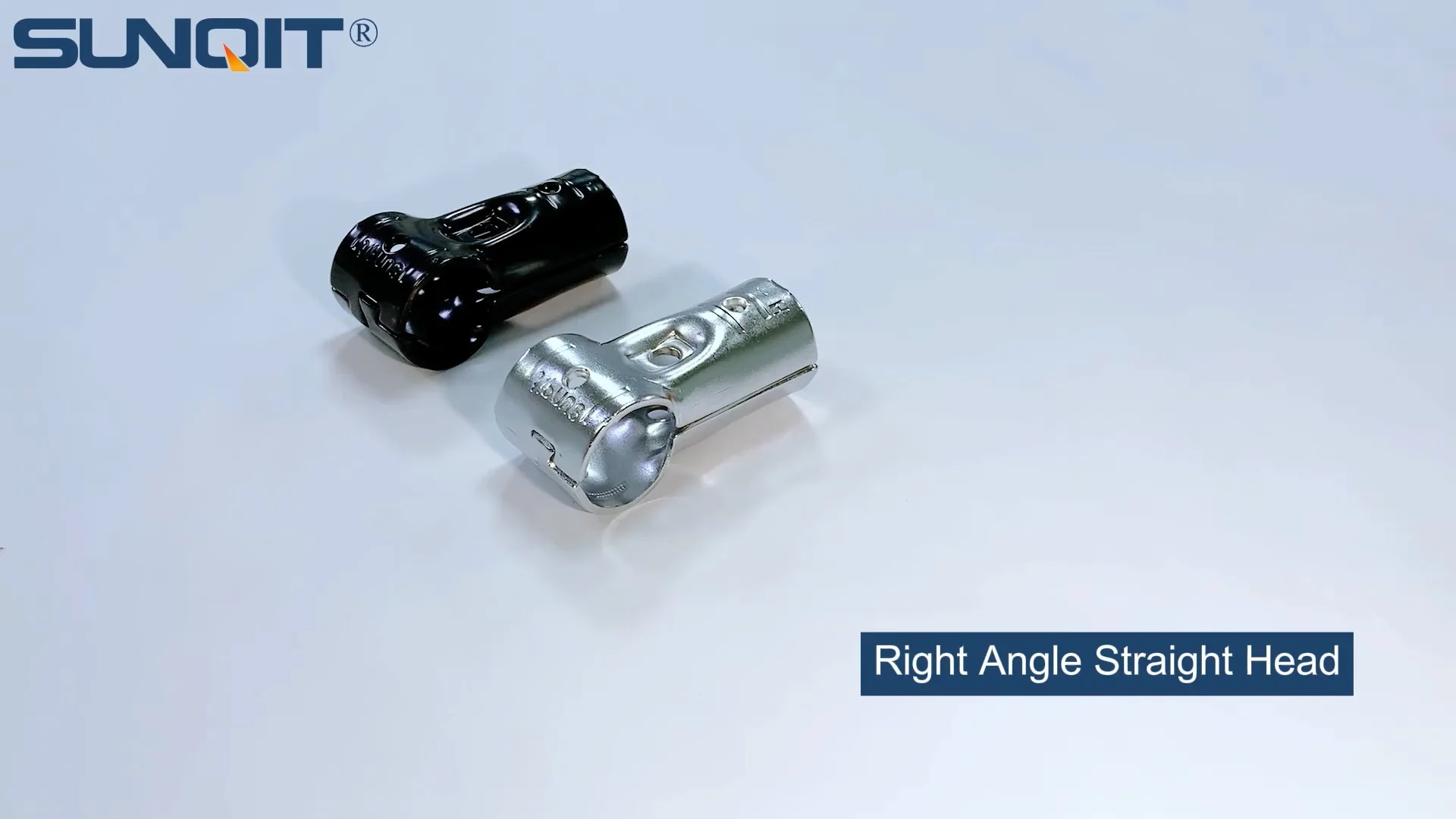
The unsung hero behind flexible, waste-free manufacturing workflows
The Pressure of Modern Manufacturing: Why JIT Isn't Just a Trend—It's a Necessity
Walk into any manufacturing facility today, and you'll feel it immediately: the hum of urgency. Customers want products faster, with more customization, and at lower costs. Competitors are nipping at your heels, armed with newer technologies and tighter supply chains. In this high-stakes environment, "good enough" no longer cuts it. That's where Just-In-Time (JIT) production comes in—not as a buzzword, but as a lifeline.
JIT, at its core, is about one thing: eliminating waste. Every second a machine sits idle, every extra component cluttering a warehouse shelf, every unnecessary step in a workflow eats into profits and slows down delivery. Toyota pioneered the concept decades ago, but today's factories face even greater pressure to trim the fat. Consumer demand shifts overnight—one month it's wireless headphones, the next it's smart home devices—and production lines must pivot without missing a beat. Rigid, fixed systems that worked in the era of mass production? They're now liabilities.
But here's the challenge: JIT isn't easy. To pull it off, you need a production environment that bends without breaking. Traditional setups—think welded steel workbenches, bolted-down conveyor belts, and custom-built flow racks—are the opposite of flexible. Reconfiguring them takes weeks, requires specialized labor, and often costs more than the production downtime it causes. So how do manufacturers square the need for agility with the reality of physical infrastructure? The answer lies in something surprisingly simple: lean pipe systems. And at the heart of those systems? The two way lean pipe joint.
Lean Pipe Systems: The Backbone of Flexible Manufacturing
Before diving into the two way lean pipe joint itself, let's take a step back. What even is a "lean pipe system"? At first glance, it looks deceptively simple: aluminum or steel pipes, coated in durable plastic, connected by a variety of joints. But don't let the simplicity fool you. These systems are the building blocks of modern, adaptable factories. They form workbenches where assemblers stand, flow racks that feed components to lines, and conveyors that move products from station to station—all without a single weld or permanent fixture.
Unlike traditional manufacturing setups, which are often designed for a single product line and built to last decades, lean pipe systems are temporary by design. They're meant to evolve. A workbench today might support smartphone assembly; tomorrow, with a few adjustments, it could hold tools for laptop production. This flexibility is the secret sauce that makes JIT possible. And if lean pipe systems are the backbone, then the joints—the pieces that hold the pipes together—are the vertebrae. They're what allow the whole structure to bend, twist, and reconfigure with minimal effort.
Among all the joints available—three-way, four-way, swivel, fixed—the two way lean pipe joint stands out for its versatility. It's the Swiss Army knife of the lean pipe world: simple, reliable, and ready for almost any job. Let's break down why it matters, and how it transforms JIT from a lofty goal into a daily reality.
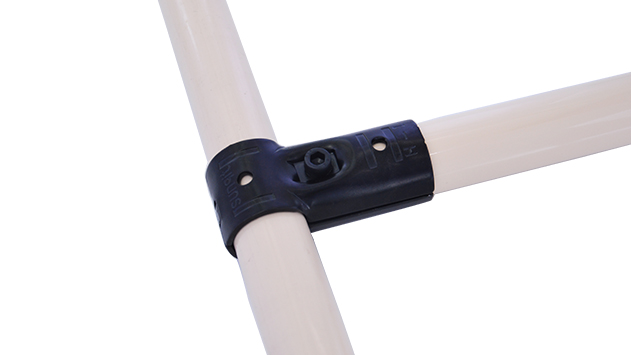
Meet the Two Way Lean Pipe Joint: Small, Sturdy, and Shockingly Smart
Picture a small, cylindrical component, usually made of zinc-plated steel or high-strength plastic, with two openings at a 90-degree angle (though some designs allow for adjustable angles). That's the two way lean pipe joint. Its job? Connect two lean pipes together to form corners, right angles, or even straight extensions (with the right). But what makes it special isn't just what it does—it's how it does it.
Traditional joints often require tools, bolts, or welding. Not the two way lean pipe joint. Most designs use a simple twist-lock mechanism or a hand-tightened screw. A worker can grab two pipes, slide the joint onto their ends, and secure it in seconds. No wrenches, no power tools, no waiting for a maintenance crew. This speed is critical in JIT environments, where every minute of downtime translates to missed deadlines.
Durability matters too. These joints are built to take a beating. The plastic coating (often polyethylene) resists scratches and corrosion, protecting both the joint and the pipes it connects. The steel core ensures stability, even when supporting heavy loads—think stacks of circuit boards on a flow rack or power tools on a workbench. And because they're reusable, you're not throwing away money every time you reconfigure a setup. A single two way joint can be moved, adjusted, and reused dozens of times over its lifespan.
But perhaps the joint's greatest strength is its modesty. It doesn't try to do everything. Instead, it excels at the basics, which is exactly what JIT needs. In a system where waste is the enemy, overcomplicating things is a cardinal sin. The two way lean pipe joint is proof that sometimes, the most effective solutions are the most straightforward.

5 Ways Two Way Lean Pipe Joints Make JIT Production Work (Without the Headaches)
So how exactly does this humble joint support JIT? Let's dive into the specifics—from reducing downtime to cutting costs, and even making workers' lives easier.
1. Slashing Setup Time: From Weeks to Hours
In JIT, downtime is the ultimate waste. Traditional production lines, built with fixed steel frames, can take weeks to reconfigure. Imagine needing to shift from assembling 10-inch tablets to 12-inch laptops. Engineers would have to redesign the workflow, order custom parts, and hire welders to modify workbenches and conveyors. By the time everything's ready, the market might have moved on.
With two way lean pipe joints, that timeline collapses. Take a typical scenario: A car parts manufacturer gets a rush order for a new sensor. The production team needs to add a small assembly station to their existing line. Using lean pipes and two way joints, they can build a custom workbench in under two hours. No design team, no special tools—just a few workers, a handful of pipes, and joints that snap into place. The station is up and running by lunch, and the first sensors are rolling off the line by the end of the day. That's the power of JIT enabled by lean pipe systems.
2. Killing Inventory Waste: Flow Racks That Keep Up with Demand
Inventory waste is JIT's arch-nemesis. Storing extra components "just in case" ties up capital and takes up valuable space. Flow racks—tilted shelves where products roll forward as items are removed—are a JIT staple, ensuring first-in, first-out (FIFO) usage and minimizing stockpiles. But traditional flow racks are rigid; they can't adapt to different component sizes or changing demand.
Enter two way lean pipe joints. Build a flow rack with lean pipes, and suddenly you're in control. Need to widen the shelves for larger boxes? Loosen the two way joints, adjust the pipes, and retighten. Add a second level to accommodate a new part? Snap on more joints and pipes. A electronics plant in Malaysia reported cutting component inventory by 30% after switching to lean pipe flow racks, simply because they could adjust shelf heights and widths to match daily demand. No more overstocking "just to be safe."
3. Erasing Overprocessing: Workbenches Tailored to the Task
Overprocessing—doing more work than necessary—is another hidden waste. Think about a workbench that's too tall for the shortest worker, forcing them to stretch. Or one with a fixed shelf that's always in the way of tools. These small inefficiencies add up, slowing down production and increasing error rates.
Two way lean pipe joints solve this by letting workers design workbenches around their needs, not the other way around. A team assembling small circuit boards might want a lower bench with built-in tool hooks. A team packaging larger products could raise the bench and add extra shelves. Because the joints make reconfiguration so easy, workers can tweak their workbenches on the fly. At a medical device factory in Germany, assemblers reported a 15% boost in productivity after adjusting their lean pipe workbenches to better fit their heights and workflows. No more "making do" with one-size-fits-all setups.
4. Boosting Labor Productivity: Less Time Fixing, More Time Making
Factory workers are the heart of JIT, but they shouldn't be spending their time fighting with equipment. Traditional setups often require workers to hunt down tools, wait for maintenance, or work around broken fixtures. With lean pipe systems and two way joints, that frustration fades.
Consider a conveyor belt that jams because a section is slightly misaligned. With a traditional steel conveyor, a technician might need to disassemble half the line to fix it. With a lean pipe conveyor—held together by two way joints—a worker can loosen the joints, realign the pipes, and have the line running again in 10 minutes. No waiting, no special training, just quick, easy adjustments. This not only reduces downtime but also empowers workers, making them feel more in control of their environment. Happy workers, as any manager knows, are more productive workers.
5. Cutting Costs: The Gift That Keeps on Giving
At the end of the day, JIT is about the bottom line. And two way lean pipe joints deliver here, too. Compared to custom steel fabrication, lean pipe systems are dramatically cheaper. A basic workbench built with lean pipes and two way joints costs a fraction of a welded steel equivalent. But the savings don't stop there.
Because the joints are reusable, you're not buying new parts every time you reconfigure. A lean pipe system built today can be torn down and rebuilt tomorrow with the same components. Over time, this adds up to significant cost savings. A furniture manufacturer in the U.S. calculated that switching to lean pipe workbenches and flow racks reduced their equipment costs by 40% over five years—simply by reusing joints and pipes during line changes.
Real-World Impact: How a Small Electronics Plant Transformed Its JIT Workflow
Let's ground this in reality with a story. A mid-sized electronics plant in Vietnam was struggling with JIT. Their production lines, built with fixed steel workbenches and conveyors, couldn't keep up with frequent product changes. Switching from smartphone to tablet assembly took 10 days and cost $15,000 in downtime and labor. Inventory was piling up because flow racks couldn't adjust to component sizes, and workers were frustrated with clunky, unergonomic setups.
Then they switched to lean pipe systems, centered around two way lean pipe joints. The results were staggering:
- Setup time for product changes dropped from 10 days to 8 hours. Workers used two way joints to reconfigure workbenches and conveyors themselves, without waiting for engineers.
- Inventory costs fell by 25%. Adjustable flow racks, built with lean pipes and joints, meant they only stocked what they needed for the day's orders.
- Worker productivity rose by 20%. Customizable workbenches reduced strain and made tools easier to reach.
- Downtime due to equipment issues plummeted by 40%. Two way joints made quick fixes possible, even for non-technical staff.
The plant manager summed it up: "We used to see JIT as a distant goal. Now, it's just how we work. And it all started with these small joints that let us adapt on the fly."

Traditional vs. Lean Pipe Systems: A Closer Look
Still not convinced? Let's compare traditional manufacturing setups with lean pipe systems using two way joints. The differences speak for themselves:
| Aspect | Traditional Steel/Welded Systems | Lean Pipe Systems with Two Way Joints |
|---|---|---|
| Setup Time | Weeks to months (requires engineering and welding) | Hours to days (worker-configurable with hand tools) |
| Flexibility | Rigid; difficult to reconfigure without major overhauls | Highly flexible; reconfigurable in minutes |
| Cost | High upfront costs; expensive to modify | Low upfront costs; reusable components reduce long-term expenses |
| Worker Empowerment | Workers depend on maintenance/engineering for changes | Workers can adjust setups independently |
| Waste Reduction | Prone to overproduction and inventory waste (fixed layouts can't adapt to demand) | Minimizes waste through adaptability (right-sized storage, quick line changes) |
Beyond the Joint: Building a Lean Ecosystem
The two way lean pipe joint doesn't work alone, of course. It's part of a larger ecosystem of lean components: conveyors that glide smoothly, casters that lock securely, ESD workbenches that protect sensitive electronics, and flow racks that keep components moving. But without the joint, this ecosystem falls apart. It's the glue that holds everything together—literally.
Take a typical lean system setup: A workbench (built with two way joints) sits next to a flow rack (also joint-connected), which feeds components to a conveyor (yep, more joints). When a new product comes in, the team adjusts the workbench height, reconfigures the flow rack shelves, and tweaks the conveyor angle—all using the same two way joints. It's a symphony of flexibility, with the joint playing the lead role.
Suppliers matter too. A reliable lean pipe supplier ensures that joints, pipes, and accessories are always in stock, so you're never waiting for parts when a JIT deadline looms. Look for suppliers that offer durable, high-quality joints—cheap knockoffs might save money upfront, but they'll fail when you need them most, undoing all your JIT progress.
The Bottom Line: JIT Needs Flexibility, and Flexibility Needs Two Way Lean Pipe Joints
Just-In-Time production isn't about perfection—it's about progress. It's about waking up each day knowing your factory can adapt, that waste is being squeezed out, and that your team has the tools to succeed. The two way lean pipe joint may be small, but it's a giant step toward that progress.
It's the difference between a factory stuck in the past, struggling to keep up, and one that's agile, efficient, and ready for whatever the market throws its way. It's the difference between workers who dread coming to work and those who feel empowered to make a difference. And in the end, it's the difference between merely surviving and thriving in today's cutthroat manufacturing landscape.
So the next time you walk through a factory and see a lean pipe workbench, a flow rack, or a conveyor, take a closer look. Chances are, there's a two way lean pipe joint holding it all together—quietly, reliably, and without fanfare. It may not get the headlines, but in the world of JIT, it's the unsung hero we can't live without.