- Company Articles
- Products and Technology
- Product knowledge
- How Two Way Lean Pipe Joint Supports Reusable Lean Manufacturing Systems

How Two Way Lean Pipe Joint Supports Reusable Lean Manufacturing Systems
Related Product
Two Way Lean Pipe Joint
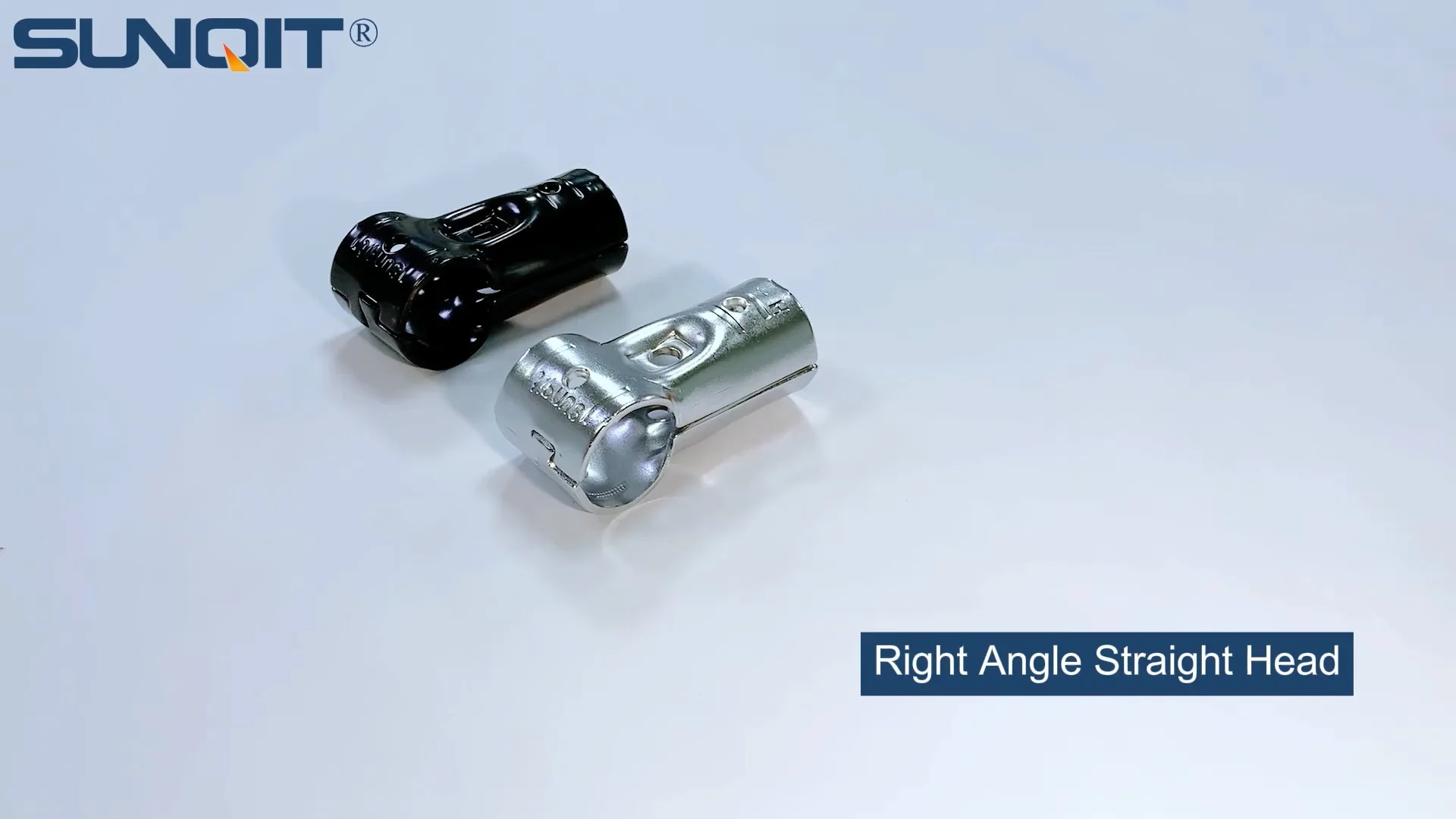
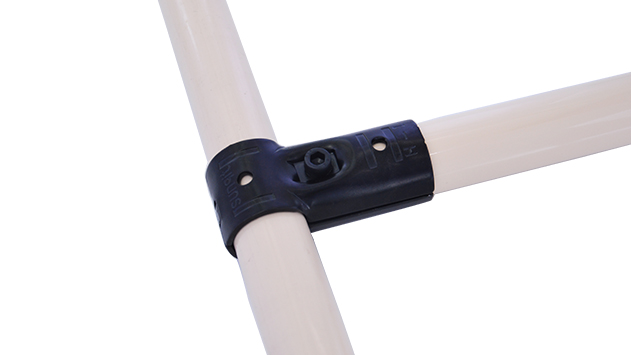
Two way lean pipe joint for 2 pcs 28MM lean pipe connection in straight angle, which used widely in workbench, flow rack, hand trolley frame connection.
Maria, the production floor manager at a mid-sized electronics assembly plant, stared at the calendar with a sinking feeling. In three weeks, her team would need to switch from assembling smartphone chargers to a new line of Bluetooth earbuds—a product with smaller components, different workflow steps, and stricter space constraints. The problem? Their current workstations were built with fixed steel frames and welded shelves. To reconfigure them, they'd need to call in contractors, shut down production for days, and spend tens of thousands of dollars on custom modifications. "There has to be a better way," she muttered, flipping through a stack of supplier catalogs. That's when she first saw it: a photo of a workstation built with sleek, silver pipes and simple, clamp-like connectors. The caption read: "Reconfigurable in hours, not weeks. Introducing the two way lean pipe joint."
For manufacturers like Maria, the struggle with rigid, one-size-fits-all production setups is all too familiar. In an era where consumer demands shift overnight and product lifecycles grow shorter, the ability to adapt quickly isn't just a competitive advantage—it's survival. This is where lean manufacturing systems, powered by components like the two way lean pipe joint, step in. More than just a piece of hardware, this unassuming connector is a catalyst for flexibility, cost savings, and employee empowerment. In this article, we'll explore how the two way lean pipe joint forms the backbone of reusable lean systems, transforming static factories into dynamic, responsive hubs of innovation.
What is a Two Way Lean Pipe Joint, Anyway?
Let's start with the basics. A two way lean pipe joint is a mechanical connector designed to join two lengths of lean pipe (also known as "lean tube") at various angles—most commonly 90 degrees, but often adjustable to 45, 30, or even 180 degrees, depending on the design. Unlike traditional welding or permanent fasteners, these joints create a secure, yet (detachable) bond, allowing users to assemble, disassemble, and reassemble structures with minimal effort.
At first glance, it might look like a simple plastic or metal clamp, but its design is deceptively clever. Most two way joints feature a hollow core that fits over the end of a lean pipe, with a tightening mechanism—usually a hex screw or cam lever—that locks the pipe in place. Some models, especially those made from aluminum or reinforced plastic, include built-in rotation stops or notches to ensure consistent angles, making assembly intuitive even for workers without technical training. "We had a new intern assemble a material rack on his first day," (laughs) Raj, a production supervisor at an automotive parts plant. "He didn't need a manual—just looked at the joint and thought, 'Oh, that clicks into place.'"
Lean pipes themselves are typically made from steel (often powder-coated for durability), aluminum, or stainless steel, with diameters ranging from 28mm to 40mm. The two way joint's versatility lies in its ability to work with these different materials, making it compatible with existing lean pipe setups or new installations. For example, a factory transitioning from steel to aluminum lean pipe can reuse its old two way joints, reducing waste and keeping costs low.
The Two Way Joint: Heart of the Lean System
To understand why the two way lean pipe joint matters, we first need to grasp the philosophy of lean manufacturing. At its core, lean is about eliminating waste—whether that's wasted time, materials, space, or effort—and creating systems that continuously improve. Traditional manufacturing setups, with their fixed structures and "set it and forget it" mentality, are the antithesis of lean. They force workers to adapt to the tools, rather than the tools adapting to the workers.
Enter the two way lean pipe joint. By enabling modular, reconfigurable structures, it turns lean principles into tangible action. Let's break down its role:
1. Flexibility: The Ability to Pivot Without Pain
In lean manufacturing, "flexibility" isn't just a buzzword—it's the ability to adjust workflows, workstation layouts, and material handling systems in response to real-time needs. A two way joint makes this possible because it turns lean pipes into building blocks. Need to raise a workbench by 6 inches to reduce worker strain? Loosen the joints, adjust the pipes, retighten. Want to add a third shelf to a material rack to accommodate larger boxes? Slide in a new pipe section and secure it with two way joints. No welding, no cutting, no waiting for maintenance. "During our last product launch, we went from a U-shaped assembly line to a linear one in four hours," says Maria, recalling her first experience with lean pipe systems. "The old setup would have taken a week and a half."
2. Reusability: Waste Not, Want Not
Waste reduction is a cornerstone of lean, and nothing embodies this like reusability. Traditional fixed structures, once obsolete, end up in scrapyards or gathering dust in warehouses. Two way lean pipe joints, by contrast, let you disassemble old structures and repurpose the pipes and joints into something new. A workbench that's no longer needed for assembly can become a packing station, or a material rack can be transformed into a turnover trolley. This not only cuts down on material costs but also reduces the environmental impact of manufacturing. "We haven't bought new shelving in two years," notes Raj. "We just reconfigure what we have. It's like Lego for adults—but for factories."
3. Employee Empowerment: Let the Experts Lead
Lean isn't just about tools—it's about people. The best ideas for improving workflows often come from the workers on the front lines, who know the nuances of their tasks better than anyone. Two way lean pipe joints put the power to innovate directly in their hands. Instead of waiting for management to approve a workstation redesign, a team can sketch out a new layout, gather the pipes and joints, and build it themselves during a lunch break. "Last month, the night shift noticed their material cart was too low—bending over was causing back pain," says Maria. "They measured, grabbed some extra pipes and two way joints, and by morning, they'd raised the cart by 8 inches. No meetings, no approvals—just problem-solving." This kind of autonomy boosts morale, fosters ownership, and turns every employee into a lean thinker.
The Hard Numbers: Benefits of Two Way Lean Pipe Joints
Talk of flexibility and empowerment is compelling, but for manufacturers, the bottom line matters most. Let's dive into the tangible benefits of integrating two way lean pipe joints into your lean system:
Cost Savings: More Than Just "Cheap"
Initial setup costs for lean pipe systems are often lower than traditional steel or wooden structures, but the real savings come later. Consider this: A fixed steel workstation might cost $1,500 and last 5 years, but if you need to reconfigure it twice during that time, each reconfiguration could cost $2,000 (contractors, downtime, materials). A lean pipe workstation with two way joints costs around $800 upfront, and reconfiguring it yourself costs $50 in new pipes (if any) and a few hours of labor. Over 5 years, that's a savings of $3,200 per workstation. Multiply that by 50 workstations, and you're looking at $160,000—money that can be reinvested in technology, training, or growth.
Time Efficiency: From Days to Hours
Downtime is the enemy of productivity. According to the Manufacturing Performance Institute, unplanned downtime costs manufacturers an average of $50,000 per hour. With traditional setups, even planned reconfigurations can take 3–5 days. Two way lean pipe joints slash that time to hours. A study by the Lean Enterprise Institute found that companies using modular lean systems reduced reconfiguration time by 70–90%. For a plant running two shifts a day, that's the difference between losing $600,000 (5 days of downtime) and $60,000 (half a day). "We used to schedule reconfigurations during holiday shutdowns because they took so long," says Raj. "Now we do them on weekends—no lost production, no overtime pay for contractors."
Adaptability Across Industries
Two way lean pipe joints aren't just for electronics or automotive plants. Their versatility makes them ideal for industries as diverse as pharmaceuticals (cleanroom-compliant stainless steel options), food and beverage (corrosion-resistant aluminum), and logistics (heavy-duty joints for pallet racks). A hospital supply company, for example, uses lean pipe systems with two way joints to build adjustable carts that transport medical equipment—easily modified to carry IV stands, surgical tools, or patient monitors. "The joint's simplicity is its superpower," says a lean consultant who works with clients in healthcare. "It doesn't care if you're assembling circuit boards or storing syringes—it just works."

From Workbenches to Material Racks: Real-World Applications
To truly appreciate the two way lean pipe joint, let's look at how it transforms everyday manufacturing tools into adaptable, lean assets. Here are three common applications:
The Lean Pipe Workbench: A Worker-Centric Hub
The workbench is the heart of any production line, and a lean pipe workbench—built with two way joints—puts worker comfort and efficiency first. Unlike fixed workbenches, which force workers to adapt to a one-height-fits-all design, lean pipe workbenches can be customized to each operator's height, with adjustable shelves, tool hooks, and even integrated LED lighting. Need to add a keyboard tray for a quality control station? Attach it with two way joints. Want to roll the bench to a different part of the floor? Add casters (secured with, you guessed it, joints) and move it in minutes.
At a medical device plant in California, workers assemble pacemaker components on lean pipe workbenches. Each bench is tailored to the operator's arm length and seating preference, reducing repetitive strain injuries by 40% in the first year. "Our employees used to complain about back pain and wrist fatigue," says the plant manager. "Now, they adjust their workbenches themselves—no HR forms, no waiting for maintenance. It's made a huge difference in morale."
Material Racks: Storage That Grows With You
Material storage is another area where rigidity causes headaches. Traditional pallet racks are fixed in height and width, meaning you either waste space or cram items into ill-fitting shelves. Two way lean pipe joints solve this by letting you build racks that adjust to your inventory. Seasonal spikes? Add more shelves. Larger components? Widen the spacing between pipes. Even better, you can disassemble and rebuild the rack if your storage area moves. A clothing manufacturer in Bangladesh, for example, uses lean pipe racks with two way joints to store fabric rolls. During peak production seasons, they expand the racks upward; during slow periods, they collapse them to free up floor space for other tasks.
Turnover Trolleys: Moving Materials Without the Heavy Lifting
Material handling is a major source of waste in many factories. Workers pushing heavy, fixed carts waste energy and time—especially if the cart is too big for tight aisles or too small for large loads. Lean pipe turnover trolleys, built with two way joints, are lightweight yet sturdy, with customizable sizes and features like fold-down sides or removable shelves. A cosmetics manufacturer in France uses these trolleys to transport batches of perfume bottles from filling to packaging. "Our old metal trolleys weighed 80 pounds empty," says a warehouse supervisor. "The lean pipe ones weigh 30 pounds, and we can adjust the shelves to fit different bottle sizes. Our workers no longer come to me complaining about sore backs."

Traditional vs. Lean Pipe Systems: A Comparison
| Feature | Traditional Manufacturing Setups | Lean Pipe Systems with Two Way Joints |
|---|---|---|
| Initial Setup Cost | High ($1,500–$3,000 per workstation) | Low ($500–$1,000 per workstation) |
| Reconfiguration Time | 3–5 days (requires contractors) | 2–6 hours (can be done in-house) |
| Material Waste | High (fixed structures are often scrapped when obsolete) | Low (pipes and joints are reusable) |
| Flexibility | Low (one-size-fits-all design) | High (adaptable to changing needs) |
| Employee Engagement | Low (workers have no control over setup) | High (teams can modify tools themselves) |
| Long-Term Cost (5 years) | High (initial + reconfiguration + replacement costs) | Low (initial + minimal reconfiguration costs) |
Case Study: How One Plant Transformed with Two Way Joints
ABC Electronics: From Stagnation to Innovation
ABC Electronics, a mid-sized manufacturer of consumer electronics in Texas, was struggling in 2022. Their production lines were rigid, reconfigurations took weeks, and employee turnover was high due to ergonomic issues (think: fixed-height workbenches that forced tall workers to hunch and short workers to stretch). Their on-time delivery rate was 75%, well below the industry average of 90%, and they were losing clients to more agile competitors.
In early 2023, they hired a lean consultant who recommended switching to a modular system built with lean pipe and two way joints. Skeptical at first, the plant manager agreed to a pilot project: converting 10 workstations on their smartphone charger line.
The results were staggering. Within three months:
- Reconfiguration time for product changes dropped from 5 days to 8 hours.
- Ergonomic complaints fell by 60% as workers adjusted their workstations to fit their bodies.
- On-time delivery improved to 92%, as the team could now pivot quickly to meet rush orders.
- Employee turnover decreased by 40%—workers reported feeling "valued and heard" because they could help design their own workspaces.
Encouraged, ABC Electronics rolled out the system to all 50 workstations. By the end of 2023, they'd saved $240,000 in reconfiguration costs, won back two major clients, and increased production capacity by 25% without expanding their facility. "The two way lean pipe joint wasn't just a tool—it was a culture change," says the plant manager. "We stopped seeing ourselves as a factory and started seeing ourselves as a team that can adapt, learn, and grow."
Choosing the Right Two Way Lean Pipe Joint: What to Look For
Not all two way lean pipe joints are created equal. To get the most out of your lean system, consider these factors when selecting joints:
Material Matters
Joints are typically made from plastic, steel, or aluminum. Plastic joints are lightweight and affordable but best for light-duty applications (e.g., small parts assembly). Steel joints are durable and ideal for heavy loads (e.g., pallet racks). Aluminum joints, often paired with aluminum profile, offer a balance of strength and weight, making them perfect for mobile structures like trolleys. If your facility uses corrosive materials or requires frequent cleaning (e.g., food processing), look for stainless steel joints.
Load Capacity
Check the joint's load rating—this is the maximum weight it can support without bending or failing. A joint rated for 100kg is fine for a tool shelf, but a material rack holding 500kg boxes needs a higher rating. Reputable suppliers will list load capacities clearly; if not, ask for test data. Remember: the weakest joint in your structure determines its overall strength, so don't mix and match ratings.
Ease of Use
The best joints are those your workers can operate without special training. Look for features like tool-free cam levers (no hex keys needed) or clear markings for angle alignment. Avoid joints with tiny, easy-to-lose parts—they'll slow down assembly and increase frustration. "We tried a cheap joint once that required a special Allen wrench," says Maria. "Halfway through assembling a rack, we lost the wrench. Never again."
Compatibility
Ensure the joint fits your lean pipe diameter (most are 28mm or 30mm, but some are 40mm). If you're mixing materials (e.g., steel pipes with aluminum joints), check for compatibility—some metals corrode when in contact, so look for joints with protective coatings or plastic insulators.
Debunking Myths: "Lean Pipe Systems Are Flimsy" and Other Misconceptions
Despite their proven benefits, some manufacturers remain hesitant to adopt lean pipe systems. Let's address the most common myths:
Myth #1: "They're not strong enough for heavy-duty work."
False. While plastic joints are best for light loads, steel and aluminum two way joints can support hundreds of kilograms. The secret is in the design: most joints distribute weight evenly across the pipe, reducing stress points. In fact, a study by the American Society of Mechanical Engineers found that properly assembled lean pipe structures with steel joints have a safety factor of 5:1—meaning they can support five times their rated load before failing. "We use lean pipe racks to store 300kg pallets of engine parts," says Raj. "They've held up for three years with no issues."
Myth #2: "Reconfiguring them is complicated."
Not anymore. Modern two way joints are designed for simplicity. Many use quick-release levers or large, easy-to-turn screws. Most workers can learn to assemble a basic workstation in under an hour. "We held a 30-minute training session, then let the team build their own workbenches," says Maria. "By the end of the day, they were teaching each other new configurations."
Myth #3: "They're only for small businesses."
Large manufacturers like Toyota, Boeing, and Siemens have used lean pipe systems for decades. In fact, Toyota helped pioneer the use of modular lean systems in the 1990s. The scalability of two way joints makes them ideal for plants of all sizes—from 10-person shops to 1,000-person facilities. "We have 12 production lines, each with 20 workstations, and they're all built with lean pipe and two way joints," says a operations director at a major appliance manufacturer. "The savings scale with the size of the plant."
The Future of Lean Manufacturing: Where Two Way Joints Fit In
As manufacturing evolves—with Industry 4.0, automation, and AI—you might wonder if "old-fashioned" tools like two way lean pipe joints will become obsolete. The opposite is true. In fact, they're becoming more important than ever. Here's why:
Integration with Smart Technology
Modular lean systems are the perfect complement to smart factories. For example, you can attach sensors to lean pipe workbenches to monitor workflow efficiency, or add LED lights that signal when parts are low. Since the structures are reconfigurable, you can easily upgrade or replace these technologies without rebuilding the entire workstation. A German automotive supplier, for instance, uses lean pipe workbenches with built-in IoT sensors that track how long each assembly step takes—data that's used to further optimize workflows.
Sustainability: The Green Manufacturing Imperative
With consumers and regulators demanding greener practices, reusability is no longer optional. Two way lean pipe joints support sustainability by reducing waste—pipes and joints can be reused for years, and when they finally wear out, aluminum and steel are fully recyclable. A study by the Ellen MacArthur Foundation found that circular economy practices (like reusing materials) can reduce manufacturing waste by 90%. For forward-thinking companies, this isn't just good for the planet—it's good for the brand.
Empowering the Workforce of the Future
The next generation of manufacturers values autonomy and creativity. Two way lean pipe joints give workers the freedom to design systems that work for them, fostering a culture of innovation. In a world where automation handles repetitive tasks, human workers will focus on problem-solving and improvement—skills that modular lean systems help develop. "Our younger workers love that they can tweak their workstations," says Maria. "They're not just assembling products—they're designing the future of our plant."
Conclusion: More Than a Joint—A Catalyst for Change
Back in Maria's plant, the Bluetooth earbud line launched on time. The team reconfigured the workstations themselves over a single weekend, using lean pipe and two way joints. No contractors, no downtime, no budget-busting bills. "We even added little tool holders and cup holders—things the workers had been asking for for months," she says, smiling. "The line is running 15% faster than the old one, and the defect rate is down. Who knew a simple connector could make such a difference?"
The two way lean pipe joint is more than a hardware component. It's a symbol of a manufacturing philosophy that puts people first, embraces change, and refuses to accept waste. In a world where adaptability is key, it's not just a tool for building workstations—it's a tool for building resilient, innovative, and successful companies. So the next time you walk through a factory, take a closer look at those sleek, silver pipes and simple connectors. They might just be the reason that plant is thriving while others struggle to keep up.