- Company Articles
- Products and Technology
- Solution
- How Vertical Lean Pipe Joints Enable Quick Workstation Reconfiguration

How Vertical Lean Pipe Joints Enable Quick Workstation Reconfiguration
Related Product
Vertical Lean Pipe Joint
Vertical lean pipe joint is used for 28mm lean pipe fixed on ground and keep it stable.
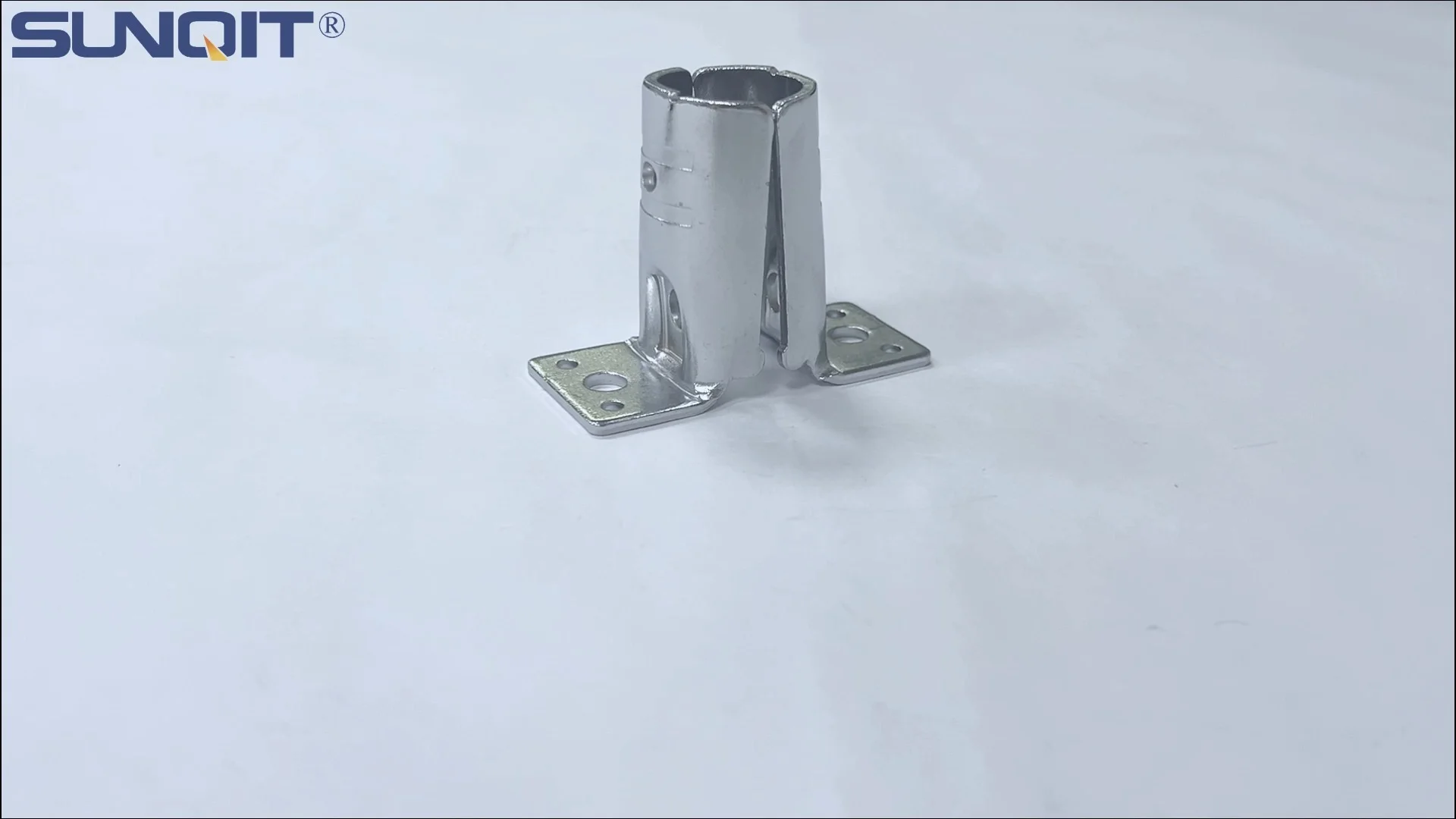
In today's fast-paced manufacturing world, where production lines shift from one product to another in days (or even hours), the ability to reconfigure workstations quickly isn't just a luxury—it's a necessity. Static, bolted-down setups that take weeks to modify are relics of a bygone era. Enter vertical lean pipe joints: small, unassuming components that are quietly revolutionizing how factories, warehouses, and workshops adapt to change. This article dives into how these joints work, why they matter, and how they're helping businesses stay agile in an unpredictable market.
The Hidden Cost of Static Workstations
Let's start with a familiar scenario: A small electronics manufacturer lands a rush order for a new gadget. Their current assembly line is set up for smartphones, but this new product is larger, with different components. To meet the deadline, they need to reconfigure two workstations to accommodate longer assembly steps and bulkier parts. With their traditional setup—steel frames welded together, fixed-height tables, and permanently mounted tools—this means calling in a contractor to cut and reweld metal, which takes three days. By the time the workstations are ready, they've lost valuable production time, and the contractor's bill eats into their profit margin.
This isn't an isolated incident. Across industries, static workstations create bottlenecks. According to a 2024 survey by the Manufacturing Agility Institute, 68% of small-to-medium manufacturers cite "downtime during reconfiguration" as a top operational challenge. Traditional setups are designed for stability, not change. They're built to last decades, but in a market where product lifecycles can be shorter than a year, that "strength" becomes a weakness. The cost of this rigidity adds up: lost opportunities, higher labor costs, and the inability to test new production layouts without significant risk.
Real-World Impact: A automotive parts supplier in Michigan recently shared that reconfiguring a single traditional workstation used to cost them $1,200 on average (labor + materials) and take 48 hours of downtime. After switching to lean pipe-based setups with vertical joints, the same reconfiguration now costs $150 and takes 90 minutes. Over a year, that's a savings of nearly $10,000 per workstation.
What Are Vertical Lean Pipe Joints, Anyway?
At first glance, vertical lean pipe joints might look like nothing more than metal connectors. But their design is deceptively clever. These joints are the linchpins of flexible manufacturing systems, designed to connect lean pipes (hollow cylindrical tubes, often made of steel, aluminum, or plastic-coated metal) in ways that are both strong and easy to adjust.
Most vertical lean pipe joints feature a central body with multiple ports—holes where lean pipes slide in. What makes them "vertical" is their focus on supporting vertical loads (like the weight of a workbench or shelving) while still allowing for horizontal adjustments. They use a simple locking mechanism: a bolt or thumbscrew that, when tightened, presses against the pipe, creating friction to hold it in place. Loosen the bolt, and the pipe can be rotated, extended, or removed in seconds. No welding, no drilling, no specialized tools—just a wrench (or sometimes even just your hands) and a few minutes of time.
Materials matter here. Many vertical lean pipe joints are made from zinc-plated steel for durability, while others use aluminum for lighter weight—critical if you need to move the workstation later (more on that later with caster wheels). Some even come with plastic coatings to prevent scratches on delicate parts or reduce noise during assembly. The key is that they're built to withstand daily use: a well-made vertical joint can support hundreds of pounds without bending, yet still release smoothly when you need to make a change.

Building Blocks: How Vertical Lean Pipe Joints Work with Other Components
Vertical lean pipe joints don't work alone. They're part of a ecosystem of components—lean pipes, workbenches, caster wheels, and more—that together create a modular system. Let's break down how these pieces fit together, using a common setup: a lean pipe workbench.
1. The Frame: Lean Pipes + Vertical Joints
A typical lean pipe workbench starts with a frame of lean pipes (often 28mm or 30mm in diameter) connected by vertical lean pipe joints. For a basic table, you'll need four vertical pipes (the legs) and horizontal pipes along the top and bottom (to stabilize the frame). At each corner, a vertical joint connects the vertical leg pipe to the horizontal rails. Want the table taller? Use longer leg pipes. Need it wider? Add an extra horizontal section with a few more joints. It's like building with giant, industrial-grade Erector sets.
2. The Work Surface: Adding Stability
Once the frame is up, the work surface—a sheet of plywood, metal, or even an anti-static ESD panel (common in electronics manufacturing)—is attached using L-shaped brackets or additional vertical joints. These brackets connect to the horizontal frame pipes, so if you later decide to swap out the surface (say, for a thicker one to support heavier tools), you just loosen the joints, remove the old surface, and bolt on the new one.
3. Mobility with Caster Wheels
What if you need to move the workstation entirely? That's where caster wheels come in. Many lean pipe workbenches add a base frame (using, you guessed it, more vertical joints) with caster wheels bolted to the bottom. Lockable caster wheels keep the bench steady during use, but unlock them, and you can roll the entire setup across the factory floor. This is a game-changer for small spaces: a single workbench can serve as an assembly station in the morning and a packaging station in the afternoon, just by rolling it to a new spot.
4. Integrating Roller Tracks for Material Flow
For workstations that handle moving parts—like assembly lines where components need to glide from one station to the next—roller tracks are often added. These tracks (metal or plastic rails with small wheels) can be mounted to the workbench frame using vertical lean pipe joints. Need the track at a steeper angle to speed up part flow? Loosen the joints, tilt the track, retighten. Switching from small parts to larger ones? Swap out the roller track for a wider model in minutes, no drilling required.
5. Aluminum Profiles: Lightweight Strength
While lean pipes are the classic choice, many modern setups use aluminum profiles instead. These are extruded aluminum beams with T-slots (grooves) along their length, which let you attach brackets, shelves, or tools without drilling. Vertical lean pipe joints work seamlessly with aluminum profiles, too—some joints are even designed to snap into T-slots, adding another layer of flexibility. Aluminum profiles are lighter than steel, making the entire workstation easier to move (hello, caster wheels!), while still strong enough to support heavy loads.

Why Vertical Lean Pipe Joints Make Reconfiguration So Fast
So, what exactly makes vertical lean pipe joints faster than traditional methods? Let's break it down into three key advantages:
No Specialized Labor Required
Welding a steel frame requires a certified welder. Cutting aluminum profiles with precision needs a skilled machinist. But vertical lean pipe joints? A new hire can learn to use them in 15 minutes. The locking mechanisms are intuitive—tighten the bolt to secure, loosen to adjust—and the parts are standardized, so there's no guesswork. This means your existing team can handle reconfigurations, freeing up your maintenance crew for more critical tasks.
Tool-Free (or Minimal-Tool) Assembly
Most vertical joints use standard hex bolts that can be tightened with a basic wrench or even a Phillips-head screwdriver. Some newer models even have quick-release levers—pull, adjust, and snap back into place. Compare that to traditional setups, which might require angle grinders, drills, or welding torches. With vertical joints, the only "tools" you need are likely already in your toolbox (and if not, a $20 wrench set will do).
Modular Design = Less Waste
Traditional reconfigurations often mean cutting or modifying parts, which makes them one-and-done. A steel pipe cut to 4 feet can't be turned into a 6-foot pipe later. Vertical lean pipe joints, though, use interchangeable parts. That 4-foot lean pipe can be swapped out for a 6-foot one, and the joints can be reused on another project. This modularity reduces waste and keeps costs low—you're not throwing away perfectly good materials every time you need to change things up.

Traditional vs. Vertical Lean Pipe Joint Workstations: A Comparison
| Aspect | Traditional Welded/Static Workstation | Vertical Lean Pipe Joint-Based Workstation |
|---|---|---|
| Reconfiguration Time | 3–7 days (requires contractor) | 30 minutes–2 hours (in-house team) |
| Cost per Reconfiguration | $800–$2,500 (labor + new materials) | $50–$200 (mostly labor, reusable parts) |
| Flexibility | Low (fixed dimensions, hard to repurpose) | High (adjust height, width, add/remove parts) |
| Skill Required | Certified welder/machinist | Basic hand tools + 15 minutes of training |
| Downtime During Changes | 48–72 hours (production stops) | 0–30 minutes (can reconfigure during breaks) |
Real-World Success: How a Bakery Scaled with Vertical Lean Pipe Joints
Let's take a step outside the factory and into a different industry to see these joints in action: a family-owned bakery in Portland, Oregon. Specializing in artisanal bread and pastries, they'd been using wooden worktables for decades. When demand spiked during the holidays, they needed to add two more prep stations to keep up with orders for cookies and pies. Their old wooden tables were heavy, fixed-height, and couldn't be expanded.
They decided to try a lean pipe setup with vertical joints. Here's how it played out:
Week 1: Setup
They ordered aluminum lean pipes, vertical joints, and a few caster wheels. A team of three bakers (none with manufacturing experience) assembled two workstations in an afternoon. Each table had adjustable legs (thanks to vertical joints that let them set the height to match their existing wooden tables), a stainless steel work surface (easy to clean), and a lower shelf for storing mixing bowls (added with a few extra joints).
Week 3: Reconfiguration #1
The cookie dough required more counter space, so they wanted to extend one workstation by 2 feet. They unboxed two extra lean pipes and four vertical joints, loosened the bolts on the existing frame, added the new pipes, and retightened. Total time: 25 minutes. No tools beyond a wrench, and the bakers were back to rolling dough immediately.
Week 6: Reconfiguration #2
After the holidays, demand for pies dropped, but bread orders surged. Bread dough needs to rise, so they needed to add a rack above one workstation for proofing baskets. Using the same vertical joints, they attached four vertical pipes to the table frame, connected horizontal pipes across the top, and added wire shelves. The caster wheels let them roll the table closer to the oven, saving steps. Total time: 40 minutes.
Today, those two workstations have been reconfigured six times in a year, adapting to seasonal demand, new recipes, and even a staff member with a height preference (they raised one table by 4 inches in 5 minutes). The bakery owner estimates they've saved over $5,000 in contractor fees and lost productivity, and they're now planning to replace all their wooden tables with lean pipe setups.
Choosing the Right Vertical Lean Pipe Joints for Your Needs
Not all vertical lean pipe joints are created equal. To get the most out of your setup, consider these factors:
Load Capacity
How much weight will the joint need to support? A workbench holding light electronics might be fine with a basic steel joint, but a workstation supporting heavy machinery (like a 500-pound drill press) needs a heavy-duty joint with reinforced locking mechanisms.
Material Compatibility
Are you using steel lean pipes, aluminum profiles, or plastic-coated tubes? Some joints are designed for specific pipe diameters (e.g., 28mm vs. 30mm), so double-check the specs. Aluminum joints are lighter but may not be as strong as steel, so balance weight and durability.
Environmental Factors
If your workspace is humid (like a bakery) or has chemicals (like a auto shop), look for corrosion-resistant joints (zinc-plated or stainless steel). For cleanrooms (like pharmaceutical labs), plastic-coated joints reduce dust buildup.
Ease of Adjustment
Do you need to reconfigure daily, weekly, or monthly? If it's daily, quick-release levers are worth the investment. If it's monthly, standard bolt-style joints will work fine and are often cheaper.
The Future of Workstations: Smart, Connected, and Still Flexible
As manufacturing trends like Industry 4.0 and "lights-out" factories gain steam, you might wonder if vertical lean pipe joints will become obsolete. Far from it—in fact, they're evolving to work with new technologies. Some suppliers now offer "smart joints" with built-in sensors that track how often a workstation is reconfigured, helping managers identify bottlenecks. Others are integrating magnets for quick attachment of IoT devices (like barcode scanners or digital displays).
Even as factories get more automated, the need for human-centric workstations remains. Workers still need places to assemble, inspect, and package products, and those workstations need to adapt as tasks change. Vertical lean pipe joints provide the flexibility to add (or remove) automation tools—like a robotic arm or a conveyor belt—without rebuilding the entire setup.
Final Thoughts: Agility Starts with the Right Tools
In a world where change is the only constant, the ability to reconfigure workstations quickly is a competitive advantage. Vertical lean pipe joints might not be the flashiest technology in your toolkit, but they're one of the most impactful. By turning rigid setups into modular, adaptable systems, they let businesses of all sizes—from small bakeries to large auto plants—respond to opportunities faster, reduce waste, and keep their teams productive.
So, the next time you walk through your workspace, take a look at your workstations. Are they holding you back, or are they ready to change when you need them to? With vertical lean pipe joints, the answer can be the latter—without breaking the bank or disrupting your workflow. After all, in manufacturing, as in life, it's not about being perfect; it's about being ready to adapt.