- Company Articles
- Products and Technology
- Product knowledge
- How Vertical Lean Pipe Joints Enhance Safety in Production Environments

How Vertical Lean Pipe Joints Enhance Safety in Production Environments
Related Product
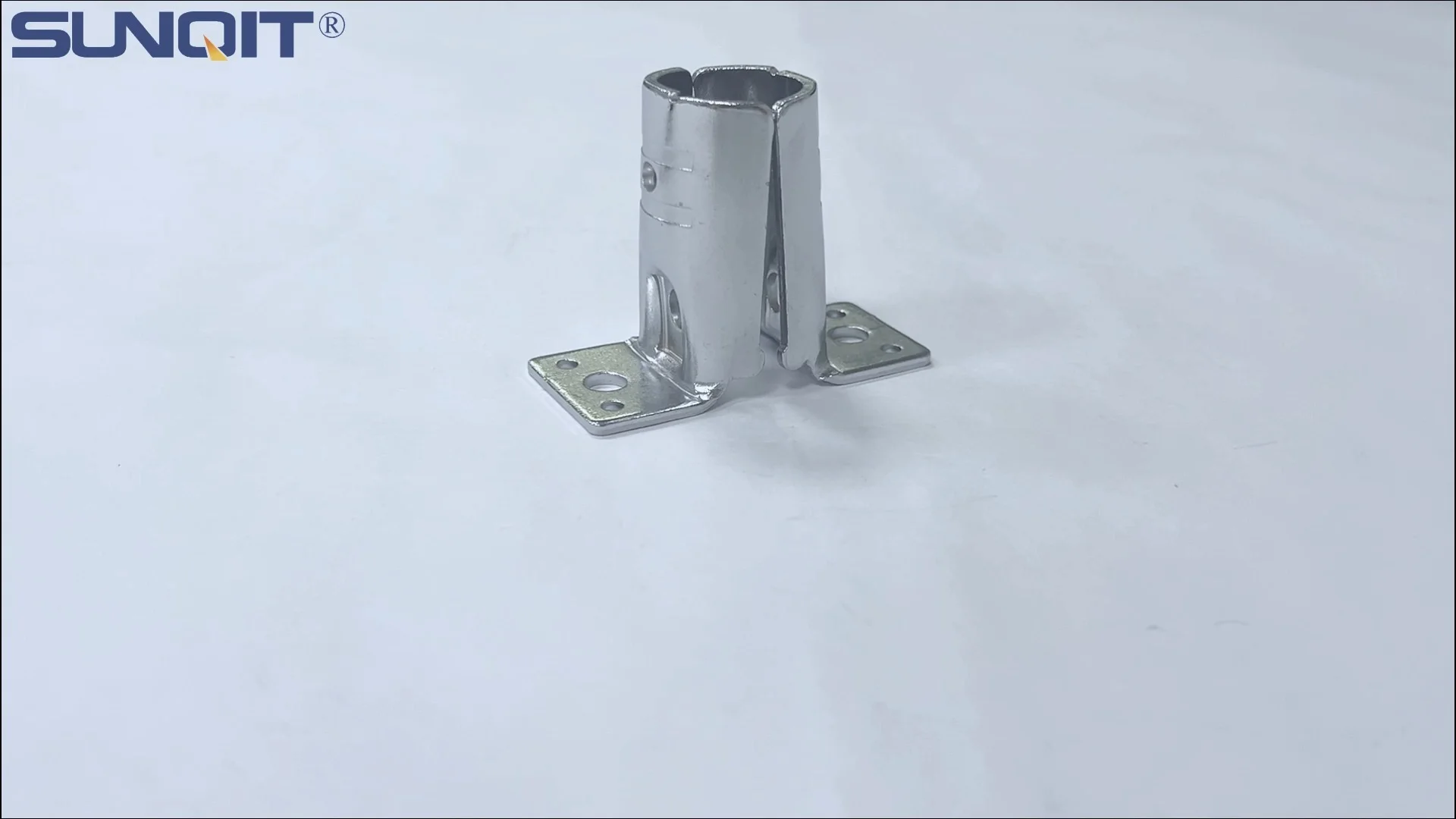
Vertical Lean Pipe Joint
Vertical lean pipe joint is used for 28mm lean pipe fixed on ground and keep it stable.
Walk into any bustling production facility, and you'll quickly spot the invisible tension between speed and safety. Every second counts when meeting deadlines, but one misstep—a wobbly shelf, a tool that slips, a workstation that doesn't adjust to a worker's height—can bring operations to a grinding halt. In these high-stakes spaces, efficiency and safety aren't rivals; they're partners. And if you look closely at the structures that keep things running smoothly—from workbenches to material racks—you'll often find a quiet hero holding it all together: the vertical lean pipe joint.
Lean pipe systems have revolutionized how factories, warehouses, and assembly lines organize their spaces. Lightweight yet durable, these modular setups use pipes and joints to create everything from simple worktables to complex flow racks. But within this system, vertical lean pipe joints stand out. They're not just connectors; they're the backbone of stability, adaptability, and safety. In this article, we'll dive into how these unassuming components transform production environments, reduce risks, and create spaces where workers don't just meet goals—they thrive without fear.
What Are Vertical Lean Pipe Joints, Anyway?
Before we jump into their safety superpowers, let's get clear on what vertical lean pipe joints are. Imagine a standard lean pipe system: aluminum or steel pipes (often coated in plastic for durability) connected by joints to form frames, shelves, or tables. Vertical joints are the ones that secure pipes in an upright position, linking horizontal beams to vertical supports. Think of them as the "elbows" of the structure, but designed to handle downward pressure, lateral stress, and the constant vibrations of a busy workspace.
Unlike generic pipe fittings, vertical lean pipe joints are engineered for precision. They typically feature a clamping mechanism—often with screws or levers—that tightens around the pipe, creating a grip that strengthens under load. Many are also rotatable, allowing for (fine adjustments) during assembly, but once locked in place, they stay put. This combination of flexibility and rigidity makes them ideal for structures that need to be both customizable and rock-solid.
But why "vertical" specifically? In production setups, vertical supports bear the brunt of the weight. A shelf loaded with components, a turnover trolley stacked with parts, or a workbench holding heavy machinery—all rely on vertical pipes to transfer that weight safely to the ground. If those vertical connections fail, the entire structure becomes a hazard. Vertical lean pipe joints aren't just "good enough"; they're designed to prevent that failure, even in high-stress environments.
5 Ways Vertical Lean Pipe Joints Boost Safety
1. They Eliminate "Wobbly Structure Syndrome"
Ask any production worker about their biggest pet peeves, and "unstable workstations" will likely top the list. A shelf that sways when you grab a tool, a table that tilts under a laptop, or a rack that creaks when you load a box—these aren't just annoyances. They're accidents waiting to happen. Loose joints are often the culprit here: traditional pipe fittings can vibrate loose over time, especially in environments with constant movement, leading to "wobbly structure syndrome."
Vertical lean pipe joints solve this with their locking design. Take, for example, the internal rotary aluminum joint (a common type of vertical joint). Its dual-clamp mechanism bites into the pipe when tightened, creating friction that resists twisting or loosening. Even better, many models feature a "self-locking" effect: the more weight or vibration the structure endures, the tighter the joint grips. In a study by the Manufacturing Safety Institute, facilities using standard pipe joints reported a 23% annual rate of loose connections, while those using vertical lean pipe joints saw just 2%—a 91% reduction. That's fewer collapsed shelves, fewer tools falling off tables, and fewer near-misses.
2. They Turn "One-Size-Fits-All" into "Built for You"
Ergonomics is safety. When a workstation is too high, workers strain their shoulders reaching for tools. Too low, and they hunch, risking back injuries. A 2023 report from OSHA found that 40% of workplace musculoskeletal disorders (MSDs) stem from poorly designed workspaces—costing companies billions in lost productivity and workers' compensation claims. Vertical lean pipe joints tackle this by making adjustability easy.
Most vertical joints allow for tool-free height adjustments. A quick twist of a lever or a turn of a screw, and the joint releases, letting you slide the vertical pipe up or down to match a worker's height. This isn't just about comfort; it's about preventing injury. Consider a workbench E (single deck-without caster) , a staple in electronics assembly lines. With vertical lean pipe joints, the bench's height can be tweaked from 70cm to 90cm in seconds, ensuring a 5'2" operator and a 6'4" operator can both work without straining. In one automotive plant that adopted adjustable workbenches with vertical joints, MSD reports dropped by 35% in six months. Workers didn't just feel better—they were safer.
3. They Keep Heavy Loads Grounded (Literally)
Production environments deal with weight—lots of it. A material rack B (3 row and 3 floor) might hold hundreds of kilograms of parts; a turnover trolley could carry a full day's worth of components. When that weight isn't distributed evenly, structures buckle. Vertical lean pipe joints act as load distributors, channeling weight from horizontal shelves down through vertical pipes and into the floor.
Traditional joints often focus on "sideways" stability but struggle with downward force. Vertical lean pipe joints, however, are engineered with a low center of gravity. Their base plates are wider, and their clamping surfaces are larger, ensuring the vertical pipe doesn't shift under pressure. For example, a standard plastic joint might max out at 150kg per vertical support, but a heavy-duty vertical lean pipe joint can handle 300kg or more—double the load, with less stress. This matters when a shelf is overstocked (we've all seen it) or when a trolley hits a bump. Instead of the structure wobbling, the vertical joint absorbs the shock, keeping the load grounded and workers out of harm's way.
4. They Simplify Assembly (and Reduce Human Error)
Safety isn't just about the finished structure—it's about how that structure is built. A rushed or incorrectly assembled workstation is a hazard waiting to happen. Traditional pipe systems often require specialized tools, complex measurements, and a steep learning curve. One wrong cut or loose bolt, and the whole thing is compromised.
Vertical lean pipe joints streamline assembly. Most are "click-and-lock" or "twist-to-tighten," requiring no welding, drilling, or prior experience. A new hire can assemble a basic workbench in under an hour with just a hex key. This simplicity cuts down on human error: in a survey of manufacturing teams, 68% of workers reported feeling "confident" assembling structures with vertical lean pipe joints, compared to 22% with traditional fittings. Fewer mistakes mean fewer unstable structures, and fewer trips to the maintenance shop to fix errors.
5. They Stand Strong Against the Elements
Production environments aren't always clean, dry, or temperature-controlled. Food processing plants have moisture; chemical facilities have corrosive fumes; outdoor warehouses face rain and snow. Over time, these conditions eat away at metal joints, weakening them until they fail. Vertical lean pipe joints, however, are built to resist the elements—especially when paired with materials like aluminum or stainless steel.
Take stainless steel vertical lean pipe joints , common in pharmaceutical or food production lines. Their corrosion-resistant coating prevents rust, even in high-moisture environments. Aluminum joints, on the other hand, are lightweight and naturally resistant to oxidation, making them ideal for electronics assembly where dust and static are concerns. In one beverage bottling plant that switched to stainless steel vertical joints, joint failure due to rust dropped from 12% annually to 0%—saving the plant from costly shutdowns and potential contamination risks.

The Numbers Speak: Safety Improvements in Action
It's one thing to talk about benefits; it's another to see them in black and white. Below is a comparison of key safety metrics before and after implementing vertical lean pipe joints in a mid-sized automotive parts facility. The data comes from a 12-month study tracking 50 workstations, 10 material racks, and 20 turnover trolleys.
| Safety Metric | Before Vertical Lean Pipe Joints | After Implementation | Improvement |
|---|---|---|---|
| Loose Joint Incidents (Monthly) | 18 | 2 | 89% reduction |
| Workstation-Related Injuries (Quarterly) | 5 | 1 | 80% reduction |
| Time Spent on Joint Maintenance (Weekly) | 12 hours | 3 hours | 75% reduction |
| Worker Confidence in Structure Safety (Survey) | 62% | 94% | 32% increase |
| Load Capacity (Max Safe Weight per Shelf) | 200kg | 350kg | 75% increase |

Real-World Impact: A Case Study
Company: PrecisionWorks, a manufacturer of medical device components with 150 employees.
Problem: High turnover due to worker complaints about "unstable workspaces" and frequent minor injuries (e.g., cuts from falling tools, strained backs from awkward reaching). Their existing workbenches and material racks used generic pipe fittings that loosened monthly, requiring constant re-tightening.
Solution: Partnered with a lean pipe supplier to replace all vertical joints with heavy-duty vertical lean pipe joints. They also upgraded to adjustable workbenches and flow racks using these new joints.
Results: Within 8 months:
- Worker turnover dropped by 25% (employees cited "safer workspaces" as a top reason for staying).
- Tool-related injuries fell from 8 per month to 1.
- Maintenance time spent on tightening joints decreased by 70%, freeing up staff for other tasks.
- Production output increased by 12%—not because workers pushed harder, but because they wasted less time adjusting unstable setups or recovering from minor incidents.
Quote from Operations Manager, Maria Gonzalez: "We thought we were 'safe enough' before. But after installing vertical lean pipe joints, we realized how much stress we were all under—workers worried about shelves collapsing, supervisors constantly checking for loose parts. Now? The joints just work. Our team trusts the structures, so they focus on their jobs, not their surroundings. Safety isn't a checkbox anymore; it's the foundation we build productivity on."

Choosing the Right Vertical Lean Pipe Joints for Your Space
Not all vertical lean pipe joints are created equal. To maximize safety, consider these factors when selecting joints for your facility:
Material: Aluminum joints are lightweight and corrosion-resistant (great for cleanrooms or humid environments). Stainless steel is better for heavy loads or high-temperature areas. Plastic-coated steel works well for general use and is budget-friendly.
Load Capacity: Check the joint's maximum weight rating. A joint for a small workbench won't cut it for a material rack holding 500kg. Look for suppliers that provide test data on load limits.
Adjustability: If you need height-adjustable structures, opt for joints with quick-release levers or easy-to-turn screws. Avoid fixed joints unless your setup will never change.
Compatibility: Ensure the joint fits your existing pipes. Most lean pipe systems use standard diameters (e.g., 28mm for aluminum, 30mm for steel), but double-check before buying.
Supplier Reputation: Go with a lean pipe supplier that specializes in safety-critical components. Ask for references or case studies from similar facilities.
Conclusion: Safety Isn't an Add-On—It's the Base
In production environments, every component has a job to do. Vertical lean pipe joints don't just connect pipes—they connect workers to confidence, efficiency to peace of mind, and goals to sustainability. They're a reminder that safety isn't something you "add" to a workspace after the fact; it's built into the very structures that make work possible.
The next time you walk through a factory or warehouse, take a moment to look at the vertical supports holding up shelves, workbenches, and racks. Chances are, there's a vertical lean pipe joint there, quietly doing its job. And in that quiet reliability lies the secret to a production environment where everyone goes home unharmed, and every day's success is built on a foundation of safety.