- Company Articles
- Products and Technology
- Solution
- How Vertical Lean Pipe Joints Improve Ergonomics in Assembly Workstations

How Vertical Lean Pipe Joints Improve Ergonomics in Assembly Workstations
Related Product
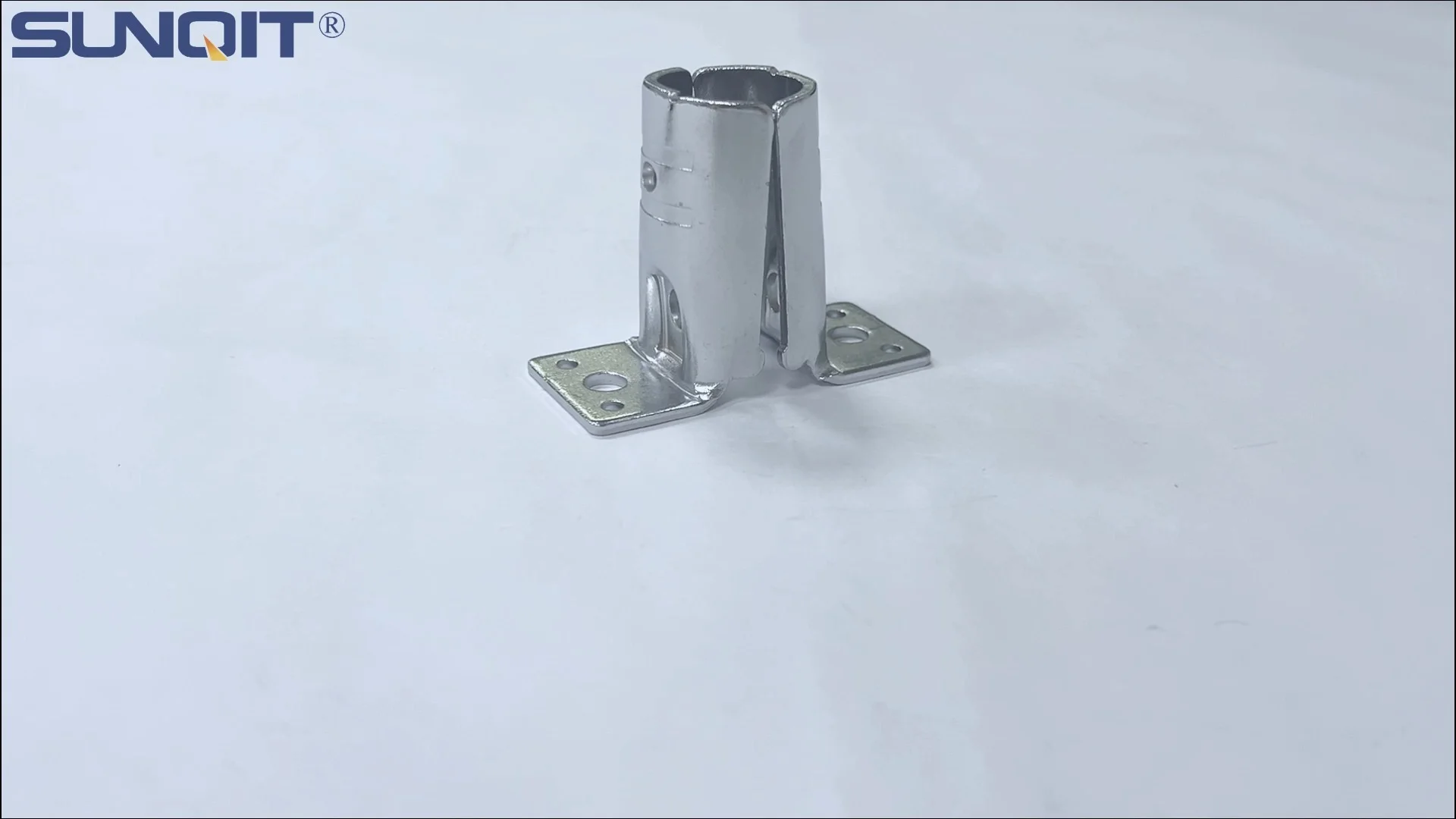
Vertical Lean Pipe Joint
Vertical lean pipe joint is used for 28mm lean pipe fixed on ground and keep it stable.
Walk into any busy assembly plant, and you'll notice a common thread: workers hunched over workbenches, reaching awkwardly for tools, or straining to lift heavy components. These small, repeated movements might seem trivial at first, but over time, they add up—leading to fatigue, discomfort, and even chronic injuries. For manufacturers, this isn't just a human issue; it's a productivity problem. Discomfort leads to slower work, more mistakes, and higher absenteeism. But what if there was a simple, adaptable solution to redesign workstations around the people who use them? Enter vertical lean pipe joints—a yet powerful component that's quietly revolutionizing how assembly lines prioritize ergonomics.
The Hidden Cost of Poor Ergonomics in Assembly Lines
Ergonomics isn't just about "comfort"—it's about designing work environments that fit the human body's natural movements. In assembly work, where tasks are repetitive and precision is key, poor ergonomics manifests in predictable ways:
- Awkward Postures: Bending at the waist to reach materials on low shelves, or stretching arms overhead to grab tools from high racks, strains the spine and shoulders.
- Static Loading: Standing in one spot for hours, or holding the same posture (like gripping a screwdriver), leads to muscle fatigue and reduced blood flow.
- Repetitive Motions: Twisting, lifting, or reaching multiple times per minute—common in tasks like part assembly—wears down joints and increases the risk of conditions like carpal tunnel syndrome.
According to the Bureau of Labor Statistics, musculoskeletal disorders (MSDs) account for nearly 30% of workplace injuries, with manufacturing workers at the highest risk. The cost? Billions in medical expenses, lost productivity, and employee turnover. For forward-thinking plants, the solution isn't just better chairs or anti-fatigue mats—it's reimagining the workstation itself.
Lean Pipe Systems: Built for Adaptability
Lean pipe systems—often called "flexible pipe systems"—have been a staple in lean manufacturing for decades. Made from lightweight, durable materials like steel or aluminum, these systems use pipes, joints, and accessories to build custom workbenches, material racks, trolleys, and more. What makes them unique is their modularity: unlike fixed, one-size-fits-all furniture, lean pipe setups can be easily reconfigured, extended, or modified as production needs change. This flexibility is the first step toward ergonomic design—because no two workers are the same, and no two tasks stay static forever.
At the heart of these systems are the joints—the connectors that hold pipes together. While most joints handle horizontal or angled connections, vertical lean pipe joints stand out for their ability to adjust height and vertical alignment. Think of them as the "height controllers" of the lean pipe world, allowing workstations to rise, lower, or tilt to match the people using them.

Vertical Lean Pipe Joints: The Ergonomic Game-Changer
So, what exactly is a vertical lean pipe joint? In simple terms, it's a specialized connector designed to join pipes in vertical orientations while allowing for easy height adjustment. Most are made from chrome-plated steel (like the vertical lean pipe joint chrome variant) for strength and corrosion resistance, with internal mechanisms that let pipes slide up or down and lock into place. Some models even swivel or rotate, adding another layer of adaptability.
Let's break down how these joints transform ergonomics:
1. Tailored Height for Every Worker
The average assembly line has workers of varying heights—from 5'2" to 6'4" and beyond. A fixed-height workbench forces shorter workers to stand on tiptoes or taller ones to hunch, both of which strain the back and neck. Vertical lean pipe joints solve this by letting teams adjust the work surface height in minutes. For example, a lean pipe workbench built with vertical joints can be raised to elbow level for a 6-foot worker and lowered for someone shorter, ensuring neutral posture (shoulders relaxed, elbows at 90 degrees) for everyone. Neutral posture isn't just more comfortable—it's proven to reduce MSD risk by up to 50%, according to OSHA studies.
2. Adjustable Shelving and Tool Placement
It's not just the workbench surface that matters—tools and materials need to be within easy reach, too. Vertical joints let workers add shelves, tool hooks, or bins at optimal heights: frequently used tools at shoulder level (to avoid bending), less common items slightly lower, and heavy materials at waist height (to minimize lifting strain). For example, a technician assembling small electronics might position a parts bin 18 inches above the workbench, while a worker handling larger components could lower it to 12 inches. This "zone-based" organization reduces unnecessary movement and keeps the most critical items within the "golden zone"—the area between mid-thigh and eye level where reaching requires minimal effort.
3. Dynamic Adaptability for Changing Tasks
Assembly lines rarely stick to one task forever. A workstation might assemble circuit boards in the morning and test components in the afternoon, each requiring different tool setups. Vertical lean pipe joints make reconfiguration a breeze. Need to add a second shelf for test equipment? Loosen the joint, slide a pipe up, and lock it. Switching to a taller worker for the next shift? Adjust the entire workbench height in under a minute. This flexibility ensures the workstation evolves with the task, not the other way around.

From Theory to Practice: A Day in the Life of an Ergonomic Workstation
Let's put this into context with a real-world example. Imagine a small electronics manufacturer that recently upgraded to lean pipe workstations with vertical joints. Here's how it impacts their team:
- Maria (5'4"): Assembles smartphone screens. She adjusts her lean pipe workbench to 34 inches high, with a parts bin mounted at 48 inches (shoulder level) using vertical joints. Her tools hang from a bar just below the bin, so she never has to stretch. "I used to go home with a sore neck every night," she says. "Now? I barely notice the time passing."
- James (6'3"): Handles larger battery packs on the same line. He raises his workbench to 40 inches and lowers his parts bin to 42 inches, keeping materials at waist level. "No more hunching over," he notes. "My back pain is gone, and I'm actually faster because I'm not stopping to stretch."
- Team Lead Raj: When the line switches to a new product—a bulkier tablet—the team reconfigures the workstations in 20 minutes. They add extra vertical joints to support a wider shelf, lower the roller track (used to slide products between stations) by 6 inches, and lock everything in place. "Before, we'd have to order a whole new workbench," Raj explains. "Now, we just tweak the joints and keep going."

Traditional vs. Vertical Lean Pipe Joint Workstations: A Side-by-Side Look
| Feature | Traditional Fixed Workstation | Vertical Lean Pipe Joint Workstation |
|---|---|---|
| Height Adjustability | Fixed (one size fits all) | Adjustable in 1-inch increments (30–48 inches typical) |
| Shelf/Tool Positioning | Pre-drilled holes; hard to reposition | Unlimited positions via vertical joints; reconfigurable in minutes |
| Worker Comfort | High risk of awkward postures; fatigue common | Neutral posture encouraged; reduced strain on back, neck, and shoulders |
| Adaptability to New Tasks | Limited; often requires new furniture | Highly adaptable; joints allow quick reconfiguration for new products |
| Cost Over Time | Low upfront, but high replacement costs as needs change | Moderate upfront, but minimal replacement costs (modular components) |
Complementary Components: Making the System Complete
Vertical lean pipe joints don't work alone—they shine when paired with other lean pipe accessories that enhance ergonomics further. Here are a few key players:
Caster Wheels : Mobility Without Strain
Adding caster wheels to a lean pipe workstation turns it into a mobile cart, letting workers move heavy materials or entire setups without lifting. Lockable casters keep the workstation stable during use, while swivel wheels make maneuvering tight spaces easy. For example, a team assembling large appliances can roll their workbench to the material storage area instead of carrying parts across the floor—reducing lifting strain and saving time.
Roller Track : Smooth Material Flow
Roller track (or roller conveyor) uses gravity or gentle pushing to slide parts from one station to the next. When integrated with vertical joints, roller track can be tilted to the perfect angle—steep enough to move parts easily, but not so steep that they slide too fast. This eliminates the need to bend down to pick up dropped parts or reach across gaps, keeping workers in neutral posture.
Aluminum Profile : Lightweight Strength
For workstations that need to be both strong and lightweight, aluminum profile (extruded aluminum rails with T-slots) pairs perfectly with vertical lean pipe joints. Aluminum is easier to adjust than steel, making height changes even quicker, and its smooth surface resists scratches and corrosion. Aluminum profile accessories like brackets and connectors also integrate seamlessly with vertical joints, adding stability to adjustable setups.
Beyond Ergonomics: Productivity, Sustainability, and Morale
The benefits of vertical lean pipe joints extend far beyond happier, healthier workers. Here's how they impact the bottom line:
- Higher Productivity: Comfortable workers are faster workers. A study by the International Journal of Industrial Ergonomics found that ergonomic workstations increase output by 15–20% by reducing fatigue and errors.
- Lower Turnover: Employees stay longer when their employer prioritizes their well-being. Manufacturing plants with ergonomic initiatives report 25% lower turnover rates, according to the Society for Human Resource Management.
- Sustainability: Modular systems mean fewer new materials are needed over time. Unlike fixed furniture that ends up in landfills, lean pipe components can be reused or repurposed for years.
- Agility: In today's fast-paced manufacturing world, adaptability is key. Vertical lean pipe joints let plants pivot quickly to new products, seasonal demands, or process changes—without waiting for custom equipment.
Investing in People, Investing in Success
At the end of the day, assembly lines are only as strong as the people who run them. Vertical lean pipe joints might seem like small components, but they represent a big shift in mindset: designing work around workers, not the other way around. By prioritizing ergonomics through adjustable, adaptable tools, manufacturers aren't just reducing injuries—they're building more efficient, resilient, and human-centered operations.
So, the next time you walk through an assembly plant, take a closer look at the workstations. If you see workers straining, reaching, or hunched over, there's a better way. With vertical lean pipe joints, a lean pipe workbench, and a commitment to putting people first, every workstation can be a place where health, productivity, and innovation thrive.