- Company Articles
- Products and Technology
- Product knowledge
- How Vertical Lean Pipe Joints Reduce Assembly Time in Lean Production

How Vertical Lean Pipe Joints Reduce Assembly Time in Lean Production
Related Product
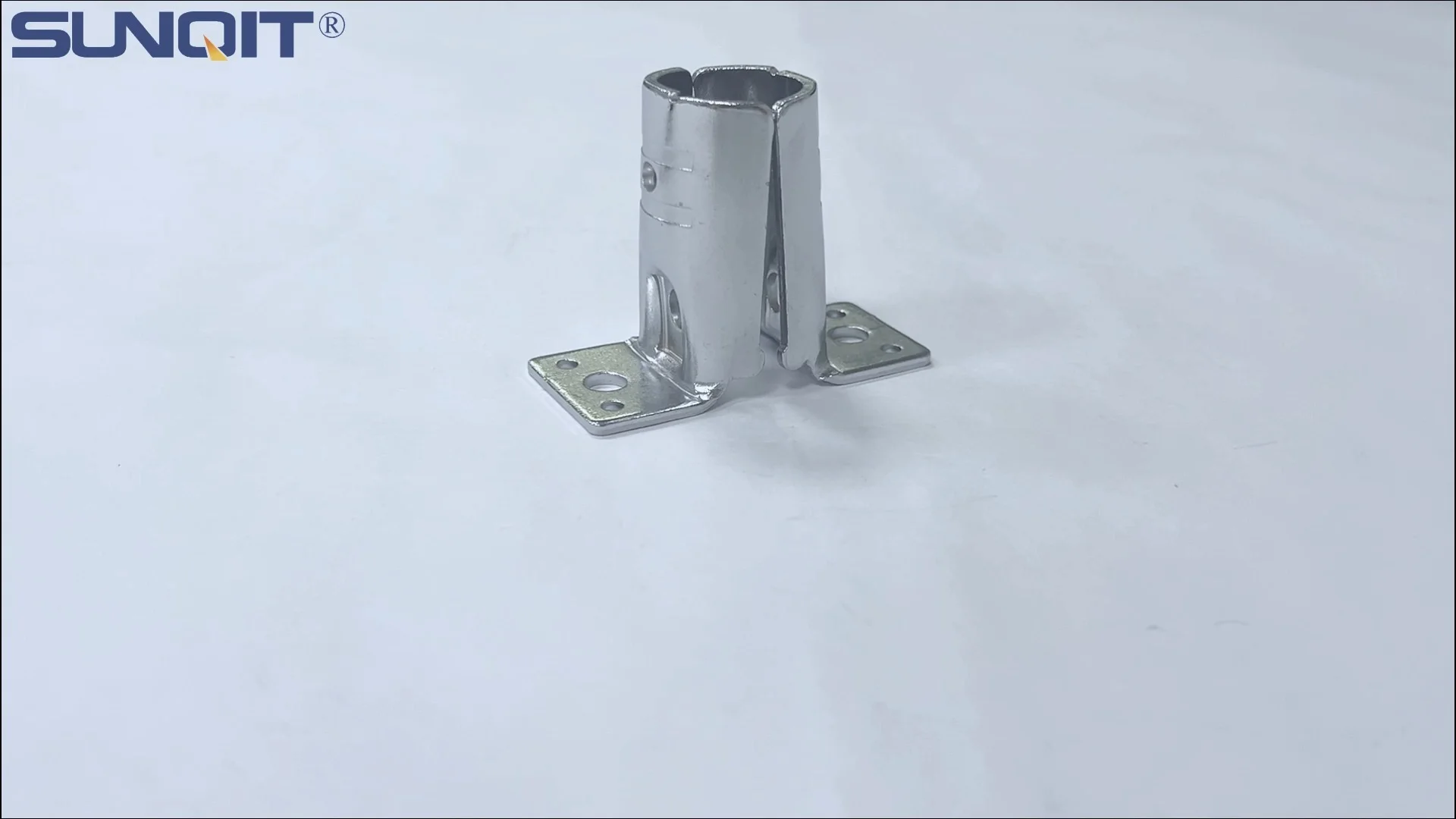
Vertical Lean Pipe Joint
Vertical lean pipe joint is used for 28mm lean pipe fixed on ground and keep it stable.
In the fast-paced world of manufacturing, every second counts. Whether you're running a small workshop or a large-scale production facility, the time it takes to assemble workstations, reconfigure flow racks, or set up new production lines directly impacts your bottom line. Missed deadlines, delayed product launches, and frustrated teams—these are just a few of the consequences of inefficient assembly processes. But what if there was a tool that could cut assembly time in half, or even more? Enter the vertical lean pipe joint —a yet powerful component in the lean pipe ecosystem that's quietly revolutionizing how factories operate.
Lean production isn't just about cutting costs; it's about creating systems that adapt, evolve, and eliminate waste at every turn. And in that mission, the right tools make all the difference. Today, we're diving deep into how vertical lean pipe joints work, why they're a game-changer for assembly efficiency, and how they fit into the broader landscape of lean system solutions. Whether you're a plant manager looking to boost productivity or a curious operator wondering why your new workbench went up so quickly, this article will unpack the "why" and "how" behind these small but mighty connectors.
The Hidden Cost of Traditional Assembly: Why Time Slips Away
Before we talk about solutions, let's face the problem head-on: traditional assembly methods are slow. Really slow. Think about the last time your team had to build a new workstation or reconfigure a material rack. Chances are, it involved a lot of tools—wrenches, drills, maybe even welding equipment. Then there was the waiting: for the maintenance team to free up, for parts to arrive, for joints to tighten or welds to cool. By the time the job was done, hours (or even days) had passed, and your production schedule had taken a hit.
Take welding, for example. While welded structures are strong, they're also permanent. Need to adjust the height of a workbench? You'll have to cut the pipes and reweld them, which means downtime, specialized labor, and the risk of damaging the entire structure. Bolted joints aren't much better. They require precise alignment, multiple tools, and often two people to hold parts in place while tightening. And if you make a mistake? You're back to square one, wasting even more time.
The worst part? This isn't just about lost minutes. Every hour spent assembling or reconfiguring is an hour your team isn't building products, serving customers, or innovating. In an era where customer demands shift overnight and product lifecycles get shorter by the year, this kind of inflexibility can feel like running a race with concrete shoes.
Lean Pipe Systems: Built for Speed, Designed for Adaptability
Enter lean pipe systems—also known as "flexible pipe systems" or "kitchen pipe systems" (a nod to their origins in Japanese factories, where they were first made from repurposed materials). At their core, lean pipe systems are modular: they use lightweight pipes (often steel, aluminum, or plastic-coated steel) and connectors to build everything from workbenches and flow racks to turnover trolleys and material carts. The magic? These systems are designed to be assembled, disassembled, and reconfigured without specialized tools —and vertical lean pipe joints are a key part of that magic.
Unlike traditional rigid structures, lean pipe systems thrive on flexibility. Need a taller workbench for a new operator? Swap out a few pipes. Launching a new product that requires a wider flow rack? Add extra sections in minutes. This adaptability is why lean pipe has become a staple in industries from automotive to electronics, where change is the only constant.
But not all lean pipe joints are created equal. While basic joints handle horizontal connections well, vertical joints—those that connect pipes vertically, like the legs of a workbench or the uprights of a rack—have always been a tricky spot. Early designs were bulky, required tools to tighten, or lacked the stability needed for vertical loads. That is, until the modern vertical lean pipe joint came along.

Vertical Lean Pipe Joints: The Secret to Lightning-Fast Assembly
So, what makes vertical lean pipe joints so special? Let's break it down. A vertical lean pipe joint is a connector designed specifically to join two pipes at a 90-degree angle, typically with one pipe running vertically and the other horizontally. But unlike old-fashioned T-joints or corner brackets, these modern joints are engineered for speed and stability .
Most vertical lean pipe joints feature a "snap-and-tighten" design. Imagine a cylindrical connector with a slot that fits over the end of a horizontal pipe. The vertical pipe slides into a perpendicular hole, and a built-in lever or set screw tightens the joint—no tools required. Some models even have internal springs or cam mechanisms that lock the pipes in place with a simple twist. Within seconds, the joint is secure enough to support heavy loads, but loose enough to adjust if you need to tweak the angle or height.
Let's walk through a real scenario: building a basic lean pipe workbench . With traditional joints, this might involve measuring, marking, drilling holes, and bolting four vertical legs to a horizontal frame—easily a 2-hour job for two people. With vertical lean pipe joints? Here's how it goes:
- Unpack the pipes and joints (no need for a toolbox—just your hands).
- Slide the vertical legs into the base joints (pre-attached to the workbench top).
- Twist the locking levers on each vertical joint until they click (you'll feel the tension build).
- Adjust the height slightly if needed (just loosen the lever, move the pipe, and retighten).
- Add caster wheels to the bottom (snapped into place with another set of quick-connect joints).
Total time? 15 minutes. For one person. That's a 75% reduction in assembly time—and that's just for a simple workbench. Scale that up to a production line with dozens of workstations and flow racks, and the savings become astronomical.

Beyond Speed: The Ripple Effects of Faster Assembly
Saving time is the most obvious benefit of vertical lean pipe joints, but their impact doesn't stop there. Faster assembly creates a chain reaction of positive outcomes that ripple through your entire operation.
1. Empowered Teams: When assembly is tool-free and quick, you don't need to wait for the maintenance team or specialized technicians. Line operators can reconfigure their own workstations to fit their needs—adjusting height for ergonomics, adding shelves for tools, or moving a flow rack closer to the production line. This sense of ownership boosts morale and productivity; employees feel valued when they can shape their workspace to work better, not harder.
2. Reduced Downtime: In manufacturing, downtime is the enemy. Every minute a production line is idle costs money. With vertical lean pipe joints, reconfiguring a line for a new product variant takes hours instead of days. For example, a electronics manufacturer we worked with recently needed to switch from assembling smartphones to tablets—a change that required wider workbenches and taller flow racks. Using vertical joints, their team reconfigured 12 workstations in 4 hours, launching the new product line a full day ahead of schedule.
3. Lower Labor Costs: Fewer hours spent assembling means fewer labor hours paid. Over time, this adds up. A mid-sized factory with 50 workstations might spend 100 hours per year on reconfigurations with traditional joints. With vertical lean pipe joints, that drops to 25 hours—saving 75 hours of labor annually. At an average hourly wage of $25, that's $1,875 saved per year, per factory.
4. Flexibility to Innovate: When setup is fast, you can experiment more. Want to test a new workflow layout? Set it up in the morning, run a trial shift, and adjust by afternoon. No more waiting weeks for engineering approval or maintenance to schedule the work. This agility lets you stay ahead of competitors and respond to customer demands in real time.

How Vertical Joints Stack Up: A Comparison with Traditional Connectors
Still not convinced? Let's put vertical lean pipe joints head-to-head with traditional assembly methods. The table below compares key metrics like assembly time, tool requirements, reconfigurability, and cost for three common approaches: welded joints, bolted joints, and vertical lean pipe joints.
| Metric | Welded Joints | Bolted Joints | Vertical Lean Pipe Joints |
|---|---|---|---|
| Assembly Time (per joint) | 15–20 minutes (including setup/welding/cooling) | 5–8 minutes (drilling, aligning, bolting) | 10–30 seconds (tool-free snap-and-tighten) |
| Tools Required | Welder, grinder, safety gear | Drill, wrench, screwdriver | None (hand-tightened) |
| Reconfigurability | Impossible (permanent welds) | Difficult (requires unbolting, potential damage to threads) | Easy (loosen lever, adjust, retighten) |
| Load Capacity | High (but fixed) | Medium-High (depends on bolt size) | Medium-High (tested for industrial loads) |
| Labor Skill Level | Certified welder required | Basic technical training | None (any team member can assemble) |
| Long-Term Cost | High (welding labor, replacement costs for reconfigurations) | Medium (bolts wear out, labor for adjustments) | Low (reusable, minimal labor, no replacement costs) |
The data speaks for itself. Vertical lean pipe joints outperform traditional methods in nearly every category, especially when it comes to speed and flexibility. But don't just take our word for it—ask any factory that's made the switch. One automotive supplier we partner with reported cutting their line reconfiguration time from 8 hours to 1.5 hours after adopting vertical lean pipe joints. "We used to have to shut down the line for a full shift to set up for a new part," their production manager told us. "Now we do it during lunch break. The operators even joke that they can build a new flow rack faster than they can order pizza."
The Lean Ecosystem: How Vertical Joints Play Well with Others
Vertical lean pipe joints don't work in isolation—they're part of a larger lean system that includes pipes, accessories, and complementary components. To truly maximize assembly efficiency, you need to pair these joints with the right tools and materials. Let's explore a few key partners in this ecosystem:
Aluminum Lean Pipes: While traditional lean pipes are often steel with a plastic coating, aluminum pipes are lighter and corrosion-resistant—perfect for vertical applications where weight matters. When paired with vertical lean pipe joints, aluminum pipes make assembly even faster; you can carry more pipes at once, and the lighter weight reduces fatigue during setup.
Flow Racks: Flow rack systems rely on gravity to move materials from the back to the front, reducing picking time for operators. Vertical lean pipe joints are critical here because they allow you to adjust the angle of the rollers (for faster or slower flow) and the height of the rack (to match operator ergonomics). Need to add a new shelf for smaller parts? Snap in a vertical joint, add a pipe, and you're done—no drilling, no measuring.
Quick-Connect Casters: Many lean pipe workbenches and trolleys use casters for mobility. Modern casters feature the same quick-connect design as vertical joints, so you can snap them onto the bottom of vertical legs in seconds. Locking levers keep the casters in place when the workstation is stationary, and releasing them lets you roll the entire setup to a new location—no heavy lifting required.
Accessory Brackets: From tool hooks to bin holders, accessory brackets attach to vertical pipes using (you guessed it) quick-connect joints. Need a place to hang your power tools? Slide a bracket onto a vertical leg, tighten the lever, and you're ready to go. This modularity means you can customize each workstation to the task at hand, without cluttering the space with unnecessary fixtures.
The beauty of this ecosystem is that it's scalable. Start with a few workbenches, add flow racks as you grow, and reconfigure everything as your needs change. And because all components use the same standardized joints, you never have to worry about compatibility issues. A vertical lean pipe joint from one supplier will work with an aluminum pipe from another, and a caster from a third—giving you the freedom to mix and match based on your budget and requirements.
Choosing the Right Supplier: Why Quality Matters
Not all vertical lean pipe joints are created equal. While the basic design is similar across brands, small differences in materials, engineering, and testing can have a big impact on performance. A cheaply made joint might loosen over time, bend under heavy loads, or fail to lock properly—undoing all the time savings you hoped to gain.
When shopping for vertical lean pipe joints (and lean pipe systems in general), look for a lean pipe supplier that prioritizes:
- Material Quality: Joints should be made from high-grade steel or aluminum, with corrosion-resistant coatings. Avoid plastic joints for heavy-duty applications—they'll wear out quickly.
- Load Testing: Reputable suppliers test their joints to ensure they can handle industrial loads (often 200kg or more per joint). Ask for test reports or certifications if you're unsure.
- Ergonomic Design: Locking levers should be easy to grip and tighten, even with gloves on. Look for rounded edges to prevent cuts and pinch points.
- Consistency: Joints should have tight tolerances, so pipes fit snugly every time. Inconsistent sizing can lead to wobbly structures and frustrating assembly experiences.
- Customer Support: A good supplier will offer guidance on which joints to use for specific applications, provide assembly tutorials, and stand behind their products with warranties.
It's also worth asking about customization options. Some suppliers offer specialized vertical joints for unique applications, like extra-tall workbenches or outdoor use (with weatherproof coatings). While standard joints work for most cases, custom solutions can solve niche problems and further reduce assembly time for complex setups.
The Future of Lean Assembly: What's Next for Vertical Joints
As manufacturing continues to evolve, so too will lean pipe systems. We're already seeing innovations in vertical lean pipe joints, like integrated sensors that alert operators when a joint is loose, or magnetic locking mechanisms for even faster assembly. Some companies are experimenting with 3D-printed joints, which can be customized on-site for one-of-a-kind setups—though mass-produced metal joints still reign supreme for durability.
Another trend is the rise of "smart" lean systems, where vertical joints connect to IoT platforms to track usage, monitor wear and tear, and even suggest reconfigurations based on production data. Imagine a flow rack that alerts you when it's time to adjust the vertical angle of the rollers to speed up material flow, or a workbench that automatically logs how often it's been reconfigured—helping you identify patterns and optimize workflows further.
But even without these high-tech additions, the current generation of vertical lean pipe joints is more than capable of meeting the demands of modern manufacturing. They're a testament to the lean principle that sometimes, the biggest innovations are the simplest ones: making something that works better, faster, and more intuitively than what came before.
Conclusion: Time to Build Smarter, Not Harder
In the end, vertical lean pipe joints are more than just connectors—they're enablers. They enable teams to adapt faster, innovate more, and focus on what really matters: creating value for customers. By slashing assembly time, reducing labor costs, and empowering employees to take control of their workspaces, these small but mighty components are helping factories around the world embrace the true spirit of lean production.
So the next time you walk through your factory floor, take a closer look at those workbenches, flow racks, and trolleys. Chances are, they're held together by vertical lean pipe joints—quietly working behind the scenes to keep your operation running smoothly. And if they're not? Maybe it's time to ask: What could your team accomplish with 75% more time on their hands?
The answer, we think, is pretty exciting.