- Company Articles
- Products and Technology
- Solution
- How Vertical Lean Pipe Joints Support Continuous Improvement in Lean Workshops

How Vertical Lean Pipe Joints Support Continuous Improvement in Lean Workshops
Related Product
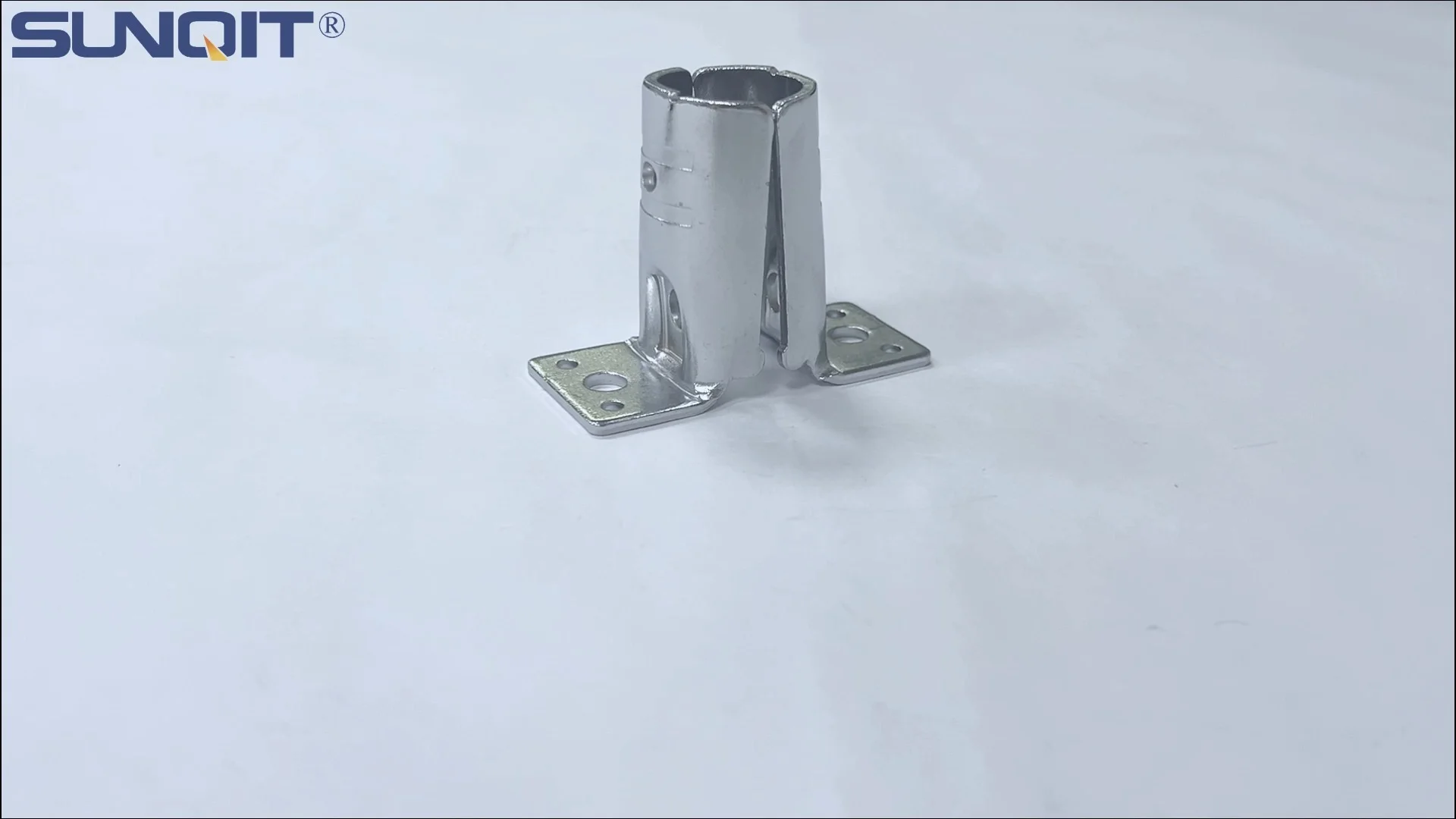
Vertical Lean Pipe Joint
Vertical lean pipe joint is used for 28mm lean pipe fixed on ground and keep it stable.
The Heartbeat of Lean Workshops – Continuous Improvement
Walk into any thriving lean workshop, and you'll feel it immediately: a quiet hum of purpose. It's not just the sound of machines or workers—it's the rhythm of
continuous improvement
. In lean manufacturing, this isn't just a buzzword; it's the lifeblood. It's about tweaking a process to cut waste by 5%, rearranging a workstation to reduce operator fatigue, or redesigning a material flow path to shave seconds off each cycle. Over time, these small changes add up to massive gains in efficiency, quality, and employee engagement.
But here's the thing: continuous improvement doesn't happen in a vacuum. It relies on a workspace that can keep up with the changes. If your production line is bolted to the floor, your workbenches are welded into place, and your material racks can't be adjusted without a wrench and a team of engineers, even the best improvement ideas die on the vine. That's where the unsung heroes of lean infrastructure come in—components so, you might not notice them until you need to adapt. Today, we're shining a light on one such hero: the
vertical lean pipe joint
.
At first glance, a vertical lean pipe joint might seem like little more than a metal connector. But in reality, it's the linchpin of flexible, adaptable workspaces. It's the reason a workshop can reconfigure a
lean pipe workbench
in an hour instead of a week, or adjust a
flow rack
to handle a new product size without ordering custom parts. In short, it's the physical enabler of continuous improvement. Let's dive in.
Understanding Vertical Lean Pipe Joints: The Unsung Heroes of Flexible Workspaces
Let's start with the basics. A vertical lean pipe joint is a specialized connector designed to join lengths of lean pipe (often
PE coated lean pipe
, a durable, lightweight material coated in polyethylene for protection and grip) at vertical angles. But "vertical" here doesn't mean rigidly fixed—far from it. These joints are engineered for movement: they rotate, pivot, and lock into place, allowing pipes to be positioned at precise angles or adjusted on the fly.
Think of it like a universal joint for your workshop. Traditional fixed joints (welded or bolted) lock pipes into static positions, turning your infrastructure into a permanent fixture. Vertical lean pipe joints, by contrast, act like a "living hinge." They let you adjust the height of a shelf, the angle of a
roller track
, or the width of a workbench with nothing more than a hex key. Some models even feature internal springs or cam locks that make adjustments tool-free, so operators can tweak their own workspaces without waiting for maintenance.
Materials matter, too. Most vertical lean pipe joints are made from high-strength steel with corrosion-resistant coatings (like chrome or zinc), ensuring they can handle the daily wear of a busy workshop. Pair them with PE coated lean pipe—known for its strength-to-weight ratio and resistance to dents—and you get a system that's both sturdy and adaptable. This combination of durability and flexibility is what sets vertical lean pipe joints apart from cheaper plastic connectors or one-time-use metal brackets.
But why "vertical" specifically? In lean workshops, vertical space is often underutilized. Traditional setups might stack materials horizontally, wasting overhead space, or fix vertical supports so they can't be adjusted to match changing inventory levels. Vertical lean pipe joints solve this by letting you build upward
and
adjust as needed. Want to add a second shelf to a material rack? Just loosen the joint, slide the pipe up, and lock it. Need to lower a roller track to make loading easier for shorter operators? A quick twist, and it's done. This vertical adaptability is critical for maximizing space and ergonomics—two key drivers of continuous improvement.

Flexibility: The Cornerstone of Continuous Improvement, Enabled by Vertical Lean Pipe Joints
If continuous improvement is the goal, flexibility is the path to get there. In today's manufacturing landscape, product lifecycles are shorter than ever. A workshop might assemble smartphone components in the morning and switch to tablet parts by afternoon. Seasonal demand spikes mean ramping up production for holiday orders, then scaling back in slower months. New regulations might require reconfiguring workstations to add safety barriers or ergonomic supports. In all these scenarios, a rigid workspace becomes a bottleneck.
Vertical lean pipe joints turn that bottleneck into a gateway. Let's take a common scenario: a lean pipe workbench used for electronics assembly. On Monday, the team is building small circuit boards, so the workbench needs a flat surface, a tool rail at waist height, and a bin for small parts. By Wednesday, they're tasked with larger motherboard assemblies, which require more surface area and a higher tool rail to accommodate bulkier equipment. With traditional fixed workbenches, this would mean either using a second bench (wasting space) or calling in maintenance to rebuild the first (wasting time). With vertical lean pipe joints? The operator grabs a hex key, loosens the joints holding the tool rail, adjusts it to the new height, and reconfigures the bin holders—all in 15 minutes. The workbench adapts, the team stays productive, and the improvement (better ergonomics for larger assemblies) is implemented immediately.
Flow racks tell a similar story. These sloped racks use gravity to feed materials to the front, reducing the need for workers to reach or bend. But what if the materials change size? A new component might be taller, requiring the rack's shelves to be spaced farther apart. Or a heavier part might need a steeper slope to slide properly. Vertical lean pipe joints make these adjustments trivial. Loosen the joints securing the side rails, adjust the angle of the roller track, and lock everything back into place. No custom cutting, no welding, no delays. The flow rack now works for the new part, and the team avoids the waste of overreaching or struggling with stuck materials—another small win for continuous improvement.
Even better, this flexibility reduces the fear of trying new things. In workshops with rigid infrastructure, employees might hesitate to suggest changes because "it'll take too long to implement." But when vertical lean pipe joints make reconfiguration easy, teams feel empowered to experiment. Maybe the night shift tries a new workstation layout to cut down on walking time; if it works, the day shift can copy it the next morning. If not, they can revert in minutes. This culture of experimentation is where some of the best continuous improvement ideas are born—and vertical lean pipe joints make it possible.

Supporting Lean Principles: 5S, Kanban, and Visual Management
Lean manufacturing is built on principles like 5S (Sort, Set in Order, Shine, Standardize, Sustain), Kanban (pull-based production), and visual management. These aren't just abstract concepts—they require physical systems to work. Vertical lean pipe joints don't just enable flexibility; they actively support these principles, turning them from theory into daily practice.
Take 5S, for example. "Set in Order" (seiton) is all about arranging tools and materials so they're easy to find and use. A messy workstation with tools scattered across the bench wastes time and increases errors. With vertical lean pipe joints, you can build custom tool holders that mount directly to the workbench frame, keeping everything within arm's reach. Need to rearrange the tools based on frequency of use? Just adjust the joints to move the holders. "Sustain" (shitsuke), the final S, is about maintaining these improvements over time. Since vertical lean pipe joint systems are easy to adjust, teams are more likely to keep their workspaces organized—no one wants to spend hours rebuilding a bench, so they'll take 5 minutes each day to tidy up instead.
Kanban relies on visual signals to trigger production—like a bin of parts that, when empty, tells the upstream team to make more. But if the Kanban bins are stored on fixed shelves that are too high or too low, the visual signal gets missed, leading to stockouts or overproduction. Vertical lean pipe joints let you position Kanban bins at eye level, ensuring operators can see at a glance when supplies are low. You can even color-code the bins using PE coated lean pipe in different hues (some suppliers offer colored coatings), making the visual system even more intuitive. This reduces the risk of miscommunication and keeps the production flow smooth—exactly what Kanban aims for.
Visual management, too, gets a boost from vertical lean pipe joints. In lean workshops, everything should have a place, and that place should be visible. With adjustable racks and workbenches, you can label each position clearly, using signs mounted on vertical pipes. If a process changes and a new tool is added, just adjust the joint to add a new mounting arm for the sign. No more outdated labels or "temporary" solutions that become permanent. The workspace stays visually clear, reducing confusion and errors—another win for continuous improvement.

Traditional vs. Vertical Lean Pipe Joint-Based Structures: A Comparison
| Aspect | Traditional Fixed Structures | Vertical Lean Pipe Joint-Based Structures |
|---|---|---|
| Flexibility | Very limited; requires rebuilding to adjust. | Highly flexible; reconfigurable in minutes/hours. |
| Setup/Reconfiguration Time | Days to weeks (welding, cutting, custom parts). | Minutes to hours (tool-free or simple tool adjustments). |
| Cost Over Time | Low upfront, high long-term (rebuilding, wasted space). | Slightly higher upfront, lower long-term (adaptable, no rebuilds). |
| Adaptability to Volume Changes | Poor; can't scale up/down without new infrastructure. | Excellent; add/remove shelves, racks, or workbenches as needed. |
| Employee Engagement | Low; workers hesitate to suggest changes. | High; easy adjustments encourage experimentation. |
Real-World Applications: From Assembly Lines to Warehouses
Let's ground this in real-world examples. Vertical lean pipe joints aren't just theoretical—they're transforming workshops across industries, from automotive to electronics to medical devices. Here are a few scenarios where they've made a tangible difference:
Automotive Component Manufacturing:
A Tier 1 auto supplier was struggling with frequent product changes. One week, they were producing door handles for sedans; the next, for SUVs, which are larger and heavier. Their traditional fixed workbenches couldn't adjust to the new part size, leading to operator strain and slower assembly times. After switching to lean pipe workbenches with vertical lean pipe joints, they could raise the work surface by 6 inches in 10 minutes, aligning the handles at a more ergonomic height. The result? A 12% reduction in assembly time and fewer worker complaints about back pain—both direct outcomes of continuous improvement enabled by flexible infrastructure.
Electronics Warehousing:
A tech distributor used static flow racks to store circuit boards. When demand for smaller, thinner boards spiked, the racks' fixed shelf spacing wasted space—they could fit twice as many boards if the shelves were closer together. With vertical lean pipe joints, they adjusted the roller tracks to reduce shelf height by 3 inches per level, doubling storage capacity without expanding the warehouse footprint. This not only cut down on the need for off-site storage (a waste of money) but also made picking faster, as boards were more accessible.
Medical Device Assembly:
A manufacturer of surgical tools needed to comply with new FDA regulations requiring more frequent equipment cleaning. Their old workbenches had fixed tool rails with hard-to-reach crevices that trapped dirt. Using vertical lean pipe joints, they redesigned the workbenches with removable tool holders—just loosen the joints, take off the holders, clean them, and reattach. This reduced cleaning time by 40% and ensured compliance, all while keeping the workbench functional during shifts. It's a small change, but it's exactly the kind of continuous improvement that keeps operations running smoothly.
Maintenance and Long-Term Value
Some might worry: if vertical lean pipe joints are adjusted so often, will they wear out? The answer is no—when properly maintained, they're built to last. Most manufacturers recommend simple routine checks: tightening any loose joints every few months, wiping down PE coated lean pipe to prevent dust buildup, and lubricating moving parts (like rotating joints) annually. These tasks take minutes, not hours, and ensure the system stays reliable for years.
This durability translates to long-term cost savings. Traditional fixed structures often need to be replaced entirely when production needs change—a new workbench here, a custom rack there. With vertical lean pipe joints, you can reuse the same pipes and joints for years, just reconfiguring them as needed. A workshop that invests in a lean pipe system with vertical joints might spend more upfront than buying a cheap fixed workbench, but over time, they'll save thousands by avoiding replacements and minimizing downtime.
Plus, as continuous improvement efforts mature, the system grows with you. What starts as a single lean pipe workbench might expand into a full production line with flow racks, roller tracks, and material trolleys—all connected by vertical lean pipe joints. This scalability ensures your infrastructure keeps pace with your improvement goals, rather than holding them back.
Conclusion: Small Components, Big Impact
In the grand scheme of lean manufacturing, vertical lean pipe joints might seem small. They're not flashy like automated robots or high-tech software. But as we've seen, they play a outsized role in enabling continuous improvement. By providing flexibility, supporting lean principles like 5S and Kanban, empowering employees to experiment, and adapting to changing needs, these unassuming connectors are the backbone of modern, agile workshops.
Continuous improvement isn't about grand gestures—it's about the daily, incremental changes that make work better, safer, and more efficient. And those changes need a workspace that can keep up. Vertical lean pipe joints don't just support that workspace; they
enable
it. They turn rigid factories into living, breathing systems that evolve alongside your team's best ideas.
So the next time you walk through a lean workshop, take a closer look at the infrastructure. Chances are, you'll spot vertical lean pipe joints hard at work—holding up shelves, connecting roller tracks, supporting workbenches. And now you'll know: those small, unassuming connectors are quietly driving the continuous improvement that makes the workshop thrive.