- Company Articles
- Products and Technology
- Product knowledge
- How Vertical Lean Pipe Joints Support Lean Inventory Management

How Vertical Lean Pipe Joints Support Lean Inventory Management
Related Product
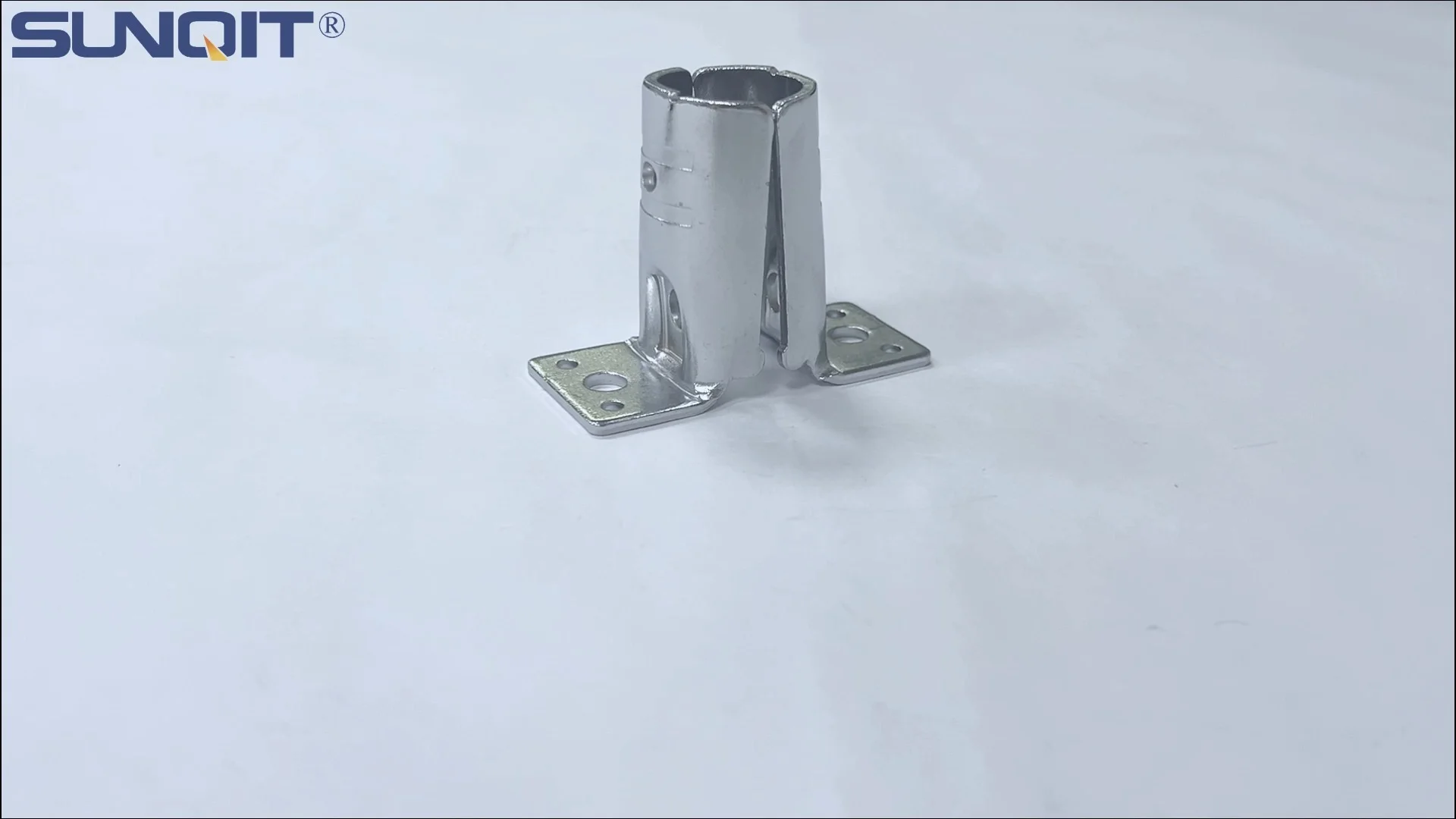
Vertical Lean Pipe Joint
Vertical lean pipe joint is used for 28mm lean pipe fixed on ground and keep it stable.
In the fast-paced world of manufacturing and warehousing, inventory management isn't just about tracking parts and products—it's about creating a system that breathes. A system that adapts to shifts in demand, minimizes waste, and keeps operations flowing like a well-tuned machine. Lean inventory management, with its focus on reducing excess, streamlining flow, and continuous improvement, has become the gold standard for businesses aiming to stay competitive. But here's the thing: lean principles can't thrive in a rigid environment. Traditional fixed shelving, bulky racks, and one-size-fits-all workstations often act as roadblocks, trapping teams in inefficient workflows and stagnant inventory practices. That's where vertical lean pipe joints come in—quietly powerful components that turn static spaces into dynamic, lean-friendly ecosystems. In this article, we'll dive into how these unassuming joints play a pivotal role in supporting lean inventory management, and why they've become a secret weapon for manufacturers and warehouses worldwide.
1. The Core of Lean Inventory Management: Flexibility and Waste Reduction
Before we unpack the role of vertical lean pipe joints, let's ground ourselves in what lean inventory management truly entails. At its heart, lean is about delivering value to the customer while eliminating waste—whether that waste is excess inventory, unused space, or time spent searching for materials. Key principles like Just-In-Time (JIT) production, where materials arrive exactly when needed, and continuous improvement (kaizen) rely on one critical factor: adaptability. If your workspace can't adjust to smaller batch sizes, seasonal demand spikes, or new product lines, lean goals like reduced inventory holding costs or faster turnaround times become nearly impossible.
Consider a common scenario: A electronics manufacturer using traditional steel racks. These racks are sturdy, but they're also fixed. When the company launches a new, smaller component, the racks—designed for larger parts—leave half their space unused. Over time, this unused space becomes a graveyard for "just in case" inventory (waste), and workers waste time navigating around oversized storage units to reach what they need. Now imagine the same manufacturer with a system that can shrink, expand, or reconfigure in hours. Suddenly, space is used efficiently, inventory stays lean, and teams can pivot without skipping a beat. That's the flexibility lean demands—and that's where vertical lean pipe joints shine.
2. What Are Vertical Lean Pipe Joints, Anyway?
If you're not familiar with lean pipe systems, let's start with the basics. Lean pipe systems—also known as "flexible pipe systems"—are modular setups built from lightweight pipes (often steel, aluminum, or plastic-coated steel) and connecting joints. These systems are used to create everything from workbenches and flow racks to material trolleys and conveyor supports. And at the center of this modularity are the joints. Vertical lean pipe joints, specifically, are designed to connect pipes at vertical angles, enabling the creation of multi-tiered structures, overhead storage, and adjustable height workstations.
Unlike traditional welding or bolted connections, vertical lean pipe joints are engineered for quick assembly and disassembly. Most feature a clamp-style design: slide a pipe into the joint, tighten a screw or lever, and it's secure. Need to adjust the height of a shelf? Loosen the joint, reposition the pipe, and retighten. No power tools, no specialized labor, no downtime. This simplicity is intentional—lean systems thrive on empowering frontline workers to modify their environment to fit their needs, and vertical joints put that power directly in their hands.
Materials matter too. Many vertical lean pipe joints are made from durable plastics, aluminum, or zinc-plated steel, balancing strength with lightweight portability. For environments like electronics manufacturing, where static control is critical, you'll even find ESD-safe (electrostatic discharge) variants—ensuring sensitive components stay protected while the system remains flexible. This combination of durability, adaptability, and specificity makes vertical lean pipe joints a cornerstone of modern lean setups.

3. How Vertical Lean Pipe Joints Solve Lean Inventory Challenges
Now, let's connect the dots: How exactly do these joints support lean inventory management? Let's break it down into three key areas: space optimization, demand-driven flexibility, and waste reduction.
3.1 Space Optimization: Using Height to Reduce Floor Clutter
One of the biggest enemies of lean inventory is wasted space—especially floor space. Traditional storage systems often prioritize width over height, leaving vertical space unused. This forces inventory to spread out horizontally, increasing the distance between storage and production lines (another form of waste: transportation). Vertical lean pipe joints change this by turning unused vertical space into valuable real estate.
For example, a flow rack built with vertical lean pipe joints can be stacked with multiple tiers, each holding different components. A workstation assembling smartphones might have a three-tier flow rack: top tier for incoming circuit boards, middle tier for batteries, and bottom tier for finished subassemblies. By using vertical joints to create these tiers, the rack takes up half the floor space of a single-tier alternative, bringing materials closer to the assembly line. Workers no longer walk 20 feet to grab parts—they reach up or down, reducing movement (waste) and cutting cycle times.
Vertical joints also enable overhead storage solutions. Imagine a warehouse where lightweight materials (like packaging supplies) are stored on overhead racks suspended from the ceiling, using vertical joints to connect support pipes. This frees up floor space for high-turnover inventory, ensuring that the most frequently used items are at ground level—exactly where they're needed. No more climbing ladders or using forklifts for small, daily supplies—just efficient, vertical space utilization.
3.2 Demand-Driven Flexibility: Adapting to Inventory Fluctuations
Lean inventory management isn't about eliminating inventory—it's about having the right inventory, at the right time, in the right quantity. This means your storage system must scale with demand. During peak seasons, you might need more shelving; during slow periods, you need that space back for other tasks. Vertical lean pipe joints make this scaling possible without the cost of new infrastructure.
Take a clothing manufacturer gearing up for the holiday season. In Q1-Q3, they produce small batches of year-round basics, using a compact workbench setup with minimal storage. But in Q4, demand spikes, and they need to store bulk fabric rolls and finished garments. With vertical lean pipe joints, they can quickly add tiers to existing racks or build new, temporary storage units using leftover pipes and joints from their off-season setup. When the season ends, these structures are disassembled, and the pipes are stored compactly—no permanent space taken, no money wasted on seasonal storage solutions.
This flexibility also supports JIT principles. Suppose a supplier delivers materials in smaller, more frequent batches (a JIT hallmark). Traditional fixed racks, designed for large, monthly deliveries, would leave gaps between batches. With vertical joints, workers can adjust shelf heights or add/remove tiers to fit each small batch perfectly, ensuring every inch of space is used and inventory doesn't pile up. It's lean inventory in action: the system adapts to the inventory, not the other way around.
3.3 Waste Reduction: Cutting Costs Through Modularity
Waste in lean terms (muda) comes in many forms: overproduction, waiting, defects, and yes, unnecessary inventory. But there's another form of waste that's often overlooked: infrastructure waste. Traditional fixed systems require significant upfront investment, and when they become obsolete (e.g., when a product line is discontinued), they're either scrapped (creating waste) or repurposed poorly (wasting their original value). Vertical lean pipe joints eliminate this by design.
Lean pipe systems are inherently reusable. A vertical joint that once supported a conveyor frame can be repurposed to build a material trolley when the conveyor is no longer needed. The pipes and joints are standardized, so components from one system can be mixed and matched with another. This reusability slashes long-term costs: instead of buying new racks every time your needs change, you reconfigure what you already have. For example, a automotive parts supplier that used vertical joints to build a production line workbench can later disassemble that workbench and use the joints to build a shipping rack for a new client. No waste, no new spending—just continuous value from the same components.
Modularity also reduces setup time, another form of waste. Traditional steel racks might take a team of installers a full day to assemble. A lean pipe system with vertical joints? A single worker can build a basic flow rack in under an hour. This means less downtime when launching new product lines or reorganizing workflows—keeping production on track and inventory moving.

3. Comparing Traditional vs. Lean Pipe Joint Systems: A Closer Look
| Feature | Traditional Fixed Racks | Lean Pipe Systems with Vertical Joints |
|---|---|---|
| Flexibility | Fixed dimensions; cannot be adjusted without cutting/welding. | Adjustable height, width, and depth; reconfigurable in minutes. |
| Space Utilization | Often underutilized (e.g., large shelves for small items). | Maximizes vertical space; adapts to item size for minimal waste. |
| Setup Time | Hours to days (requires tools/labor). | Minutes to hours (no special tools needed). |
| Cost Over Time | High (replacement costs for new configurations). | Low (reusable components; minimal new purchases). |
| Support for Lean Goals | Limited (rigidity hinders JIT and kaizen). | Strong (enables space efficiency, quick adaptation, and waste reduction). |

4. Real-World Impact: How Vertical Lean Pipe Joints Transform Inventory Management
Let's put theory into practice with a real example. A mid-sized medical device manufacturer was struggling with lean implementation. Their inventory turnover rate was low, and workers spent 15% of their shift searching for parts. Their storage system? Traditional wooden shelves and fixed steel racks, which hadn't been updated in a decade. The company partnered with a lean pipe supplier to overhaul their workspace using vertical lean pipe joints, focusing on flow racks, workbenches, and material trolleys.
The results were striking: By replacing wooden shelves with multi-tiered flow racks (built using vertical joints), the manufacturer reduced storage space requirements by 40%. Parts were organized by assembly stage, with the most frequently used items at eye level. Inventory turnover increased by 25% because workers could access materials faster, reducing the need for "buffer" inventory. Perhaps most notably, when the company introduced a new, smaller device, they reconfigured existing flow racks in an afternoon—no new storage units needed. The vertical joints allowed them to add smaller, custom-sized tiers, ensuring the new components fit perfectly without wasting space.
Another example: A food packaging warehouse handling seasonal products (e.g., holiday gift baskets). Before lean pipe systems, they used fixed pallet racks that sat half-empty during off-seasons. With vertical lean pipe joints, they built adjustable-height racks that could shrink from 5 tiers to 2 during slow months, freeing up floor space for pallet stacking. This reduced their off-season inventory holding costs by 30% and eliminated the need to rent additional storage during peak times.
5. Choosing the Right Vertical Lean Pipe Joints for Your Needs
Not all vertical lean pipe joints are created equal, and choosing the right ones depends on your specific inventory and workflow needs. Here are a few key factors to consider:
Load Capacity: If you're storing heavy items (e.g., metal components), opt for steel or aluminum joints with higher weight ratings. For lighter items (e.g., electronics), plastic or zinc-plated joints may suffice.
Environment: In cleanrooms or electronics facilities, ESD-safe joints (often made with conductive materials) prevent static damage to sensitive inventory. In wet or corrosive environments (e.g., food processing), stainless steel joints resist rust and contamination.
Compatibility: Ensure joints are compatible with your existing pipes (or the pipes you plan to use). Most lean pipe suppliers offer standardized sizes (e.g., 28mm diameter), but double-checking avoids headaches later.
Supplier Reliability: Work with a trusted lean pipe supplier that offers a range of joints and accessories. A good supplier will also provide guidance on system design, helping you maximize flexibility and efficiency.
6. Conclusion: Vertical Joints, Vertical Impact on Lean Inventory
Lean inventory management isn't just a set of principles—it's a mindset that requires your workspace to evolve with your goals. Vertical lean pipe joints may seem like small components, but their impact is anything but. By enabling flexible, space-efficient, and reusable storage systems, they turn rigid environments into adaptive ones, where waste is minimized, inventory stays lean, and teams can focus on what matters: delivering value to customers.
Whether you're building a new production line, revamping a warehouse, or simply looking to cut inventory costs, don't overlook the power of vertical lean pipe joints. They're not just tools—they're partners in your lean journey, supporting continuous improvement one adjustable shelf, one reconfigurable rack, and one optimized workflow at a time. In a world where adaptability is everything, vertical lean pipe joints don't just support lean inventory management—they make it possible.