- Company Articles
- Products and Technology
- Product knowledge
- How Weather Resistant is 3030 National Standard Profile A? Outdoor Use Considerations

How Weather Resistant is 3030 National Standard Profile A? Outdoor Use Considerations
Related Product
3030 National Standard Profile A
Workbench, production line, logistic rack, warehouse rack Industry: Manufacturer workshop, Automobile, Electronic, Assembling, logistic
Walk through any industrial park, warehouse loading dock, or outdoor manufacturing facility, and you'll likely spot a maze of metal structures: workbenches, material racks, flow racks, and conveyor systems. These aren't just random pieces of metal—they're the backbone of daily operations, designed to withstand heavy loads, constant use, and perhaps most importantly, the unpredictable whims of Mother Nature. Rain, scorching sun, freezing winters, coastal salt spray—outdoor industrial setups face it all. So when facility managers and operations teams choose materials for these structures, weather resistance isn't just a "nice-to-have"; it's a make-or-break factor for longevity, safety, and cost-effectiveness.
One material that's been gaining traction in these spaces is the 3030 national standard profile a . A staple in the world of industrial aluminum, this profile is praised for its versatility, strength, and modularity. But here's the question many teams ask: Just how well does it hold up when exposed to the elements? Can it really replace heavier, more traditional materials like steel in outdoor settings? Let's dive in and unpack the weather resistance of 3030 national standard profile a, and what you need to know before installing it outdoors.
First Things First: What Exactly is 3030 National Standard Profile A?
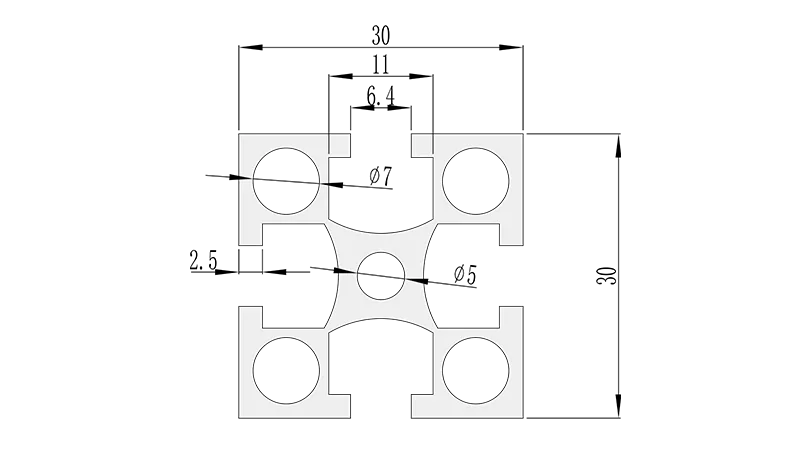
Before we judge its weather resistance, let's make sure we're all on the same page about what 3030 national standard profile a is. At its core, it's an aluminum extrusion profile —meaning it's formed by pushing heated aluminum through a die to create a consistent, uniform shape. The "3030" refers to its cross-sectional dimensions: 30mm by 30mm, making it a compact yet sturdy choice for a wide range of applications. The "national standard" tag ensures it meets specific manufacturing and quality benchmarks, so you know you're getting a product that's consistent across suppliers.
Most 3030 national standard profile a is made from 6063-T5 aluminum alloy, a popular choice in industrial settings for its balanced mix of strength, malleability, and corrosion resistance. Unlike raw aluminum, which can be soft and prone to warping, the extrusion process (hence the term aluminum extrusion profile ) gives it structural integrity, making it ideal for load-bearing structures like workbenches, flow racks , and material handling systems. Its modular design also means it's easy to assemble with aluminum profile accessories —brackets, connectors, end caps, and hinges—allowing teams to build custom setups without welding or heavy tools.
The Science Behind Its Weather Resistance: Material Matters
To understand how 3030 national standard profile a stands up to the outdoors, we need to start with its most basic component: aluminum. Unlike steel, which rusts when exposed to moisture and oxygen, aluminum has a built-in defense mechanism: a thin, invisible layer of aluminum oxide that forms naturally on its surface. This layer acts like a shield, preventing further oxidation and corrosion. But that's just the starting point—manufacturers often enhance this natural protection with additional treatments, and the extrusion process itself plays a role in boosting durability.
Breaking Down Weather Resistance: Key Factors to Consider
Weather resistance isn't a single trait—it's a combination of how a material handles specific environmental stressors. Let's break down how 3030 national standard profile a performs against the most common outdoor challenges.
1. Corrosion: The Silent Enemy of Outdoor Metals
Corrosion is public enemy number one for any metal structure left outside. Whether it's rainwater, humidity, or coastal salt spray, moisture can eat away at unprotected metals over time, weakening joints, causing rust stains, and eventually leading to structural failure. So how does 3030 national standard profile a stack up here?
Aluminum's natural oxide layer is a great first line of defense, but for outdoor use, most manufacturers take it a step further with treatments like anodizing or powder coating. Anodizing involves submerging the aluminum in an electrolytic solution to thicken the oxide layer, making it more resistant to scratches and chemical attacks. Powder coating, on the other hand, applies a dry powder (usually polyester or epoxy) electrostatically, which is then cured under heat to form a hard, protective film. Both treatments not only boost corrosion resistance but also add color options, which can help with visibility or branding in industrial settings.
Compare this to stainless steel pipe series —another common industrial material—and you'll see trade-offs. Stainless steel is inherently corrosion-resistant thanks to its chromium content, but it's significantly heavier than aluminum (3030 profile weighs roughly 1.5-2kg per meter, while stainless steel pipe of similar dimensions can hit 4-5kg). This extra weight makes stainless steel harder to install and more expensive to ship, which is why many teams opt for aluminum in outdoor setups where weight and cost are priorities.
2. UV Resistance: Standing Up to the Sun's Rays
The sun's ultraviolet (UV) rays are another silent threat. Over time, UV exposure can cause some materials to fade, become brittle, or lose structural integrity. Think about how plastic outdoor furniture cracks after a few summers, or how untreated wood warps and fades. Aluminum, however, is naturally UV-resistant—its oxide layer doesn't break down under sunlight, and the metal itself doesn't become brittle with age.
That said, the finish matters. Uncoated aluminum might develop a slight patina (a dull, chalky layer) over years of direct sun exposure, but this is purely cosmetic and doesn't affect structural strength. Powder-coated 3030 profiles, especially those with UV-stabilized coatings, hold up even better—colors stay vibrant, and the coating resists chipping or peeling. This is a big plus for outdoor workbenches or flow racks where visibility (e.g., color-coded zones) is important.
3. Temperature Extremes: From Freezing Winters to Sweltering Summers
Outdoor structures don't just deal with moisture and sun—they also face extreme temperature swings. A profile in Arizona might bake in 120°F (49°C) heat one day and cool to 60°F (15°C) at night, while one in Minnesota could endure -20°F (-29°C) winters followed by 90°F (32°C) summers. These fluctuations cause materials to expand and contract, which can loosen joints, warp frames, or even crack welds.
Aluminum has a higher thermal expansion coefficient than steel, meaning it expands more when heated and contracts more when cooled. But here's the upside: 3030 national standard profile a is designed with modularity in mind. Its joints—often secured with aluminum profile accessories like bolts, brackets, or snap-in connectors—allow for slight movement without compromising stability. Unlike rigid welded steel structures, which can crack under thermal stress, the 3030 profile's modular design acts like a "shock absorber" for temperature changes. Just make sure installers leave small gaps at connection points to accommodate expansion—this is a simple tweak that goes a long way in preventing warping.
4. Moisture: Beyond Rain—Humidity and Condensation
Rain isn't the only moisture threat; high humidity and condensation can also take a toll. In humid climates, water vapor can settle on metal surfaces, leading to corrosion over time. This is especially true for hollow structures, where trapped moisture can linger and cause internal corrosion.
3030 national standard profile a is often hollow (a design choice that reduces weight while maintaining strength), but manufacturers address this with aluminum profile accessories like end caps and drain holes. Sealed end caps prevent rainwater or condensation from entering the hollow core, while strategically placed drain holes (if needed) allow any trapped moisture to escape. For example, a flow rack used outdoors might have drain holes at the bottom of vertical supports to let rainwater run out instead of pooling inside. It's these small details—paired with the profile's corrosion-resistant finish—that make it a solid choice for humid environments.
The Role of Accessories: It's Not Just About the Profile
A profile is only as strong as its weakest link, and in outdoor setups, that "weak link" is often the accessories that hold it all together. Aluminum profile accessories —brackets, connectors, casters, and end caps—need to be just as weather-resistant as the profile itself. Using cheap, uncoated steel brackets with your 3030 aluminum profile, for example, is a recipe for disaster: the steel will rust, stain the aluminum, and eventually fail, even if the profile itself stays intact.
Thankfully, most suppliers offer aluminum or stainless steel accessories specifically designed for outdoor use. Anodized aluminum brackets, stainless steel bolts, and UV-resistant plastic end caps are all readily available. When planning your outdoor setup, prioritize accessories with the same corrosion-resistant treatments as the profile. For example, if you're using a powder-coated 3030 profile, opt for powder-coated or stainless steel brackets to match. It might cost a bit more upfront, but it'll save you from costly replacements down the line.
3030 Aluminum vs. Stainless Steel Pipe Series: A Quick Comparison
You might be wondering: If stainless steel is known for corrosion resistance, why not just use stainless steel pipe series instead? It's a fair question—stainless steel is a tried-and-true material for harsh environments. To help you decide, let's compare the two side by side.
| Feature | 3030 National Standard Profile A (Aluminum) | Stainless Steel Pipe Series |
|---|---|---|
| Material | 6063-T5 aluminum alloy (extruded) | Stainless steel (typically 304 or 316 grade) |
| Corrosion Resistance | Excellent (natural oxide layer + anodizing/powder coating); good for rain, humidity, mild salt spray | Superior (chromium oxide layer); ideal for heavy salt spray, chemical exposure |
| UV Stability | Excellent (no brittleness or fading; powder coatings enhance color retention) | Good (no fading, but can get hot to the touch in direct sun) |
| Weight (per meter) | 1.5-2kg (lightweight, easy to install/transport) | 4-5kg (heavier, requires more labor/equipment to install) |
| Cost | Moderate (more affordable than stainless steel) | High (stainless steel is pricier, especially 316 grade) |
| Modularity | High (easily assembled with aluminum profile accessories; no welding needed) | Low (often requires welding; less modular) |
| Best For | Outdoor workbenches, flow racks, material racks, and light-to-medium load structures in most climates | Extreme environments (coastal salt spray, industrial chemical exposure, heavy loads) |
The takeaway? For most outdoor industrial setups—think warehouses, manufacturing facilities, or distribution centers in moderate climates—3030 national standard profile a offers the best balance of cost, weight, and weather resistance. Stainless steel is better for extreme conditions, but it comes with a higher price tag and lower flexibility.
Real-World Performance: Case Studies
Numbers and specs are helpful, but nothing beats real-world examples. Let's look at two case studies of 3030 national standard profile a used outdoors to see how it performed.
Case Study 1: Outdoor Flow Racks at a Coastal Warehouse (Charleston, SC)
A logistics company in Charleston, South Carolina, needed flow racks for their outdoor loading dock. Located just 10 miles from the coast, the area is prone to high humidity, occasional rain, and salt spray from sea breezes. They opted for 3030 national standard profile a with anodized finish and stainless steel accessories (brackets, connectors). After 3 years of use, the racks showed minimal signs of wear: no corrosion, no fading, and joints remained tight. The only maintenance needed was annual cleaning with mild soap and water to remove salt buildup.
Case Study 2: Outdoor Workbenches in the Arizona Desert (Phoenix, AZ)
A manufacturing plant in Phoenix installed 3030 profile workbenches in their uncovered outdoor assembly area. Temperatures here regularly exceed 110°F (43°C) in summer, with intense UV exposure. The workbenches were powder-coated with a UV-resistant finish and paired with aluminum accessories. After 2 years, the powder coating showed no fading or chipping, and the aluminum frame remained stable—no warping, even with daily temperature swings of 50°F (28°C). The only issue? The plastic end caps (non-UV-resistant) began to crack after 18 months, so the team replaced them with UV-stabilized versions. Lesson learned: Don't skimp on accessory quality!
Installation Tips for Maximum Weather Resistance
Even the most weather-resistant profile will underperform if installed incorrectly. Here are a few pro tips to ensure your 3030 national standard profile a setup thrives outdoors:
- Seal the ends: Use end caps to prevent water, dirt, or insects from entering hollow profiles. For extra protection, apply a small amount of silicone sealant around the edges of the caps.
- Slope for drainage: When building horizontal structures like flow racks or workbench tops, angle them slightly (1-2 degrees) to allow rainwater to run off instead of pooling.
- Anchor securely: High winds can topple lightweight aluminum structures. Use concrete anchors or weighted bases for tall racks or freestanding setups.
- Avoid direct contact with soil: If installing profiles near the ground, use concrete footings or metal bases to prevent the bottom of the profile from touching soil (which can trap moisture and cause corrosion).
- Choose the right finish: For coastal areas or high-humidity environments, opt for anodized or powder-coated finishes over bare aluminum. For UV-heavy areas, pick powder coatings with UV inhibitors.
Maintenance: Keeping Your Profile in Top Shape
Aluminum is low-maintenance, but "low" doesn't mean "no" maintenance. A little care goes a long way in extending the life of your outdoor 3030 profile setup:
- Clean regularly: Wipe down profiles with a soft cloth and mild soap and water every 3-6 months to remove dirt, salt, or grime. Avoid abrasive cleaners, which can scratch the finish.
- Inspect joints: Check aluminum profile accessories (brackets, bolts, connectors) for tightness. Loose joints can allow moisture to seep in or cause structural wobbling.
- Touch up coatings: If the powder coating or anodizing gets chipped, use a touch-up paint pen (matching the color and finish) to seal the exposed aluminum and prevent corrosion.
- Lubricate moving parts: If your setup includes casters or sliding components, lubricate them with a silicone-based lubricant (avoid oil-based products, which attract dirt) to prevent rust and ensure smooth movement.
Limitations: When 3030 Profile Might Not Be the Best Fit
While 3030 national standard profile a is a strong performer in most outdoor settings, it's not invincible. There are a few scenarios where you might want to consider alternatives:
- Extreme chemical exposure: If your setup is near areas with heavy industrial chemicals (e.g., acids, solvents), stainless steel might be a better choice—aluminum can corrode in highly acidic or alkaline environments.
- Extremely heavy loads: While 3030 profile is strong for its weight, stainless steel or thicker aluminum profiles (like 4040 or 5050) are better for supporting loads over 500kg per linear meter.
- Permanent submersion: Aluminum can handle occasional rain or splashes, but permanent submersion (e.g., in standing water) can eventually cause corrosion, even with treatments. In these cases, fiberglass or specialized coated steel might be more suitable.
Final Thoughts: Is 3030 National Standard Profile A Weather Resistant Enough?
After breaking down the science, comparing it to alternatives, and looking at real-world examples, the verdict is clear: 3030 national standard profile a is more than weather resistant enough for most outdoor industrial applications. Its aluminum extrusion profile (keyword) construction, natural corrosion resistance, and compatibility with durable aluminum profile accessories make it a reliable choice for rain, sun, humidity, and temperature swings—especially when paired with proper installation and maintenance.
Is it perfect? No—stainless steel still has the edge in extreme salt or chemical environments. But for the majority of outdoor setups—think warehouses, loading docks, outdoor workbenches, and flow racks (keyword)—3030 profile strikes the ideal balance of durability, cost, and versatility. It's lightweight, easy to install, and with the right care, can last 10+ years outdoors. So if you're planning an outdoor industrial project, don't sleep on 3030 national standard profile a—it just might be the weather-resistant workhorse your facility needs.